The queue at the pharmacy has not moved in ten minutes. The reply you are waiting for still has not come. Your teenager has asked the same question for the fourth time tonight. Patience gets tested in small rooms long before big ones, and most of us fail it there several times a day.
So it surprises people that the Bible does not start its talk about patience with a command. The first time the idea appears in full, God is describing himself. Before anyone is told to be patient, God announces that he is.
Read that way, Bible verses about patience stop being a scolding for people with short fuses. They describe something God has, show it given to people who did not deserve it, and only then ask the same of us in two directions: patience with people, and patience while waiting for God. The twelve verses below follow that order, with the background each one needs.

Discover your unique purpose. You are God's masterpiece.Jeremiah 29:11 · 12 min
That was just the opening. Open the app and search #007 to hear the full 12-minute story — free.
Keep listening free in the app Free on iOS & Android — no sample needed


Patience in the Bible Starts as Something God Says About Himself
Numbers 14:18 — The Description Moses Quoted Back to God
“The LORD is slow to anger, and abundant in loving kindness, forgiving iniquity and disobedience;” — Numbers 14:18 (WEBU)
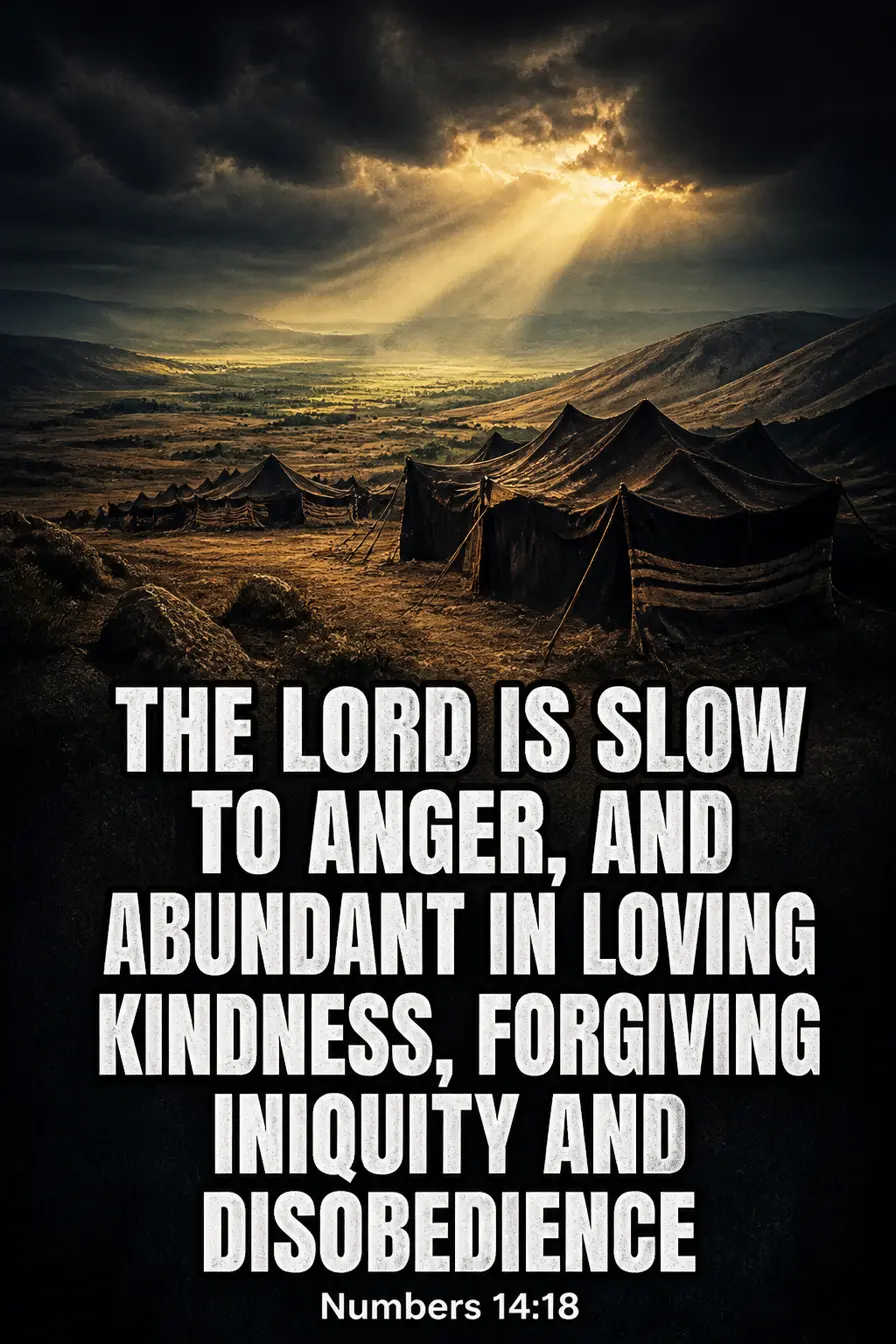
“Slow to anger” is the Old Testament’s word for patience, and in Hebrew it is a picture: long of nostrils. Anger in Hebrew lives in the nose, the flare and the heat of breath, so a patient person takes a long time to get there. God first says this about himself at Mount Sinai (Exodus 34:6).
What makes Numbers 14 worth reading is the moment Moses uses it. Israel has just refused to enter the promised land, proposed choosing a new leader to take them back to Egypt, and threatened to stone the two spies who disagreed. God says he will strike them. He quotes God’s own self-description from Sinai back to him, and God answers, “I have pardoned according to your word.” The definition of patience was strong enough to lean on in the worst week of the journey.
2 Peter 3:9 — When God’s Patience Looks Like Slowness
“The Lord is not slow concerning his promise, as some count slowness; but he is patient with us, not wishing that anyone should perish, but that all should come to repentance.” — 2 Peter 3:9 (WEBU)

Peter is answering mockers who ask, “Where is the promise of his coming?” Nothing has changed since the world began, they say, so nothing will.
His reply separates two things that look identical from the outside. Slowness is failing to act when you should. Patience is choosing not to act yet, for someone else’s sake. The difference is the reason behind the wait, and the reason Peter gives is that the delay is mercy, extended to people who have not turned yet.
That is worth carrying into your own waiting. A delay you cannot explain is not proof that God is absent or careless.
1 Timothy 1:16 — Paul Calls Himself the Example
“However, for this cause I obtained mercy, that in me first, Jesus Christ might display all his patience for an example of those who were going to believe in him for eternal life.” — 1 Timothy 1:16 (WEBU)

The line before this calls Paul the chief of sinners, and he means it. Before his conversion he hunted Christians from house to house. Here he presents his own life as the display case for “all” of Christ’s patience — not some of it, the full amount.
This is the verse to read when you are sure you have used up God’s patience. Paul’s logic runs the other way: if the patience reached him, it reaches the people further down the line. He was put first so nobody after him could think they were the exception.
Bible Verses About Patience With Others
Proverbs 16:32 — Better Than Taking a City
“One who is slow to anger is better than the mighty; one who rules his spirit, than he who takes a city.” — Proverbs 16:32 (WEBU)

“Slow to anger” here is the same long-of-nostrils phrase God used about himself. A patient person, in the Bible’s own vocabulary, is someone who resembles God in this one way.
The comparison is meant to sound unfair. Taking a walled city meant months of siege and a king’s whole army. Proverbs says ruling your own spirit beats it. Keeping quiet in a meeting when every instinct said to fire back counts, in Proverbs, for more than a conquest.
1 Thessalonians 5:14 — Three Kinds of People, One Instruction
“We exhort you, brothers: Admonish the disorderly; encourage the faint-hearted; support the weak; be patient toward all.” — 1 Thessalonians 5:14 (WEBU)
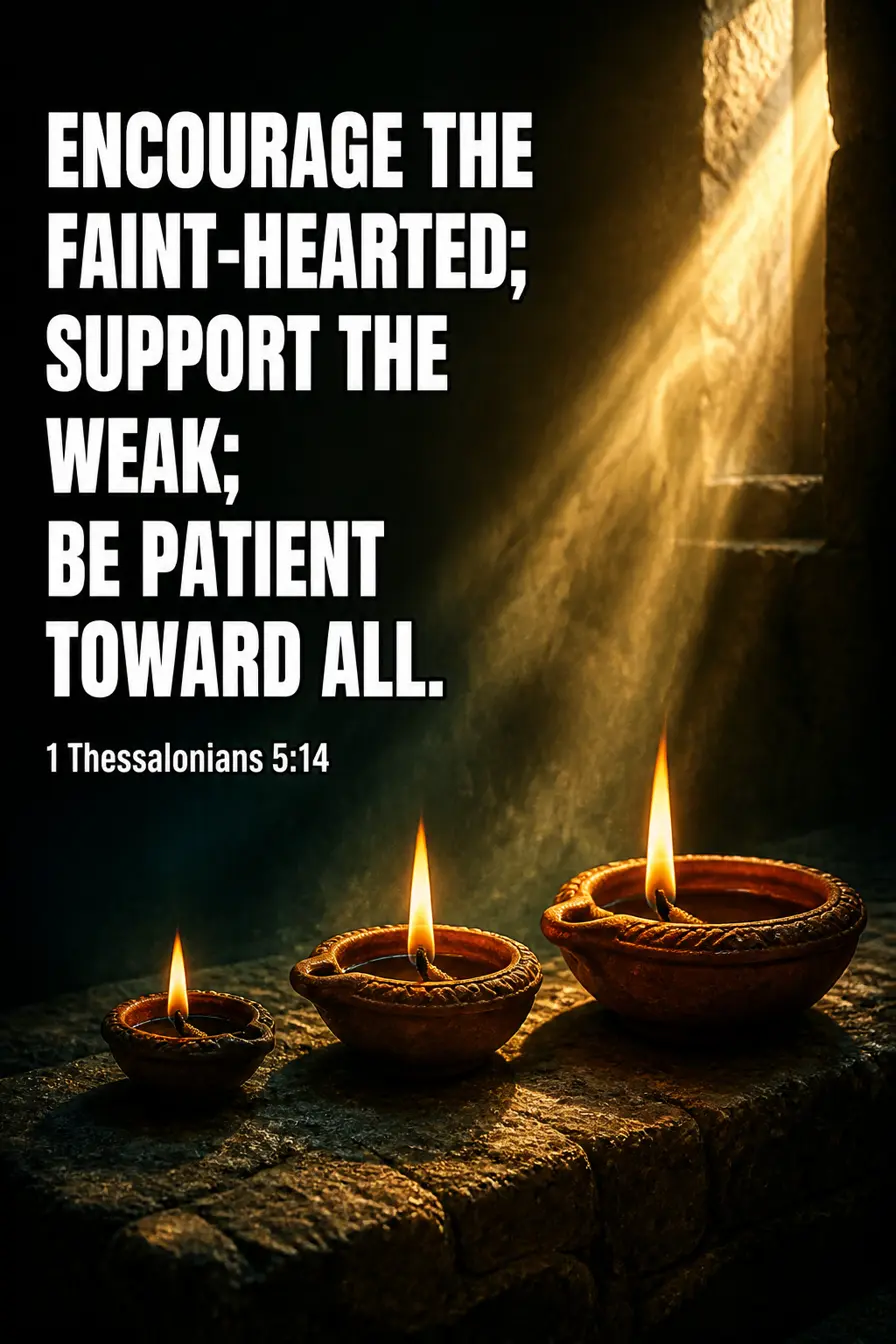
Paul was writing to a young church he had been forced to leave after only a short stay, and it shows in how practical this is. He sorts the difficult people into three kinds. The disorderly need correcting. The faint-hearted need encouraging. The weak need holding up. Each gets a different response: treating a frightened person as lazy only makes things worse.
Then the last clause covers all three. Correction without patience turns into nagging, encouragement gives up after the second try, and support starts keeping score. Patience keeps the other three from going sour.
Ecclesiastes 7:8-9 — Long in Spirit, Not High in Spirit
“Better is the end of a thing than its beginning. The patient in spirit is better than the proud in spirit. Don’t be hasty in your spirit to be angry, for anger rests in the bosom of fools.” — Ecclesiastes 7:8-9 (WEBU)

The Hebrew sets two shapes against each other. The patient spirit is long; the proud spirit is high. One stretches out over time, the other rears up in the moment.
The pairing explains a lot about impatience. Most of it is a form of pride: the conviction that our schedule, our way of doing things, our reading of the situation should already have won. The first line supplies the cure, which is to judge things at the end rather than the beginning. A conversation, a project, a hard year in a marriage: almost nothing looks its best halfway through. Our post on Bible verses about relationships takes the same idea into the friction of living closely with other people.
Patience and God’s Timing
Psalm 37:7 — Don’t Get Heated
“Rest in the LORD, and wait patiently for him. Don’t fret because of him who prospers in his way, because of the man who makes wicked plots happen.” — Psalm 37:7 (WEBU)

“Fret” sounds mild in English, like worrying at a loose thread. The Hebrew word means to burn or be kindled. David is telling you not to let yourself heat up while you watch someone else’s scheme succeed.
Psalm 37 says it three times (verses 1, 7 and 8), which tells you how hard it is to obey. The psalm admits the wrong people sometimes prosper for a while. What it refuses is the slow burn of comparison, the habit of checking how well they are doing. Its counsel is to rest and wait, because the burning does nothing to them and plenty to you.
Psalm 40:1-2 — A Doubled Verb for a Long Wait
“I waited patiently for the LORD. He turned to me, and heard my cry. He brought me up also out of a horrible pit, out of the miry clay. He set my feet on a rock, and gave me a firm place to stand.” — Psalm 40:1-2 (WEBU)

“Waited patiently” translates a doubled verb in Hebrew, the same word said twice. Hebrew repeats a word to underline it, here the length. David waited, and then kept on waiting.
The patience is in the past tense. The psalm is written from the rock, looking back at the pit. That matters if you are still in the clay: whoever wrote “I waited patiently” did not feel patient at the time. Patience is often something you only see in hindsight.
Habakkuk 2:3 — Though It Takes Time, Wait for It
“For the vision is yet for the appointed time, and it hurries toward the end, and won’t prove false. Though it takes time, wait for it, because it will surely come. It won’t delay.” — Habakkuk 2:3 (WEBU)

Habakkuk opens his book with a complaint: “LORD, how long will I cry, and you will not hear?” He watches violence go unpunished, and God’s first answer, that the Babylonians are coming, makes things worse. This verse is the second answer.
Look at the apparent contradiction in it. “Though it takes time” and “it won’t delay” sit in the same sentence. Both are true, from different places. From Habakkuk’s watchtower, it takes time. From God’s side, it arrives exactly on schedule, at “the appointed time”. God also tells him to write the vision down on tablets first. Writing down what you wait for is how you keep hold of a promise across a long gap.
Hebrews 6:15 — Twenty-Five Years for One Promise
“Thus, having patiently endured, he obtained the promise.” — Hebrews 6:15 (WEBU)

The “he” is Abraham, and the sentence compresses a long story into eight words. Genesis says Abraham was seventy-five when he left Haran on the strength of God’s promise, and one hundred when Isaac was born. A quarter of a century sits inside “having patiently endured”.
It was not a tidy quarter of a century. Abraham tried to speed the promise along more than once, and Genesis records it plainly. Hebrews still calls the whole thing patient endurance. Patience in the Bible is not a spotless record of calm; it is staying with the promise, including the years you handled badly.
Patience in Difficult Times
Romans 5:3-4 — Suffering Produces Perseverance
“Not only this, but we also rejoice in our sufferings, knowing that suffering produces perseverance; and perseverance, proven character; and proven character, hope;” — Romans 5:3-4 (WEBU)
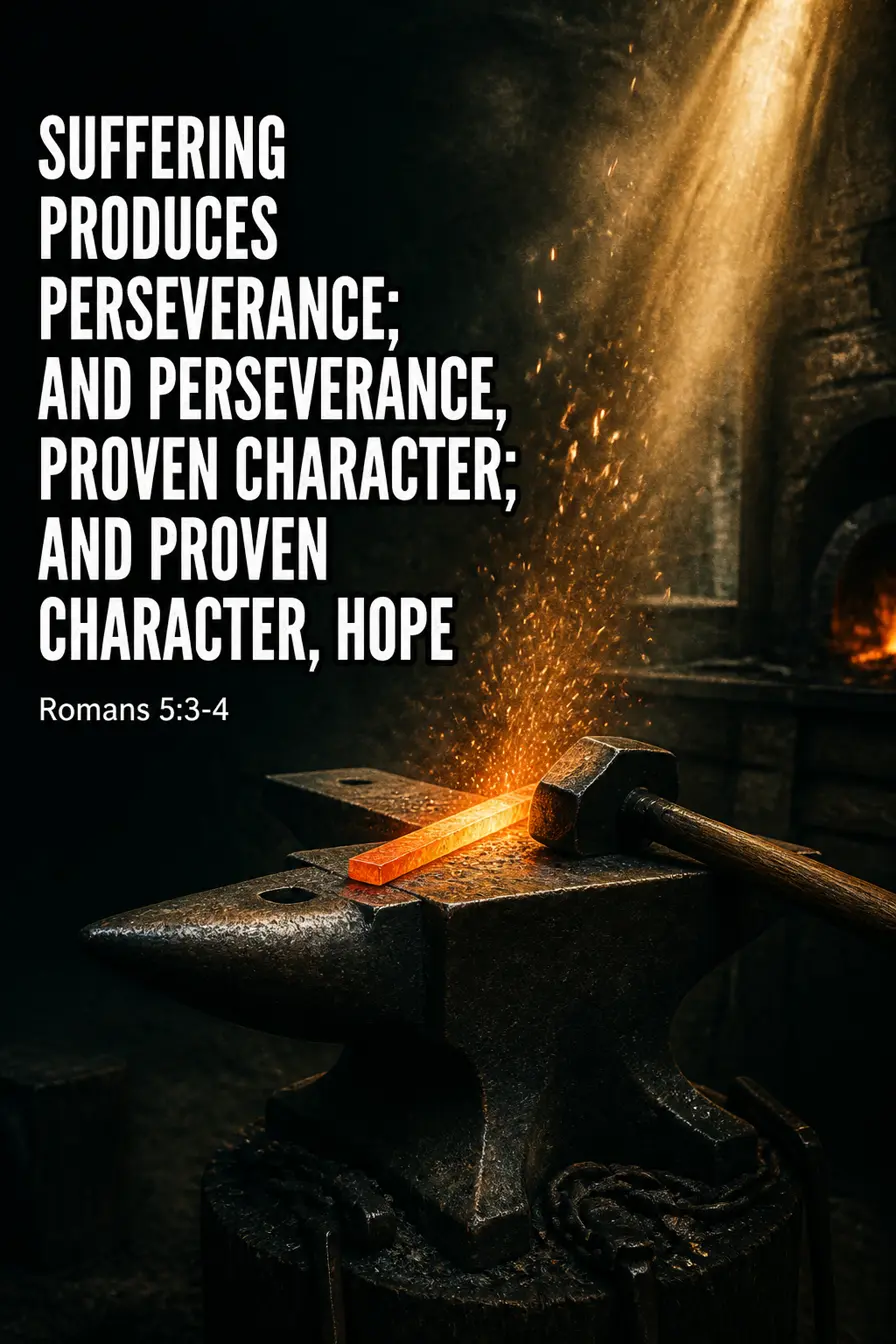
The Greek word behind “perseverance” is built from under and remain. It is the patience of staying under a weight instead of throwing it off, which is a different thing from the slow-to-anger patience earlier in this list.
Paul is not saying suffering is good. He is describing a chain, link by link. Staying under a hard thing produces a tested character, and tested character turns out to be where hope grows. You cannot skip to the last link. That is the honest part, and it is also the encouraging part: if you are in the first link, the chain is already moving. If the weight you are under feels like more than patience can hold, our post on Bible verses for hope in difficult times sits closer to that place.
James 5:11 — Job Was Not Quiet
“Behold, we call them blessed who endured. You have heard of the perseverance of Job and have seen the Lord in the outcome, and how the Lord is full of compassion and mercy.” — James 5:11 (WEBU)

“The patience of Job” became a proverb, and it has misled people for centuries. Job was not quiet. In chapter 3 he curses the day he was born, and for most of the book he argues, protests and demands that God answer him.
What James praises is not calm. It is that Job stayed. He took his complaints to God instead of walking away from God, and at the end God says Job spoke rightly, unlike the friends who defended God with neat answers. If your patience sounds more like arguing than serenity, you are in good company. The verse ends on the outcome: the Lord “full of compassion and mercy”. The waiting had an end, and it was kind.
One Practice: Name What Your Patience Is For
Patience in these verses points in two directions, and most impatience comes from mixing them up. Some of it is about people: the colleague, the child, the spouse, the slow driver. Some of it is about waiting: the diagnosis, the job, the prayer that has not been answered.
Tonight, before bed, write two short lines:
- Putting up with: ______
- Waiting for: ______
Then take one verse from the matching section above. For the first line, Proverbs 16:32 or 1 Thessalonians 5:14. For the second, Psalm 37:7 or Habakkuk 2:3. Read it slowly, once, and leave it on the paper where you will see it in the morning.
Naming the thing tends to take the heat out of it, and one verse tied to one situation lasts longer than a general resolution to “be more patient”.
Frequently Asked Questions
What is the best Bible verse about patience?
Exodus 34:6 is the foundation, because it is where God first calls himself “slow to anger” — the Bible’s root phrase for patience. For daily use, Proverbs 16:32 covers patience with people and Psalm 37:7 covers waiting on God. Choose the one that matches the patience you need today.
What does the Bible say about patience and waiting?
The Bible treats waiting as active trust, not passive delay. Psalm 27:14 says, “Wait for the LORD. Be strong, and let your heart take courage.” Psalm 37:7 links waiting with rest, Habakkuk 2:3 says the answer comes at “the appointed time”, and Hebrews 6:15 points to Abraham, who waited twenty-five years for one promise and “obtained the promise”.
Is patience a fruit of the Spirit?
Yes. Galatians 5:22 lists patience fourth among the nine qualities Paul calls the fruit of the Spirit, next to love, kindness and gentleness. Because it is fruit of the Holy Spirit, it grows over time rather than from willpower alone. Our post on the fruits of the Spirit walks through the whole list.
Is “patience is a virtue” in the Bible?
No. “Patience is a virtue” is an old English proverb, not a Bible verse. The closest lines in Scripture are Ecclesiastes 7:8, “The patient in spirit is better than the proud in spirit”, and Proverbs 16:32, which ranks being slow to anger above being mighty.
Why is God so patient with us?
2 Peter 3:9 gives the reason directly: God is “not wishing that anyone should perish, but that all should come to repentance.” His patience is time given for people to turn back. 1 Timothy 1:16 adds that Paul’s own life was meant to show how far that patience reaches.
Patience Comes From Somewhere
God is patient first, long before anyone asks it of us. That patience reaches people like Moses’ grumbling nation and Paul the persecutor. Only then does Scripture turn to us: be slow to anger with people, rest while you wait, stay under what you cannot yet change.
So the next time the queue does not move, reach for a description, not a rule: someone has been patient with you first. More studies like this one are in our faith collection.