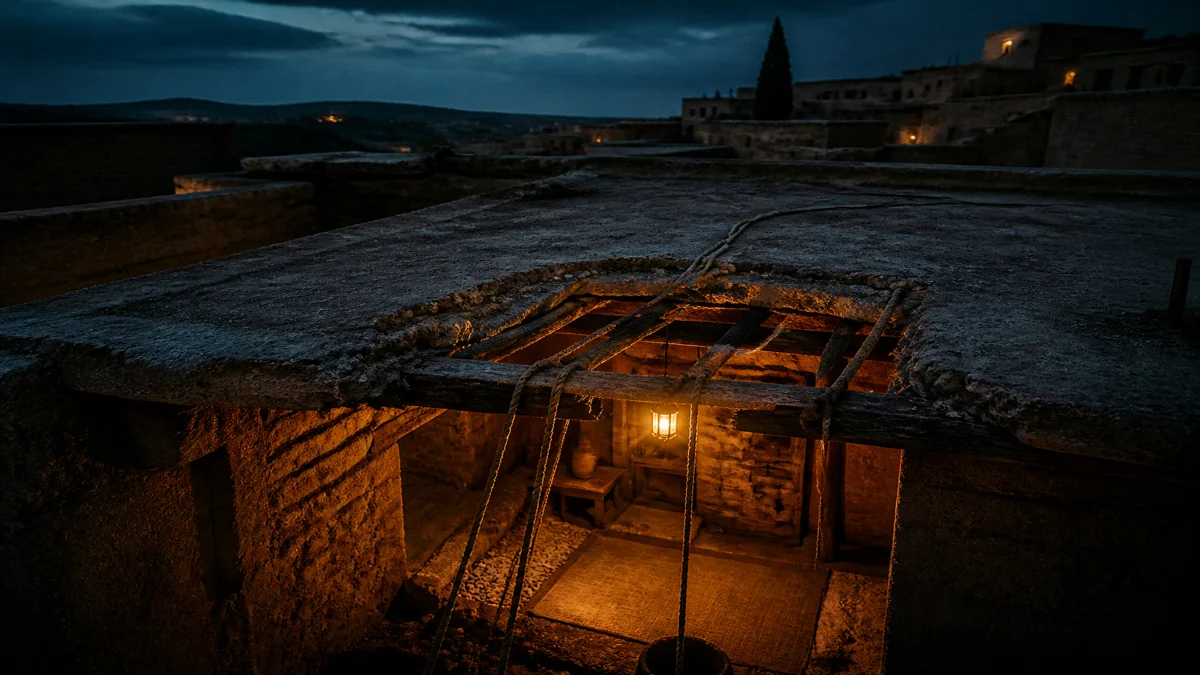
Jesus almost never talks about faith in general. He talks about somebody’s.
Count the times in the Gospels when he looks at a person and names their faith out loud, and the list is short and strange. A Roman officer. A foreign mother he had just turned down. A woman whose illness made her untouchable for twelve years. A blind beggar the crowd told to be quiet. A Samaritan. His own closest friends make it only on the other side, where the word is “little”.
Hebrews 11:1 gives the Bible’s definition: “Now faith is assurance of things hoped for, proof of things not seen.” Our Bible verses for hope and faith read that chapter in full. These Bible verses about faith show you what Jesus was looking at when he saw it — and almost every time, it was something a person did, not something they felt.

Finding Purpose
Discover your unique purpose. You are God's masterpiece.Jeremiah 29:11 · 12 min
That was just the opening. Open the app and search #007 to hear the full 12-minute story — free.
Keep listening free in the app Free on iOS & Android — no sample needed


“Great Faith”: The Two People Who Were Not Supposed to Have It
Matthew 8:10 — The Officer Who Understood Orders
“I haven’t found so great a faith, not even in Israel.” — Matthew 8:10 (WEBU)
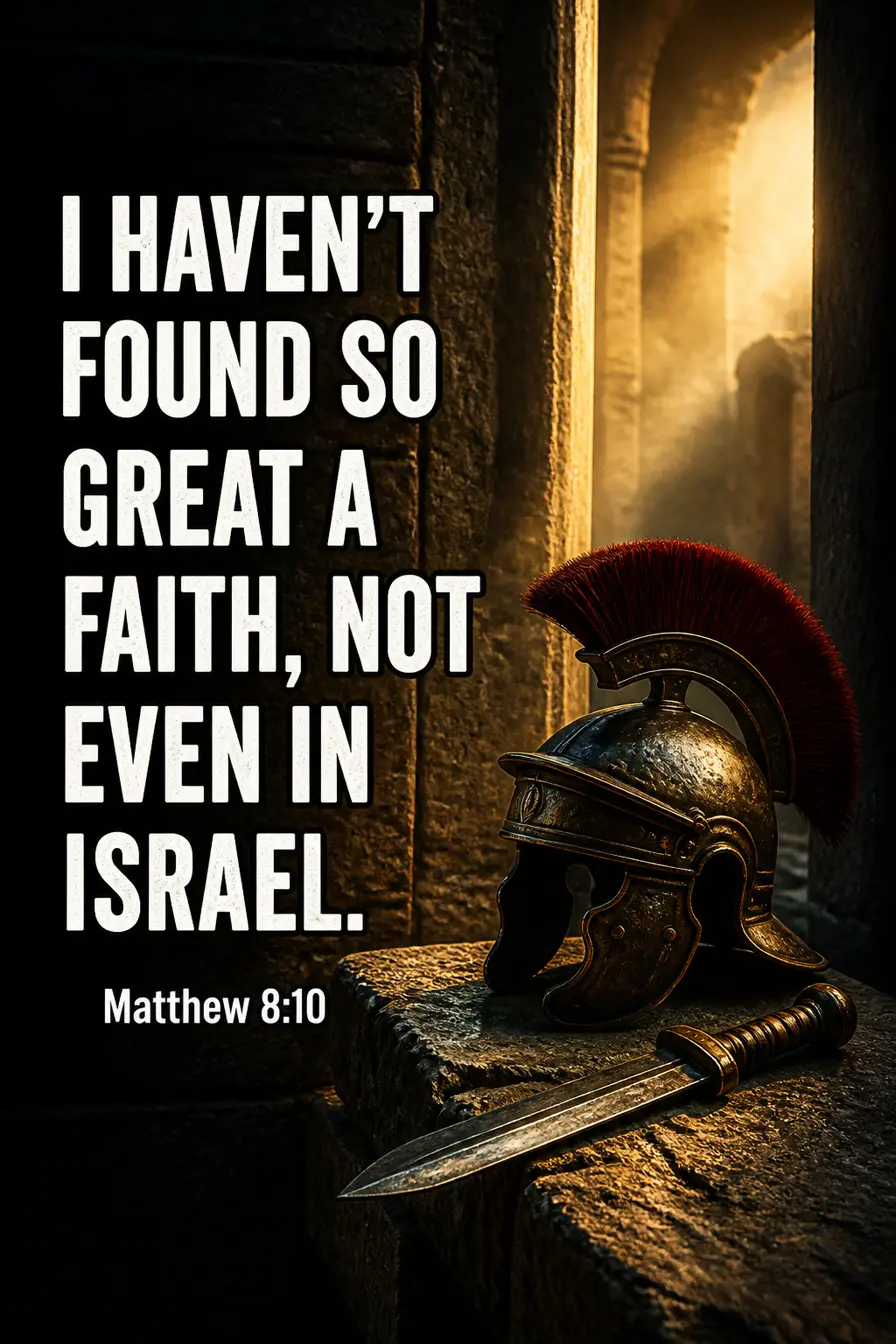
A centurion was a Roman officer over roughly a hundred soldiers in an occupying army. His servant was paralysed. When Jesus offered to come to the house, the officer stopped him: “Just say the word, and my servant will be healed.” Then he explained why. He was a man under authority with soldiers under him; he said “Go,” and they went.
That is the faith Jesus marvelled at: not a feeling of certainty, but an accurate read of who he was dealing with. Distance would not matter. The Gospels say Jesus marvelled only twice: here, at a foreigner in a foreign uniform, and in his own hometown, at the unbelief of the people who had known him longest (Mark 6:6). Whatever you assume about who God finds believable, this verse is the first thing to unsettle it.
Matthew 15:28 — The Mother Who Argued Back
“Woman, great is your faith! Be it done to you even as you desire.” — Matthew 15:28 (WEBU)

A Canaanite woman from the region of Tyre and Sidon begs Jesus to help her daughter. He says nothing. When he finally answers, it sounds like a door closing: “It is not appropriate to take the children’s bread and throw it to the dogs.”
She does not leave. She takes his own picture and turns it: “Yes, Lord, but even the dogs eat the crumbs which fall from their masters’ table.” And that is the moment he calls her faith great.
Faith here is a mother who kept arguing, inside his own words, because she was sure there was more mercy in him than the first answer showed. If you have been praying the same prayer for a long time and hearing nothing, she is the person in Scripture standing closest to you.
“Your Faith Has Made You Well”: What They Actually Did
Mark 5:34 — The Touch Nobody Was Supposed to Notice
“Daughter, your faith has made you well. Go in peace, and be cured of your disease.” — Mark 5:34 (WEBU)
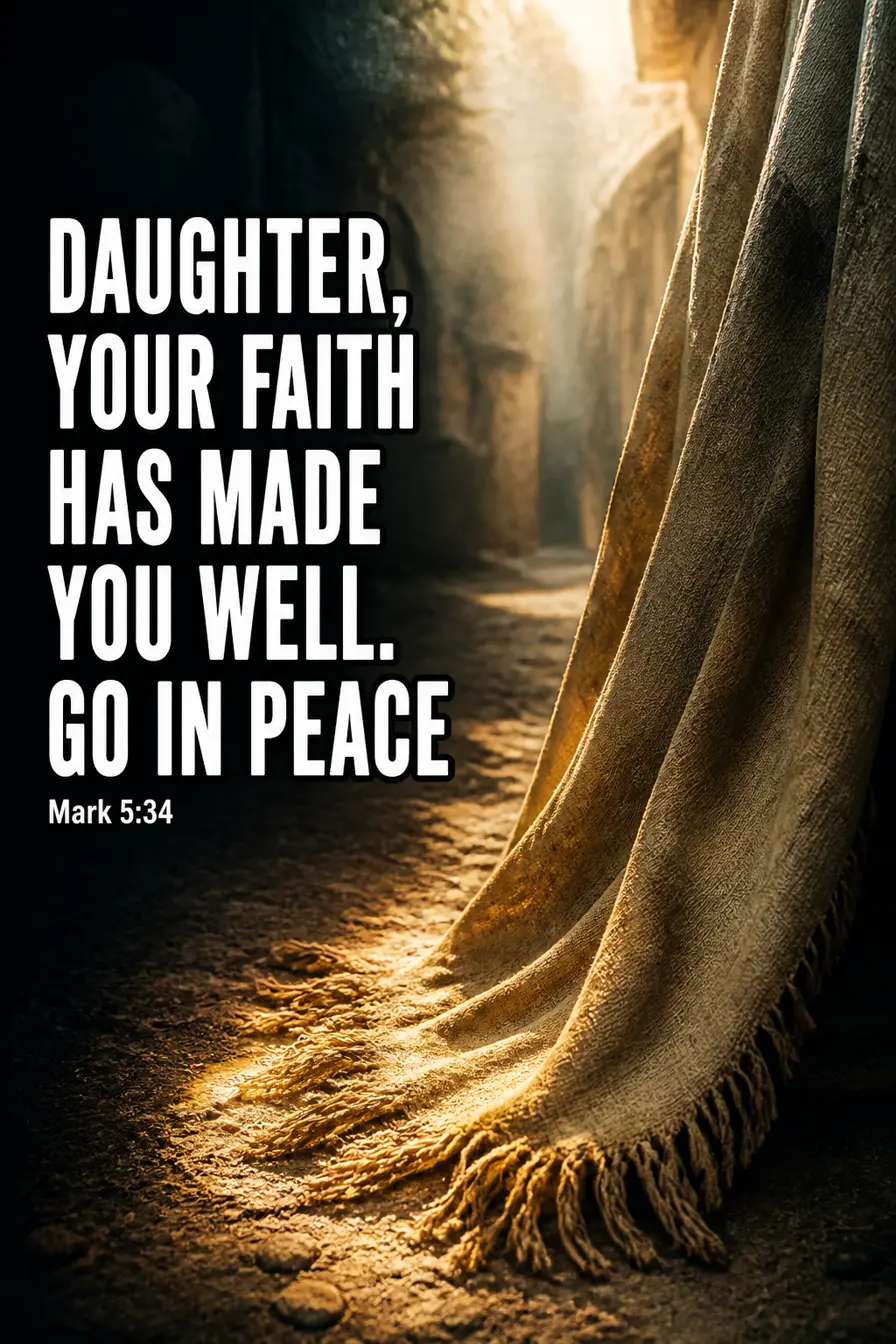
She had been bleeding for twelve years and had spent everything on doctors. Under the purity laws of Leviticus 15, a condition like hers made her ceremonially unclean the whole time — kept at the edge of worship and of ordinary touch. So she did not ask. She came up behind Jesus in a crowd, telling herself, “If I just touch his clothes, I will be made well.”
The healing happened at once. Then Jesus stopped, asked who had touched him, and kept looking until she came forward “fearing and trembling” and told him the whole truth. He did not let her slip away healed and still hidden. The first word he spoke to a woman nobody had touched in twelve years was “Daughter”.
Mark 10:52 — The Beggar Who Shouted Louder
“Go your way. Your faith has made you well.” — Mark 10:52 (WEBU)
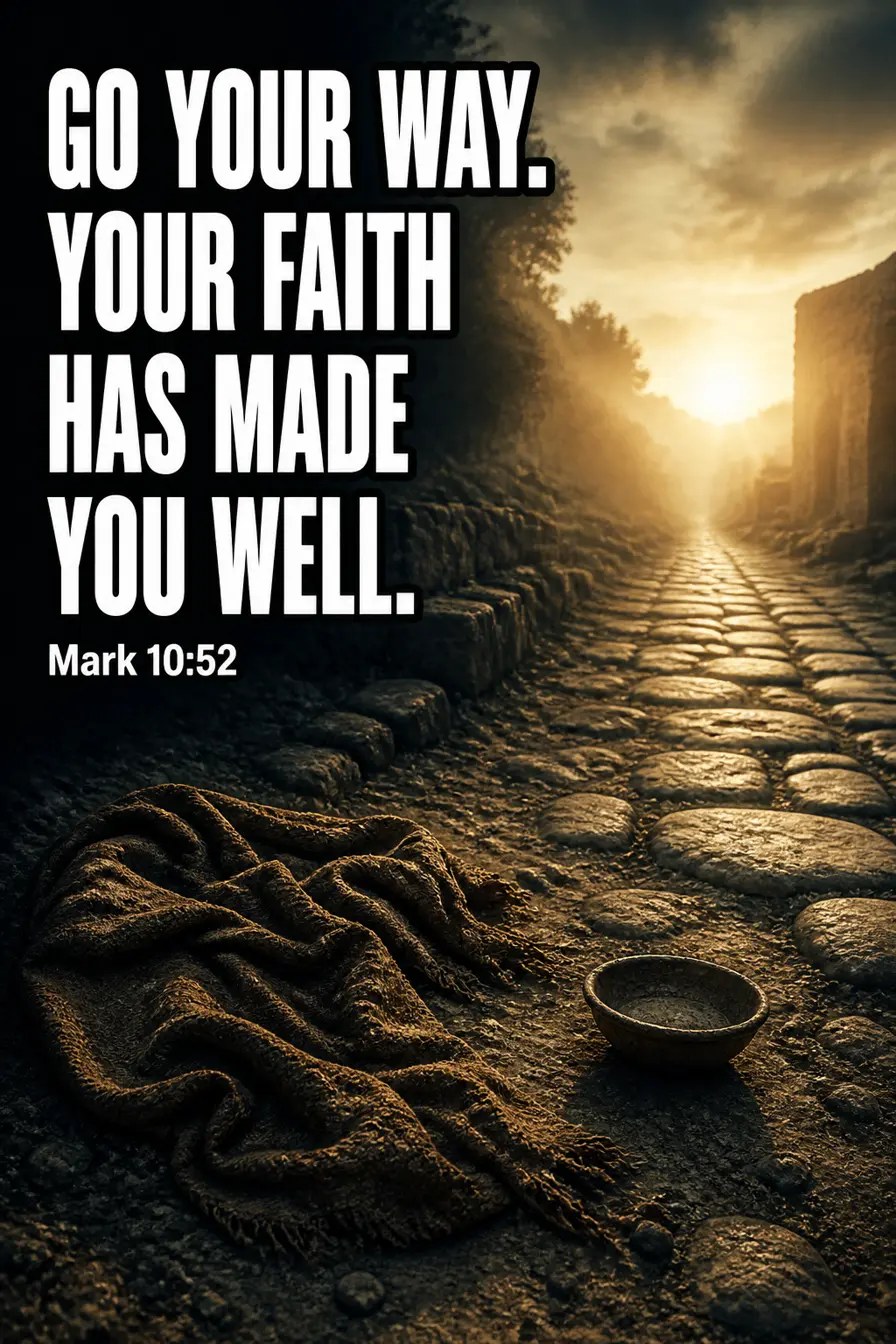
Bartimaeus sat begging by the road out of Jericho. When he heard Jesus was passing, he started shouting, “Jesus, you son of David, have mercy on me!” The crowd told him to be quiet. Mark records exactly what he did with that: “he cried out much more”. When Jesus called him, he threw off his cloak and came. Jesus asked him a question that sounds unnecessary: “What do you want me to do for you?” He made the man say it.
So faith here has two visible parts: refusing to be shushed, and naming what you want. Most of us manage the first and skip the second, praying in general terms because a specific request feels presumptuous. Jesus asked for the specific one.
Matthew 9:29 — Two Men Asked a Direct Question
“According to your faith be it done to you.” — Matthew 9:29 (WEBU)
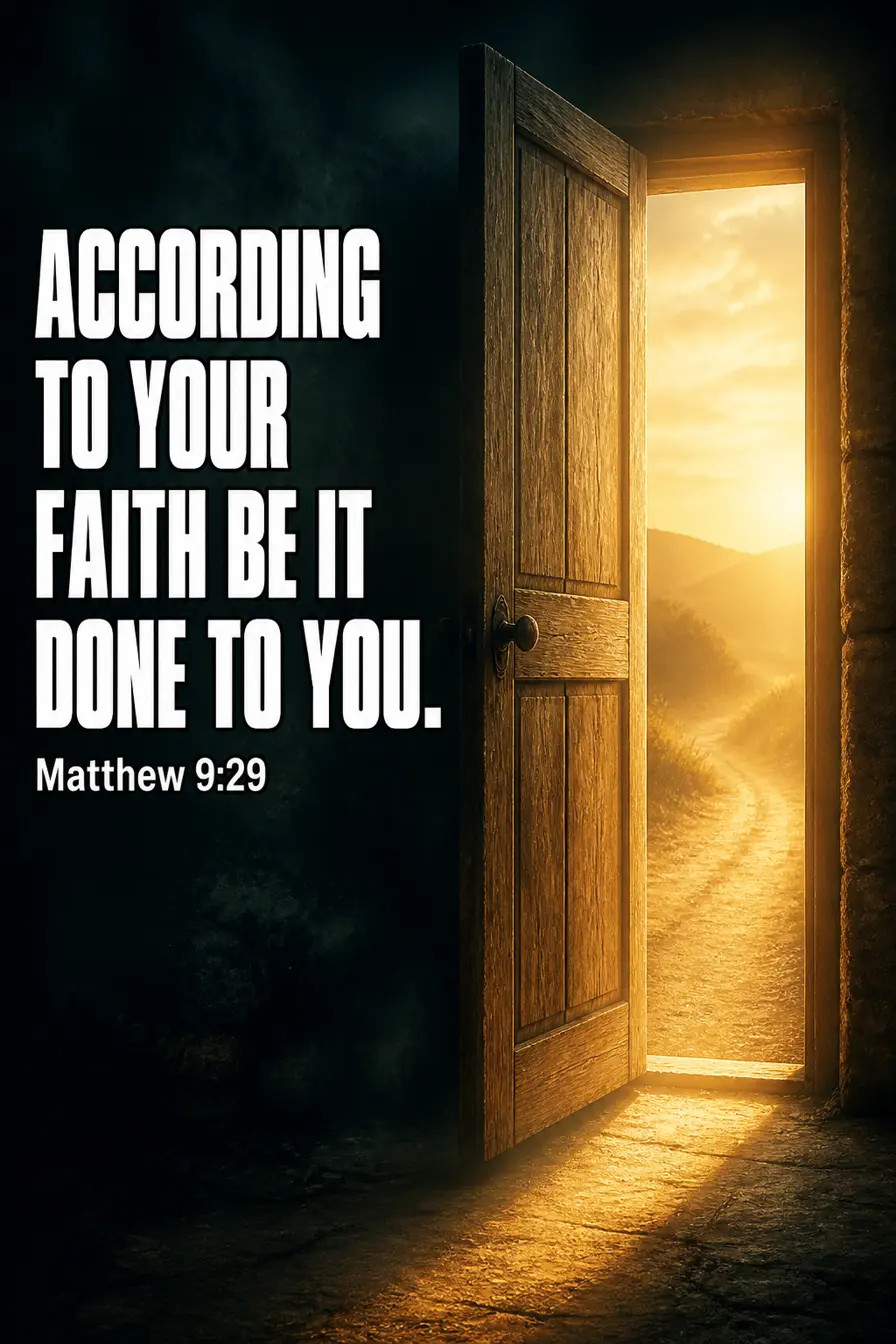
Two blind men followed Jesus down the road and then into the house, calling out the whole way. Inside, before anything happened, he asked them plainly: “Do you believe that I am able to do this?” They answered with two words: “Yes, Lord.”
Just an honest answer to a direct question about who he was and what he could do.
It is worth answering the same question yourself, about the specific thing you are carrying, without padding it. Not whether you feel strong in faith. Whether you believe he is able.
Mark 2:5 — Faith Seen Through a Hole in the Roof
“Jesus, seeing their faith, said to the paralytic, “Son, your sins are forgiven you.”” — Mark 2:5 (WEBU)
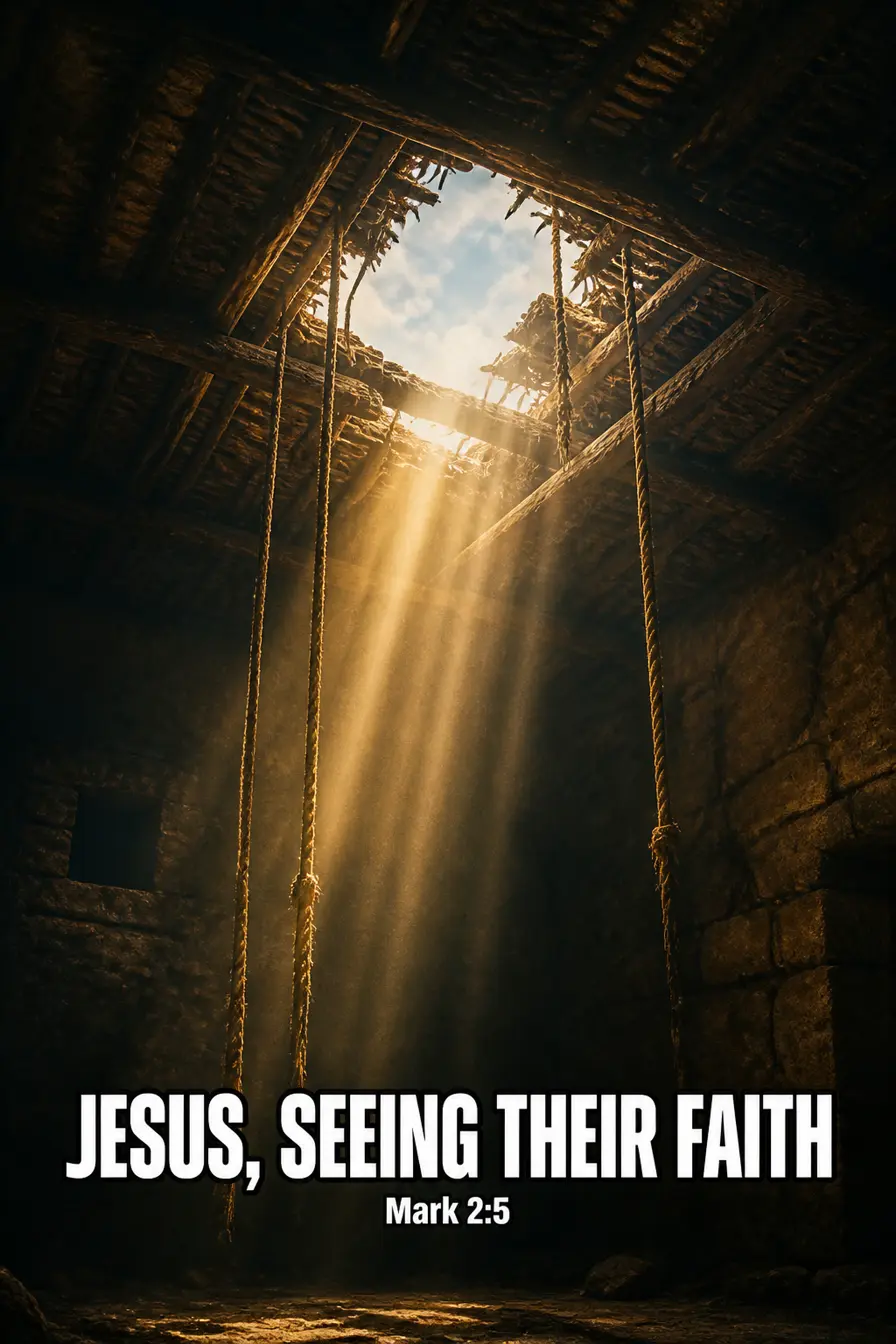
Four men carried a paralysed friend to a house in Capernaum so crowded nobody could reach the door. So they climbed onto the flat roof, broke it open, and lowered him on his mat into the room below.
Read the verse slowly: “seeing their faith”. The faith Jesus saw belonged to the friends. The man on the mat did not have to supply it.
That changes what you can do for someone whose faith has run out. You do not have to talk them back into believing. You can carry them — pray for them by name, show up, make the inconvenient trip. And if you are the one on the mat right now, the verse says something gentle: other people’s faith counts too.
Luke 17:19 — The One Who Came Back
“Get up, and go your way. Your faith has healed you.” — Luke 17:19 (WEBU)

Ten men with leprosy stood at a distance and called out to Jesus, because their disease kept them apart from everyone else. He told them to go and show themselves to the priests, and they were cleansed on the way. One of them, seeing it, turned back, shouting praise, and threw himself at Jesus’ feet. Luke adds the detail on purpose: “and he was a Samaritan.”
Jesus asked the obvious question — “Weren’t the ten cleansed? But where are the nine?” — and then said this verse to the one who returned. All ten were healed. Only one heard about his faith.
So faith in Luke is not finished when the prayer is answered. It turns round. When something you prayed for arrives, coming back to say so is part of believing, not an extra.
Luke 7:50 — Faith With No Miracle Attached
“Your faith has saved you. Go in peace.” — Luke 7:50 (WEBU)
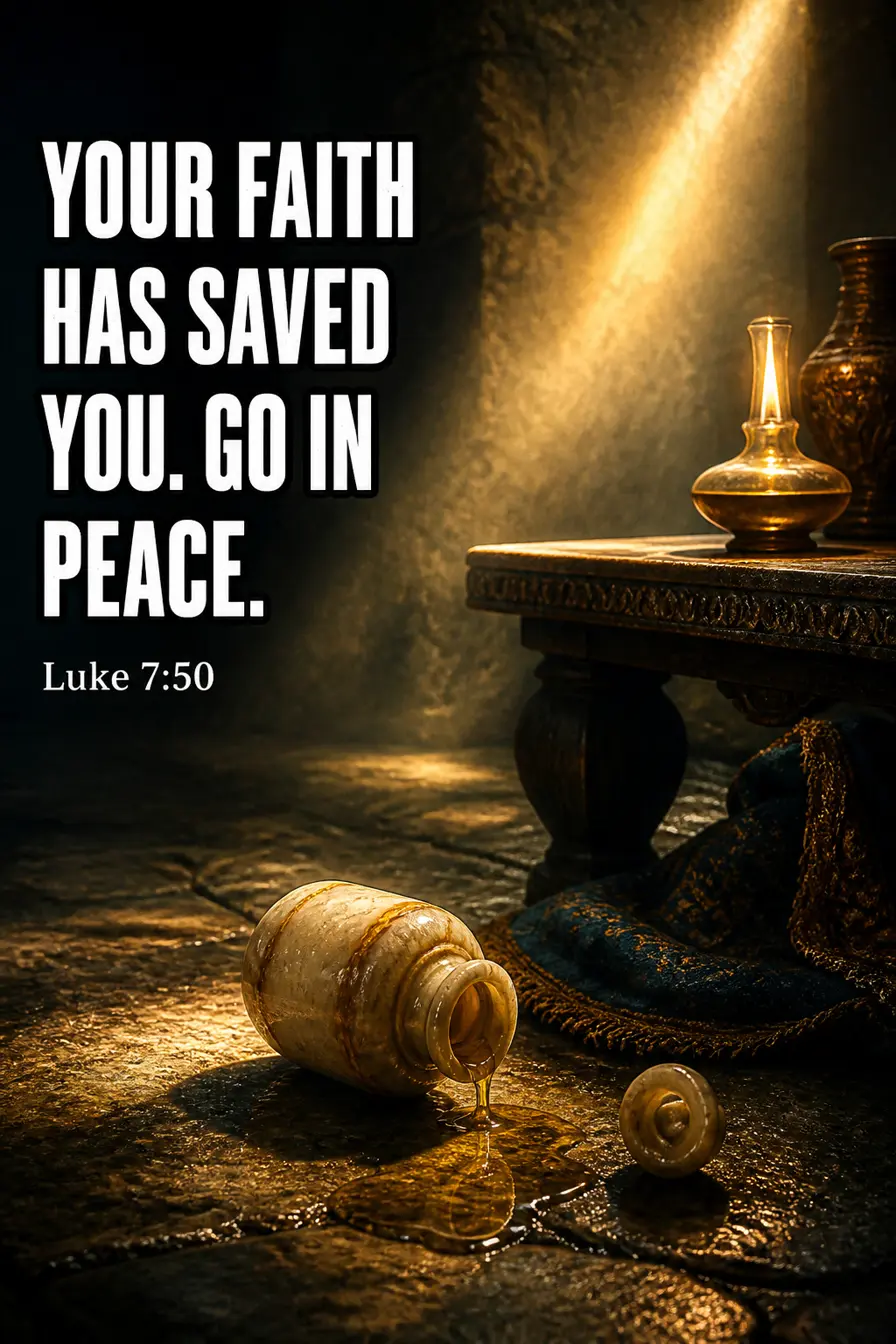
Jesus was eating at the house of a Pharisee named Simon when a woman known in the town as a sinner came in, wept over his feet, dried them with her hair and anointed them. Jesus told him a short story about two debtors, then said her many sins were forgiven, “for she loved much”.
There is no illness in this story and no healing. Yet Jesus uses the same words he uses over the miracles: your faith. Here it saved her — from the weight of what she had done.
That matters if you have only been looking for faith in dramatic answers. The quietest scene on this page gets the same words as the miracles.
“Little Faith”: What Jesus Said to His Own Friends
Mark 4:40 — The Question in the Storm
“Why are you so afraid? How is it that you have no faith?” — Mark 4:40 (WEBU)
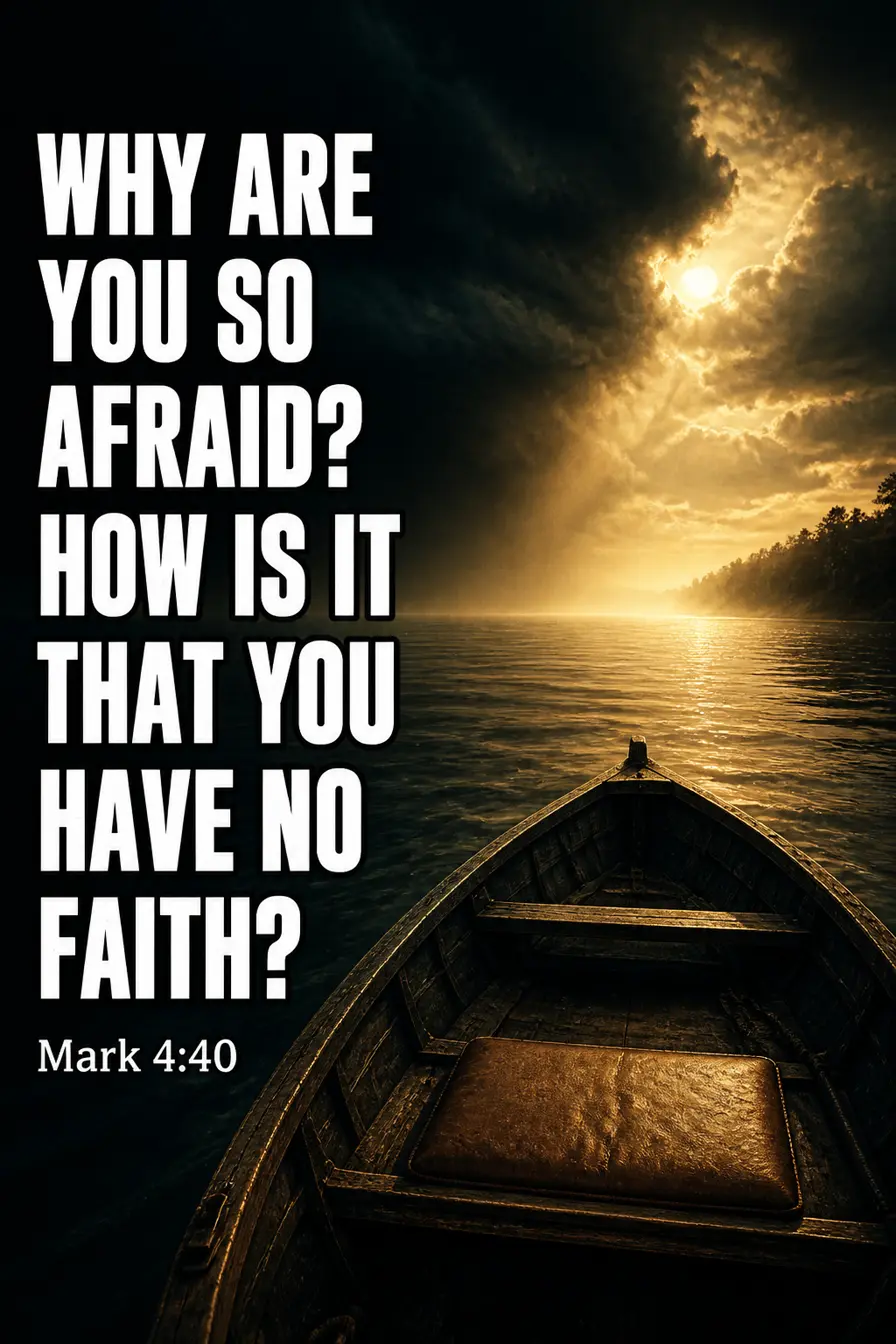
A storm came down hard enough to fill the boat with water, and they were sure they would drown. Jesus was asleep in the stern on a cushion. They woke him with an accusation: “Teacher, don’t you care that we are dying?”
He calmed the sea first, and asked the question second. He did not withhold help until they found their faith; he helped and then asked where it had gone.
Notice what their faithlessness sounded like. Not “we do not believe in you” but “you do not care”. Fear rarely questions whether God exists. It questions whether he is paying attention. If that is the shape your fear takes, this boat is a good place to bring it — and to remember who was asleep in it.
Matthew 14:31 — Said While Holding Him Up
“Immediately Jesus stretched out his hand, took hold of him, and said to him, “You of little faith, why did you doubt?”” — Matthew 14:31 (WEBU)
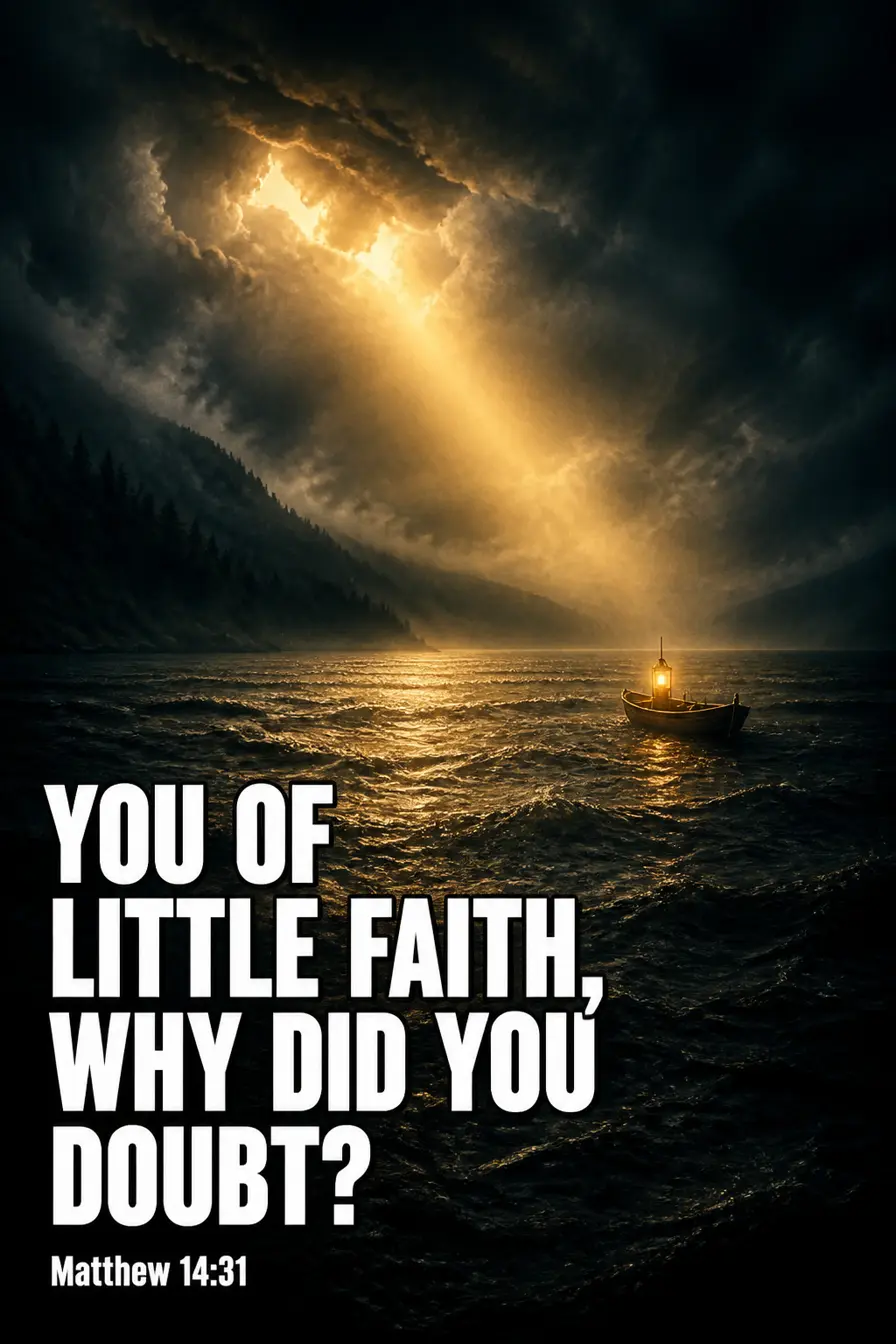
Peter asked to walk on the water, was told “Come!”, and did it. Then he saw the wind, was afraid, and began to sink, crying, “Lord, save me!”
“Immediately” comes first, then the hand, then the grip, and only then the words. Jesus said “little faith” to a man he was already holding up.
The Greek word for doubt here, distazō, pictures a mind pulled two ways. It appears in only one other verse in the New Testament: Matthew 28:17, where some of the disciples doubted even while worshipping the risen Jesus. And Peter was the only one who got out of the boat. Little faith that steps out still counts for more than none.
Luke 17:6 — Asking for More, Told to Use What You Have
“If you had faith like a grain of mustard seed, you would tell this sycamore tree, ‘Be uprooted and be planted in the sea,’ and it would obey you.” — Luke 17:6 (WEBU)
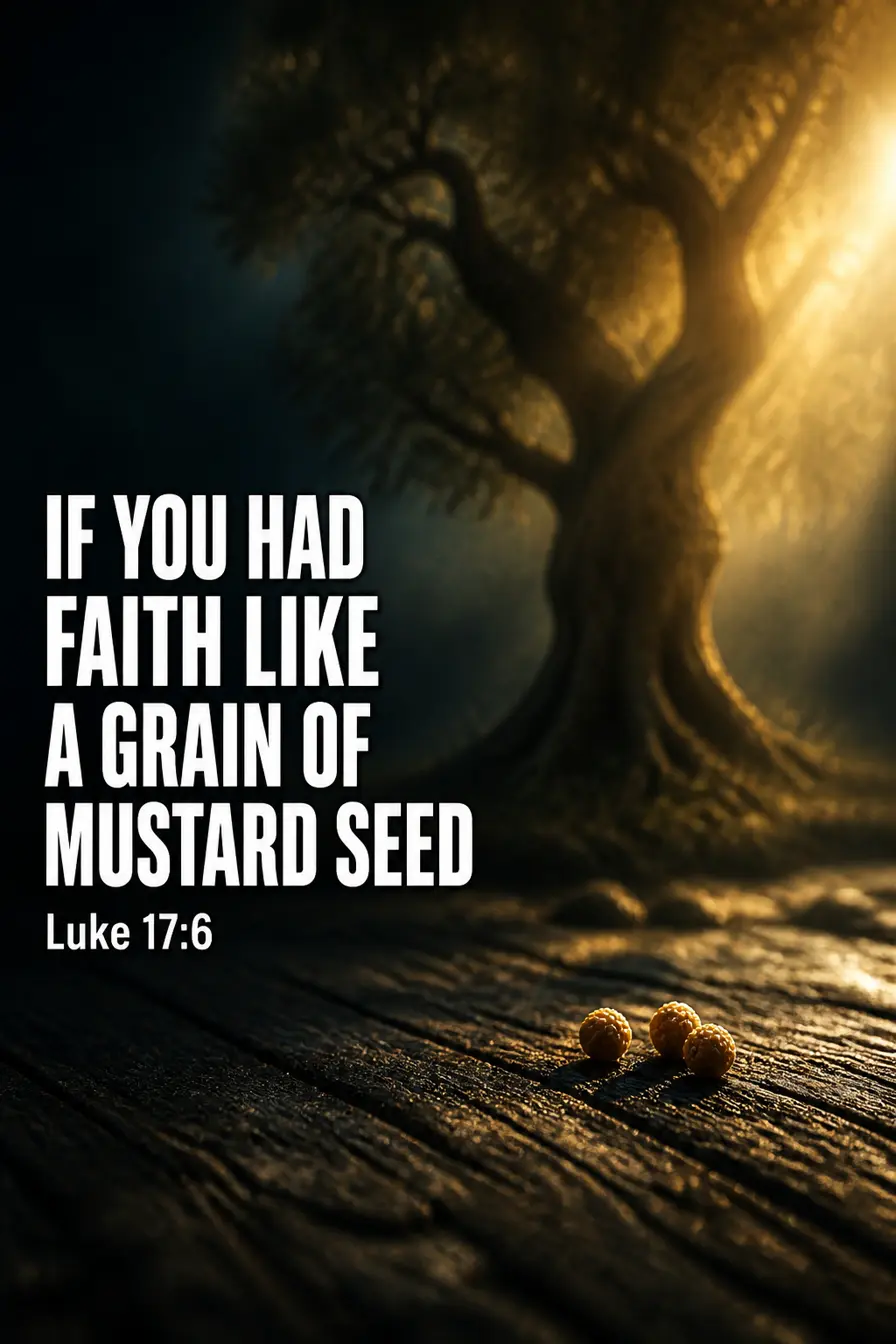
Look at what came just before. Jesus had told his apostles to forgive a brother who wrongs them seven times in one day and comes back seven times saying he repents. Their answer was a prayer: “Increase our faith.”
His reply refuses the premise. A mustard seed is tiny. The question is not how much faith they have but whether they use it — and a tree uprooted and planted in the sea is an absurd picture on purpose, to show that size was never the problem.
You may have prayed the apostles’ prayer about something you are being asked to do. Jesus’ answer is not a top-up. It is permission to start with the small amount you already hold.
The Question Jesus Left Open
Luke 18:8 — Will He Find Faith?
“when the Son of Man comes, will he find faith on the earth?” — Luke 18:8 (WEBU)
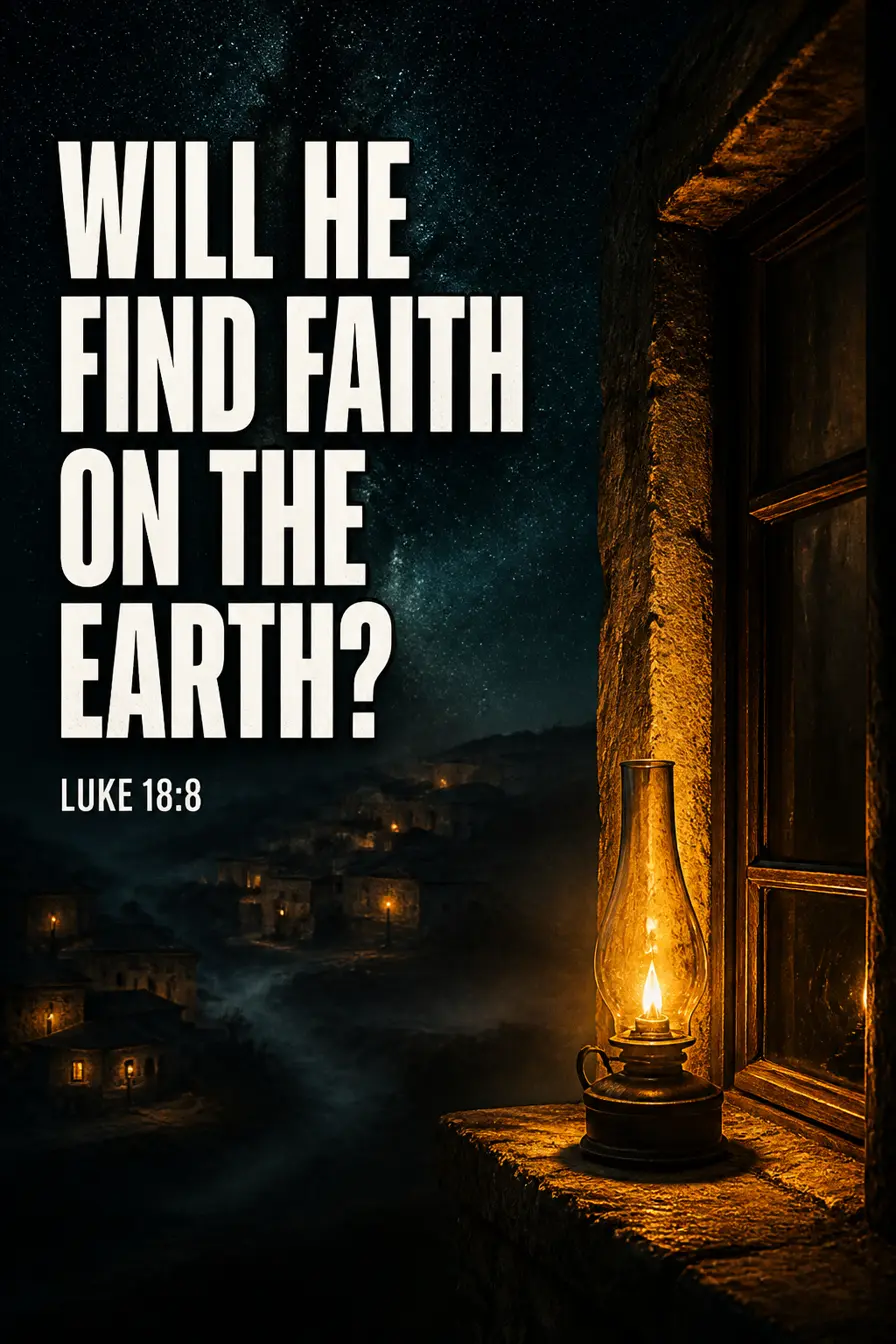
Luke introduces the story before this verse with its purpose stated plainly: Jesus told it so that they “must always pray and not give up”. A widow keeps coming back to an unjust judge who has no interest in her case, until he gives her justice just to be rid of her.
Then he ends on a question, not a promise. Will he find faith? In this passage, faith means the widow’s kind: the one who keeps coming back.
It is the only question on this page left for you to answer.
What the Pattern Says About Your Faith
Put the twelve verses side by side:
- Faith is usually visible. Jesus “saw” faith on a roof and heard it from a roadside. In almost every case it was something people did: came close, argued, shouted, turned back, kept asking.
- It turned up in the wrong people. The two times he calls faith great, he says it to foreigners.
- It did not need to be large. Two words answered his question. A seed was enough. Friends’ faith carried a man who could not walk.
The pattern says something more useful than a feeling of certainty: you do not need to feel certain before you act. You need to come close, ask plainly, and come back.
Frequently Asked Questions
What is a powerful Bible verse for faith?
Hebrews 11:1 is the closest the Bible comes to a definition: “Now faith is assurance of things hoped for, proof of things not seen.” Many readers also name Mark 9:24, the father’s cry “I believe. Help my unbelief!”, because it is the prayer people actually pray when their faith feels thin. Our hope and faith verses read both in context.
What Bible verse says faith without works is dead?
James 2:26: “For as the body apart from the spirit is dead, even so faith apart from works is dead.” James is not saying works earn anything. He is saying living faith moves, the way it moved on the roof in Capernaum and on the roadside at Jericho.
Are we saved by faith or by works?
Paul answers in Ephesians 2:8-9: “for by grace you have been saved through faith, and that not of yourselves; it is the gift of God, not of works, that no one would boast.” Paul and James describe the same faith from two sides: received as a gift, and visible in what a person does.
How can you grow your faith?
The apostles asked for exactly that in Luke 17:5, and Jesus answered that a mustard seed of faith is enough if it is used. Paul adds where faith comes from: “So faith comes by hearing, and hearing by the word of God” (Romans 10:17). In practice, read the Gospel stories themselves, not just verses about faith, and act on the small amount you have.
What did Jesus say about faith?
He named it in specific people far more often than he explained it. He called the faith of a Roman centurion and a Canaanite mother great, told several people “your faith has made you well”, and asked his own disciples why they had so little. He also asked whether he would find faith on the earth when he returns (Luke 18:8).
Where to Go Next
Choose one person from this page whose faith looks like yours — the one shouting from the roadside, the one carried by friends, the one sinking with a hand already on them — and read their whole story in the Gospel today.
More on trusting God when it is hard sits in the faith archive, and if fear is what is crowding your faith out, our Bible verses about fear start in the same storm-tossed boat. If you want something small enough to carry, twelve short verses with the lines around them each fit on a card.