Jesus wept. Two words, and the shortest verse most people can name.
Of the 105 verses in the Protestant Bible that run to three words or fewer in this translation, five are complete sentences. The other hundred are lists of towns in Joshua, ancestors in Chronicles, “Then Job answered,” and at one point “sixty-one thousand donkeys”. They are short because of where somebody drew a line, not because anyone meant them as a saying. Chapters were added to the Bible in the thirteenth century, and the New Testament’s verse numbers come from an edition a French printer, Robert Estienne, published in 1551.
The difference is worth knowing if you are looking for short Bible verses to memorize or carry through a week. Some are short on purpose. Others are fragments cut loose, and they mean something different outside the sentence they came from.
These twelve are the first kind: each one stands up alone. For each we have added what the surrounding lines contribute, because context rarely weakens a short verse. Usually it sharpens it.

Finding Purpose
Discover your unique purpose. You are God's masterpiece.Jeremiah 29:11 · 12 min
That was just the opening. Open the app and search #007 to hear the full 12-minute story — free.
Keep listening free in the app Free on iOS & Android — no sample needed


Short Bible Verses That Were Short on Purpose
Luke 17:32 — Three Words That Carry a Whole Chapter
“Remember Lot’s wife!” — Luke 17:32 (WEBU)

Jesus did not need to tell the story. His listeners knew it: Lot’s family was led out of Sodom before its destruction, and Lot’s wife “looked back from behind him, and she became a pillar of salt.”
The line before it is what makes it land. He has just described a day when the person on the housetop should not go down for their goods, and the person in the field should not turn back. So the warning is not about curiosity. It is about going back for things. Most of us are not tempted to stare at a burning city; we are tempted to return for the old arrangement, the thing already decided against. Three words is exactly the length of something you can say to yourself at the door.
1 Thessalonians 5:19 — What Gets Put Out by Being Ignored
“Don’t quench the Spirit.” — 1 Thessalonians 5:19 (WEBU)
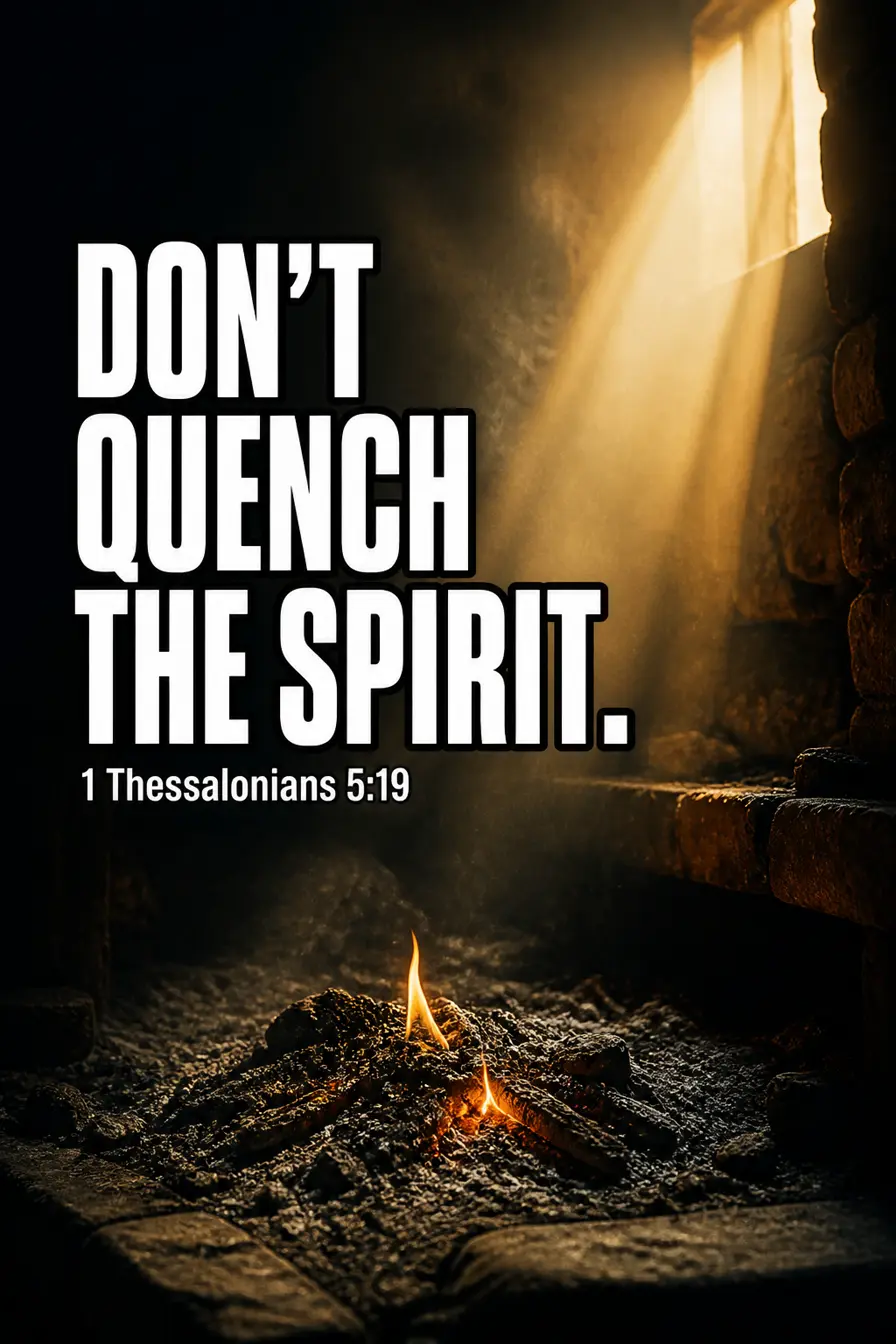
Quench is fire language — what you do to flames with water. Something is already burning, and the instruction is not to put it out.
Read it in its row and it gets clearer. The end of this letter is a burst of short commands: always rejoice, pray without ceasing, give thanks, don’t quench the Spirit, don’t despise prophecies, test all things. They read like instructions called after somebody leaving. The quenching in view is the ordinary kind — the impulse to pray that gets talked down, the conviction dismissed as overthinking. Nobody drowns a fire on purpose. It goes out because nobody fed it.
Luke 1:37 — A Promise About Promises
“For nothing spoken by God is impossible.” — Luke 1:37 (WEBU)
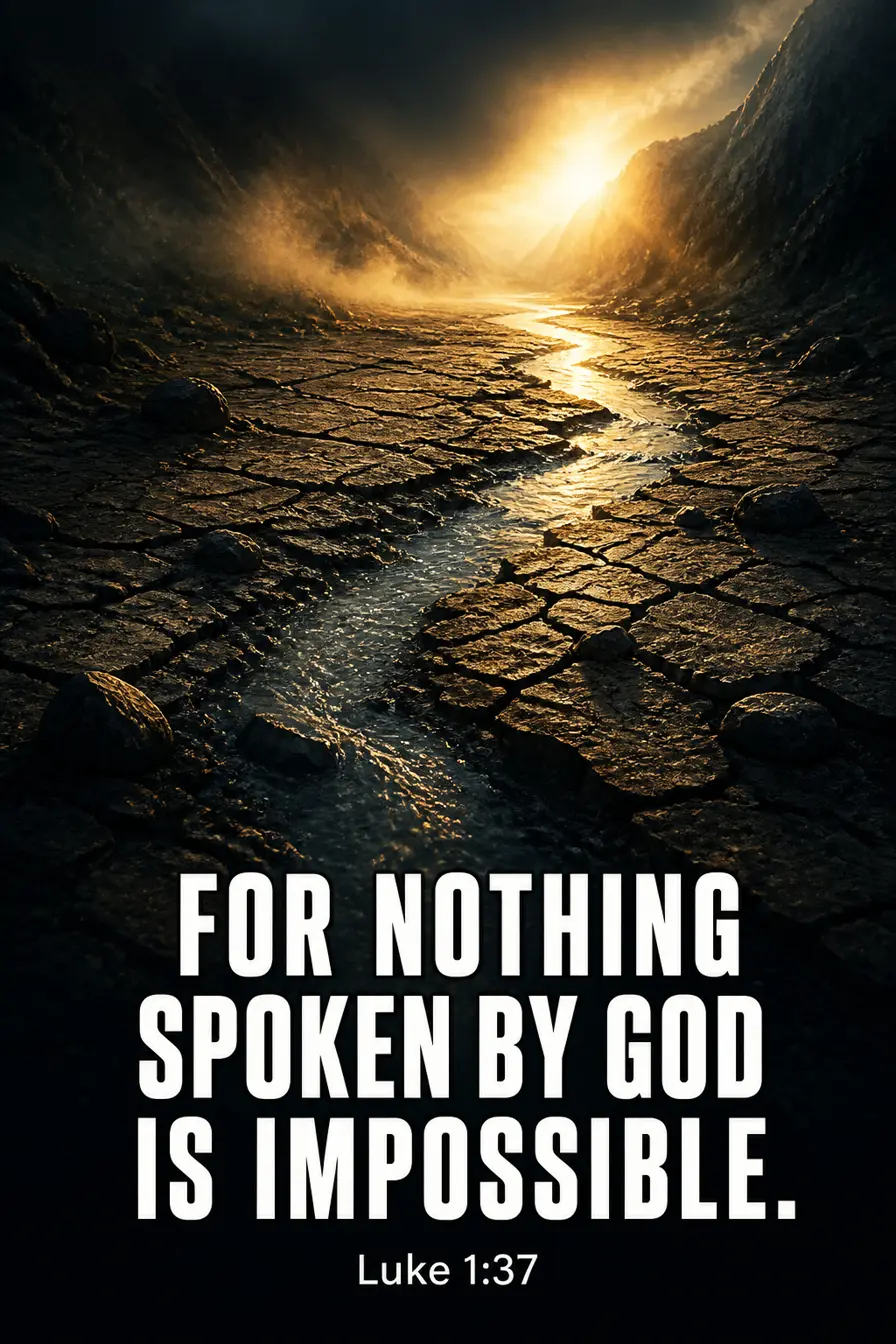
Most people know this as “nothing is impossible with God”, which turns it into a general statement about power. This translation keeps something the Greek has: the claim is about what God has spoken.
The setting confirms it. The angel says it to Mary right after pointing to her relative Elizabeth — old, “called barren”, and now six months pregnant. The evidence offered is not a display of strength but a word that had already come true. That is a narrower claim than the fridge-magnet version and a sturdier one. Not that anything you want can happen, but that what God has actually said will.
Short Verses About Who God Is
Genesis 1:1 — The Book Opens by Insisting on an Author
“In the beginning, God created the heavens and the earth.” — Genesis 1:1 (WEBU)
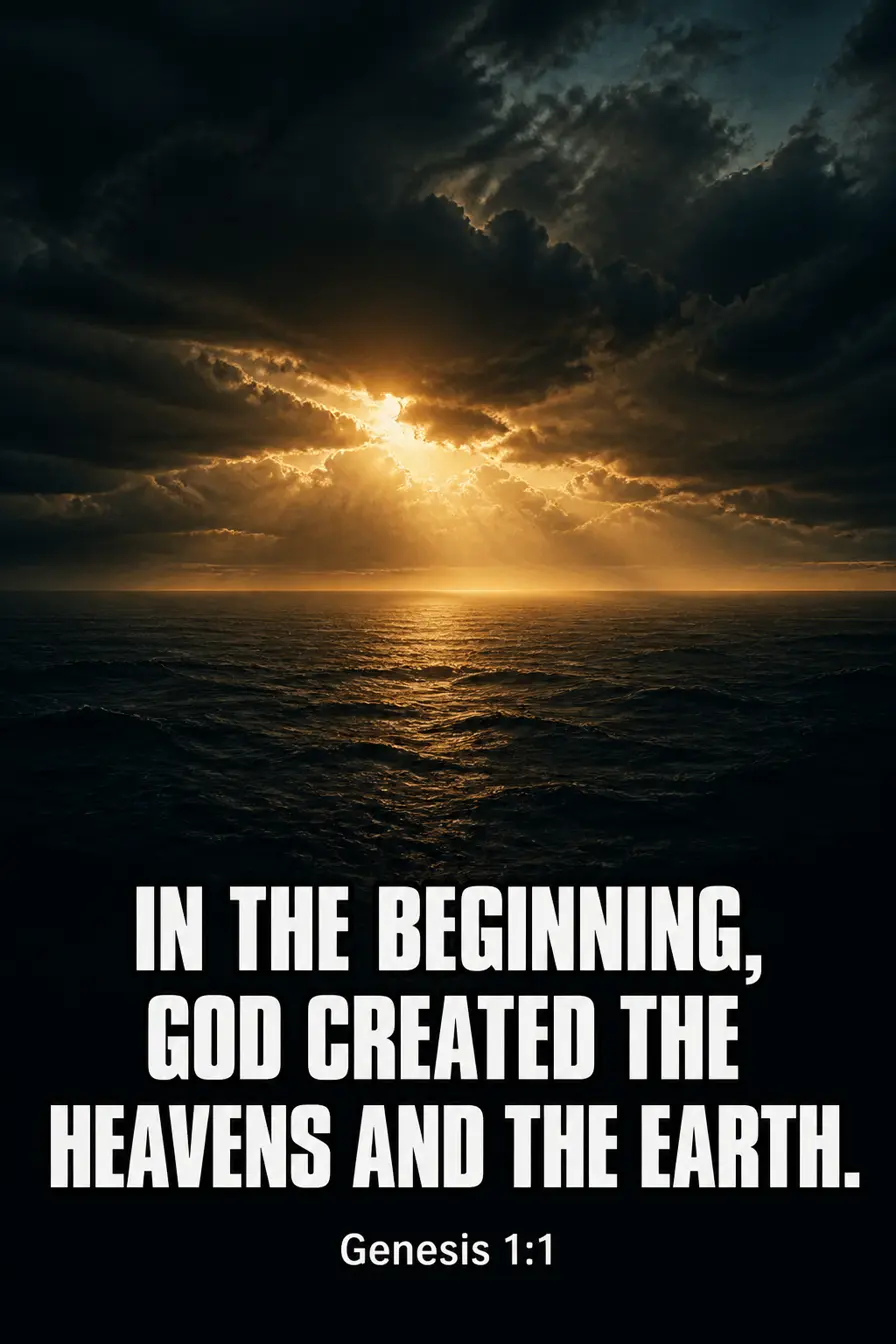
Ten words, and the first thing they claim is that there was a beginning at all — that the world is neither eternal nor an accident, but started.
The verb carries more than it shows. “Created” translates a Hebrew word the Old Testament uses only with God as its subject. People make, build and shape things throughout the Bible, but this verb is reserved. So the opening line does not make the world ordinary; it marks it as something only one agent could have done. On a week when your life feels like a string of things that happened to you, the book you are reading opens by insisting there is an author.
1 John 4:8 — The Half the Slogan Leaves Out
“He who doesn’t love doesn’t know God, for God is love.” — 1 John 4:8 (WEBU)
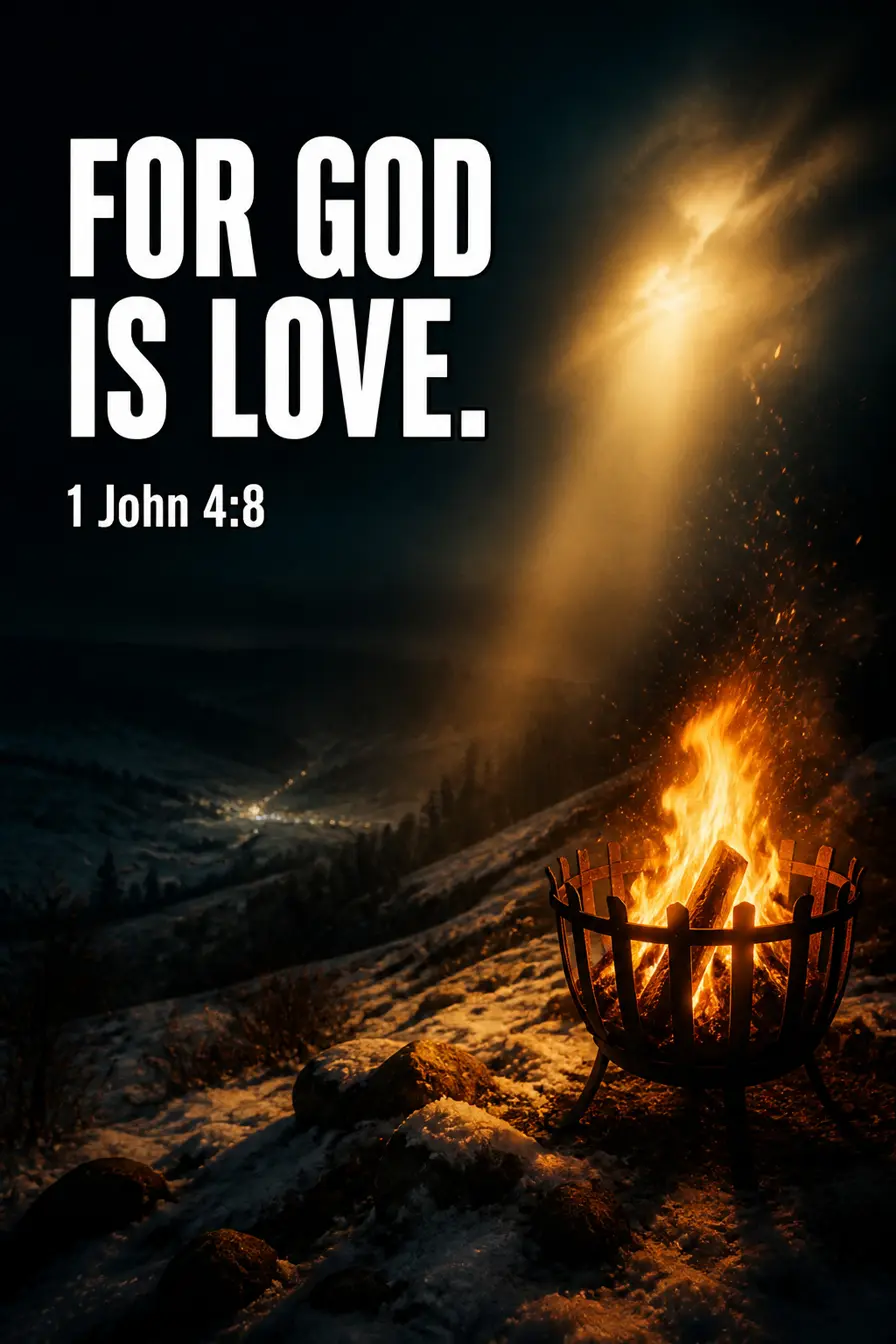
“God is love” gets printed as a three-word slogan, and the slogan drops the half of the sentence doing the work. The verse opens with a test.
That changes its direction. The line is not mainly a comforting fact about God’s temperament; it is a diagnostic about us. Knowing God is measured by whether we love, and the reason given is that love is what he is. So the short version is true, and the full version is sharper — nobody gets to claim the second half without being examined by the first.
Hebrews 13:8 — Written for When the Teachers Are Gone
“Jesus Christ is the same yesterday, today, and forever.” — Hebrews 13:8 (WEBU)

Read the verse before it: “Remember your leaders, men who spoke to you the word of God, and considering the results of their conduct, imitate their faith.” The tense is past. Those leaders had died.
So verse 8 lands as a contrast, not a slogan. The people who taught you change, age and are buried; the one they taught about does not. If your faith was bound up with a particular pastor, parent or teacher who is no longer here, this is the verse written for exactly that loss. What they gave you was never about them.
Short Bible Verses for Strength in a Hard Week
Lamentations 3:25 — Written at the Centre of the Ruins
“The LORD is good to those who wait for him, to the soul who seeks him.” — Lamentations 3:25 (WEBU)
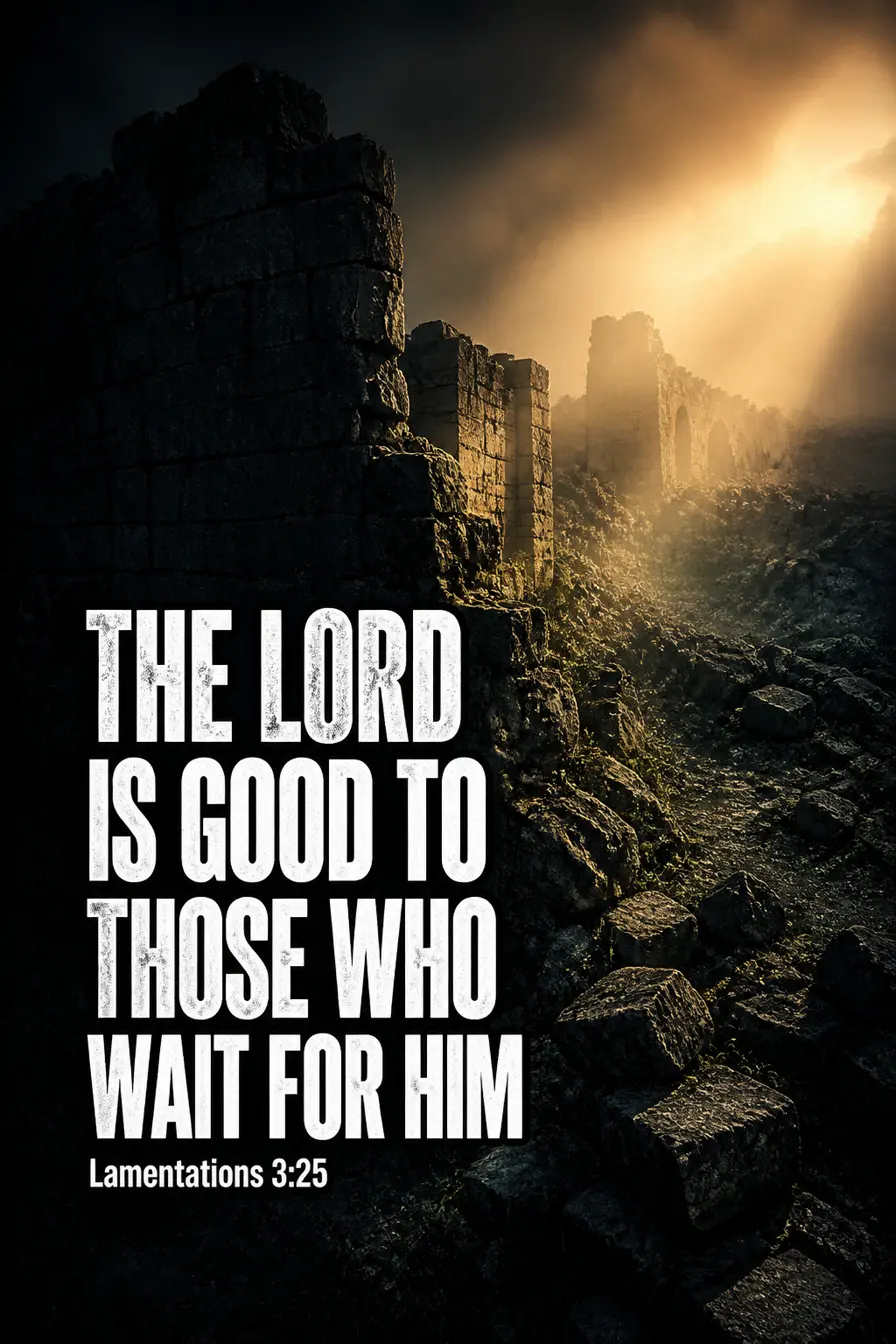
Lamentations is five poems written over Jerusalem after it was burned, and this line sits at the centre of the book. Nearly everything around it is grief.
The claim is small and precise. God is good to those who wait for him — not to those who have understood, recovered, or stopped hurting. The next verse adds that it is good to “hope and quietly wait”. Waiting here is not passive. It is the posture of somebody who has run out of moves and is choosing, deliberately, not to call the story finished. In a week when nothing can be fixed, it is the one thing left that still counts as doing something.
2 Corinthians 5:7 — A Fragment About Dying, Not Deciding
“for we walk by faith, not by sight.” — 2 Corinthians 5:7 (WEBU)
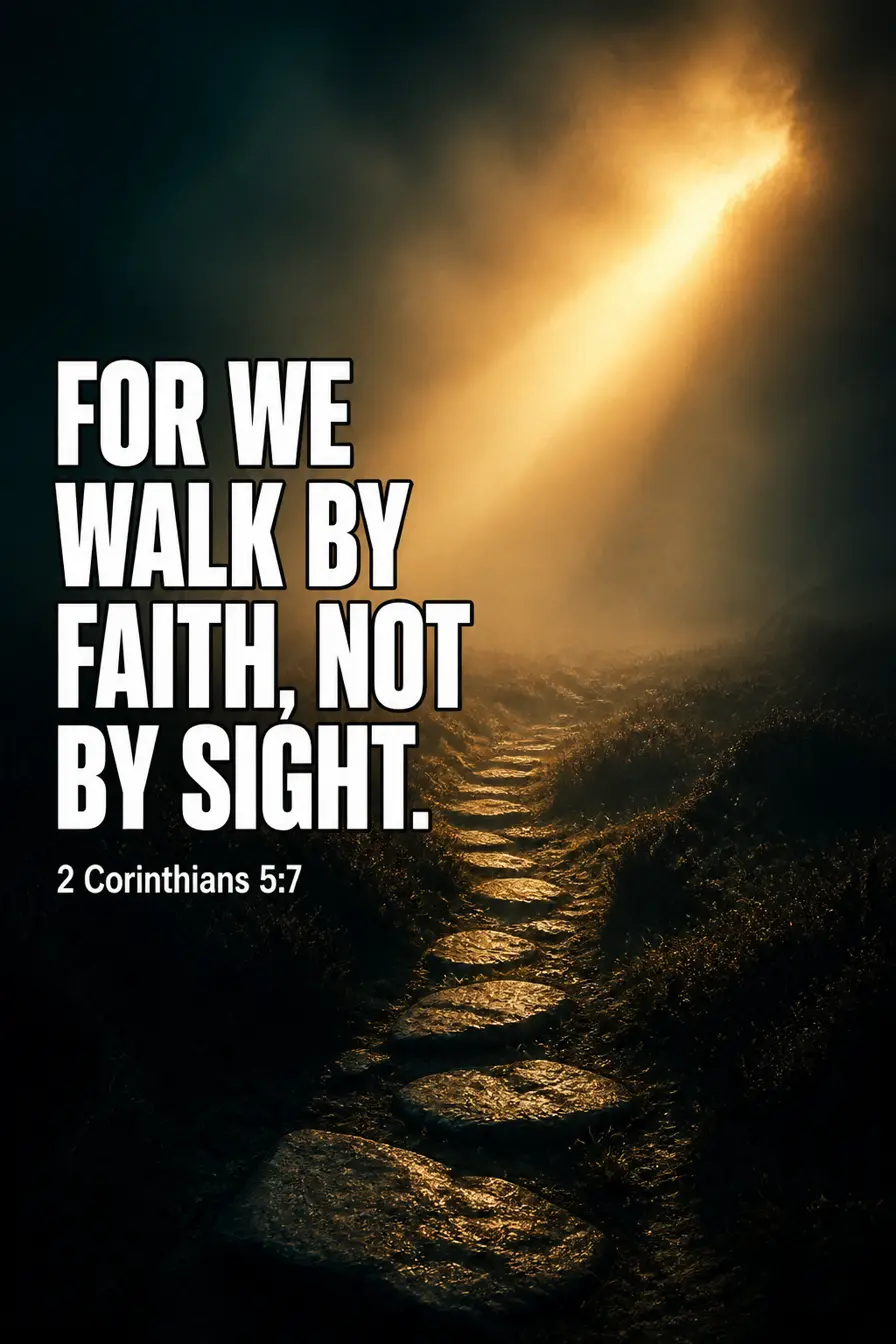
The lowercase first letter gives it away: this is an aside dropped into the middle of a sentence, which is why some translations put it in brackets.
And the sentence is not about making bold choices. It is about death. Paul writes that while we are at home in the body we are absent from the Lord, and that he would rather be “absent from the body and to be at home with the Lord”. Walking by faith is his description of living in the meantime — carrying on while the thing that matters most is not yet visible. It is less a slogan for decisions than a description of getting through a life that will not show you its ending.
Isaiah 40:8 — It Agrees With You About People
“The grass withers, the flower fades; but the word of our God stands forever.” — Isaiah 40:8 (WEBU)
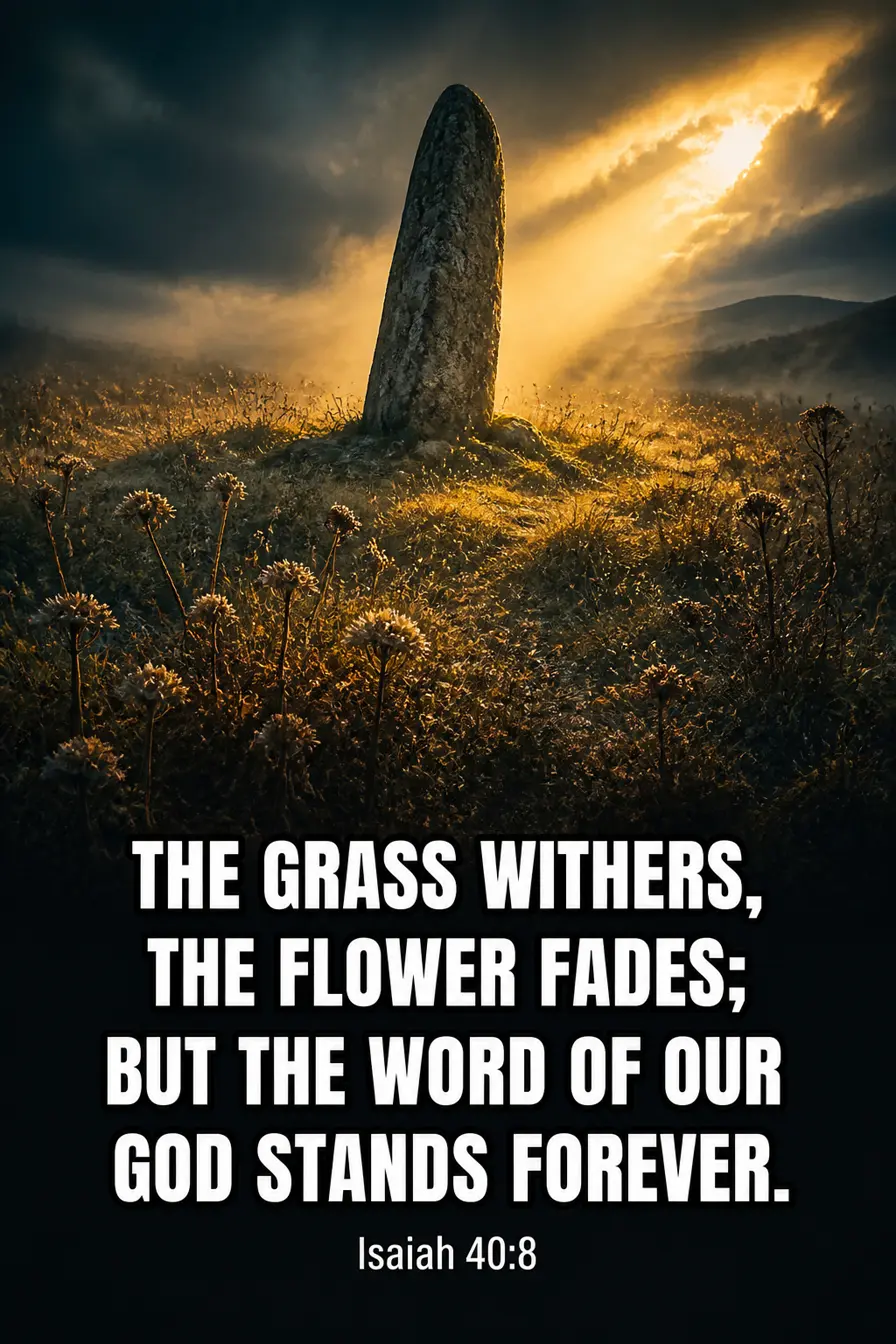
The verse begins mid-conversation. Two lines earlier a voice says “Cry out!”, another asks what to cry, and the answer is that all flesh is like grass. The withering is the prophet’s message about us.
Then the turn. This chapter opens the part of Isaiah written to exiles, and the comfort offered is not that people are durable. It is that something other than people is. If you have been let down by somebody who meant every word at the time, the verse does not argue. It agrees with you about people, and points somewhere else.
Short Scripture Verses to Live By
1 Corinthians 16:14 — The Qualifier on Everything Before It
“Let all that you do be done in love.” — 1 Corinthians 16:14 (WEBU)
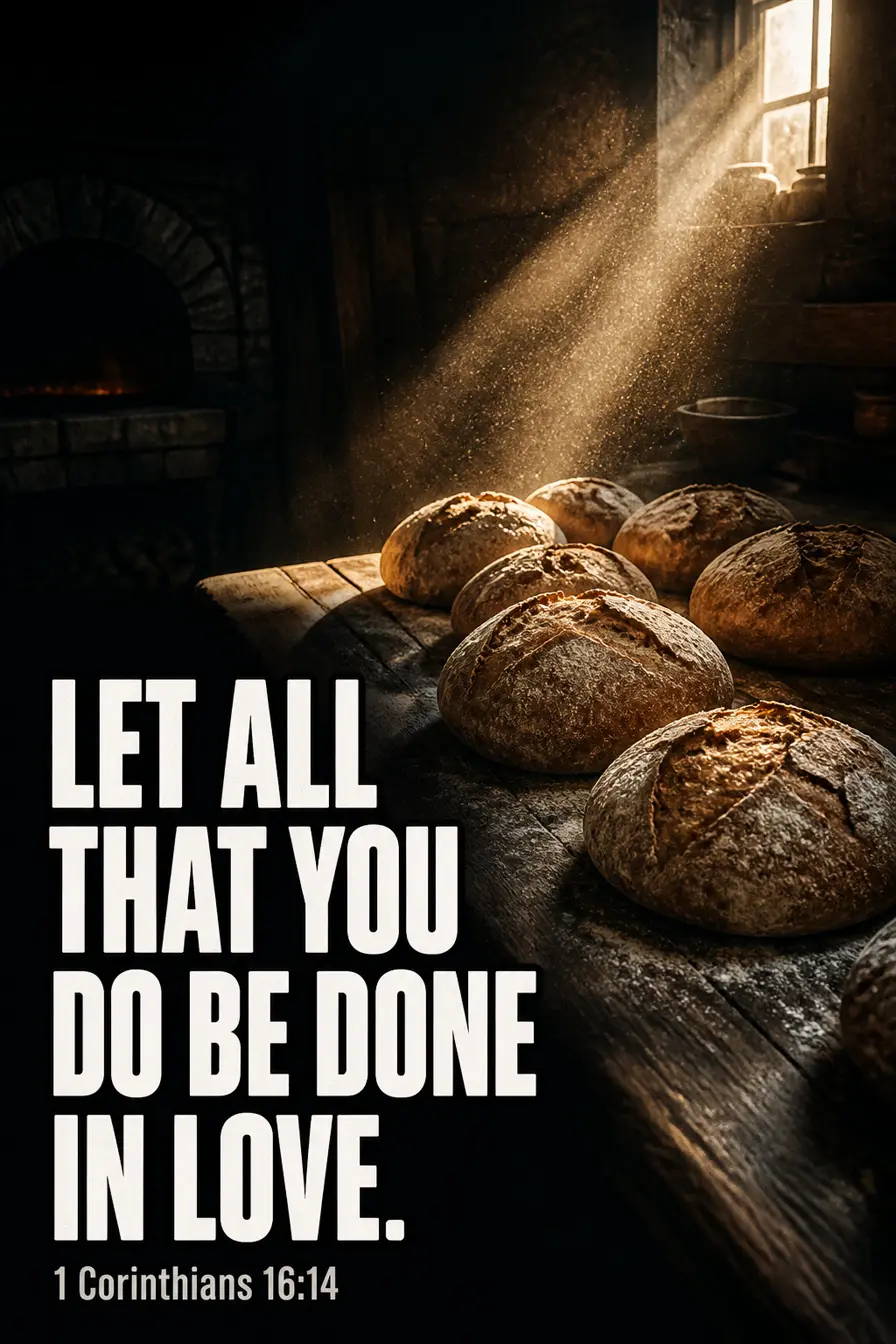
It closes a run of short commands, and the four before it sound like orders on a parade ground: “Watch! Stand firm in the faith! Be courageous! Be strong!”
Then this. Paul has spent sixteen chapters on a church that was confident, clever, divided and taking its own members to court, and his last word on strength is that all of it be done in love. The order is deliberate. Firmness without love is how that church got into trouble. Read as a set, this verse is the condition attached to everything before it — including every argument you happen to be right about.
John 8:32 — Not a Motto About Knowledge
“You will know the truth, and the truth will make you free.” — John 8:32 (WEBU)

This is carved over library doors as a motto about education. That is not what it is.
The sentence starts a verse earlier, with a condition: “If you remain in my word, then you are truly my disciples.” Knowing the truth and being made free come after remaining — staying, continuing, being shaped over time. The listeners bristled at the word “free” straight away, insisting they had never been slaves to anyone. The freedom in view is not information. It is what happens to someone who keeps listening long enough to change.
Psalm 90:12 — A Request to Be Taught Subtraction
“So teach us to count our days, that we may gain a heart of wisdom.” — Psalm 90:12 (WEBU)
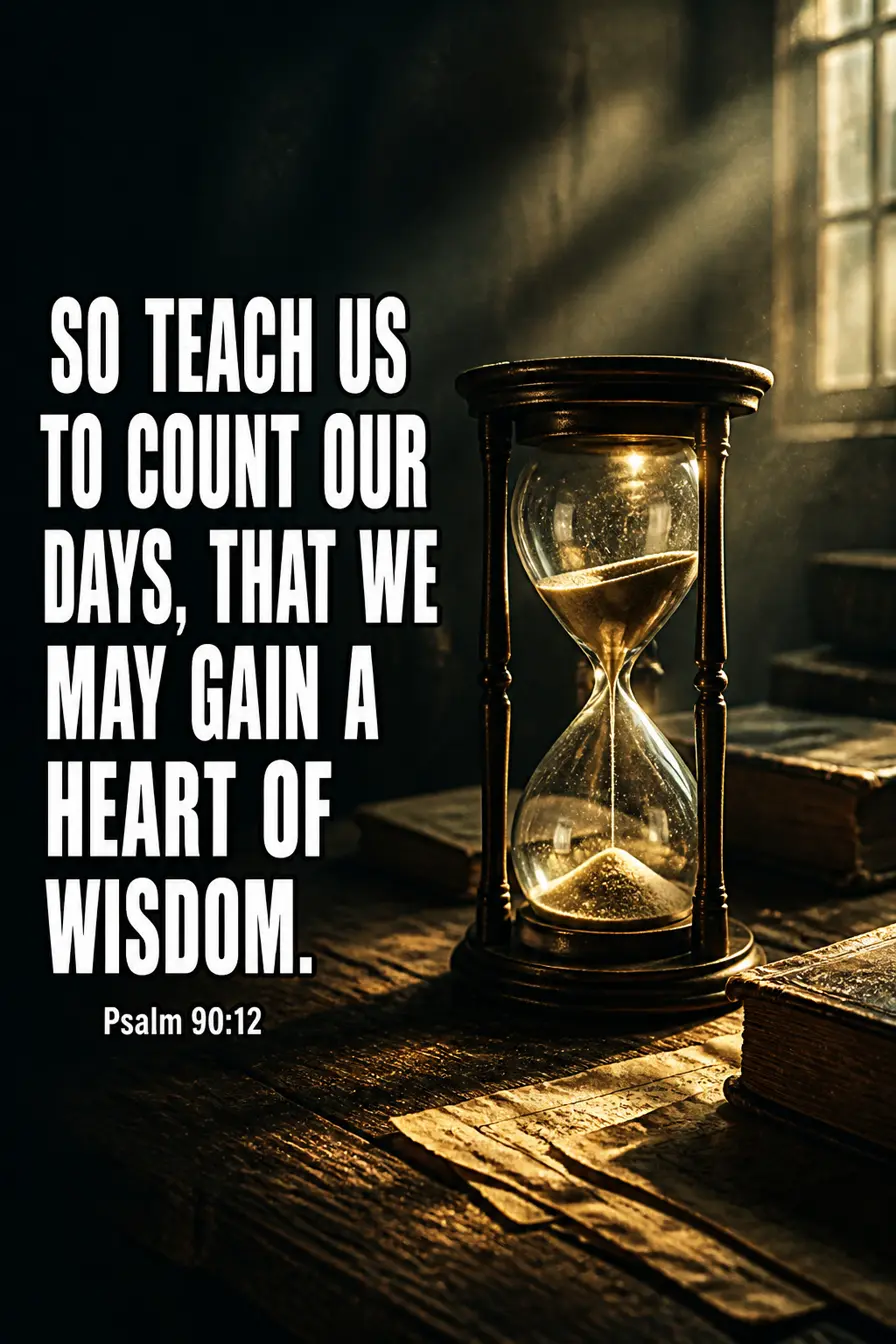
Psalm 90 is headed “A Prayer by Moses, the man of God” — the only psalm attributed to him. Two verses earlier it gives the arithmetic: seventy years, eighty by strength, and those pass quickly.
So “count our days” is meant literally. It asks to feel the number rather than know it in the abstract, and the wisdom is what the counting produces. Most of us live as if the supply were unlimited, which is why so many days go on things we would never choose if we could see the total. A good verse for a birthday. A better one for a Monday.
How to Memorize a Short Bible Verse in a Week
Pick one of these twelve and keep it for seven days. Only one.
Write it by hand on something you will see — a card by the kettle, the inside of a notebook — rather than a phone wallpaper, which disappears from view within a day. Each time you notice it, read the two or three verses around it once as well. By Thursday the short line will bring the longer passage with it, and that is the whole reason for choosing verses that are complete: when the moment comes, three words are enough to call up the chapter.
If you want to memorize more than one, add the second only after the first comes back without effort. Short verses are easy to learn and easy to lose, and the ones we keep are the ones we used.
Frequently Asked Questions
What is the shortest verse in the Bible?
In English it is John 11:35, “Jesus wept.” It comes at the tomb of his friend Lazarus, moments before Jesus raises him — so the grief is real even though he knows how the day will end. In the original Greek the shortest is 1 Thessalonians 5:16, “Always rejoice”, which runs to fewer letters.
What are the five shortest Bible verses?
Counting only complete sentences in this translation: “Jesus wept” (John 11:35), “Always rejoice” (1 Thessalonians 5:16), “Pray without ceasing” (1 Thessalonians 5:17), “Remember Lot’s wife!” (Luke 17:32) and “Don’t despise prophecies” (1 Thessalonians 5:20). Three of the five sit within five verses of each other at the end of one letter.
What are good short Bible verses to memorize?
Choose verses that are complete sentences, so they still mean the same thing on their own. Genesis 1:1, Hebrews 13:8, 1 Corinthians 16:14 and John 8:32 all qualify, and Luke 17:32 is three words long. Learn one at a time, with the verse before it, and add the next only when the first comes back without effort.
What are good short Bible verses for kids?
Genesis 1:1 and 1 Corinthians 16:14 are complete, concrete and easy to say aloud. Luke 17:32 works well too, because “Remember Lot’s wife!” is three words with a whole story attached, and children remember stories long after they forget lists. Teach the story first, then the verse that points back to it.
What are short but meaningful Bible verses?
Ones that are a whole sentence on their own, so the meaning survives being lifted out. Luke 1:37, “For nothing spoken by God is impossible”, Hebrews 13:8 and Lamentations 3:25 each carry a complete thought in one line. Their weight usually comes from the passage around them, which is why every verse on this page is read with its context.
What is a short Bible verse for strength?
Lamentations 3:25 is written for weeks when nothing can be fixed: the LORD is good to those who wait for him. Isaiah 40:8 suits a week when people have let you down. For the most famous strength verse of all, Philippians 4:13, our collection of inspirational Bible verses reads it in its original setting.
Where to Start
One verse, written by hand, seven days. That is the only suggestion on this page that changes anything this week.
More on building faith one habit at a time sits in the faith archive. For the people Jesus said had faith, by name, the verses about faith start with a Roman officer. If three of the shortest verses — always rejoice, pray without ceasing, give thanks — are the ones you need, our verses about prayer take that passage apart line by line.