Several of the most-shared Christian motivation quotes are not in the Bible.
Not misquoted. Not paraphrased. Simply absent — printed over a sunrise, credited to Scripture, and repeated so often that most of us could not say where they came from if somebody asked us. Others are genuinely in there but say something noticeably different from the version on the graphic, and the difference tends to matter on exactly the day somebody needs the verse.
This is worth thirty seconds of checking, because a line you lean on during a hard month should be one that holds weight. Below are the five most common ones, what the text actually says in each case, and then the motivation Scripture does give — which turns out to be far more concerned with work and getting back up than with feelings.

Discover your unique purpose. You are God's masterpiece.Jeremiah 29:11 · 12 min
That was just the opening. Open the app and search #007 to hear the full 12-minute story — free.
Keep listening free in the app Free on iOS & Android — no sample needed

Five Lines Everyone Attributes to Scripture
“God won’t give you more than you can handle”
The nearest verse is about temptation, not suffering, and it promises something other than extra capacity.
“No temptation has taken you except what is common to man. God is faithful, who will not allow you to be tempted above what you are able, but will with the temptation also make the way of escape, that you may be able to endure it.” — 1 Corinthians 10:13 (WEBU)
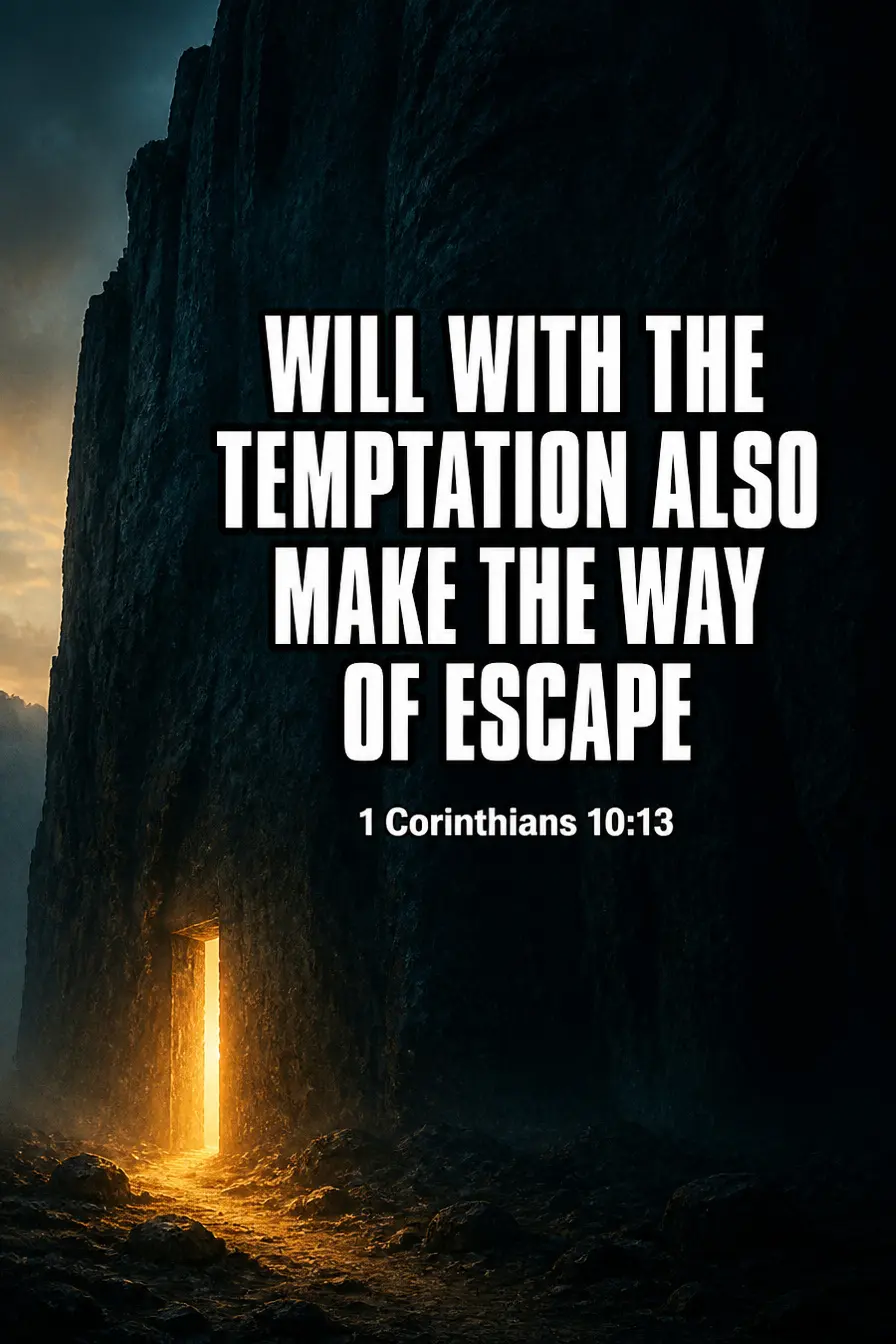
Paul is writing about the pull toward idolatry in Corinth. The subject is what you might be tempted to do, not what you might be asked to bear — and the promise attached is a way of escape, a door out, rather than a raised limit.
The popular version quietly changes the topic to grief, illness and loss, and then tells anybody drowning in one of them that God evidently thought they could take it. That is not what the verse says, and the whole of Scripture argues against it. Our Bibles are full of people given far more than they could handle, which is the reason so many of them are on record shouting about it.
“God helps those who help themselves”
This one is not in the Bible at all. It appears in Aesop and was popularised in English by Benjamin Franklin’s almanac. Scripture’s own line about the person who is stumbling runs the other way.
“A man’s steps are established by the LORD. He delights in his way. Though he stumble, he shall not fall, for the LORD holds him up with his hand.” — Psalm 37:23-24 (WEBU)

Note the grammar. The stumbling is granted — though he stumble — and the reason he does not go all the way down is somebody else’s hand. Self-help is precisely what the verse rules out as the mechanism.
“Money is the root of all evil”
The real sentence has three differences, and every one of them changes the meaning.
“For the love of money is a root of all kinds of evil. Some have been led astray from the faith in their greed, and have pierced themselves through with many sorrows.” — 1 Timothy 6:10 (WEBU)

The love of money, not money. A root, not the root. All kinds of evil, not all evil. Drop those three and we get a verse condemning wages, which the same letter does not do — it tells rich people to be generous rather than to become poor.
The second half is the part nobody prints, and it is the more useful half: what the love of money does is pierce a person through with sorrows. That is a description of the cost, not a slogan about morality.
“Pride comes before a fall”
The paraphrase is close, and it drops the bigger of the two words.
“Pride goes before destruction, and an arrogant spirit before a fall.” — Proverbs 16:18 (WEBU)

Hebrew proverbs work in pairs, and this one pairs pride with destruction and arrogance with a fall. The popular version keeps the second half and throws away the first, which makes the proverb sound like a warning about embarrassment.
A fall is recoverable, and we usually laugh about it later. Destruction is neither, and it is the word the proverb leads with.
“The Lord works in mysterious ways”
A line from a hymn by William Cowper, written in 1774, not a verse. The idea behind it does appear in Scripture, and it is a claim about distance rather than mystery.
“For as the heavens are higher than the earth, so are my ways higher than your ways, and my thoughts than your thoughts.” — Isaiah 55:9 (WEBU)

Higher is not the same as unknowable. The comparison is scale — the height of the sky over the ground — and the surrounding chapter is an open invitation to come and be fed, which is the opposite of a closed door.
We tend to reach for the hymn version as a conversation-ender, offered when nobody has an explanation. Isaiah’s version is an argument for trusting a bigger perspective, which is a different thing and considerably more use.
Two Verses That Are Real, and Quoted Backwards
Jeremiah 29:11 — Read Verse 10 First
“For the LORD says, “After seventy years are accomplished for Babylon, I will visit you and perform my good word toward you, in causing you to return to this place. For I know the thoughts that I think toward you,” says the LORD, “thoughts of peace, and not of evil, to give you hope and a future.” — Jeremiah 29:10-11 (WEBU)
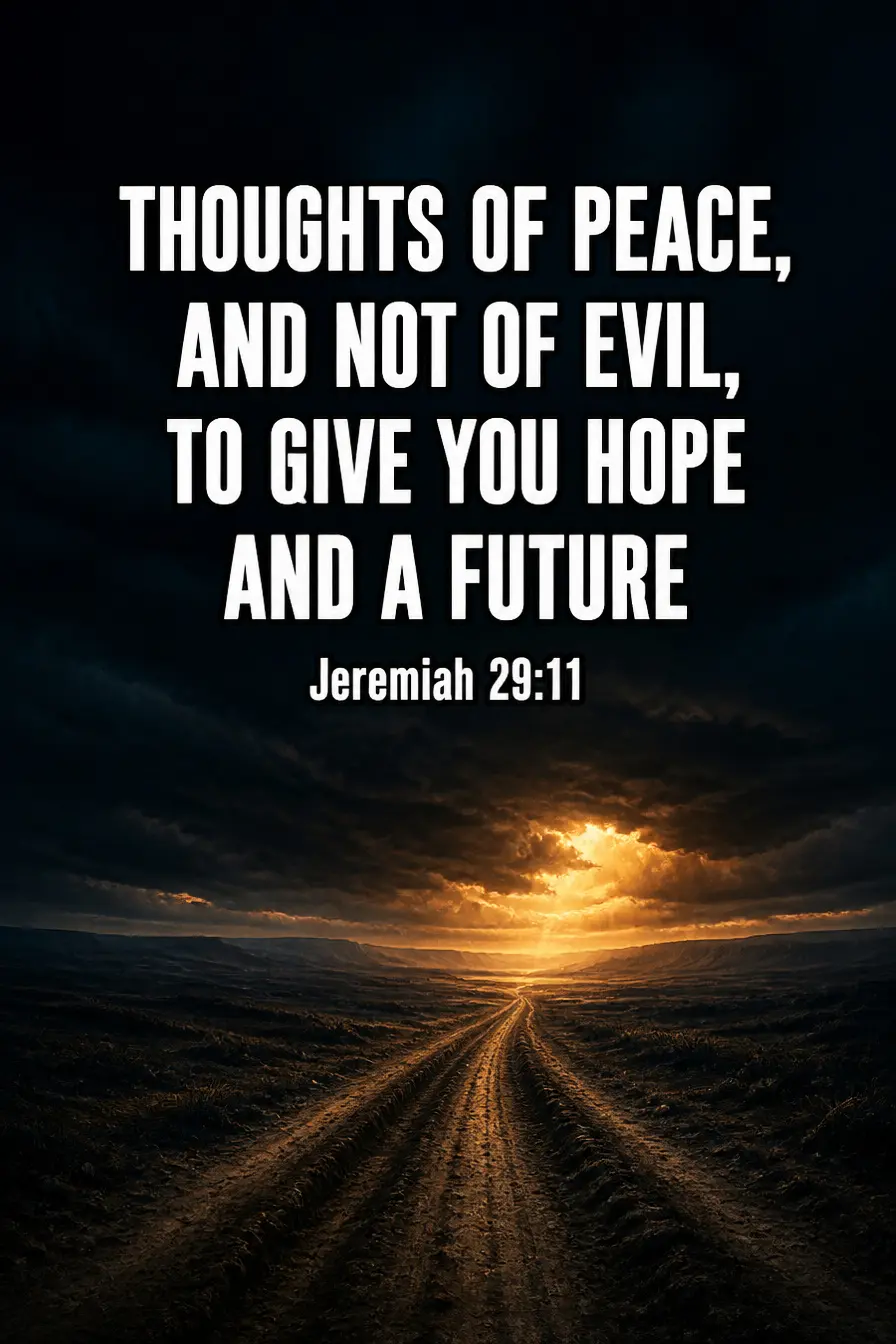
This is the graduation-card verse, and the sentence immediately before it sets the timescale: seventy years. The people first given this promise were being told they would die in Babylon and their grandchildren would go home.
That does not weaken the verse. It changes what kind of promise it is. Not a guarantee that the plan is about to unfold this year, but a statement about intent that held good across three generations of an exile the letter also instructs them to settle into — build houses, plant gardens, have children. Read whole, it is a far better verse for a long hard stretch than the version on the card.
Matthew 7:1 — The Half-Sentence
“Don’t judge, so that you won’t be judged. For with whatever judgment you judge, you will be judged; and with whatever measure you measure, it will be measured to you.” — Matthew 7:1-2 (WEBU)
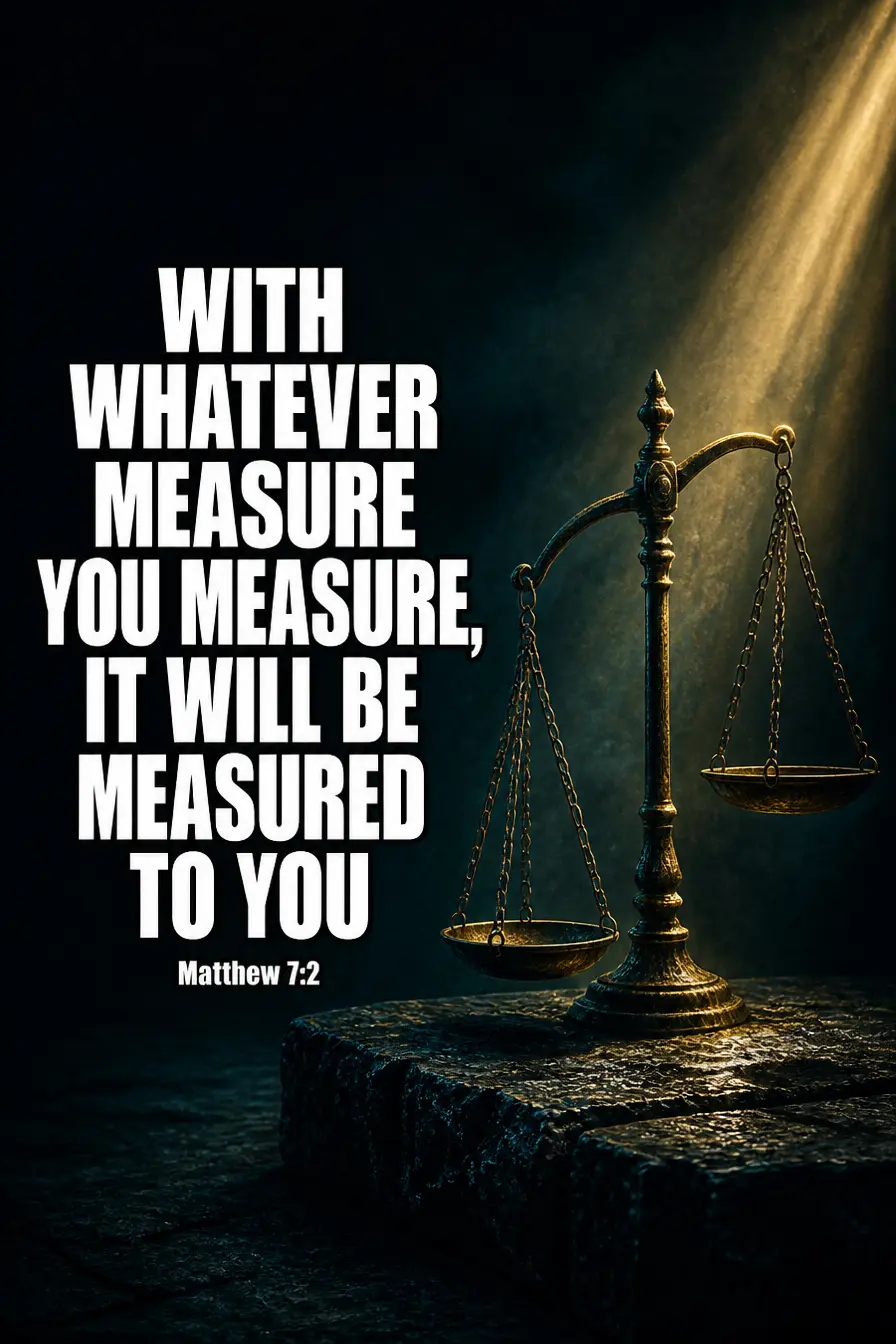
Verse 1 alone reads as a ban on having an opinion. Verse 2 explains the actual mechanism, and it is about reciprocity: whatever standard you apply is the standard that comes back to you.
Five verses later the same passage tells the listener to take the beam out of their own eye so that they can see clearly to help with their brother’s speck — which assumes the helping still happens. The instruction is about the order of operations, not about silence.
“I can do all things through Christ who strengthens me.” — Philippians 4:13 (WEBU)
The third famous case gets its own treatment in the article on strength and hope: verse 12 states the secret and half of it is hunger, which is not what the sports-gear version suggests.
The Motivation Scripture Actually Gives Is About Work
Once the misattributed lines are out of the way, a pattern shows up in what remains. The genuinely motivational passages in the Bible are overwhelmingly about labour, persistence and getting back up — not about confidence, and almost never about feeling ready.
Nehemiah 4:6 — A Mind to Work
“So we built the wall; and all the wall was joined together to half its height, for the people had a mind to work.” — Nehemiah 4:6 (WEBU)
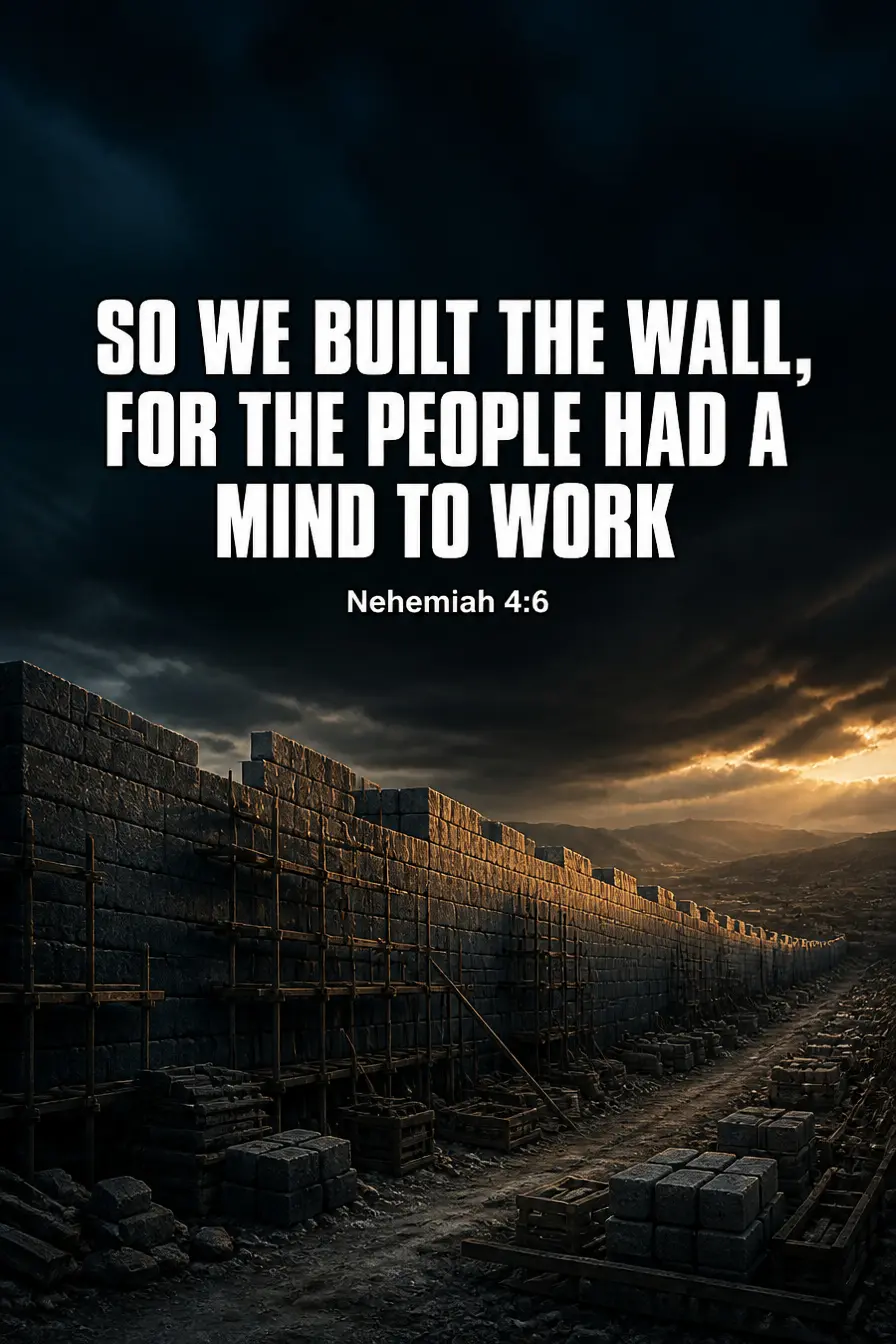
One of the flattest sentences in the Old Testament and one of the most quietly encouraging. No miracle is reported. The wall reached half its height because the people had a mind to work.
The chapter around it is full of mockery, threats and exhaustion, and the progress happens anyway. That is the shape most of our projects have — the middle, where nothing dramatic is occurring and the only variable left is whether the people involved still intend to do it.
2 Chronicles 15:7 — Hands Not Slack
“But you be strong! Don’t let your hands be slack, for your work will be rewarded.” — 2 Chronicles 15:7 (WEBU)
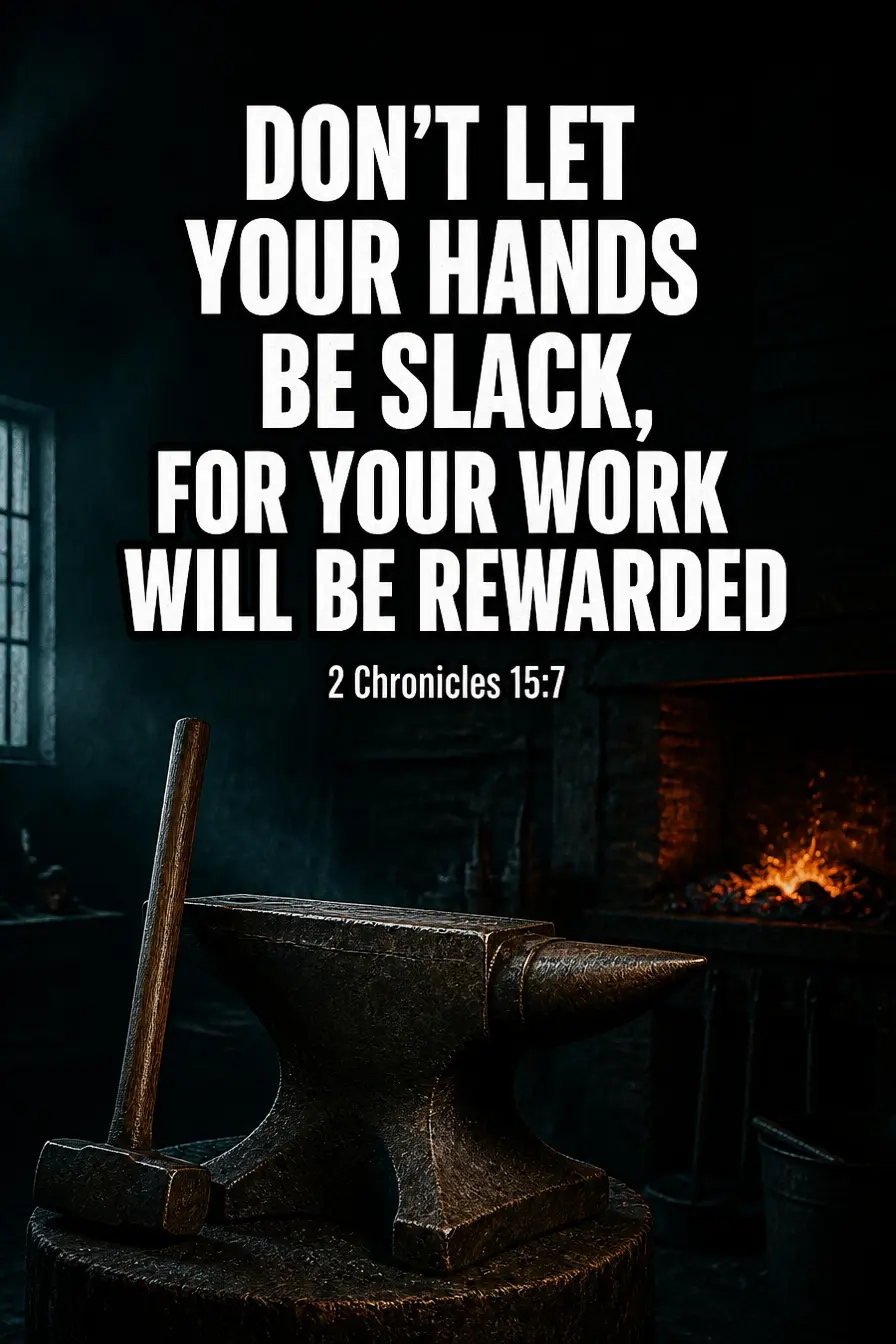
Be strong, and then immediately a physical instruction about hands. The prophet does not ask King Asa to feel braver; he asks him not to let his hands go loose, which is something a person can check.
That is the shape of most biblical encouragement, and it is why these verses survive being read on a flat day. They name an action rather than a mood, and the reward clause is attached to the work rather than to the enthusiasm.
Ecclesiastes 9:10 — With Your Might
“Whatever your hand finds to do, do it with your might; for there is no work, nor plan, nor knowledge, nor wisdom, in Sheol, where you are going.” — Ecclesiastes 9:10 (WEBU)
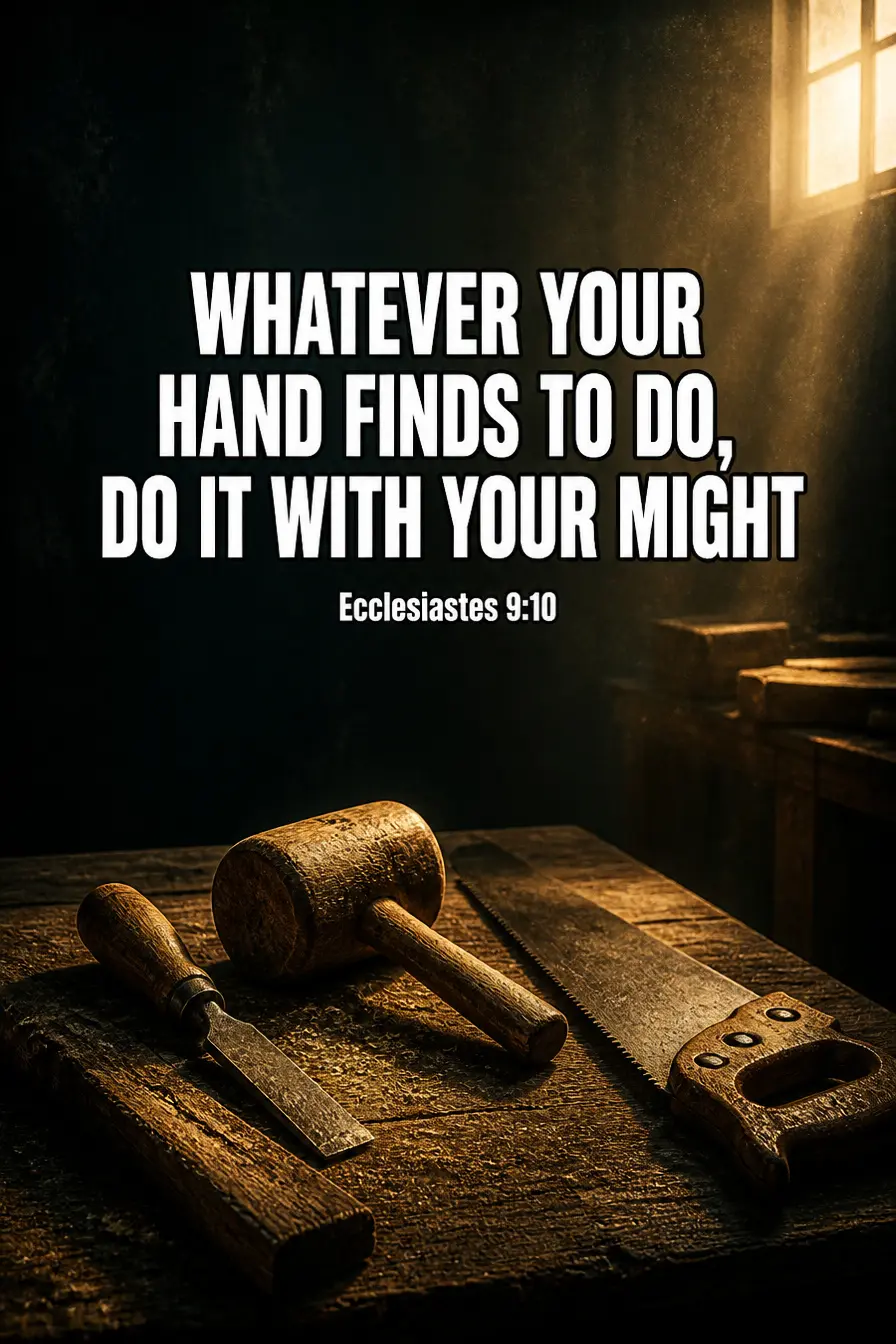
Whatever your hand finds is deliberately unglamorous. It is not the work you were hoping for or the calling you have been waiting to identify — it is what is in front of you today.
Ecclesiastes gets there by the bleakest route available, which is why the line lands. The reason to work with your might is that the window is finite. It is motivation built on the shortness of a life rather than on the size of a dream, and it is oddly steadying.
1 Corinthians 15:58 — Not in Vain
“Therefore, my beloved brothers, be steadfast, immovable, always abounding in the Lord’s work, because you know that your labor is not in vain in the Lord.” — 1 Corinthians 15:58 (WEBU)

This is the last sentence of the long chapter on resurrection, and the placement is the argument. Paul spends fifty-seven verses establishing that the dead are raised, and then draws one practical conclusion from it: keep working, because the work is not wasted.
He does not promise it will be noticed, paid or finished. The claim is narrower and harder to dislodge — that it does not evaporate.
Galatians 6:9 — In Due Season
“Let’s not be weary in doing good, for we will reap in due season if we don’t give up.” — Galatians 6:9 (WEBU)
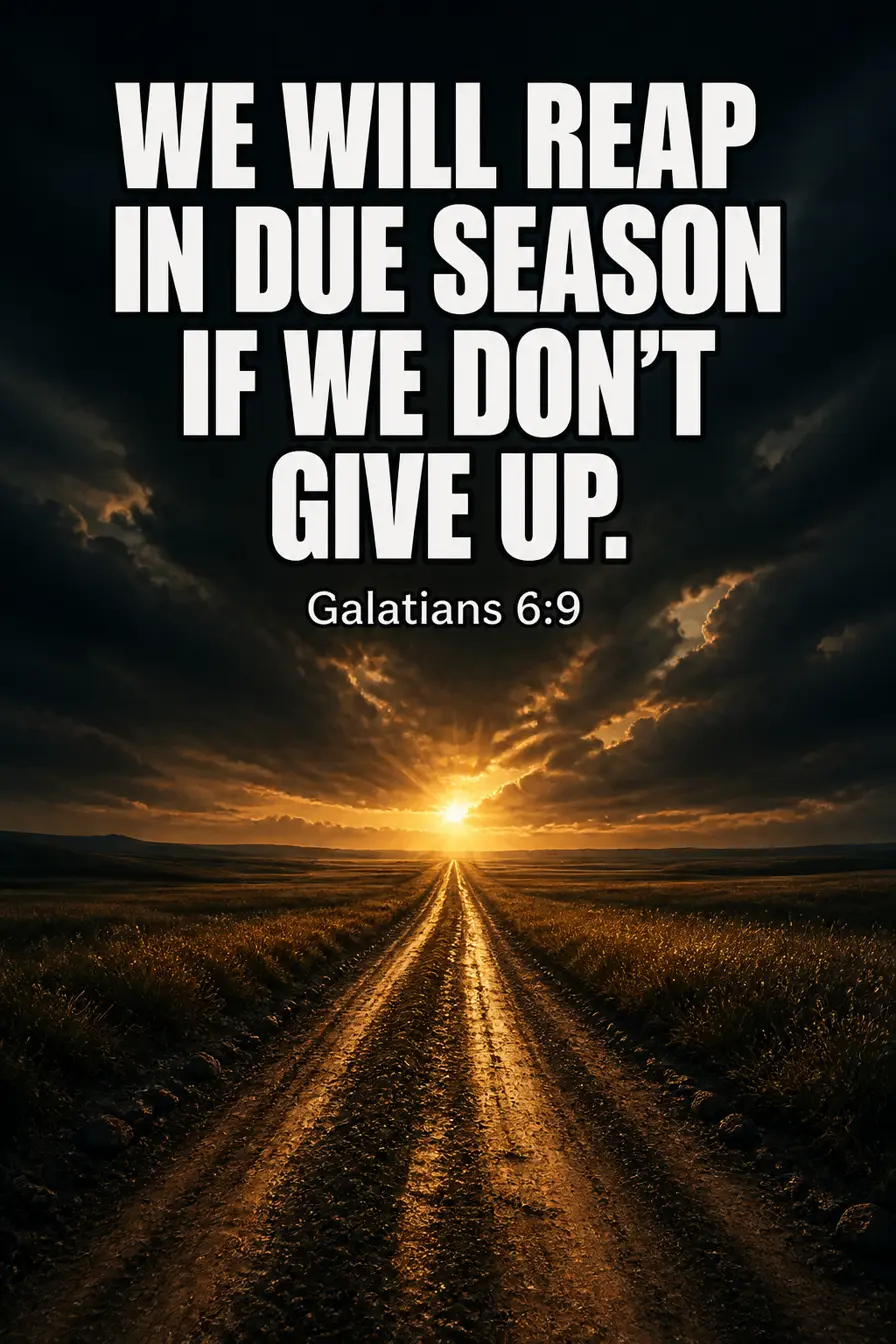
Two conditions sit in this short verse, and both are about time rather than effort. The harvest comes in due season — a season chosen by the crop, not the farmer — and only if we don’t give up.
Which makes weariness the actual enemy the verse names, not failure. Nothing here suggests the work was going badly. It suggests that most good work has a stretch in the middle where quitting is the only real risk.
And It Assumes You Will Fall Over
Proverbs 24:16 — Seven Times
“for a righteous man falls seven times and rises up again, but the wicked are overthrown by calamity.” — Proverbs 24:16 (WEBU)
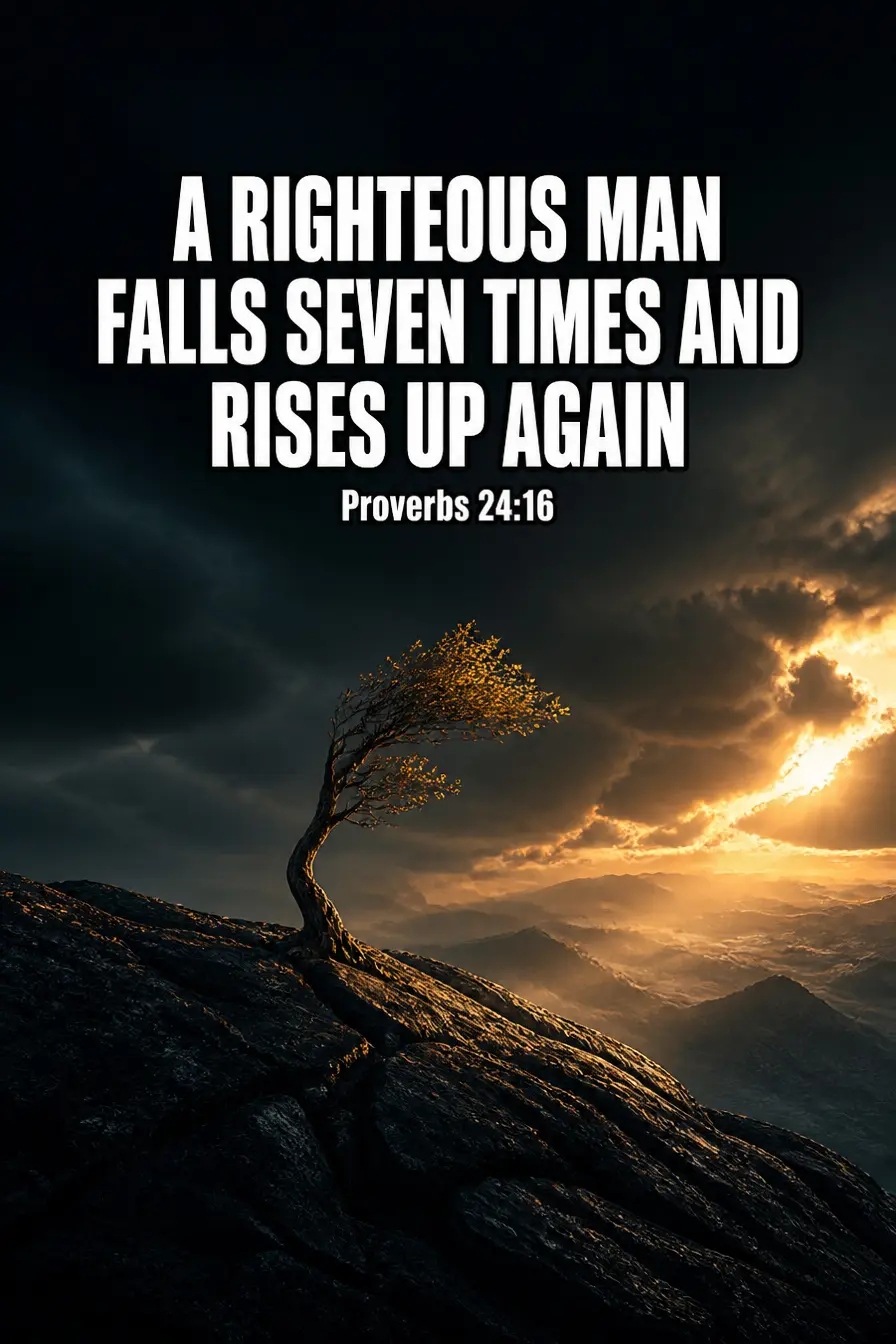
The righteous man in this proverb falls. Seven times, which in Hebrew usage means as often as it takes rather than a literal count. What distinguishes him is not that he stays upright but that he keeps getting back up.
Take that seriously and a great deal of our Christian guilt loses its grip. Falling is inside the description of the righteous person, not outside it. The contrast in the second half is not with someone who never fell — it is with someone who does not rise.
Hebrews 12:1 — Lay Aside the Weight
“Therefore let’s also, seeing we are surrounded by so great a cloud of witnesses, lay aside every weight and the sin which so easily entangles us, and let’s run with perseverance the race that is set before us” — Hebrews 12:1 (WEBU)
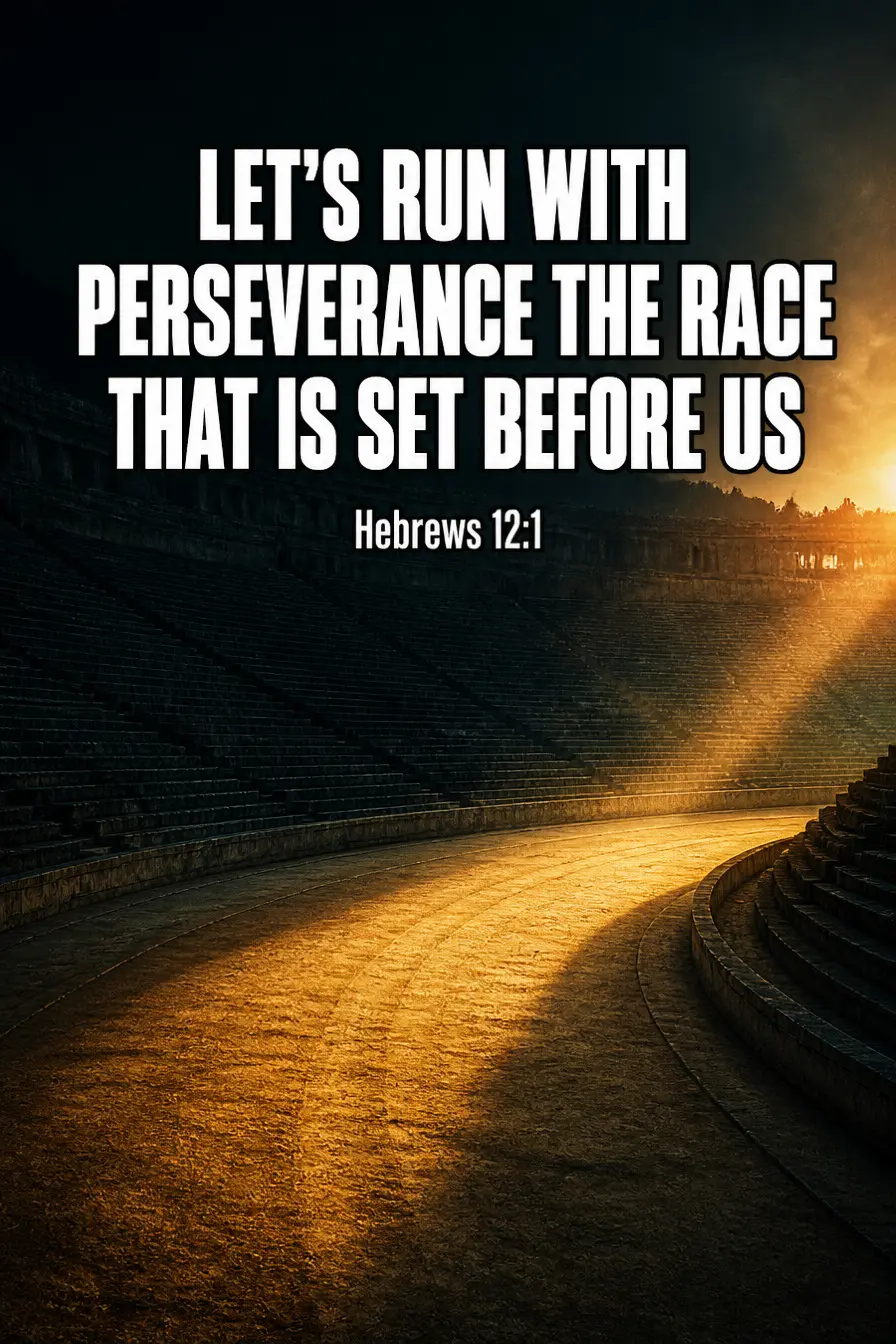
Two things get dropped, and only one of them is sin. Every weight is the other, and a weight is not necessarily wrong — it is simply heavy. Runners in the ancient games stripped off perfectly good clothing at the start line.
That distinction does real work in our busy lives. Some of what has to go is not a moral failure at all; it is a commitment, a project or a habit that would be fine for somebody running a different race.
1 Corinthians 9:24-25 — A Crown That Does Not Last
“Don’t you know that those who run in a race all run, but one receives the prize? Run like that, so that you may win. Every man who strives in the games exercises self-control in all things. Now they do it to receive a corruptible crown, but we an incorruptible.” — 1 Corinthians 9:24-25 (WEBU)

The crown at the Isthmian games near Corinth was a wreath of wild celery. Paul’s readers had seen athletes give up years of their lives training for a garland that would be brown within a week, and he points at the ratio rather than at the effort.
Corruptible is doing the work. The argument is not that Christians should try harder than athletes; it is that the athletes’ discipline already proves people will pay enormous costs for something that visibly rots.
The Lines Worth Keeping on a Card
Four verses that get printed on everything and survive the treatment, because each says something specific rather than something warm.
“Trust in the LORD with all your heart, and don’t lean on your own understanding. In all your ways acknowledge him, and he will make your paths straight.” — Proverbs 3:5-6 (WEBU)
For the decision you cannot think your way through. The instruction is not to stop thinking but to stop leaning — a distinction anybody who has over-analysed a choice at 2 a.m. will recognise.
“Haven’t I commanded you? Be strong and courageous. Don’t be afraid. Don’t be dismayed, for the LORD your God is with you wherever you go.” — Joshua 1:9 (WEBU)
For the morning you have to start something. It opens with a question, which makes it a reminder of an order already given rather than a fresh pep talk.
“Don’t be conformed to this world, but be transformed by the renewing of your mind, so that you may prove what is the good, well-pleasing, and perfect will of God.” — Romans 12:2 (WEBU)
For the month everything around you is pulling one way. The mechanism named is the mind, and the stated outcome is the ability to tell what is actually good — a skill, not a feeling.
“Behold, I will do a new thing. It springs out now. Don’t you know it? I will even make a way in the wilderness, and rivers in the desert.” — Isaiah 43:19 (WEBU)
For the point where the last thing has clearly ended. The tense is present — it springs out now — and the question in the middle assumes the new thing is already visible to somebody paying attention.
Who Actually Said It: The Names Behind Most Quote Graphics
Search for Christian motivation quotes and the same handful of authors supply most of what comes back. Knowing who they were makes it much easier to judge whether an attribution is plausible before sharing it.
Charles Spurgeon (1834-1892) was a Baptist preacher in London whose sermons were transcribed weekly and printed for decades, which is why so much survives to quote. A.W. Tozer (1897-1963) was an American pastor and editor best known for The Pursuit of God. Oswald Chambers (1874-1917) is the name on “My Utmost for His Highest”, though the book was assembled from his lectures by his wife after his death — a detail worth knowing, because it means the wording is hers as much as his.
C.S. Lewis (1898-1963) was an Oxford and Cambridge literary scholar, and he is by some distance the most misattributed name in this whole category: a great many warm sentences circulate under his name that appear nowhere in his published work. Augustine (354-430) is the second, for the same reason and for far longer.
Corrie ten Boom (1892-1983) was a Dutch watchmaker who hid Jewish neighbours from the Gestapo and survived Ravensbrück. Elisabeth Elliot (1926-2015) was a missionary whose first husband was killed in Ecuador in 1956, and who then went to live among the people who killed him. Billy Graham (1918-2018) preached to more people in person than anyone in recorded history. Max Lucado, John MacArthur, R.C. Sproul, Francis Chan, Randy Alcorn and Joni Eareckson Tada are the contemporary names that appear most often.
Two practical notes follow from that list. First, the writers who are quoted most are the ones whose words were transcribed most, which is a fact about publishing rather than about depth. Second, when a quote sounds unusually modern, unusually neat, or unusually flattering to the reader, the attribution is the thing to check — Lewis, Augustine and Spurgeon carry an enormous amount of text they never wrote.
None of that makes the real quotations less useful. It makes the habit of checking a reference worth extending beyond Scripture to everything else on the graphic.
How to Check a Quote in Thirty Seconds
Three steps, and between them they catch almost everything on this page. None of them needs a commentary.
Find the reference. A quote graphic with no book, chapter and verse is the single strongest signal. Every line in the first section of this article circulates without one.
Read the verse before and the verse after. This is where Jeremiah 29:11 and Matthew 7:1 come apart, and it takes about ten seconds. Most misuse survives only as long as the surrounding paragraph goes unread.
Compare two translations. Where they differ sharply on a key word — plans against thoughts, the root against a root — the popular version has usually picked whichever wording made the better poster. Reading both tells you which words are actually load-bearing.
Questions People Ask About Christian Motivation Quotes
What are some inspiring Christian quotes from the Bible?
Four that carry their weight: “Whatever your hand finds to do, do it with your might” (Ecclesiastes 9:10), “your labor is not in vain in the Lord” (1 Corinthians 15:58), “a righteous man falls seven times and rises up again” (Proverbs 24:16), and “we will reap in due season if we don’t give up” (Galatians 6:9). Each names an action rather than a mood.
What is a short inspirational Christian message or quote?
“But you be strong! Don’t let your hands be slack, for your work will be rewarded” (2 Chronicles 15:7) fits on one line and gives something to do. For a shorter one, Nehemiah 4:6 — “the people had a mind to work” — describes the middle of a long project better than most modern encouragement does.
What are some Christian quotes for strength during difficult times?
Psalm 37:24 on being held up while stumbling, Proverbs 24:16 on rising again, and Galatians 6:9 on the harvest arriving in its own season. Avoid “God won’t give you more than you can handle” — it is not in Scripture, and 1 Corinthians 10:13, the verse behind it, is about temptation rather than suffering.
Where do you find Christian quotes from the Bible?
Any complete Bible with a concordance, or a searchable text online. The important habit is checking the reference before sharing a line: if a quote graphic gives no book, chapter and verse, treat that as the first warning sign, then read the verses either side before trusting it.
How can Christian quotes be used for encouragement and spiritual growth?
Best when a whole verse is memorised rather than a fragment, and when it is checked in context first. A verse held in full survives being tested by a hard week; a cropped one tends to fall apart at the moment it is needed, which is what happened to every line in the first section of this page.
Who are some popular authors of Christian quotes?
Charles Spurgeon, A.W. Tozer, Oswald Chambers, C.S. Lewis, Augustine, Corrie ten Boom, Elisabeth Elliot and Billy Graham account for most of the older material; Max Lucado, John MacArthur, R.C. Sproul, Francis Chan, Randy Alcorn and Joni Eareckson Tada for most of the recent. Lewis and Augustine are also the two most misattributed names in the category.
One Thing to Do With This
Pick the quote you lean on most and look up its reference tonight. If there is not one, that is the answer. If there is, read the verse before and the verse after, and see whether the line still means what the graphic said.
More passages read this way are collected in the faith archive, and the practice of reading them daily is worked through in the guide to choosing a devotional that lasts. If you want what God himself says rather than what is said about him, God quotes in his own words gathers twelve of them.