
Search for God quotes and nearly everything you find is a quote about God. Saints, poets, preachers and novelists, each describing him from the outside.
The Bible has the other kind as well: lines where God himself is the speaker. They are easy to skim past, because the words often sit inside a longer story, but read on their own they are startling. His first words to people after things go wrong are a question. He gives his own name and it sounds unfinished. He tells a prophet his heart has turned over.
Here are twelve of them, all quoted from the World English Bible. Some are well known and some are almost never put on a card. Together they answer a question that sits under every quote about God: what does he sound like when he speaks for himself?
Radical Transformation
One encounter on one road. The verse everyone quotes, and what it cost.Acts 9 · 13 min
That was just the opening. Open the app and search #013 to hear the full 13-minute story — free.
Keep listening free in the app Free on iOS & Android — no sample needed


The Questions God Asks
Genesis 3:9 — “Where Are You?”
“The LORD God called to the man, and said to him, “Where are you?”” — Genesis 3:9 (WEBU)
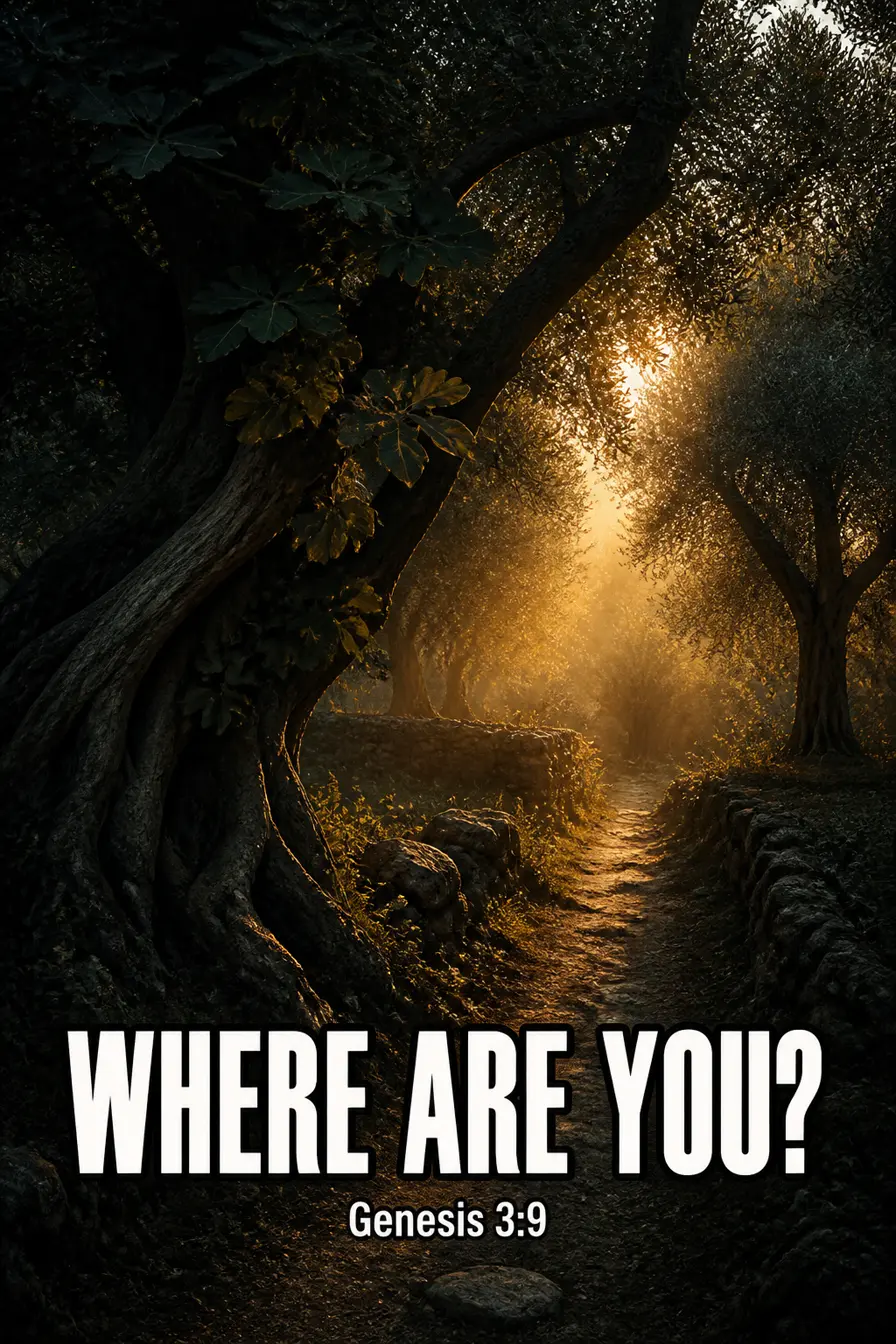
This is the first question God asks in the Bible. The man and woman have just eaten what they were told not to eat, and when they hear God walking in the garden “in the cool of the day”, they hide among the trees.
God does not need the information. The question is an opening, not an investigation. He comes looking, calls out, and lets the man answer for himself: “I was afraid, because I was naked; so I hid myself.”
If you have been hiding from God after something you did, notice that his first move in the Bible’s first failure is to come looking for the ones who hid. Your answer can be as honest as Adam’s: afraid, and hiding.
Genesis 4:9 — The Question Cain Dodged
“The LORD said to Cain, “Where is Abel, your brother?”” — Genesis 4:9 (WEBU)
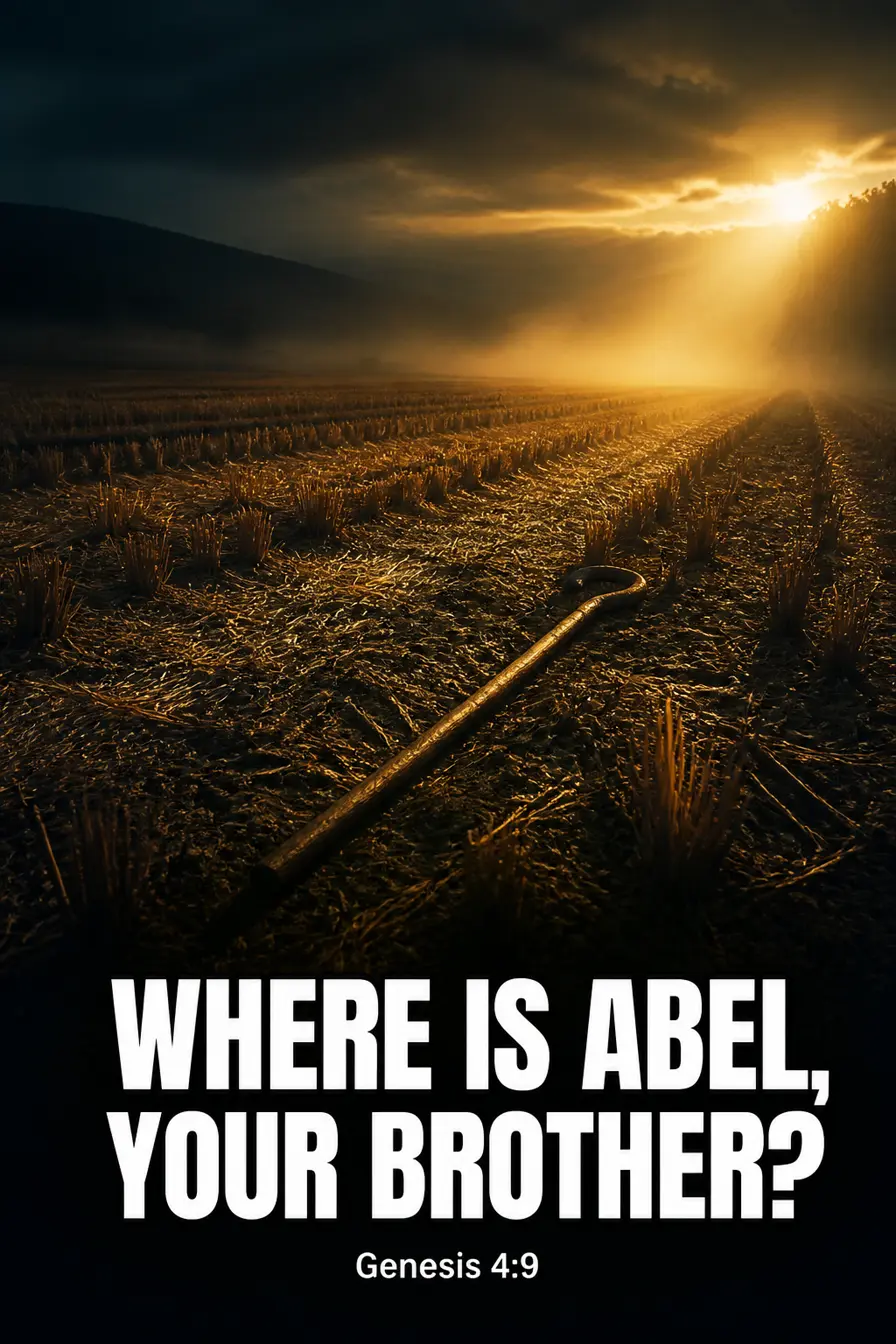
The second question in the Bible follows the first murder. Cain has killed his brother in a field, and God asks where Abel is.
Cain’s reply is the famous line, and it is his, not God’s: “I don’t know. Am I my brother’s keeper?” It is often quoted as if it were a principle. In the story it is an evasion, from someone who knew exactly where his brother was.
God’s question puts responsibility for another person on the table, and Cain tries to take it off again. That is worth asking yourself about the people closest to you. Not whether you are their keeper in theory, but whether you know where they are right now.
Job 38:4 — God Answers a Question With a Question
“Where were you when I laid the foundations of the earth? Declare, if you have understanding.” — Job 38:4 (WEBU)
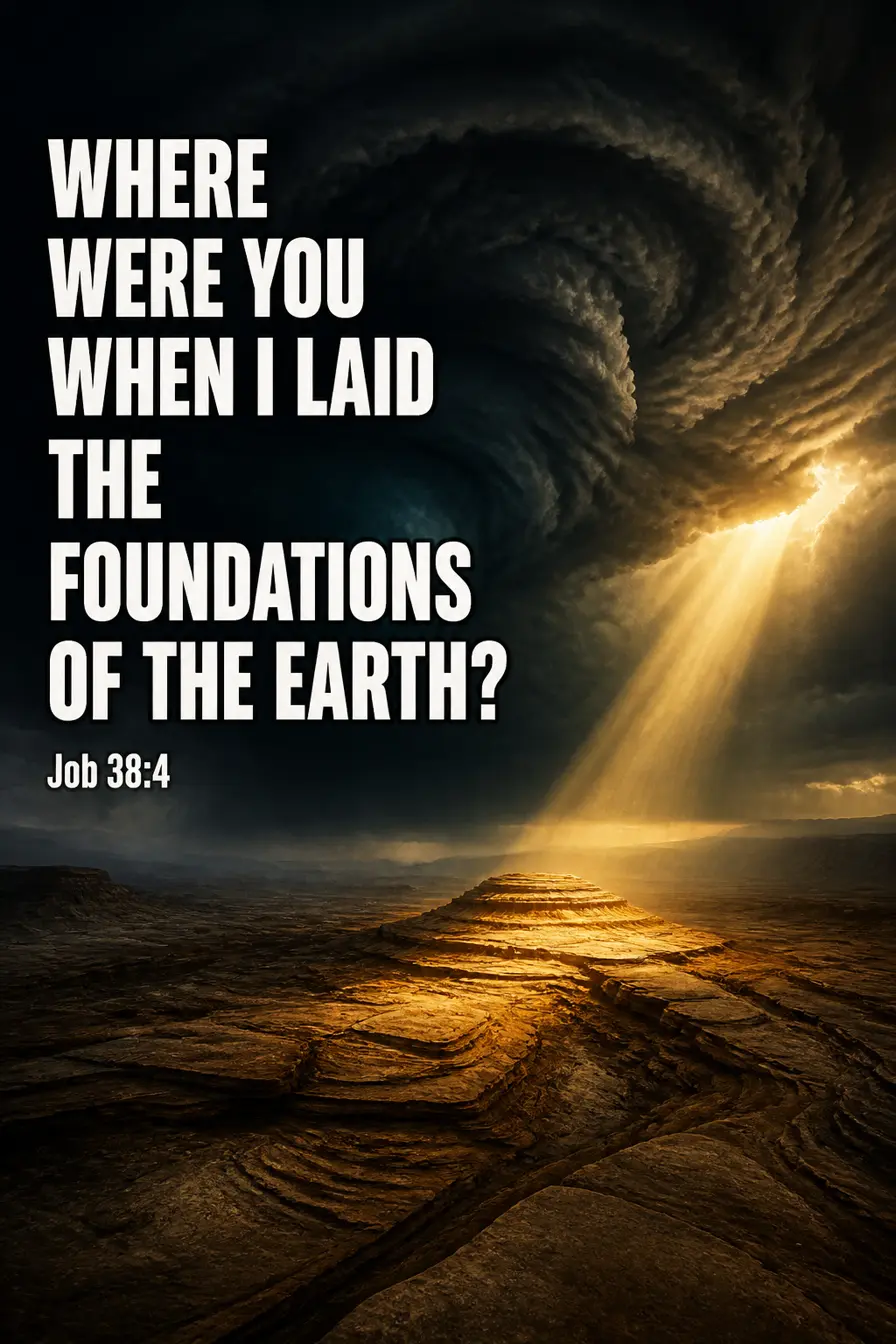
For most of the book Job has demanded a hearing. He has lost his children, his wealth and his health, and his friends have insisted he must have deserved it. When God finally speaks, “out of the whirlwind”, he does not explain any of it. He asks questions — about the sea, the stars, the wild animals — for four chapters.
It can sound like a put-down. But two things in the book push against that reading. God answers Job in person, which is what Job had asked for. And at the end God tells the friends that they “have not spoken of me the thing that is right, as my servant Job has” — the man who argued is vindicated over the men who defended God.
If you have questions God has not answered, Job is in the Bible to say that asking them out loud is not the problem.
Jonah 4:11 — The Book That Ends on God’s Question
“Shouldn’t I be concerned for Nineveh, that great city, in which are more than one hundred twenty thousand persons who can’t discern between their right hand and their left hand, and also many animals?” — Jonah 4:11 (WEBU)
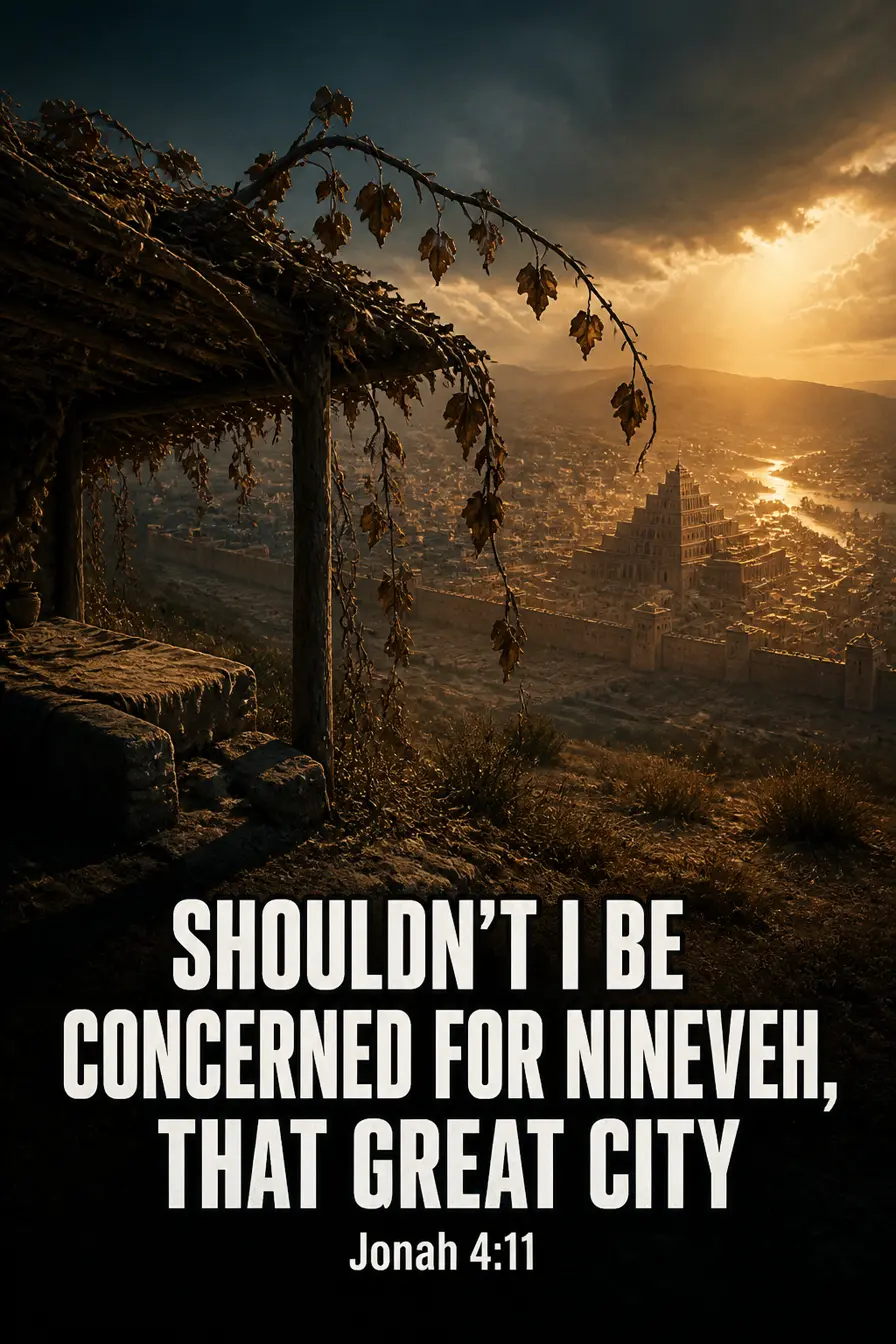
Jonah is furious. He preached to Nineveh, the capital of a cruel enemy empire, and the city repented and was spared. He sits outside it sulking under a vine, and when the vine withers he wants to die.
The book of Jonah ends with this verse. There is no reply from Jonah, no narrator wrapping things up — only God’s question, left hanging. It includes the animals, which is one of the gentlest details in the prophets.
The question is still open for anyone who reads it. When God is merciful to someone you would rather see punished, which side of this question are you sitting on?
The Name God Gives Himself
Exodus 3:14 — “I AM WHO I AM”
“God said to Moses, “I AM WHO I AM,”” — Exodus 3:14 (WEBU)
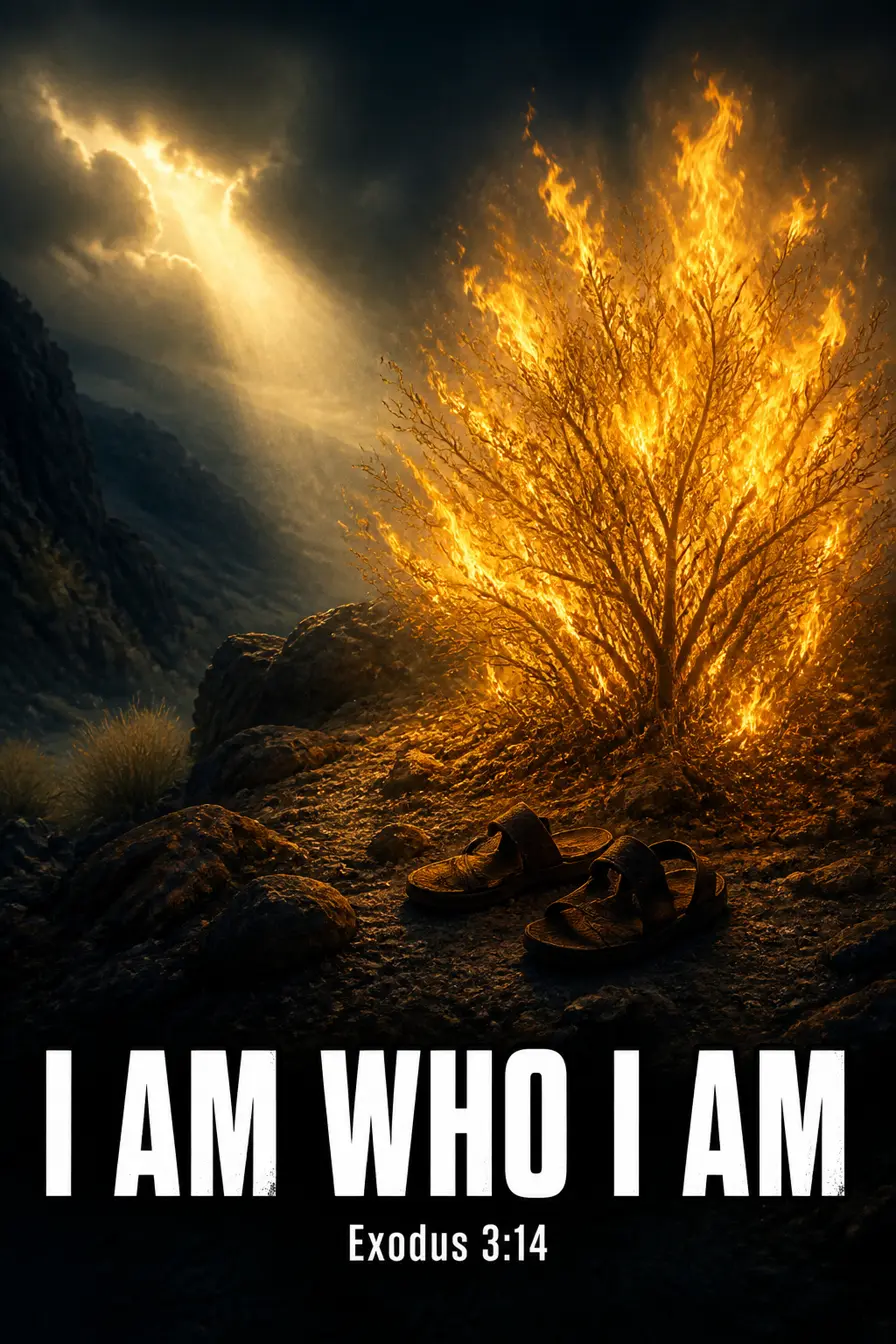
At the burning bush, Moses asks a practical question. If the Israelites ask who sent him, what name should he give?
The answer has puzzled readers ever since. The Hebrew, ehyeh asher ehyeh, can also be translated “I will be what I will be”. It is closely related to the divine name YHWH, which most English Bibles print as “the LORD” in small capitals.
So the name God gives is less a label than a promise with the end left open. Moses wanted something to tell people. He got a God who would show who he was by what he did next — through the plagues, the sea and the long road out of Egypt. If you are waiting to see what God is like in your own situation, that is the name he gave.
Exodus 34:6 — The Description God Gives of Himself
“The LORD! The LORD, a merciful and gracious God, slow to anger, and abundant in loving kindness and truth,” — Exodus 34:6 (WEBU)
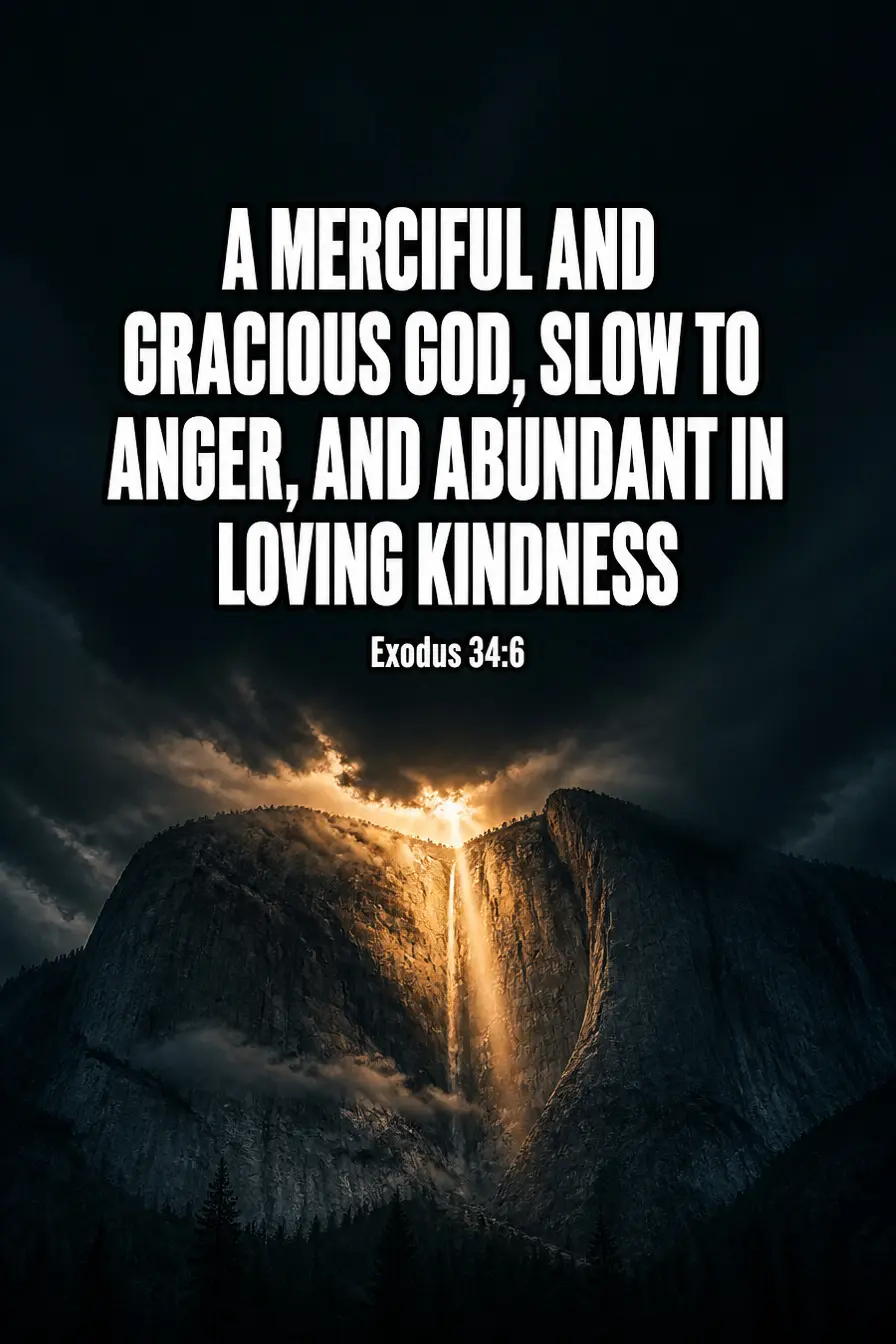
Moses had asked to see God’s glory. What he got was a voice passing by, proclaiming God’s own name and character. This happens just after the golden calf, when Israel had broken the covenant almost as soon as it was made.
That timing matters. God’s fullest description of himself in the Old Testament is spoken to people who had just failed him. It became the Old Testament’s favourite way to describe God: the same words come back in Numbers, Nehemiah, the Psalms, Joel and Jonah.
In Jonah they come back as a complaint. Jonah says he ran away precisely because he knew God was “gracious” and “merciful”. If you ever worry that you have used up God’s patience, this is the sentence he chose to describe himself with.
Malachi 3:6 — Why You Are Still Here
“For I, the LORD, don’t change; therefore you, sons of Jacob, are not consumed.” — Malachi 3:6 (WEBU)
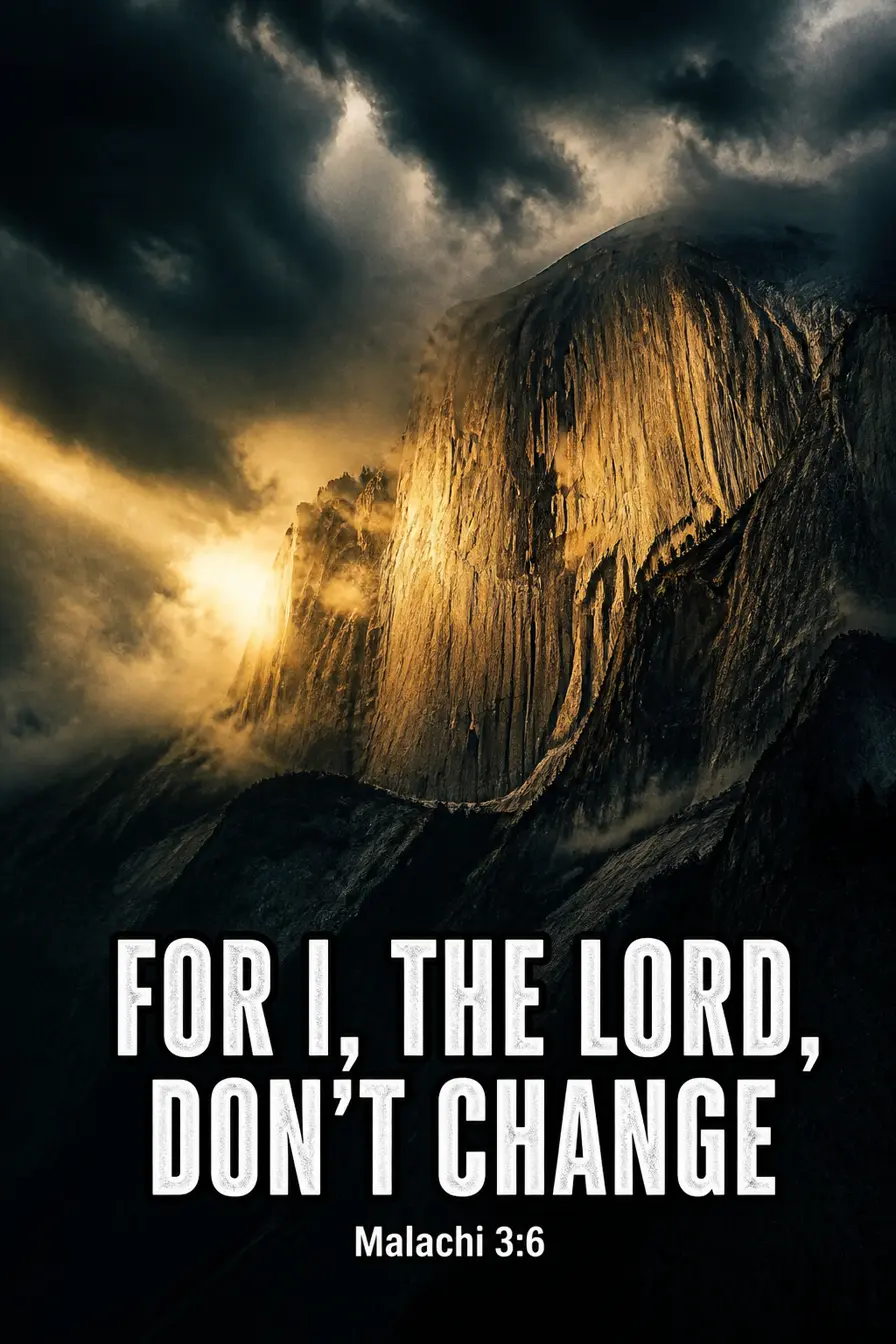
Malachi is the last book of the Old Testament in Christian Bibles, written to people who had come home from exile and drifted into going through the motions.
The famous half of the verse — “I, the LORD, don’t change” — is usually quoted alone, as a statement about God’s nature. The second half explains why it matters: the sons of Jacob “are not consumed.” His not changing is the reason they survived their own changing.
That is the comfort in it. Your faithfulness rises and falls. His does not, and that is why a bad year has not been the end of you.
What God Says He Feels
Hosea 11:8 — “My Heart Is Turned Within Me”
“How can I give you up, Ephraim? How can I hand you over, Israel? How can I make you like Admah? How can I make you like Zeboiim? My heart is turned within me, my compassion is aroused.” — Hosea 11:8 (WEBU)
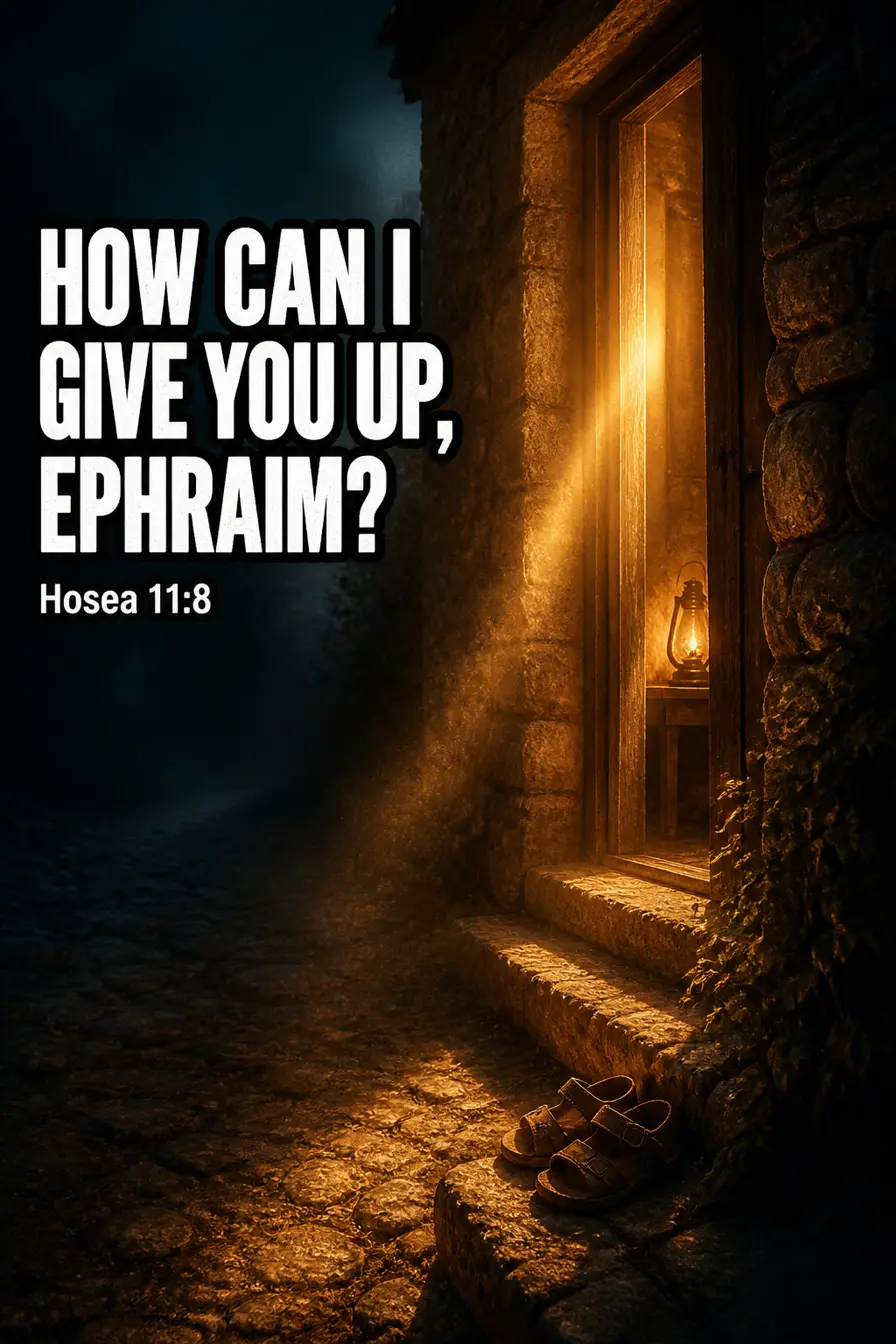
Hosea spends chapters describing Israel’s unfaithfulness in the language of a broken marriage. Then, in chapter 11, God speaks like a parent remembering teaching a child to walk — and then breaks off.
Admah and Zeboiim were the cities destroyed alongside Sodom and Gomorrah. God names them and then refuses. “How can I” comes four times, and then one of the most emotional lines in the prophets: “My heart is turned within me.”
This is not a God who is unmoved by what people do. He is moved, and what moves him most is that he will not give them up. If you were taught that God is cold or simply angry, read this verse aloud once.
Jeremiah 31:3 — Loved Before Anything Changed
“Yes, I have loved you with an everlasting love. Therefore I have drawn you with loving kindness.” — Jeremiah 31:3 (WEBU)
Jeremiah spent most of his career announcing the fall of Jerusalem. This verse comes from a short section of his book that promises restoration, spoken to people facing or already living in exile.
Notice the order of the sentence. The love is “everlasting”, so it does not start when they come back. And the drawing — God pulling them toward himself — comes second, as a result of the love, not as its condition.
That order is the reverse of how most of us expect to be loved. You do not come close first and get loved second. You are drawn because you were already loved.
1 Samuel 16:7 — What God Says He Looks At
“For man looks at the outward appearance, but the LORD looks at the heart.” — 1 Samuel 16:7 (WEBU)
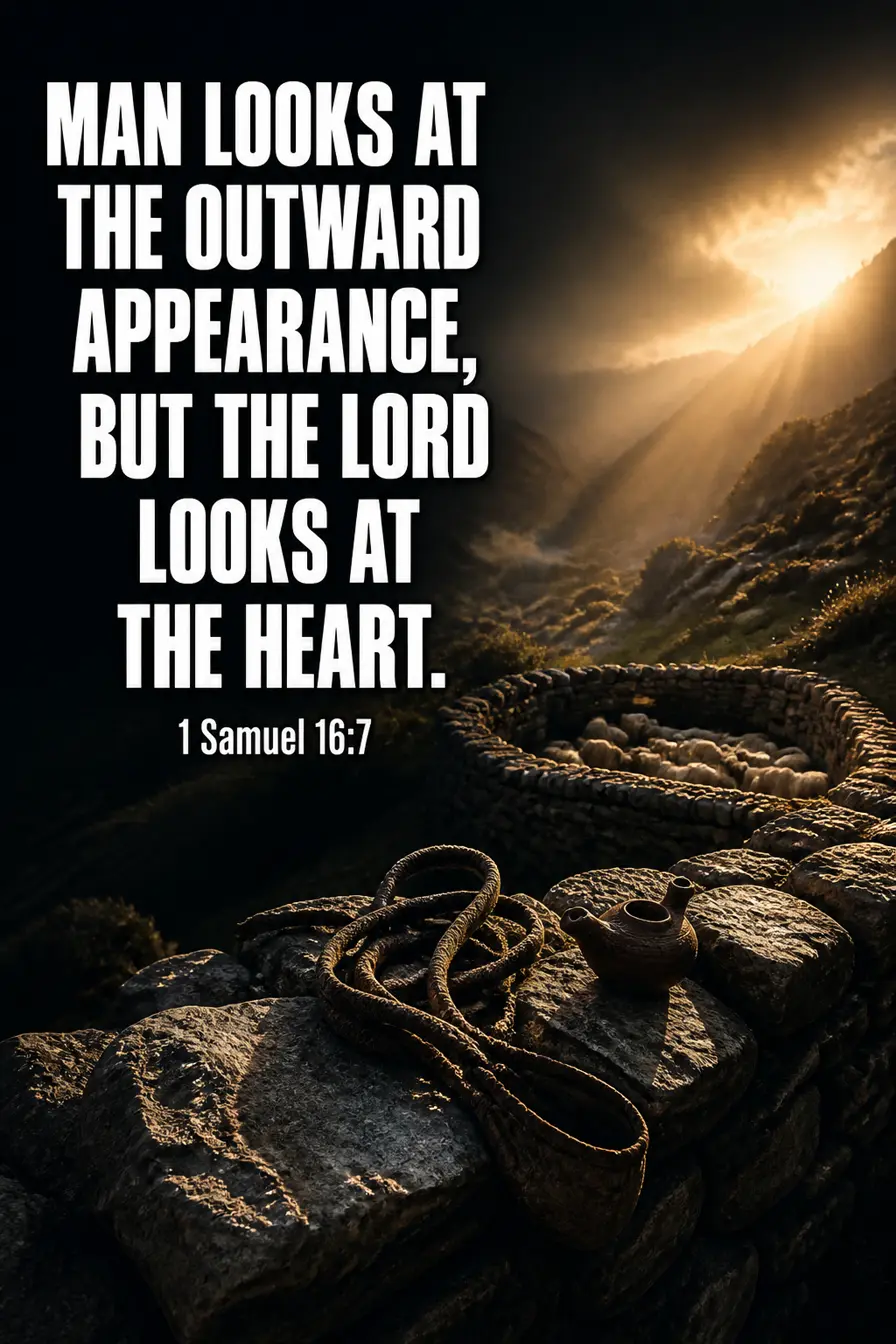
Samuel was sent to Bethlehem to anoint a new king from among Jesse’s sons. He saw the eldest, Eliab, and was sure he had found him. God told him to stop looking at his face and his height.
Seven sons passed in front of Samuel and God chose none of them. The one he wanted was not even in the room — David, the youngest, out minding the sheep.
It is easy to read this verse as a warning about judging others, and it is. It is also a relief. Whatever the room thinks of you, and whatever you think when you look in the mirror, God says plainly where he is looking.
Said Aloud From Heaven
Matthew 3:17 — Well Pleased Before Anything Was Done
“Behold, a voice out of the heavens said, “This is my beloved Son, with whom I am well pleased.”” — Matthew 3:17 (WEBU)
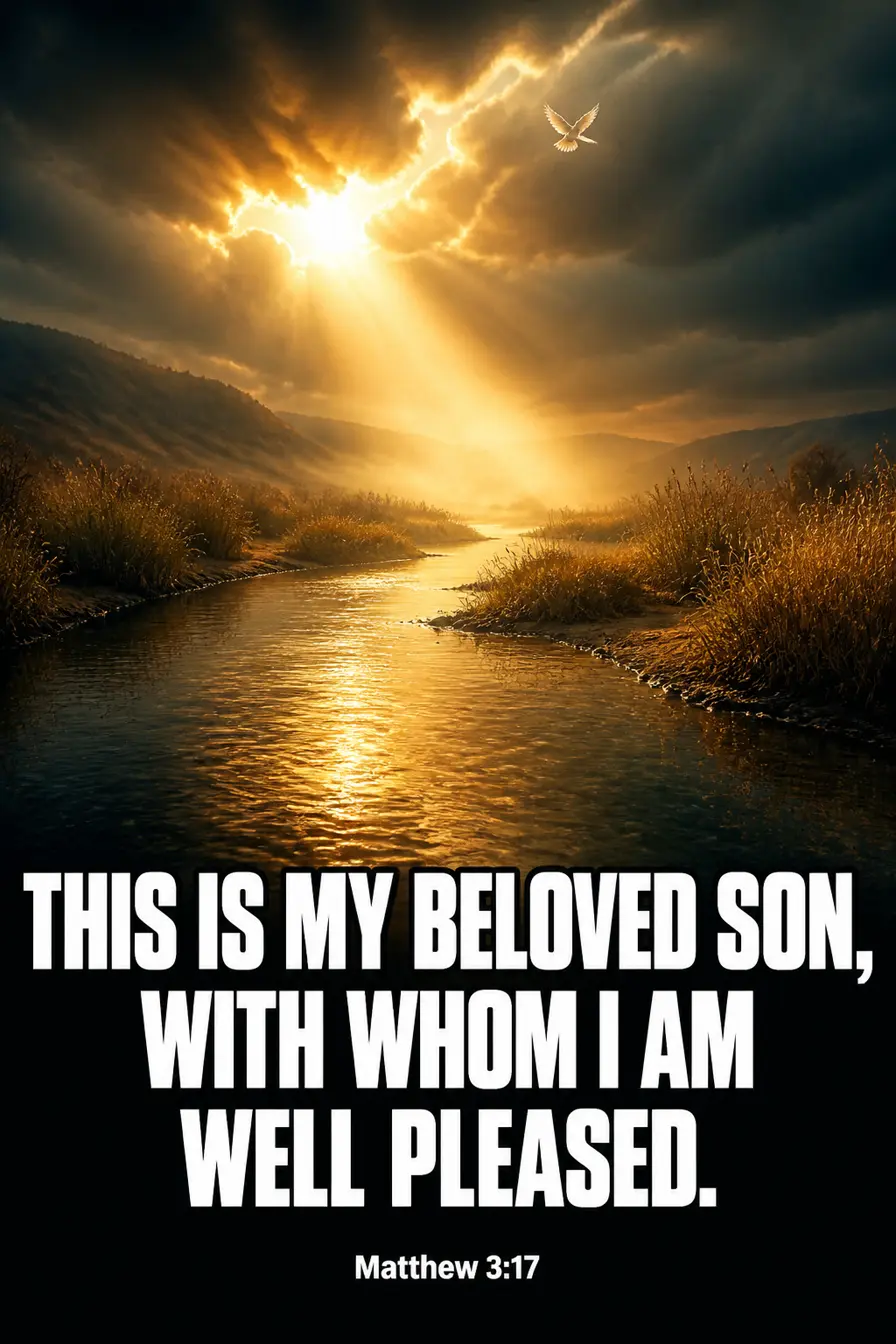
At Jesus’ baptism in the Jordan, the heavens open and God speaks out loud. In Matthew’s account this comes before Jesus has preached a sermon, healed anyone or called a single disciple.
So the Father’s pleasure is not a reward for a successful ministry. It is said at the start, before the wilderness, before the crowds, before the cross.
Christians have long read this as the pattern for anyone who belongs to Jesus. If your sense of God’s approval rises and falls with how well you are doing, this verse puts the approval first.
Revelation 21:5 — The Last Thing God Says He Is Doing
“He who sits on the throne said, “Behold, I am making all things new.”” — Revelation 21:5 (WEBU)
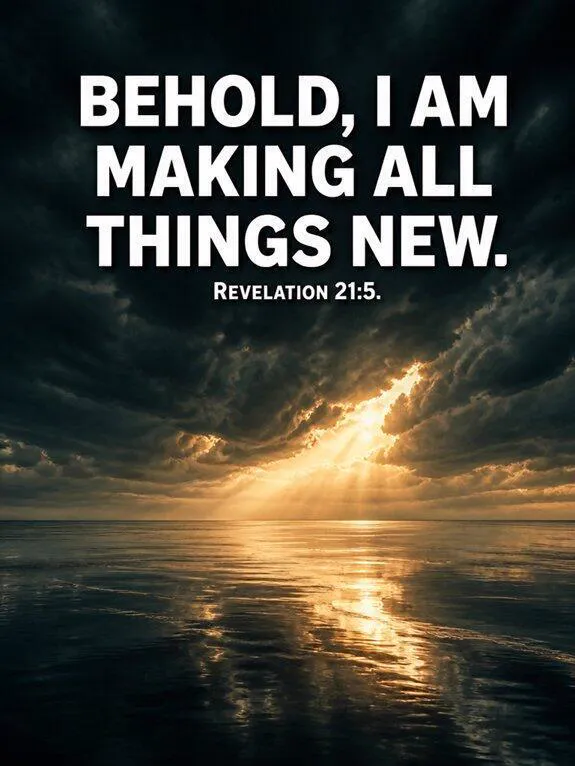
Near the very end of the Bible, after the promise that God “will wipe away every tear from their eyes”, the one on the throne speaks.
Read the tense. Not “I will make” but “I am making” — already under way. And the object is “all things”, not all new things. Many readers take that as renewal of what already exists, including people and places that have been badly damaged.
The Bible opens with God asking “Where are you?” in a garden after things went wrong. It closes with him saying what he is doing about it.
Reading God Quotes in Context
Every line on this page is surrounded by a story, and the story usually changes how it sounds. Before you use one of these God quotes on a card or in a message, read the paragraph around it once. Three questions help:
- Who is God speaking to? A frightened man in a garden, an angry prophet, a crowd at a river.
- What just happened? A betrayal, a murder, a loss, a repentance.
- Is it a statement or a question? A surprising number of his most famous lines are questions, and they are meant to be answered.
Frequently Asked Questions
What are some inspirational quotes about God?
Two of the most quoted are by Augustine and C.S. Lewis. Augustine opens his Confessions by telling God that he made us for himself, and our heart is restless until it rests in him. Lewis wrote in The Problem of Pain that God whispers to us in our pleasures but shouts in our pains, which are “his megaphone to rouse a deaf world”.
Did Pascal say there is a God-shaped hole in every heart?
Not in those words. The phrase “God-shaped vacuum” is a later paraphrase. In his Pensées, Pascal wrote that the infinite abyss in us can be filled only by an infinite and unchanging object — that is, by God himself.
What is God saying about life?
One of his plainest answers comes through Moses in Deuteronomy 30:19: “I have set before you life and death, the blessing and the curse.” In the next breath he tells them which one to take: “choose life, that you may live”.
What does God say about himself in the Bible?
His fullest self-description is Exodus 34:6, quoted above: merciful, gracious, slow to anger and abundant in loving kindness. He gives his name as “I AM WHO I AM” (Exodus 3:14) and says he does not change (Malachi 3:6).
What was the first thing God said in the Bible?
“Let there be light” (Genesis 1:3) are the first words God speaks. His first words to people are a blessing and instructions in Genesis 1:28 and 2:16-17, and his first question, after the first failure, is “Where are you?” in Genesis 3:9. Our famous Bible verses follow Genesis 1:3 all the way to a broadcast from the moon.
Where to Go Next
Pick one of these twelve and read the whole chapter it comes from today. Start with Jonah 4 — it takes three minutes.
More close readings sit in the scripture archive, and if a Christian quote you love turns out not to be in the Bible at all, our Christian motivation quotes check the most-shared ones word for word. For one passage read word by word, Galatians 5:22-23 and its nine qualities goes further.