The gratitude journal is still on the nightstand. You stopped writing in it the week the test results came back, or the job ended, or the house went quiet. Listing three good things a day started to feel like lying to a notebook.
If that is where you are, most Bible verses about gratitude will sound like they were written for someone whose week went well. They were not. Read where these lines were first spoken and a pattern shows up quickly: a prisoner, a prophet watching his country’s harvest fail, a man praying from inside a fish, Jesus at a table hours before his arrest. Scripture’s thanks is mostly given from the low ground.
So gratitude, in the Bible, does not ask you to call the hard thing good. It asks you to find God inside it and say so out loud. The twelve passages below follow that thread. Every quotation is from the World English Bible.

Discover your unique purpose. You are God's masterpiece.Jeremiah 29:11 · 12 min
That was just the opening. Open the app and search #007 to hear the full 12-minute story — free.
Keep listening free in the app Free on iOS & Android — no sample needed


Thanks in Everything, Not for Everything
The most quoted gratitude verse in the Bible is also the most misread. Start there.
1 Thessalonians 5:16-18 — The Small Word That Changes the Command
“Always rejoice. Pray without ceasing. In everything give thanks, for this is the will of God in Christ Jesus toward you.” — 1 Thessalonians 5:16-18 (WEBU)

Read the preposition slowly. Paul does not write “for everything give thanks”. He writes “in everything”. The difference is the whole article.
Thanking God for a miscarriage or a layoff would mean calling evil good. Thanking God in it means refusing to let the bad news be the only voice in the room. The thanks is aimed at God, who is still present, not at the event.
The letter went to a young church harassed from its first weeks; they “suffered the same things from your own countrymen” (1 Thessalonians 2:14). Paul was telling people under pressure that gratitude was still open to them.
Philippians 4:6-7 — Gratitude Written From a Prison Cell
“In nothing be anxious, but in everything, by prayer and petition with thanksgiving, let your requests be made known to God. And the peace of God, which surpasses all understanding, will guard your hearts and your thoughts in Christ Jesus.” — Philippians 4:6-7 (WEBU)

Paul wrote this in chains, known to “the whole palace guard” (Philippians 1:13). Nothing had resolved.
Notice what the thanksgiving is attached to: requests. You may still ask for what you need, urgently and specifically. Gratitude is not a substitute for asking; it is the posture you ask from. Set the request next to what God has already done, and it stops sounding like the only fact in your life. The promise is peace standing guard, not a solved problem. We cover how this verse works on a racing mind in our post on Bible verses for anxiety.
Bible Verses About Gratitude When Everything Is Falling Apart
Three people with every reason to stop giving thanks, who did not.
Habakkuk 3:17-18 — When the Harvest Fails
“For even though the fig tree doesn’t flourish, nor fruit be in the vines, the labor of the olive fails, the fields yield no food, the flocks are cut off from the fold, and there is no herd in the stalls, yet I will rejoice in the LORD. I will be joyful in the God of my salvation!” — Habakkuk 3:17-18 (WEBU)
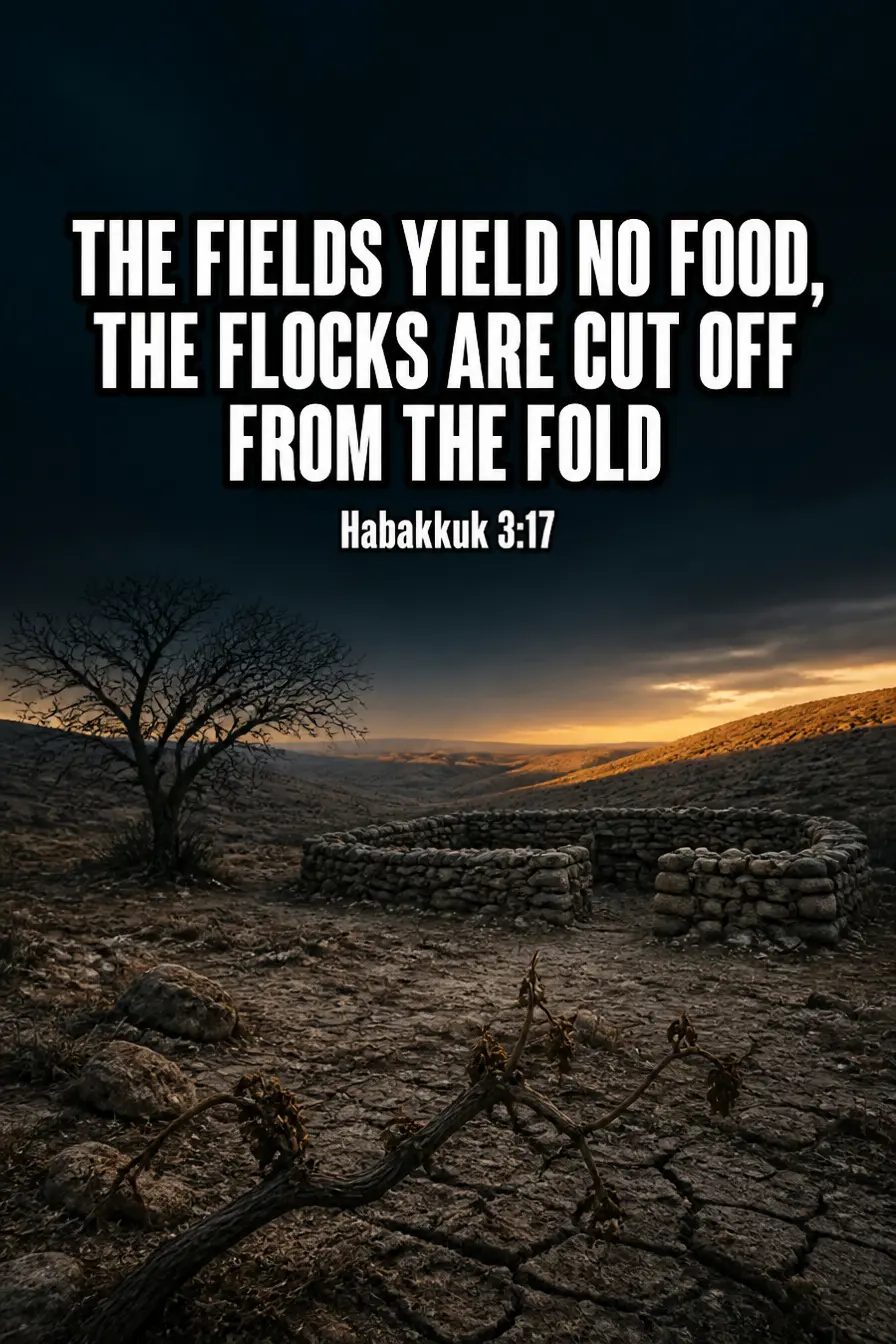
Habakkuk was a prophet who had just been told the Babylonians were coming to take the land (Habakkuk 1:6). In a farming society, figs, grapes, olives, grain and flocks were the whole economy. He is describing total loss.
Then comes one word: “yet”. Habakkuk names every empty field first, and only then turns. Biblical gratitude does not skip the inventory of loss. Our post on hope in difficult times stays longer with this kind of stubborn faith.
Jonah 2:9 — Thanks Before the Rescue
“But I will sacrifice to you with the voice of thanksgiving. I will pay that which I have vowed. Salvation belongs to the LORD.” — Jonah 2:9 (WEBU)

Jonah was a prophet who ran from God’s assignment, boarded a ship going the other way, and was thrown overboard in a storm. The book says he “prayed to the LORD, his God, out of the fish’s belly” (Jonah 2:1).
The detail most readers miss is the timing. This thanksgiving comes before the fish releases him in the next verse. Jonah is still in the dark and still partly responsible for the mess. He gives thanks anyway, on credit.
You do not have to wait for the rescue either. You can thank God for who he is while you wait to see what he does.
Daniel 6:10 — Gratitude as an Ordinary Habit Under Threat
“When Daniel knew that the writing was signed, he went into his house (now his windows were open in his room toward Jerusalem) and he kneeled on his knees three times a day, and prayed, and gave thanks before his God, as he did before.” — Daniel 6:10 (WEBU)

Daniel was a Jewish exile serving in the Persian court. His rivals had just passed a decree: anyone who prayed to any god or man except the king for thirty days would be thrown to the lions (Daniel 6:7).
The verse ends with four plain words: “as he did before”. He kept a routine that already included thanks, three times a day, and the routine held when the law changed. Build gratitude into your day before you need it. In a crisis you will not have the energy to start a habit, only to keep one.
What Jesus Said and Did About Being Grateful
Two scenes answer one of the questions people ask most often about this topic.
1 Corinthians 11:23-24 — Thanks on the Night of Betrayal
“…the Lord Jesus on the night in which he was betrayed took bread. When he had given thanks, he broke it and said, “Take, eat. This is my body, which is broken for you.”” — 1 Corinthians 11:23-24 (WEBU)

Paul sets the time stamp first: “on the night in which he was betrayed”. Jesus knew a friend at the table had already arranged his arrest. And the first thing he did with the bread was give thanks.
The Greek word behind “given thanks” is eucharisteō, the root of “Eucharist”: many Christians name their central act of worship after this moment of gratitude.
He did not give thanks for the betrayal. He gave thanks over the bread, on the worst night of his life. If you wonder whether gratitude is allowed when someone has hurt you badly, this is Scripture’s clearest answer.
Luke 17:15-17 — Where Are the Nine?
“One of them, when he saw that he was healed, turned back, glorifying God with a loud voice. He fell on his face at Jesus’ feet, giving him thanks; and he was a Samaritan. Jesus answered, “Weren’t the ten cleansed? But where are the nine?”” — Luke 17:15-17 (WEBU)

Ten men with leprosy asked Jesus for mercy. He told them to go show themselves to the priests, and “as they went, they were cleansed” (Luke 17:14). All ten were healed. One came back.
The nine were not wicked. They were doing exactly what Jesus told them to do. That is the realistic danger for most of us: not bitterness, but forgetting to turn around.
The one who returned was a Samaritan, an outsider. Jesus’ questions read less like a scolding than an invitation: when did you last go back to give thanks for an answered prayer?
Psalms of Gratitude That Train a Forgetful Heart
The psalms treat gratitude less as a feeling and more as an act of memory.
Psalm 103:2-4 — Talking Back to Your Own Soul
“Praise the LORD, my soul, and don’t forget all his benefits, who forgives all your sins, who heals all your diseases, who redeems your life from destruction, who crowns you with loving kindness and tender mercies,” — Psalm 103:2-4 (WEBU)

David, the shepherd who became Israel’s king, is not talking to God in this line. He is talking to himself. “My soul” is the part of him that wants to sulk, and he gives it an instruction: do not forget.
The psalm assumes forgetting is the default. Pain is loud and recent; goodness is quiet and often years old.
So David makes a list, one line at a time. Copy it tonight: speak to yourself and name specific benefits. Not a vague “blessed”, but the actual forgiveness, the actual recovery, the day someone showed up.
Psalm 107:1 — The Thanksgiving of People Who Were in Trouble
“Give thanks to the LORD, for he is good, for his loving kindness endures forever.” — Psalm 107:1 (WEBU)

Alone, this line reads like a slogan. The rest of the psalm walks through four groups of people: travelers lost in the desert, prisoners in darkness, the sick close to death, and sailors caught in a storm. Each time, the same sentence returns: “Then they cried to the LORD in their trouble, and he delivered them out of their distresses” (Psalm 107:6).
So verse 1 is the thanks of survivors. “Loving kindness” translates the Hebrew hesed, loyal covenant love that keeps its promises when the other party has nothing to offer. For thanks offered in worship, see our Bible verses about gratitude to God.
A Thankful Heart as a Daily Practice
The last three passages make gratitude the shape of an ordinary day.
Colossians 3:15-16 — Gratitude as the Umpire
“And let the peace of God rule in your hearts, to which also you were called in one body, and be thankful. Let the word of Christ dwell in you richly; in all wisdom teaching and admonishing one another with psalms, hymns, and spiritual songs, singing with grace in your heart to the Lord.” — Colossians 3:15-16 (WEBU)
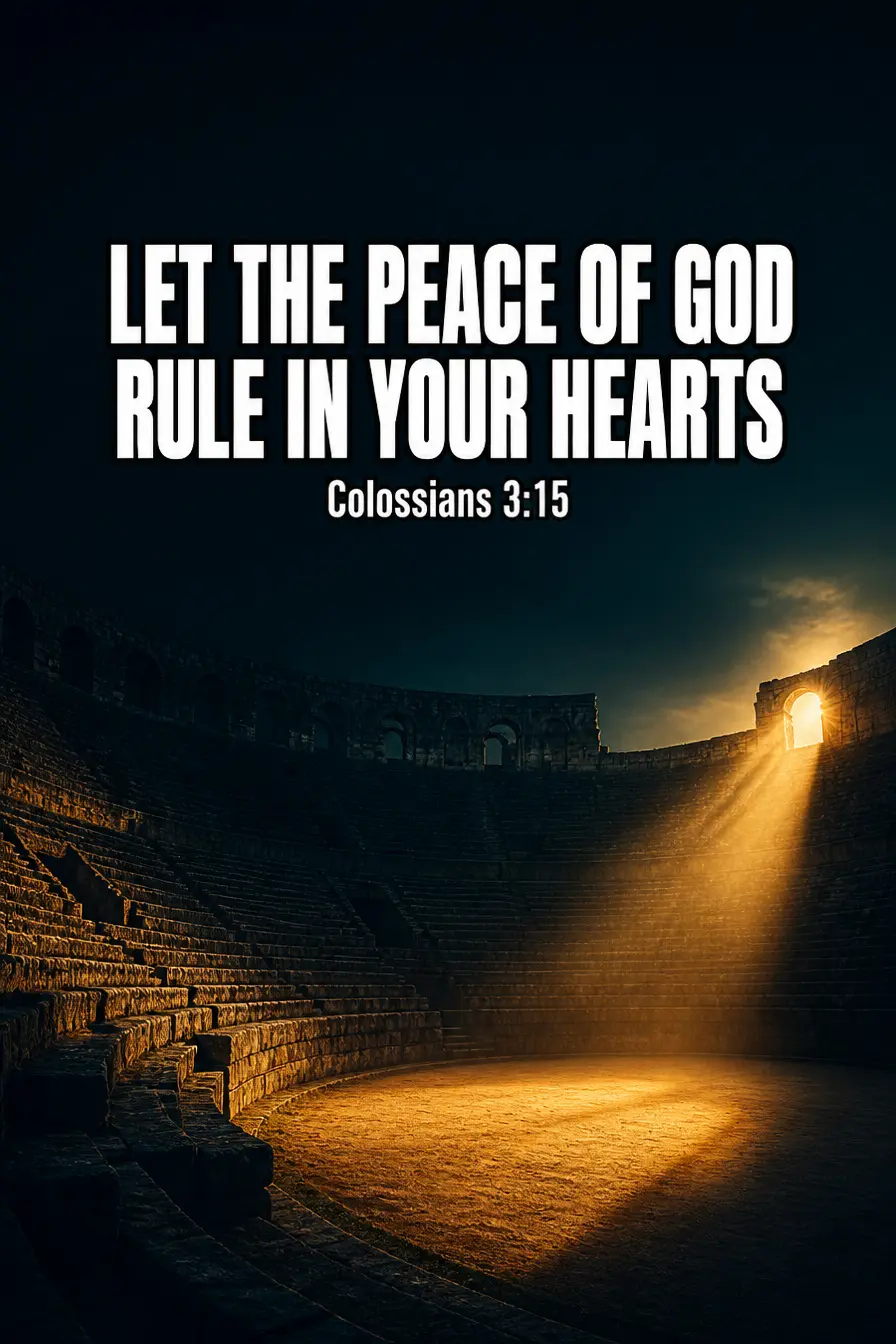
The Greek word translated “rule” here, brabeuō, was used for the official who judged an athletic contest. Peace is meant to make the calls in your heart, and “be thankful” comes right after it, as if the two work together.
Gratitude here is also communal: “in one body”, through songs sung to one another. Paul, who signs this letter “Remember my chains” (Colossians 4:18), assumes thanks lasts longer in company. When you cannot find the words, sit where others are singing them and borrow their voices. Our post on gratitude for friends looks at the people God uses this way.
Colossians 2:6-7 — Overflow From the Roots
“As therefore you received Christ Jesus the Lord, walk in him, rooted and built up in him and established in the faith, even as you were taught, abounding in it in thanksgiving.” — Colossians 2:6-7 (WEBU)

Paul stacks three images: walking, a tree’s roots, a building going up. Then he names what all of it produces: “abounding in it in thanksgiving”. The word means to overflow, to have more than enough.
The order is the point. Thanksgiving is not the effort that makes you rooted; it is what spills out once you are. If gratitude feels forced, do not grit your teeth. Go back to the roots: Scripture, prayer, the basics you were taught. Our post on Bible verses about prayer is a place to start.
Hebrews 12:28 — A Kingdom That Can’t Be Shaken
“Therefore, receiving a Kingdom that can’t be shaken, let’s have grace, through which we serve God acceptably, with reverence and awe,” — Hebrews 12:28 (WEBU)

The readers of Hebrews had already lost a great deal. The letter reminds them that they “joyfully accepted the plundering of your possessions” (Hebrews 10:34).
The phrase “let’s have grace” is a Greek idiom that many translations render as “let us be thankful”. The same expression appears when Jesus asks whether a master will “thank that servant” in Luke 17:9. So the writer is saying: you are receiving something that cannot be taken from you, so be grateful. When everything that can be shaken is shaking, gratitude rests on the one thing that cannot.
How to Practice Gratitude on a Hard Day
One practice, drawn from Habakkuk and Psalm 103, for days when a list of blessings feels false.
Draw a line down the middle of a sheet of paper.
On the left, write what is actually wrong, without softening it: the diagnosis, the account balance, the conversation that never happened.
On the right, write one “yet” for each line. Not a silver lining, which would be thanking God for the loss, but something true about God that the loss has not erased. “Yet he forgave me.” “Yet he got us through last winter.”
Pray the right-hand column out loud, starting each line with “Thank you that”. Three lines are enough. Do it at the same time each day for a week, the way Daniel did “as he did before”. The goal is not to feel grateful by Friday but to have the habit when you need it. If you are carrying grief, depression or a heavy medical diagnosis, a counselor or doctor belongs alongside this practice, not in place of it.
Frequently Asked Questions About Bible Verses About Gratitude
What did Jesus say about being grateful?
Jesus’ clearest teaching on gratitude is a question: “Where are the nine?” (Luke 17:17), asked when only one of ten healed men came back to thank him. He also modeled it, giving thanks over bread on the night he was betrayed (1 Corinthians 11:23-24).
What psalm talks about gratitude?
Psalm 100 is the one titled “A Psalm of thanksgiving” in its heading. Psalm 103 teaches gratitude as remembering God’s benefits, and Psalm 107 is the thanksgiving of people rescued from trouble. If you are preparing for the holiday itself, see our Thanksgiving scriptures.
What Bible verses encourage gratitude in difficult times?
The strongest are 1 Thessalonians 5:18, Habakkuk 3:17-18 and Philippians 4:6-7. Each was written or prayed under real loss: a persecuted church, a failing harvest and an imprisoned apostle. They teach thanks given in hardship, not thanks for the hardship itself.
What verse is “A Heart Full of Gratitude”?
No verse uses that exact phrase; it is a popular saying, not a quotation. The closest lines in Scripture are Psalm 9:1, “I will give thanks to the LORD with my whole heart”, and Colossians 2:7, which describes believers “abounding in it in thanksgiving”.
Gratitude That Holds
These verses were not written on good days. They come from a prison, a failed harvest, the belly of a fish and a table set on the night of a betrayal. None asks you to pretend. They ask you to name what is wrong, then say what is still true about God.
Start with one line on the right-hand side of the page tonight. For more on trusting God when circumstances do not cooperate, browse our faith articles.