
Most people who have stopped praying did not decide to stop. They ran out of confidence that they were doing it correctly, and the gap between attempts got longer until it stopped being a gap and started being a habit.
Worth saying out loud, because the Bible verses about prayer that get quoted most tend to assume you are already fluent. They talk about power, about mountains moving, about asking and receiving. They rarely touch the thing that actually blocks people, which is not doubt about whether God can do something. It is a suspicion that you are performing a skill you were never taught.
The twelve below are here as instructions rather than encouragement, and the striking thing about them as a set is how many are subtractive. Shut the door. Stop the repetitions. Stop assuming the length matters. Jesus was asked for a method exactly once, and the answer he gave takes under a minute to say.

Gratitude is a practice, not a mood. Build it into an ordinary day.Psalm 100 · 11 min
That was just the opening. Open the app and search #010 to hear the full 11-minute story — free.
Keep listening free in the app Free on iOS & Android — no sample needed

What the Disciples Actually Asked For
They lived with him and still had to ask. That detail sets the tone for everything else here.
Luke 11:1 — The Request That Started It
“When he finished praying in a certain place, one of his disciples said to him, “Lord, teach us to pray, just as John also taught his disciples.”” — Luke 11:1 (WEBU)
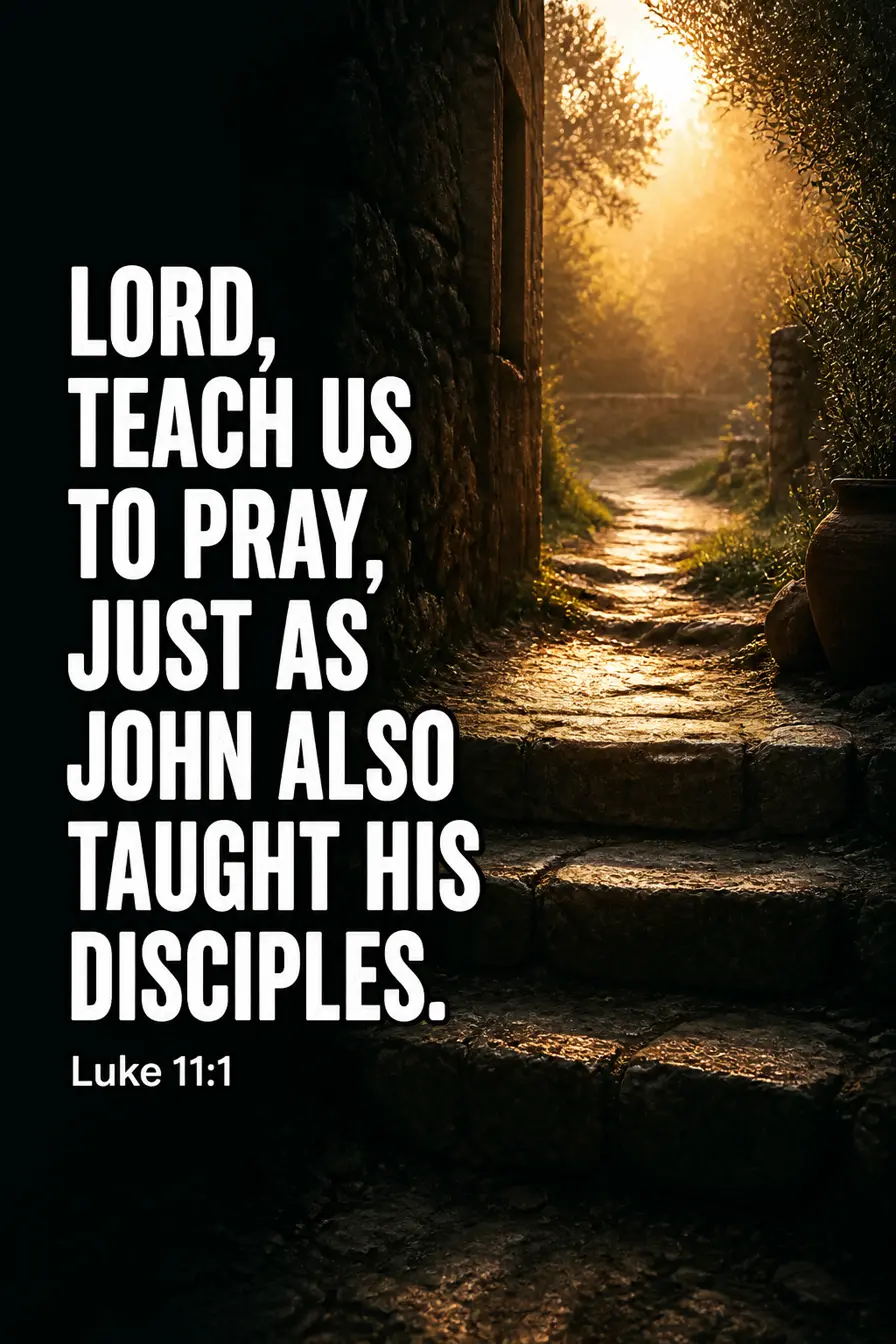
These are men who had walked with Jesus for months, watched him heal people, and heard him teach in public. And they still had to ask how to pray. Not whether to. How.
Notice the comparison they reach for: just as John also taught his disciples. In that world a teacher gave his followers a prayer, the way a guild gave apprentices a set of tools. Prayer was understood to be something learned, not something you were supposed to arrive already knowing. If you have been carrying quiet embarrassment about not knowing how to pray, the men closest to Jesus were carrying it too, and the correct response to it was to say so out loud.
Matthew 6:9-13 — The Answer Is Sixty Seconds Long
“Pray like this: “‘Our Father in heaven, may your name be kept holy. Let your Kingdom come. Let your will be done on earth as it is in heaven. Give us today our daily bread.” — Matthew 6:9-13 (WEBU)
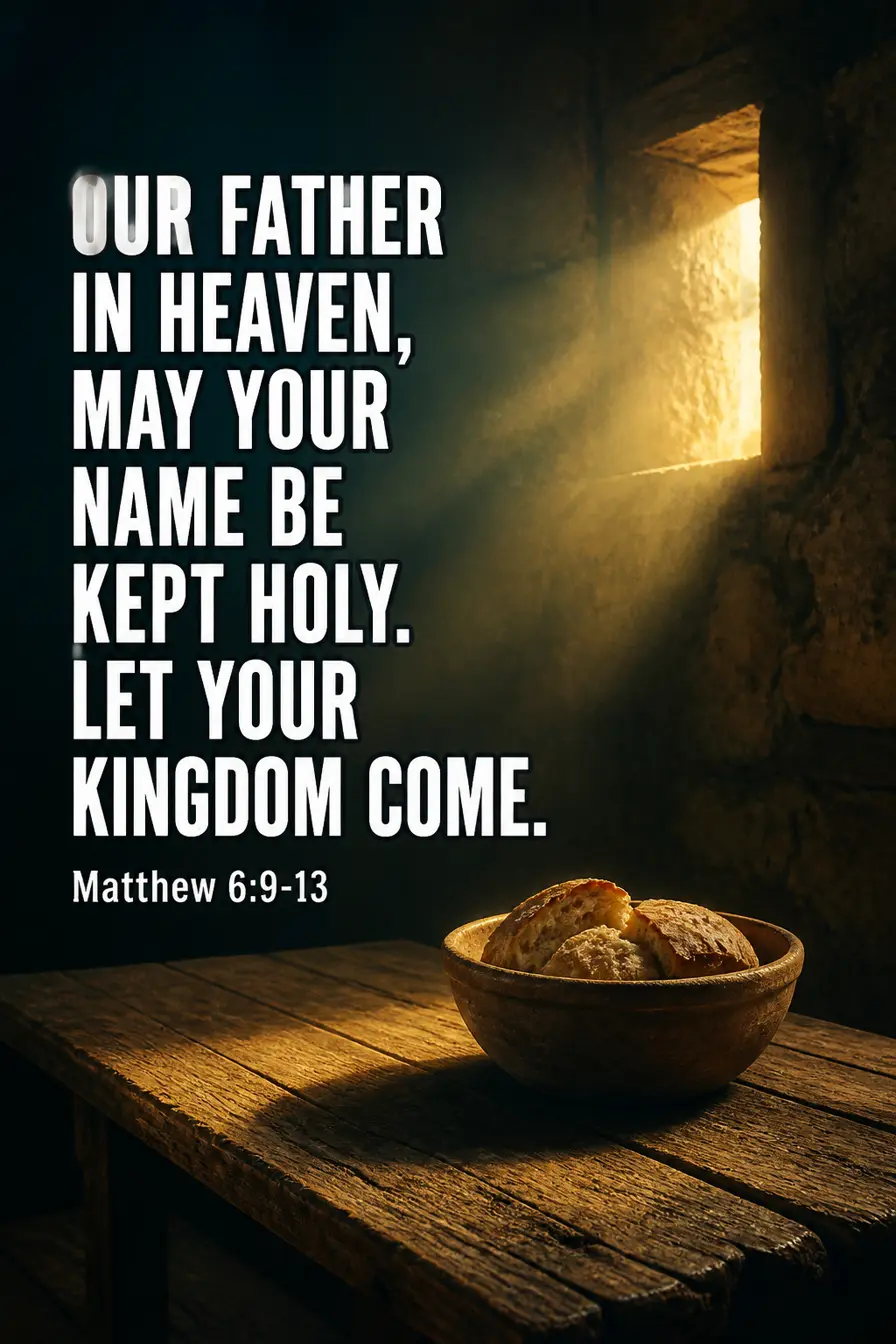
Read the whole thing aloud and time it. Under a minute, including the ending. That is the complete answer to the only recorded request for a method.
Look at what is in it: bread for today, debts forgiven, a request not to be led into the hard place. Ordinary, immediate, and almost domestic. There is no eloquence in it and no throat-clearing. The model prayer is short enough to say on a landing at two in the morning, which is presumably the point. Anything longer would exclude the people who need it most.
Romans 8:26 — For the Days With No Words At All
“In the same way, the Spirit also helps our weaknesses, for we don’t know how to pray as we ought. But the Spirit himself makes intercession for us with groanings which can’t be uttered.” — Romans 8:26 (WEBU)
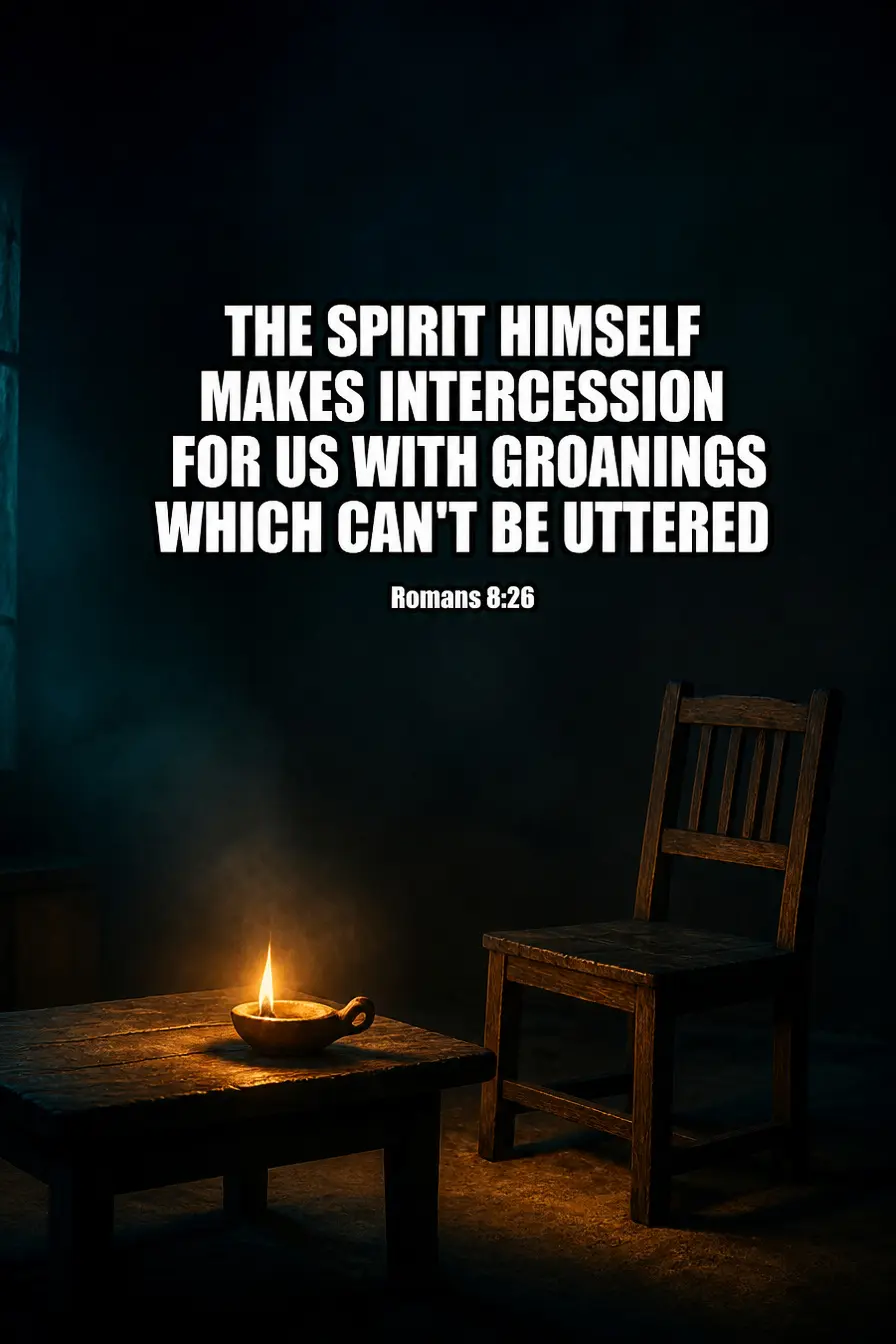
Paul states as plain fact that we don’t know how to pray as we ought. Not beginners. Everyone, himself included. That single clause removes the standard most of us are quietly failing to meet.
Then it goes further. The groanings described here cannot be put into words at all, and they still count as prayer — carried, not composed. Which means the worst night, the one where you sat down to pray and produced nothing but a sound, was not a failed attempt. It was the version this verse is describing. Nothing in the Christian life requires you to be articulate.
The Instructions Are Mostly About Stopping
Three commands about prayer from the Sermon on the Mount. Two of them are removals.
Matthew 6:6 — A Room and a Closed Door
“But you, when you pray, enter into your inner room, and having shut your door, pray to your Father who is in secret; and your Father who sees in secret will reward you openly.” — Matthew 6:6 (WEBU)
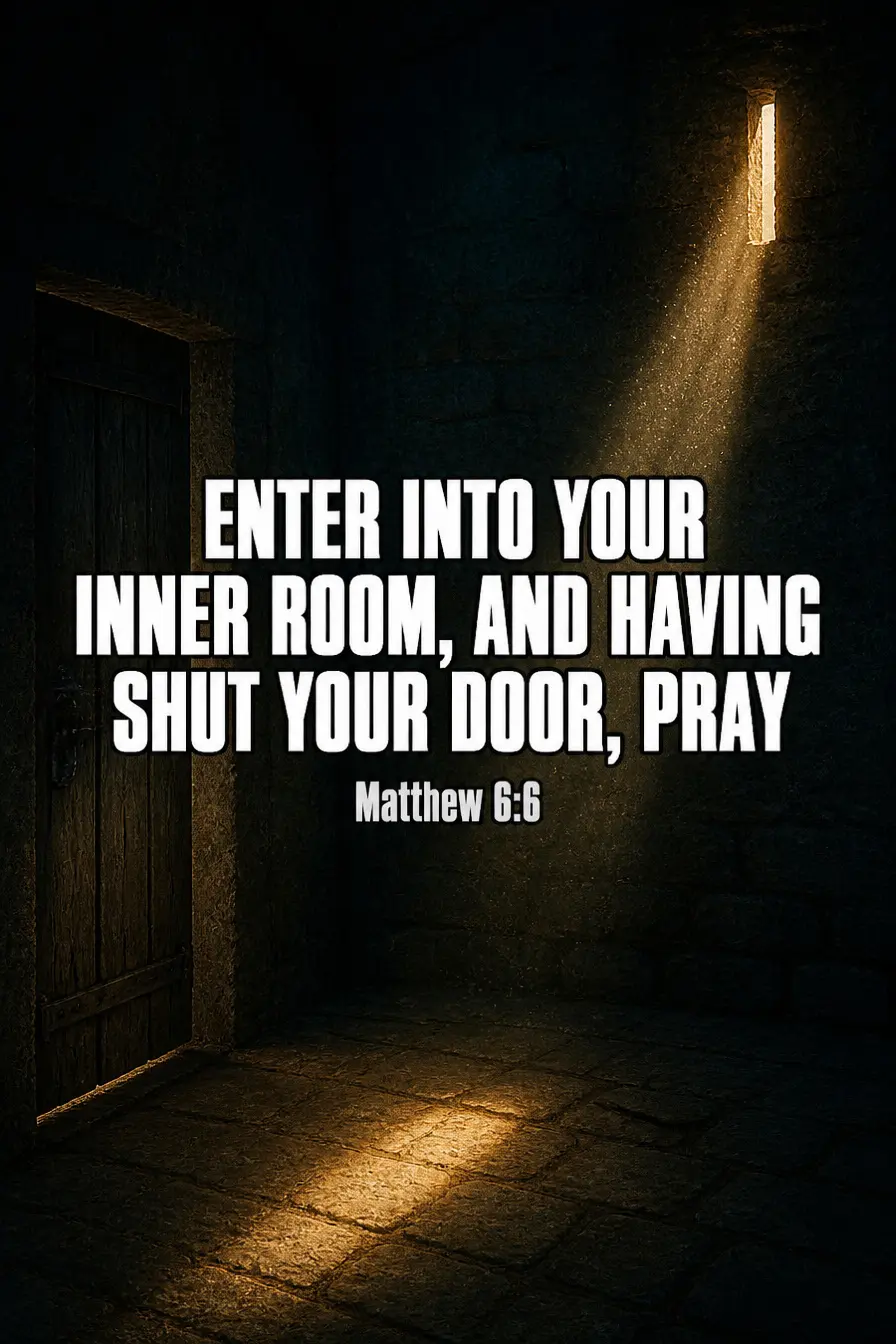
The verses either side are about people praying on street corners to be seen doing it. The instruction is the correction: go somewhere nobody is watching and shut the door behind you.
The inner room in a first-century house was the storeroom — no windows, no audience, the least impressive space available. Jesus is not recommending atmosphere. He is removing the audience, because an audience quietly changes what you say. Anyone who has prayed out loud in a group and heard their own vocabulary get better knows exactly what this verse is guarding against.
Matthew 6:7 — Length Is Not the Currency
“In praying, don’t use vain repetitions as the Gentiles do; for they think that they will be heard for their much speaking.” — Matthew 6:7 (WEBU)

The belief being dismantled is that volume buys attention — that a longer prayer, repeated often enough, has more chance of landing. Jesus calls this an assumption held by people who do not know who they are talking to.
What makes the verse useful is the sentence that follows it in the same chapter: your Father knows what you need before you ask. Prayer is not a briefing. You are not building a case for someone who has not read the file. That reframes the whole exercise, and it is the reason the model prayer that comes three verses later is as short as it is.
Matthew 7:7 — The Tense Is Continuous
““Ask, and it will be given you. Seek, and you will find. Knock, and it will be opened for you.” — Matthew 7:7 (WEBU)
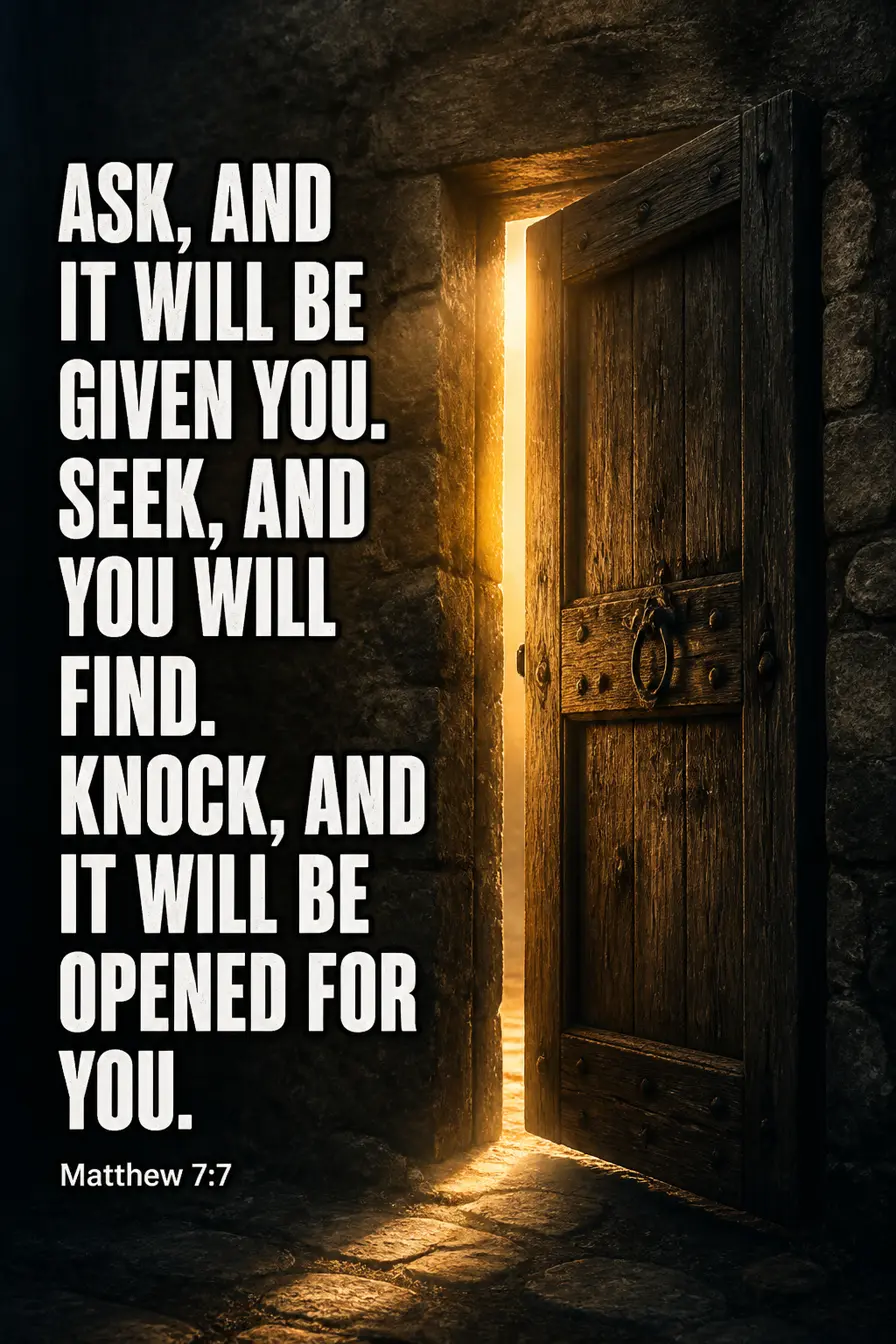
Three verbs, escalating: ask, then look for it yourself, then go and knock on the door. The sequence involves progressively more of you, which is not how a vending machine works.
The verbs here describe ongoing action rather than a single attempt — keep asking, keep seeking, keep knocking. That distinction decides whether this verse reads as a broken promise or a true one. Read as a one-time transaction it fails the first time nothing happens. Read as a description of a posture held over months, it matches how almost everyone who prays actually describes their experience of it.
When the Answer Has Not Come
The Bible is considerably more honest about unanswered prayer than most writing about prayer is.
Luke 18:1 — A Parable Aimed at Giving Up
“He also spoke a parable to them that they must always pray and not give up,” — Luke 18:1 (WEBU)
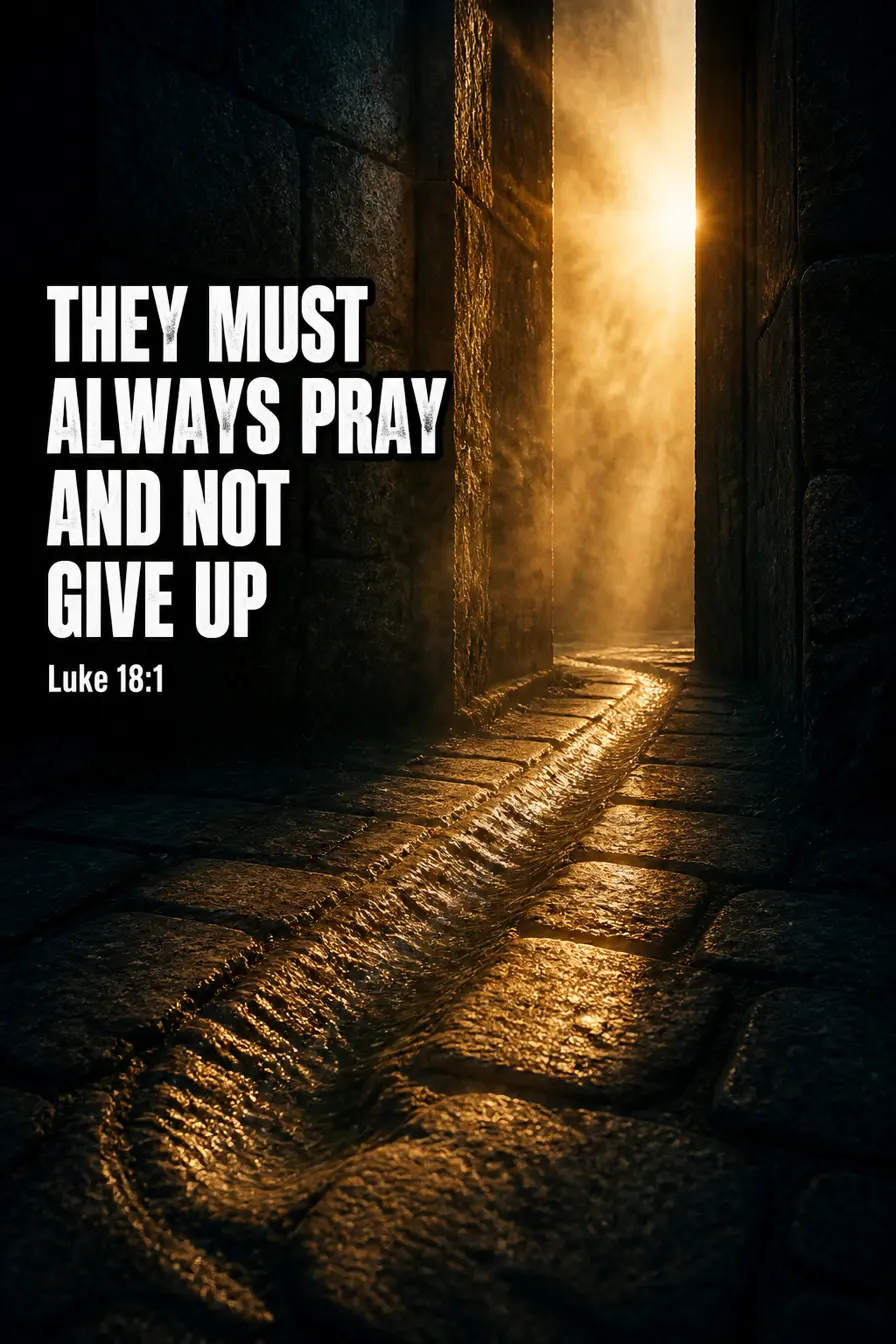
Luke does something unusual here: he tells you the purpose of the parable before he tells the parable. The story that follows is about a widow who keeps turning up at a judge’s door until he deals with her case simply to be rid of her.
The judge is described as neither fearing God nor respecting people, which makes him the opposite of the one being prayed to. That is the argument — if persistence works on someone with no interest in justice, consider who you are actually dealing with. The parable exists because giving up is the expected outcome. Jesus saw it coming and told a story about it in advance.
1 John 5:14 — The Condition Most Quoting Skips
“This is the boldness which we have toward him, that if we ask anything according to his will, he listens to us.” — 1 John 5:14 (WEBU)
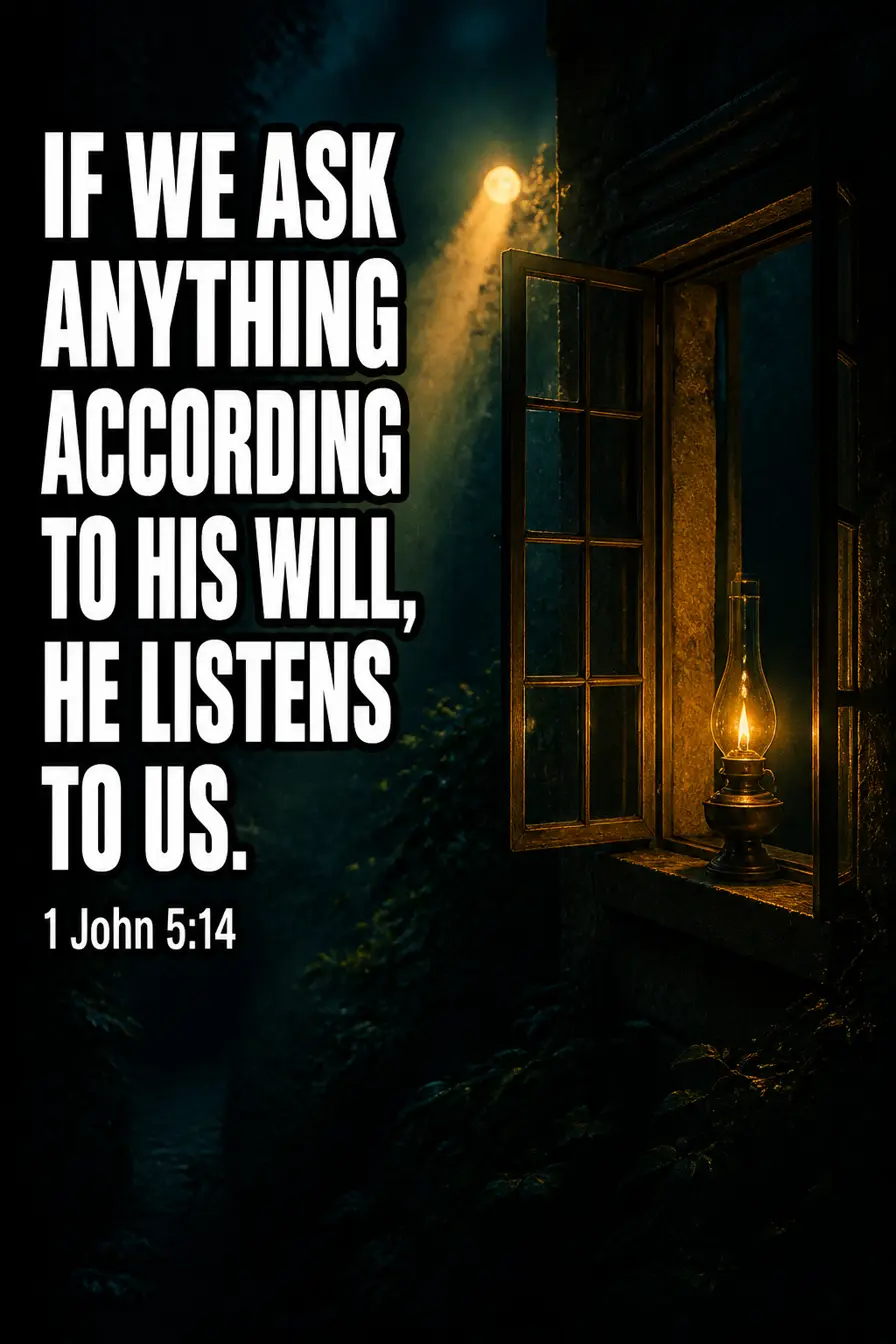
Everything turns on five words: according to his will. Quote the verse without them and it promises you whatever you ask for, which is a promise that breaks on contact with a single funeral.
Kept in, the verse is doing something better than guaranteeing outcomes. It is guaranteeing a hearing. He listens to us is the actual claim, and boldness is the word chosen for how we come — not hoping to be tolerated, not building a case. The clause that looks like a limitation is what makes the rest of the sentence survivable.
James 5:16 — Prayer With Another Person In the Room
“Confess your sins to one another and pray for one another, that you may be healed. The insistent prayer of a righteous person is powerfully effective.” — James 5:16 (WEBU)
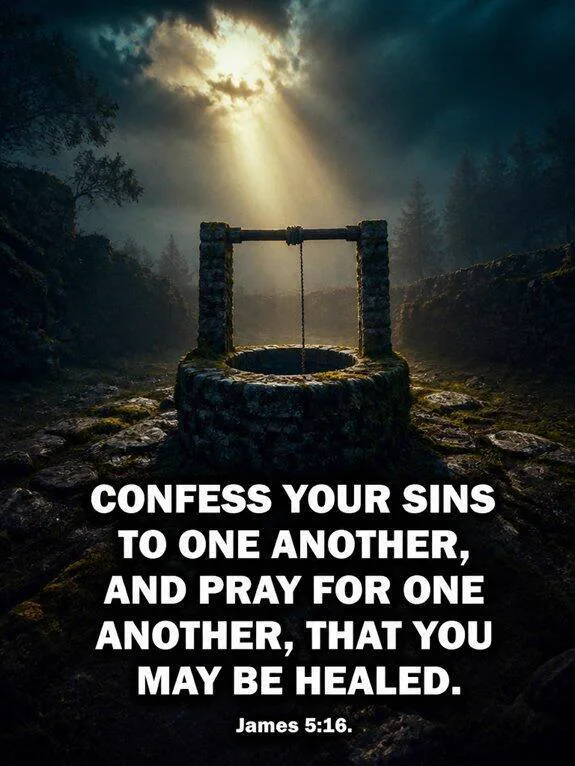
The famous half is the second sentence. The half that changes anything is the first, and it is attached: confession to another person, then prayer for each other, then healing. James puts them in one breath.
That is a demanding instruction in a culture that treats faith as private, and it is the one piece of prayer advice here that cannot be done alone. Notice also the adjective — insistent. Not eloquent, not frequent. Insistent, which is the same quality the widow had in Luke 18 and the only qualification either passage asks for.
Prayer as a Habit, Not an Emergency Line
The last three describe prayer at a completely different tempo.
1 Thessalonians 5:16-18 — Without Ceasing
“Always rejoice. Pray without ceasing. In everything give thanks, for this is the will of God in Christ Jesus toward you.” — 1 Thessalonians 5:16-18 (WEBU)

Pray without ceasing sounds impossible, and read as an instruction to be constantly speaking it is. But the phrase describes something closer to an open line than to continuous talking — the way you can be in a room with someone for an afternoon, mostly silent, still in conversation.
The third clause narrows it usefully. In everything give thanks — in it, not for it. The verse does not ask you to be grateful that the hard thing happened. It asks you to keep talking to God inside the situation rather than waiting until it resolves. Those are very different instructions, and only one of them is possible on a bad week.
Colossians 4:2 — A Word Borrowed From Guard Duty
“Continue steadfastly in prayer, watching in it with thanksgiving,” — Colossians 4:2 (WEBU)
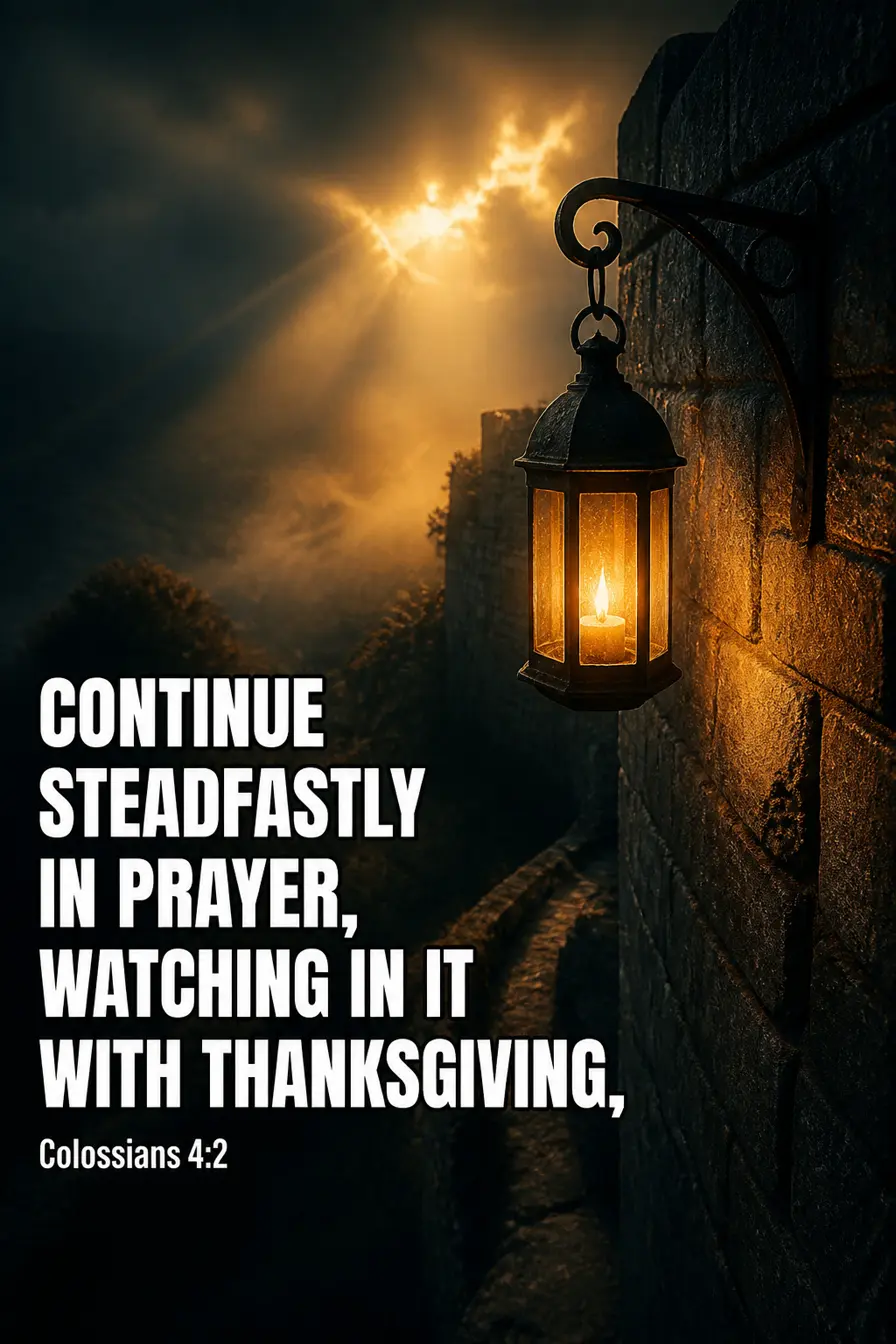
Watching is the word a sentry gets. It carries alertness and duration together — awake, on purpose, for a long time, expecting something to appear.
Applied to prayer it suggests an activity with attention in it rather than a recitation before sleep. Paul is writing from custody when he says this, which gives the instruction its weight: he is describing a discipline he is currently keeping in a room he cannot leave. The pairing with thanksgiving stops the watching turning into anxiety, and the two together are a fair description of what a sustainable prayer life looks like.
Psalm 145:18 — Near, With One Condition
“The LORD is near to all those who call on him, to all who call on him in truth.” — Psalm 145:18 (WEBU)

The promise is repeated twice in one line, and the second time it picks up a qualifier: in truth. Not in eloquence. Not in the right words or the right posture. Truthfully.
Which rules out exactly one kind of prayer — the performed kind, the version where you say what you think should be said rather than what is actually the matter. That is the same thing Matthew 6:6 was protecting with a closed door, arriving here from the other direction. The only entry requirement in either verse is honesty, and it is a lower bar than the one most of us have set for ourselves.
One Practice, Two Minutes
Pick a fixed moment you already have — the kettle boiling, the car before you get out, the last minute before you turn the light off. Attach the prayer to that, not to a feeling of readiness, because readiness will not turn up reliably.
Then say the true thing first. Not the tidy version. If the honest sentence is this is not getting better and it has been eleven months, start there. Psalm 145:18 sets truth as the condition, and Romans 8:26 covers the part where you run out of sentences, so there is no requirement to finish well.
Two minutes, at a fixed point, honestly. Do that for a fortnight before judging it. Almost everything else on this page assumes a habit already exists, and this is the smallest version of one that still counts.
Frequently Asked Questions
What does the Bible say about prayer?
The Bible treats prayer as an ordinary conversation rather than a ritual with entry requirements. Its central instruction, in Matthew 6, is to pray privately, briefly and without performance, and its most quoted promise — 1 John 5:14 — guarantees a hearing rather than a specific outcome.
How does the Bible tell us to pray?
Jesus answered this directly in Matthew 6:9-13 with a prayer under a minute long, covering provision for today, forgiveness, and protection from what you cannot handle. The surrounding verses remove three things: an audience, repetition, and the idea that length improves the odds.
Does God hear every prayer?
Psalm 145:18 makes nearness conditional on calling “in truth” rather than on wording, and Romans 8:26 states that even prayers with no words in them are carried. Between them, the Bible’s answer is that honesty is the requirement, and articulacy is not.
What does the Bible say about unanswered prayer?
Luke 18:1 exists specifically for this. Jesus told a parable about a woman who kept asking, and Luke names its purpose up front: that people would always pray and not give up. Unanswered prayer is treated throughout Scripture as normal rather than as evidence of failure.
Where to Start Tonight
Choose the two-minute version above and use it once, today, before you feel prepared. The verses on this page are unusually consistent about what prayer does not require — eloquence, length, privacy of the impressive kind, or a settled mood.
More on daily practice is collected in the Christian living archive. If anxiety is the thing driving you to pray, Philippians 4:6 is handled closely in Bible verses for anxiety, and for verses read in their original setting there is the inspirational Bible verses collection. To build the habit around a structure, the best Christian devotionals guide covers what to look for.