
Thursday, and nothing has actually gone wrong. That is almost the worst part. No disaster to point at, no single thing to fix — the week has simply kept coming, and somewhere around the fourth day the tank ran dry without announcing it. You are still doing everything. It just costs more than it used to.
Encouragement usually gets written for the emergency. Big trouble, big rescue. It is far less useful on the ordinary Thursday, when the problem is not a crisis but attrition — and that is the Thursday we keep landing on.
So we picked these twelve for the long stretch rather than the sudden drop. Every one of them was written by somebody worn down — exiles, a man watching his city burn, a prisoner, a leader who would die before seeing the place he had walked toward for forty years. Under each verse is the part that usually gets cut: where the writer stood, and what the words are actually asking.
One plain sentence before we start. Scripture and professional care are not rivals; if this has stopped being a hard week and started being every week, therapy and medical treatment belong alongside prayer, not instead of it.

Renew your strength. Learn to soar instead of flap.Isaiah 40 · 12 min
That was just the opening. Open the app and search #003 to hear the full 12-minute story — free.
Keep listening free in the app Free on iOS & Android — no sample needed

When You Have Run Out of Your Own Strength
The first three are for the point where willpower stops working — not because you gave up, but because it was never a renewable resource.
Isaiah 40:31 — The Promise Gets Smaller on Purpose
“those who wait for the LORD will renew their strength. They will mount up with wings like eagles. They will run, and not be weary. They will walk, and not faint.” — Isaiah 40:31 (WEBU)

Read the three images in the order they arrive: fly, run, walk. Every instinct says a promise should build toward its biggest picture, and this one deliberately descends. The eagle is the poster; the walking is the point. Isaiah wrote this to people facing exile in Babylon, a stretch measured in decades, where nobody flies anywhere. The verse ends on the slowest possible verb because that is the speed most of life moves at. If the only encouragement on offer were soaring, it would be useless by Wednesday. What the passage promises is that the walking itself will not finish you.
Psalm 46:1 — Written to Be Sung, Not Read
“God is our refuge and strength, a very present help in trouble.” — Psalm 46:1 (WEBU)
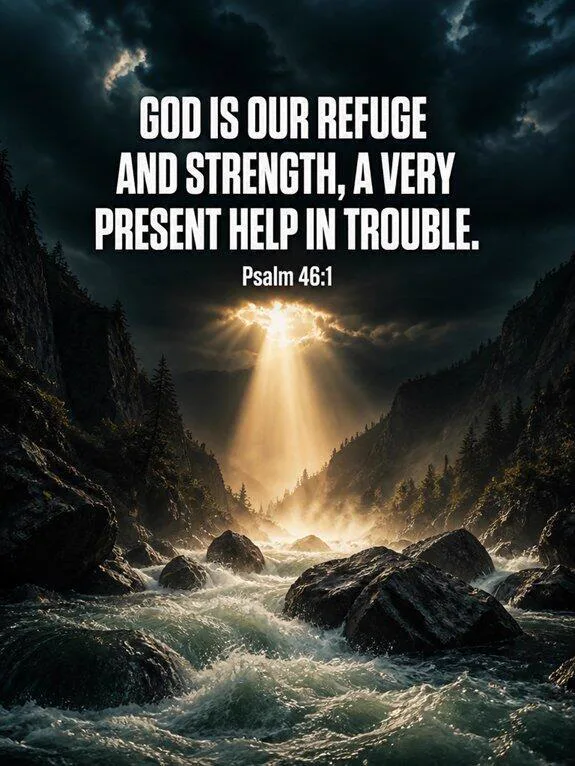
The line above this verse in the text is a stage direction: For the Chief Musician. By the sons of Korah. According to Alamoth. This was handed to a choir. Somebody had to stand up in front of a congregation and sing that God is a present help while the trouble was still going on, which is a very different act from privately believing it. The word doing the heavy lifting is present — not a help who arrives, a help already here. Nothing in the sentence promises the trouble ends. It promises the location of God during it, which is the only claim that survives a week that does not improve.
Isaiah 41:10 — Three Verbs, Not One Feeling
“Don’t you be afraid, for I am with you. Don’t be dismayed, for I am your God. I will strengthen you. Yes, I will help you. Yes, I will uphold you with the right hand of my righteousness.” — Isaiah 41:10 (WEBU)

Almost everybody quotes the first half and stops. The half that gets dropped is where the sentence turns concrete: strengthen, help, uphold. Three separate actions, escalating — the last one is what you do for somebody who has already stopped being able to stand. The opening instruction is not “feel calmer”. It is followed immediately by the reason, and the reason is a list of things God says He will do. That is worth noticing when the fear will not move on command: the verse never asks you to manufacture the feeling first.
When Doing the Right Thing Stopped Paying Off
A specific exhaustion, and the Bible names it directly: the tiredness that comes from doing good, not from doing wrong.
Galatians 6:9 — The Fatigue Is Named Precisely
“Let’s not be weary in doing good, for we will reap in due season if we don’t give up.” — Galatians 6:9 (WEBU)
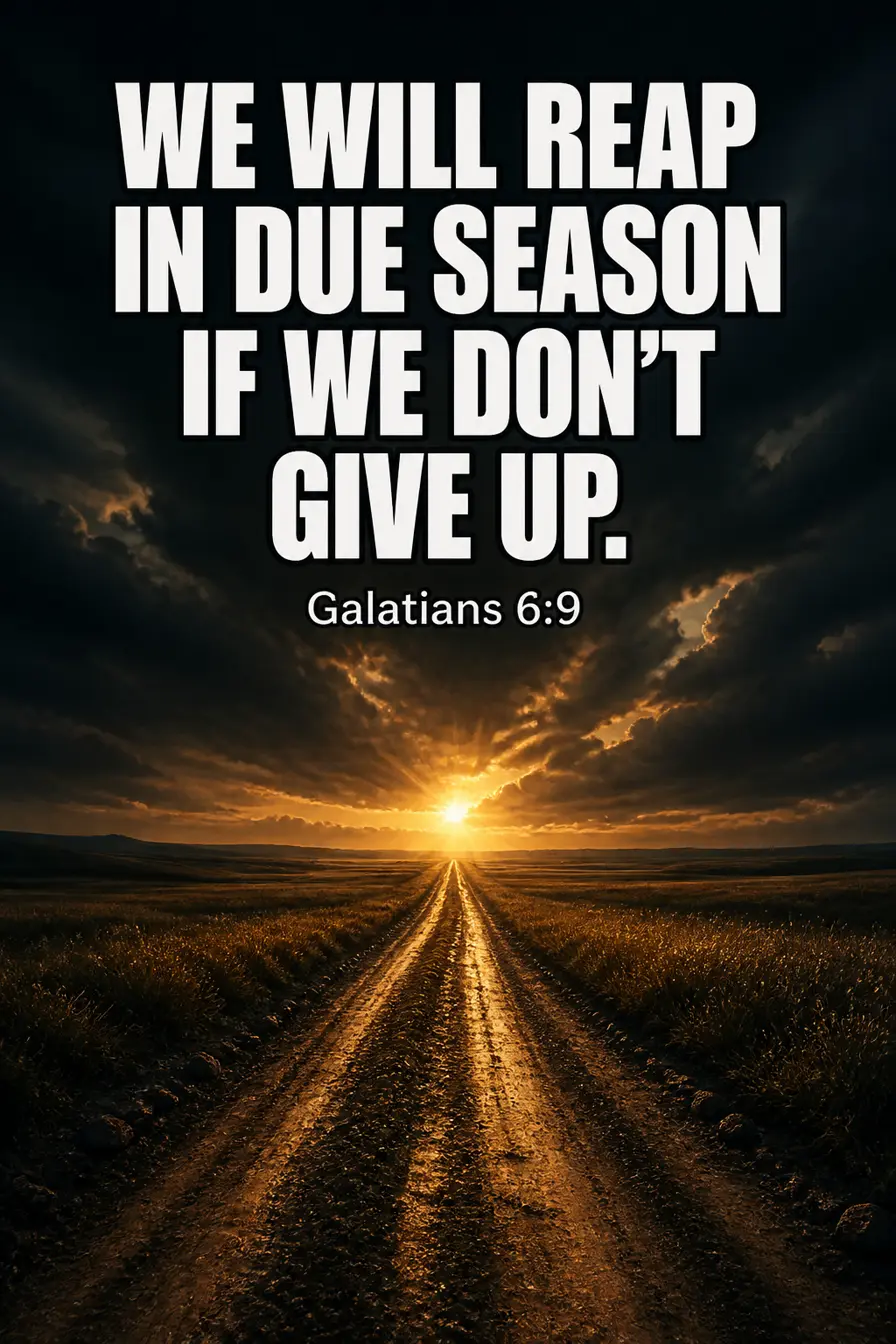
Paul does not write “weary”. He writes weary in doing good, and the precision matters. This is the tiredness of the person still turning up: still patient with the difficult relative, still honest when nobody is checking, still carrying the thing nobody thanks them for. The verse assumes that behaving well is depleting rather than energising, which is a strikingly unsentimental thing for an encouragement verse to admit. Then it offers a harvest in “due season” — a season that is never actually named. No date is given. What is given is the shape: the reaping comes after, not during.
1 Corinthians 15:58 — Read What That First Word Points At
“be steadfast, immovable, always abounding in the Lord’s work, because you know that your labor is not in vain in the Lord.” — 1 Corinthians 15:58 (WEBU)
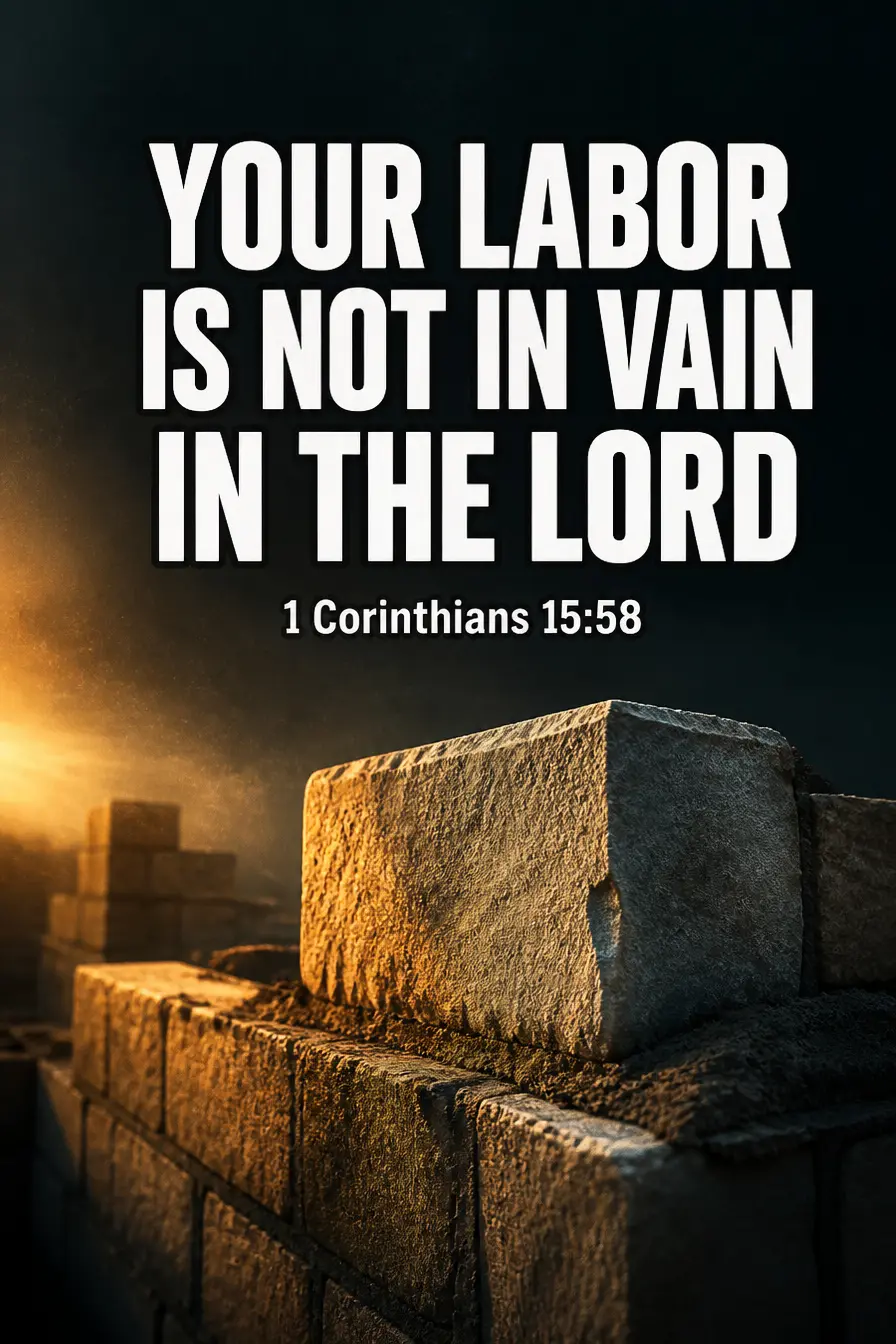
This is the last sentence of the chapter, and the chapter is Paul’s long argument about resurrection. The verse opens by pointing backwards at all of it. Strip the theology and the logic is plain: if the ending is not oblivion, effort is not erased by time. “Not in vain” is a smaller claim than “successful” and a far more durable one. It says nothing about whether you will see the result. It says the result exists whether or not you get to watch it arrive.
Hebrews 12:1-2 — The Crowd Is Made of People Who Never Saw It
“let’s run with perseverance the race that is set before us, looking to Jesus, the author and perfecter of faith” — Hebrews 12:1-2 (WEBU)
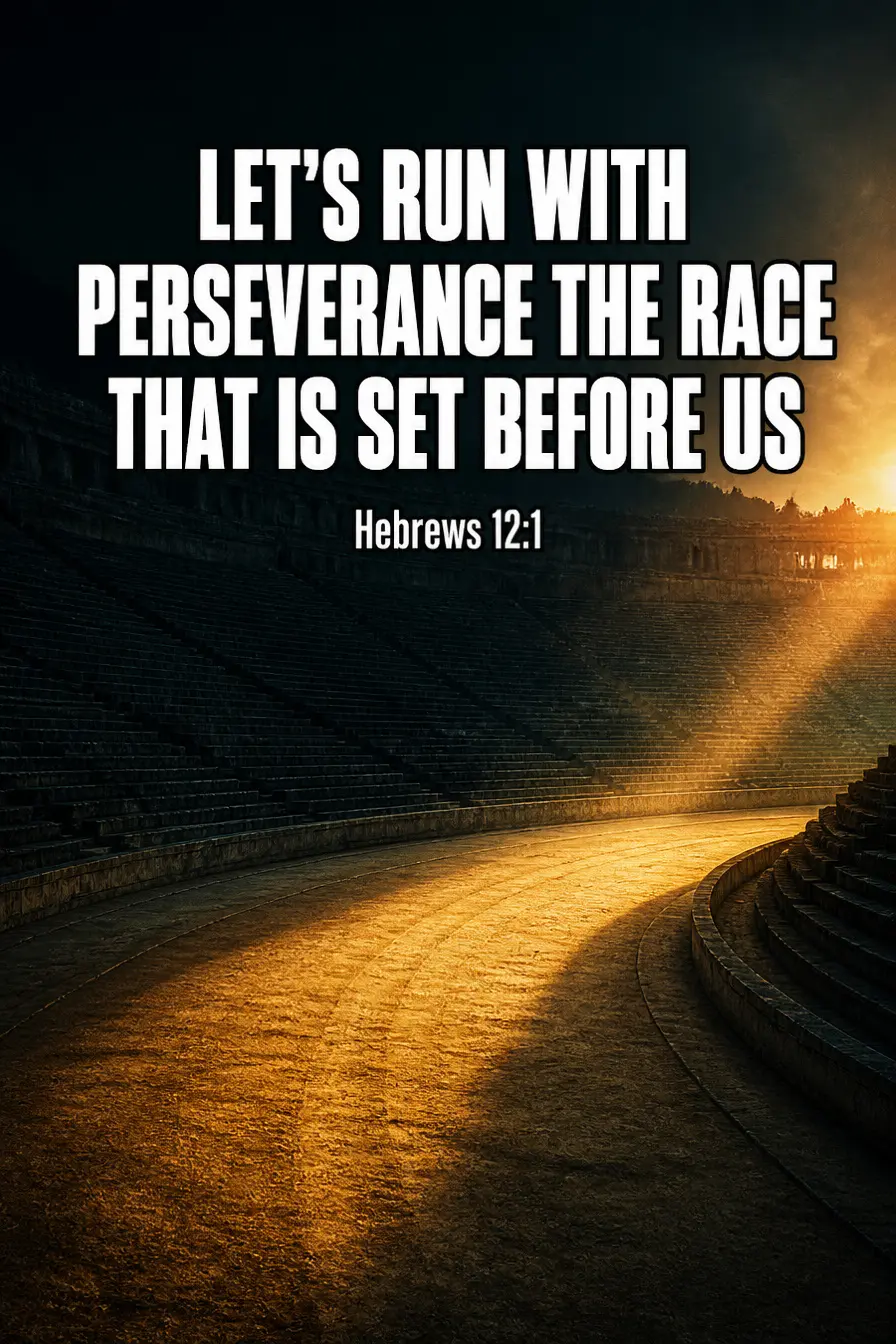
The “cloud of witnesses” is not an abstraction. It is the list in the chapter immediately before this one, and that chapter closes by saying those people died without receiving what they had been promised. So the crowd cheering is composed entirely of people whose stories did not resolve in their lifetime. That reframes the encouragement completely. The verse is not saying keep going because it works out quickly. It is saying keep going in the company of everyone who kept going without proof, and the word chosen for the running is perseverance, which only applies to something long.
When the Fear Arrives Before the Trouble Does
Three for anticipatory dread — the version that shows up about a thing that has not happened.
Psalm 27:1 — David Asks Instead of Asserting
“The LORD is my light and my salvation. Whom shall I fear? The LORD is the strength of my life. Of whom shall I be afraid?” — Psalm 27:1 (WEBU)
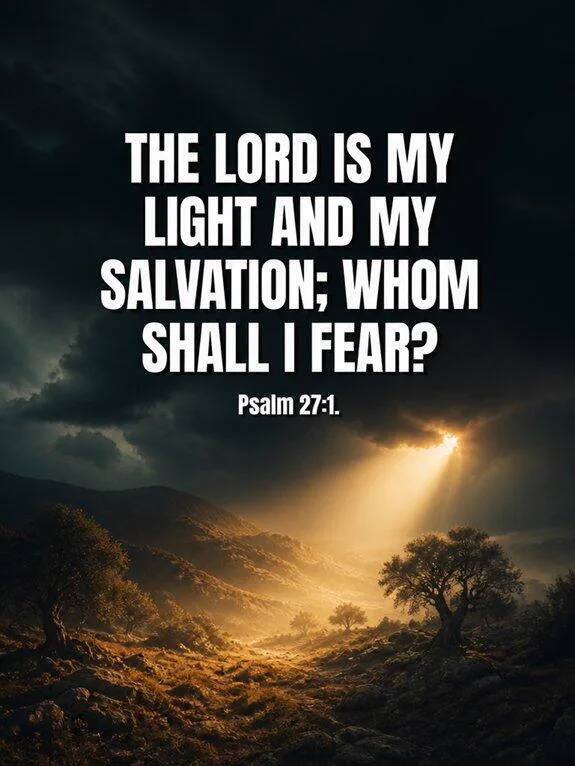
Two statements, then two questions — and the questions are never answered. David could have written “so I will not be afraid” and did not. He leaves the questions open, hanging there, which is what fear actually feels like from the inside: you can hold a true statement about God and an unanswered question at the same time. The psalm goes on to ask God not to hide His face, so the confidence in the first line is not the end of the argument. It is the thing he keeps returning to while the argument is still running.
Deuteronomy 31:6 — Said by a Man Who Would Not Get There
“Be strong and courageous. Don’t be afraid or scared of them, for the LORD your God himself is who goes with you. He will not fail you nor forsake you.” — Deuteronomy 31:6 (WEBU)
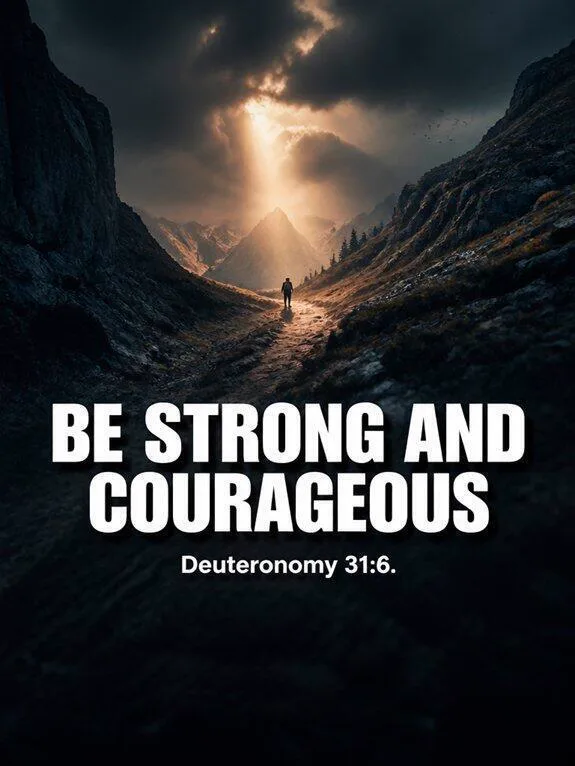
Moses is speaking days before his death, to a nation about to cross into a land he has been told he will not enter. He had walked toward it for forty years. Knowing who is talking changes the temperature of the sentence: this is not a confident man promising an outcome he expects to enjoy. It is somebody handing over a conviction he will not personally get to test. Encouragement from a person whose own story did not end the way they wanted is worth more than encouragement from somebody who got everything.
Romans 8:28 — What the Verse Does Not Say
“We know that all things work together for good for those who love God, for those who are called according to his purpose.” — Romans 8:28 (WEBU)
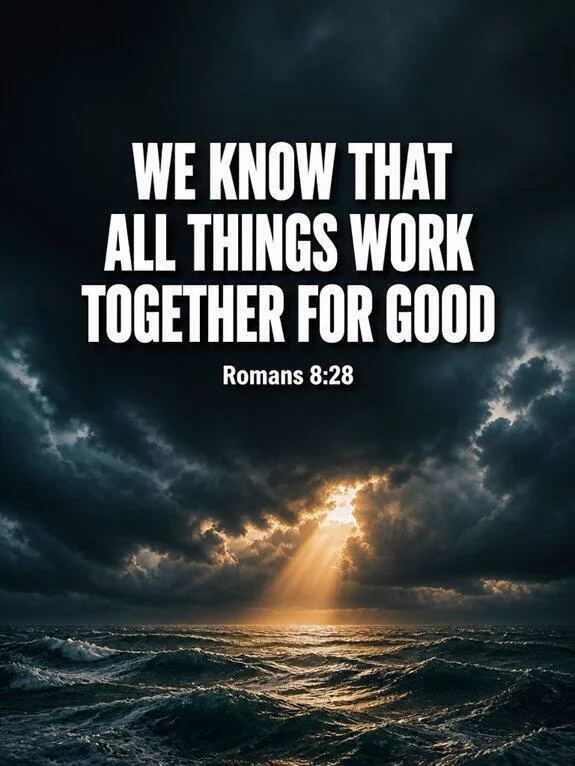
This one gets misused more than any other verse on the list, so the misreading is worth naming. It does not say all things are good. It says they work together — a verb of process and combination, not a verdict on each ingredient. Somebody quoting it at a funeral to imply the death was secretly fine has inverted the sentence. Told properly, it is much better company: the bad thing stays bad, and it is still being woven into something. Nobody is being asked to call the wound a gift.
When You Need Tomorrow to Be Different From Today
The last three are about supply — where the next day’s portion comes from when today used everything.
Lamentations 3:22-23 — Written in the Rubble
“It is because of the LORD’s loving kindnesses that we are not consumed, because his mercies don’t fail. They are new every morning. Great is your faithfulness.” — Lamentations 3:22-23 (WEBU)

These words sit inside a book of funeral poetry written over the ruins of Jerusalem after the city fell. Everything around them is grief — the chapters on either side are unflinching about hunger, siege and loss. That location is the whole force of the line. “New every morning” was not written by somebody having a good year; it was written by a man itemising a catastrophe who stopped mid-list to say the supply had not run out. The word is new, not renewed: not yesterday’s mercy topped up, but a fresh issue, and yesterday’s exhaustion has no claim on it.
2 Corinthians 4:16-18 — Calling It “Light” From Inside It
“we don’t faint, but though our outward person is decaying, yet our inward person is renewed day by day. For our light affliction, which is for the moment, works for us more and more exceedingly an eternal weight of glory” — 2 Corinthians 4:16-18 (WEBU)
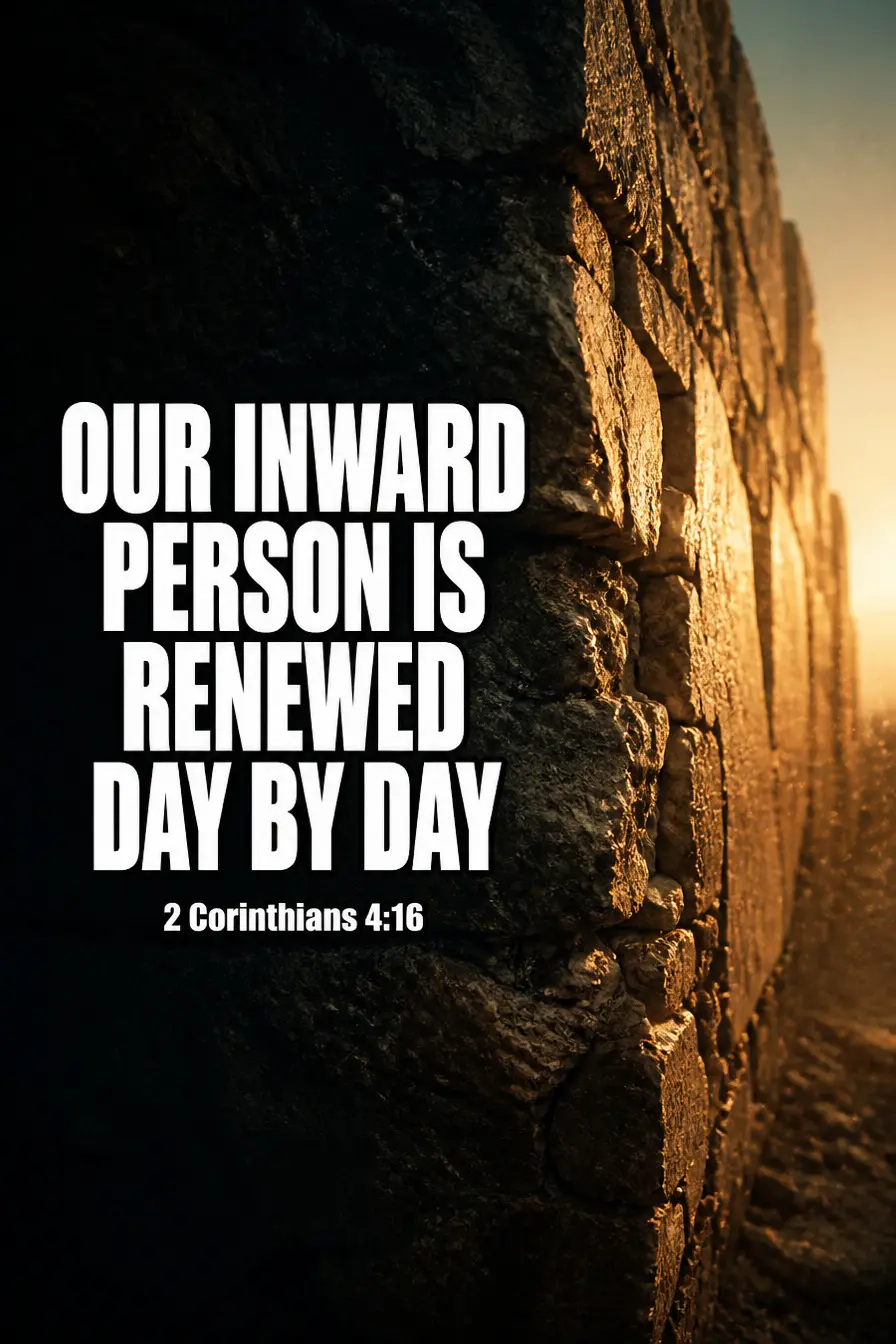
The phrase “light affliction” sounds glib until you check who wrote it. Seven chapters later in the same letter, Paul lists what his life has contained: beatings, stoning, shipwreck, a night and a day adrift at sea. He is not describing a mild inconvenience and calling it light. He is describing that, and calling it light, because he has set it against something he considers heavier. Also note “day by day” — the renewal is not one event that fixed him. It is a daily transaction, which is a slower and more honest promise.
Romans 15:13 — This Is a Prayer, Not an Order
“Now may the God of hope fill you with all joy and peace in believing, that you may abound in hope in the power of the Holy Spirit.” — Romans 15:13 (WEBU)

Grammatically this is a blessing spoken over somebody else — “now may” — which means it is asking, not commanding. That distinction matters on a day when hope feels like one more task you are failing. Nobody here is instructing you to feel hopeful. Somebody is praying that hope would be given to you, and the source named is not your effort but the Spirit. Paul places it at the close of a long, argumentative letter, in the spot where a writer says the thing they most want to leave behind.
One Practice for the Long Stretch
Pick one verse from this page. Not the most beautiful one — the one that describes your actual week most accurately. If the problem is attrition, that is probably Galatians 6:9 or Isaiah 40:31.
Then put it somewhere the tired version of you will meet it without deciding to. Lock screen, bathroom mirror, the note taped inside a cupboard door you open every morning. We fail at this in a predictable way: the day we most need the verse is the day we have the least energy to go looking for it. Remove the looking.
Say it out loud once, at the same moment each day — kettle on, keys down, whatever your day already contains. Reading is silent and slips past us. Speaking is slower and lands differently, which is the same reason the psalms were sung rather than filed. Give it a fortnight before judging whether it helped. Encouragement of this kind works by accumulation rather than impact, and a fortnight is roughly when that becomes noticeable.
Frequently Asked Questions
Which scripture is good for encouragement?
Isaiah 40:31 and Romans 15:13 are the two most reached for, and they do different jobs. Isaiah 40:31 speaks to depleted strength and promises endurance rather than rescue. Romans 15:13 is a prayer for hope rather than an instruction to feel it, which makes it easier to receive on a bad day.
What scripture encourages in hard times?
Lamentations 3:22-23 carries the most weight in genuinely hard seasons, because of where it was written — inside a book mourning a destroyed city. Its promise is deliberately small and daily: mercies that are new every morning, issued fresh rather than carried over. Psalm 46:1 pairs with it, locating God as a present help during trouble rather than after it.
What are some short Bible verses for encouragement?
Galatians 6:9 and Psalm 46:1 are both a single sentence and easy to hold in mind. “Let’s not be weary in doing good, for we will reap in due season if we don’t give up” fits on a lock screen. Short verses work better for daily repetition; longer passages like Hebrews 12:1-2 reward sitting with instead.
What does the Bible say about encouragement?
Scripture treats encouragement as something people owe each other rather than a mood. Romans 15:13 is a blessing spoken over someone else, and Hebrews 12:1 pictures a crowd of witnesses surrounding a runner. The pattern is consistent: encouragement arrives through other people and through God’s own words, rarely by self-generation.
Before You Close This Tab
Take one verse, not twelve. We built the list to be returned to, not finished in a sitting — and the week that will not let up is exactly the week when twelve of anything is too many.
More for the long stretch sits in our full collection of verses on hope, in the passages about strength and God’s promises, and across the whole hope archive. If the tiredness has fear underneath it, start instead with what Scripture says when the worry will not stop.