
Nobody hands you a calendar when it starts. Bible verses for healing get collected as though illness were a single event with a before and an after, when the experience most of us are actually having is a long middle — appointments, waiting, a week that looks like progress followed by one that does not.
The Bible is better on that middle than its reputation suggests. It records a woman ill for twelve years who got worse the whole time. A man lying by a pool for thirty-eight. A king who wept in bed and was told plainly that his tears had been seen. None of these are about a quick outcome. They were written by and about people who were still in it.
So the twelve below are arranged by stage rather than theme — the first days when nobody knows anything, the stretch that has gone on too long, the part where somebody else carries you, and the nights. If your question is whether God promises physical healing at all, that is handled directly in our Bible verses for hope and healing collection, including the four people in Paul’s own letters who prayed and were not healed. This page asks what to read on a Tuesday in month seven.
One plain note before the verses: none of this replaces medical care. Scripture and a good doctor are not competing offers, and the Bible itself treats them as sitting side by side.

When You Need Strength
Renew your strength. Learn to soar instead of flap.Isaiah 40 · 12 min
That was just the opening. Open the app and search #003 to hear the full 12-minute story — free.
Keep listening free in the app Free on iOS & Android — no sample needed

When You Need Healing and Nobody Knows Anything Yet
The early stretch has its own weight — a diagnosis that has not arrived, or has just arrived and not been absorbed.
Psalm 6:2 — Permission to Say You Are Faint
“Have mercy on me, LORD, for I am faint. LORD, heal me, for my bones are troubled.” — Psalm 6:2 (WEBU)
There is no attempt here to sound composed. “I am faint” is the whole opening argument — no context, no reassurance offered to the reader, no tidy resolution three lines later.
That matters because our first instinct when frightened is to edit. We tell people we are fine, we tell God a reasonable version, and the truth goes unsaid. This psalm did not do that, and it is in the Bible unedited. Whatever you can say tonight already counts as prayer.
Psalm 31:9-10 — The Body Is Included
“Have mercy on me, LORD, for I am in distress. My eye, my soul, and my body waste away with grief. For my life is spent with sorrow, my years with sighing.” — Psalm 31:9-10 (WEBU)
Read the list: eye, soul, body. Three things named separately and failing together — an unusually accurate description of being ill for a while.
Illness is rarely only physical by the second month. Sleep goes, then appetite, then the capacity to care about things you used to care about — and most people treat that second layer as a personal weakness rather than part of the condition. This psalm does not separate them. It puts the wasting eye and the sighing years in one sentence, treating the exhaustion as part of what is wrong rather than your failure to cope with it.
2 Kings 20:5 — Tears Counted as Evidence
“I have heard your prayer. I have seen your tears.” — 2 Kings 20:5 (WEBU)
Hezekiah was a king who had just been told to put his affairs in order because he was going to die. He turned his face to the wall and wept. The message that came back names two separate things: the prayer, and the tears.
Two distinct items, which is the detail worth keeping. The crying was not an embarrassing addendum to the real prayer; it was registered on its own terms. Anyone who has fallen apart in a car park after an appointment and then felt they ought to go home and pray properly has the order wrong. That was already the prayer.
Healing Verses for an Illness That Has Gone On Too Long
Three passages about duration. The Bible is remarkably specific about numbers here.
Mark 5:25-26 — Twelve Years, and Getting Worse
“A certain woman who had a discharge of blood for twelve years, and had suffered many things by many physicians, and had spent all that she had, and was no better, but rather grew worse,” — Mark 5:25-26 (WEBU)
Mark stacks the clauses deliberately: twelve years, many physicians, suffered under them, spent everything, no better, worse. Each lands harder than the last.
She had also been ceremonially unclean for all twelve years, which under the law of the time meant no temple and limited contact with anyone. The bill was never only medical. It was twelve years of exclusion, and the money had gone too. This passage belongs in a healing collection not for its ending, but because the Bible bothered to record the cost of the middle in this much detail — including the part where treatment made things worse.
John 5:5-6 — Thirty-Eight Years, and an Odd Question
“A certain man was there who had been sick for thirty-eight years. When Jesus saw him lying there, and knew that he had been sick for a long time, he asked him, “Do you want to be made well?”” — John 5:5-6 (WEBU)
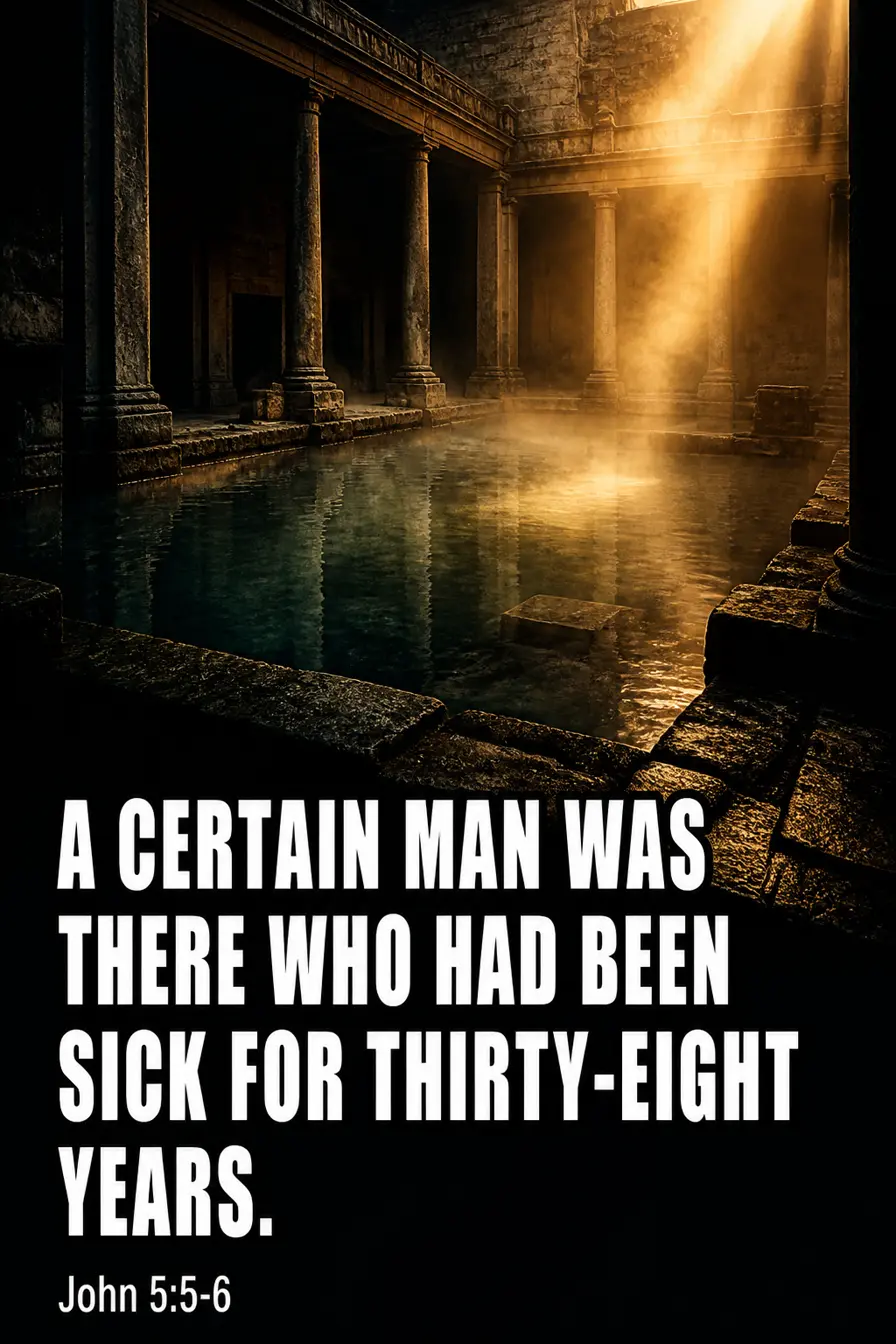
“Do you want to be made well?” is a strange thing to ask a man who has lain by a pool for thirty-eight years. It is not a trick. That long is enough for an illness to become the shape of a life, and the question takes it seriously rather than assuming.
Notice the clause in between: Jesus knew he had been sick a long time. The duration was known before the conversation started. For anyone whose condition has outlasted everyone’s sympathy — friends who stopped asking, colleagues who assume it resolved — that clause is the point. The length was not news to God, and needed no explaining first.
Psalm 119:50 — What Got Him Through
“This is my comfort in my affliction, for your word has revived me.” — Psalm 119:50 (WEBU)
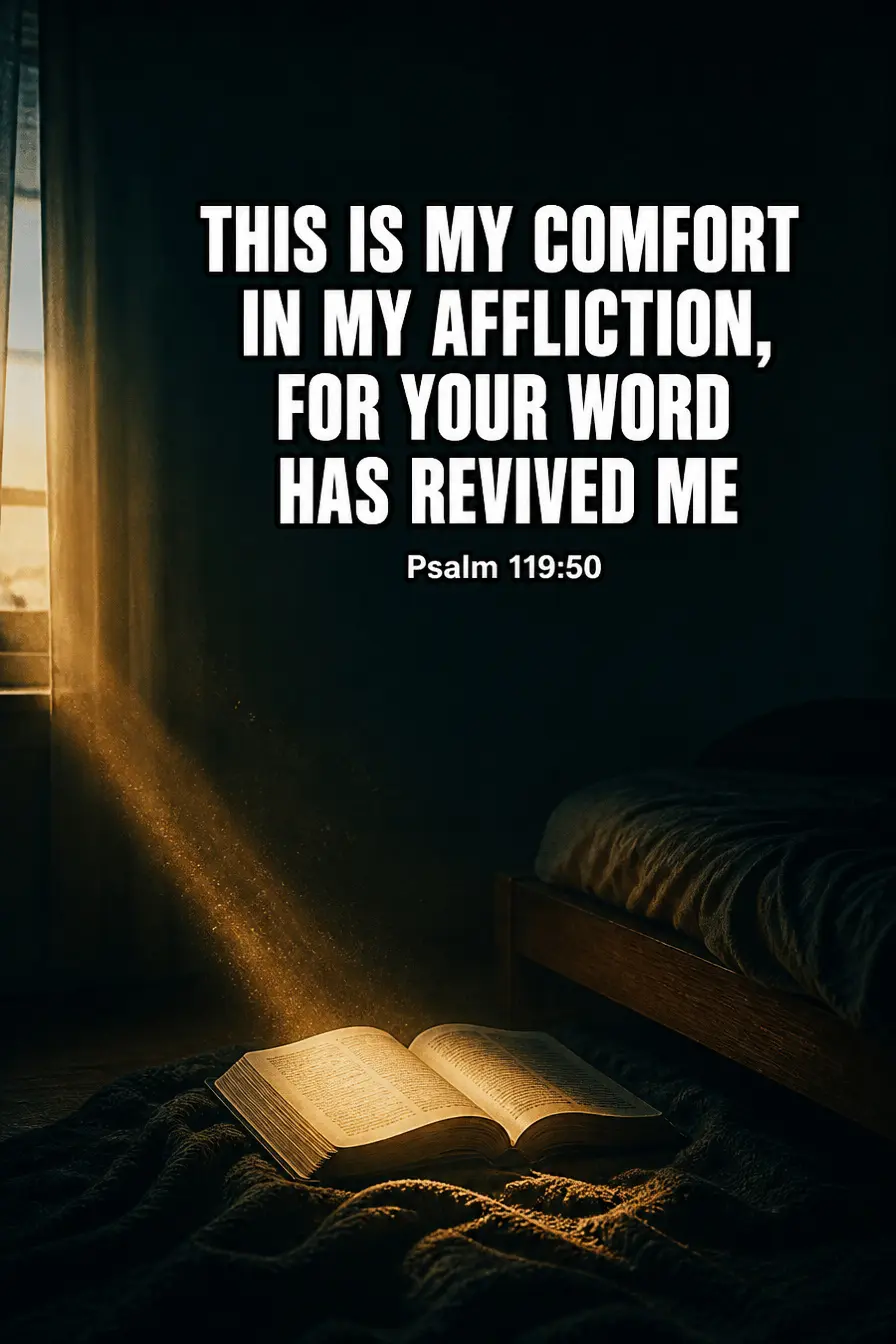
The claim is modest, and worth noticing for that reason. The affliction is not removed. Comfort in it, and revival — enough life to keep going, inside a situation that has not changed.
That is a smaller promise than most healing collections offer, and the one that tends to hold. A verse read in a waiting room does not alter the scan. What it can do is return enough of us to get through the afternoon, and this psalm counts that as a genuine result rather than a consolation prize.
Verses for Strength and Healing When Somebody Else Carries You
The Bible assumes illness happens inside a group, not to an individual alone.
Mark 2:3-5 — Four People and a Roof
“Four people came, carrying a paralytic to him. When they could not come near to him for the crowd, they removed the roof where he was. … Jesus, seeing their faith, said to the paralytic, “Son, your sins are forgiven you.”” — Mark 2:3-5 (WEBU)
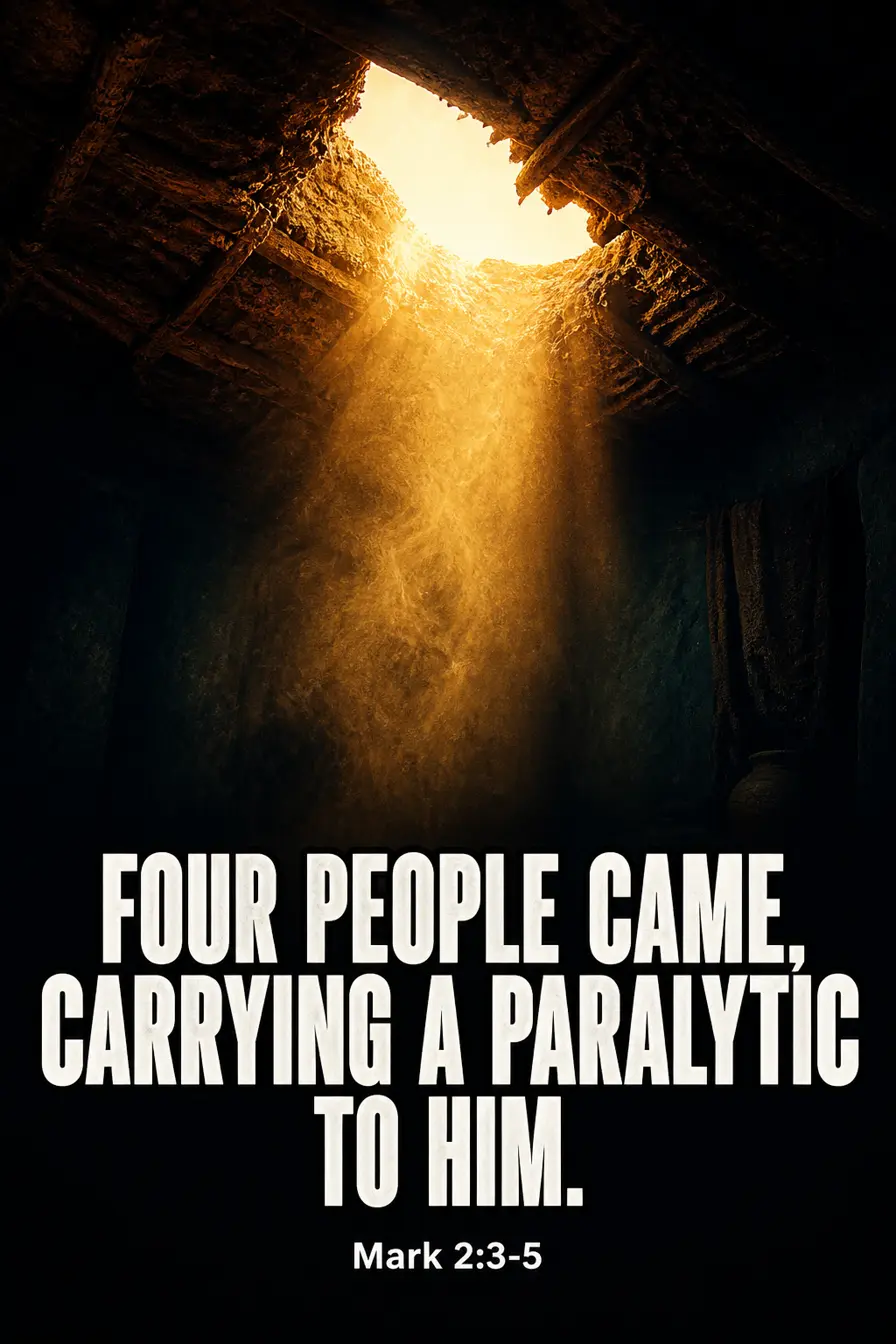
They dug through somebody’s roof. That is destruction of property in front of a crowd, and four men did it because the door was blocked and their friend could not walk.
Then read the last line closely: “seeing their faith”. Theirs. The man on the mat contributes nothing the text records — no statement of belief, no request. He is carried, lowered, and answered on the strength of what four other people did. On the days when we cannot generate any faith of our own, this passage says somebody else’s can be enough, and that being carried is a recognised position rather than a failure.
Isaiah 40:29 — Aimed at the Ones With Nothing Left
“He gives power to the weak. He increases the strength of him who has no might.” — Isaiah 40:29 (WEBU)
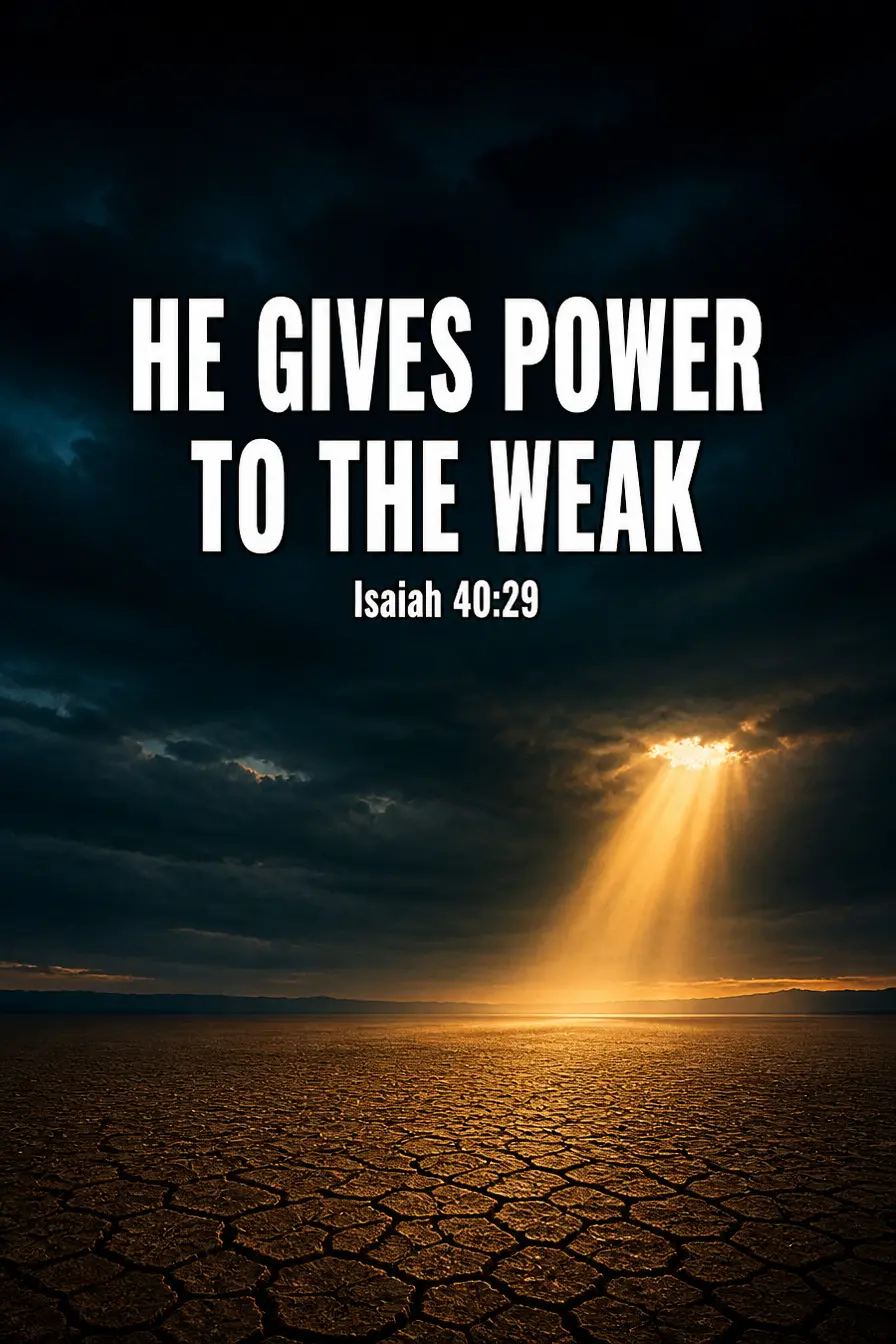
The recipient is specified twice, and both times it is somebody at zero: the weak, and then the one “who has no might” — not low reserves. None.
Isaiah wrote this to a nation in exile who had run out of reasons to expect anything, and the line is precise about who qualifies. Strength is not a reward for having held on well. It arrives at the point where there is nothing left to hold on with. If you have been quietly disqualifying yourself from encouragement because you handled this week badly, the verse has the eligibility the other way round.
Psalm 107:19-20 — Cry First, Understand Later
“Then they cry to the LORD in their trouble, and he saves them out of their distresses. He sends his word, and heals them, and delivers them from their graves.” — Psalm 107:19-20 (WEBU)
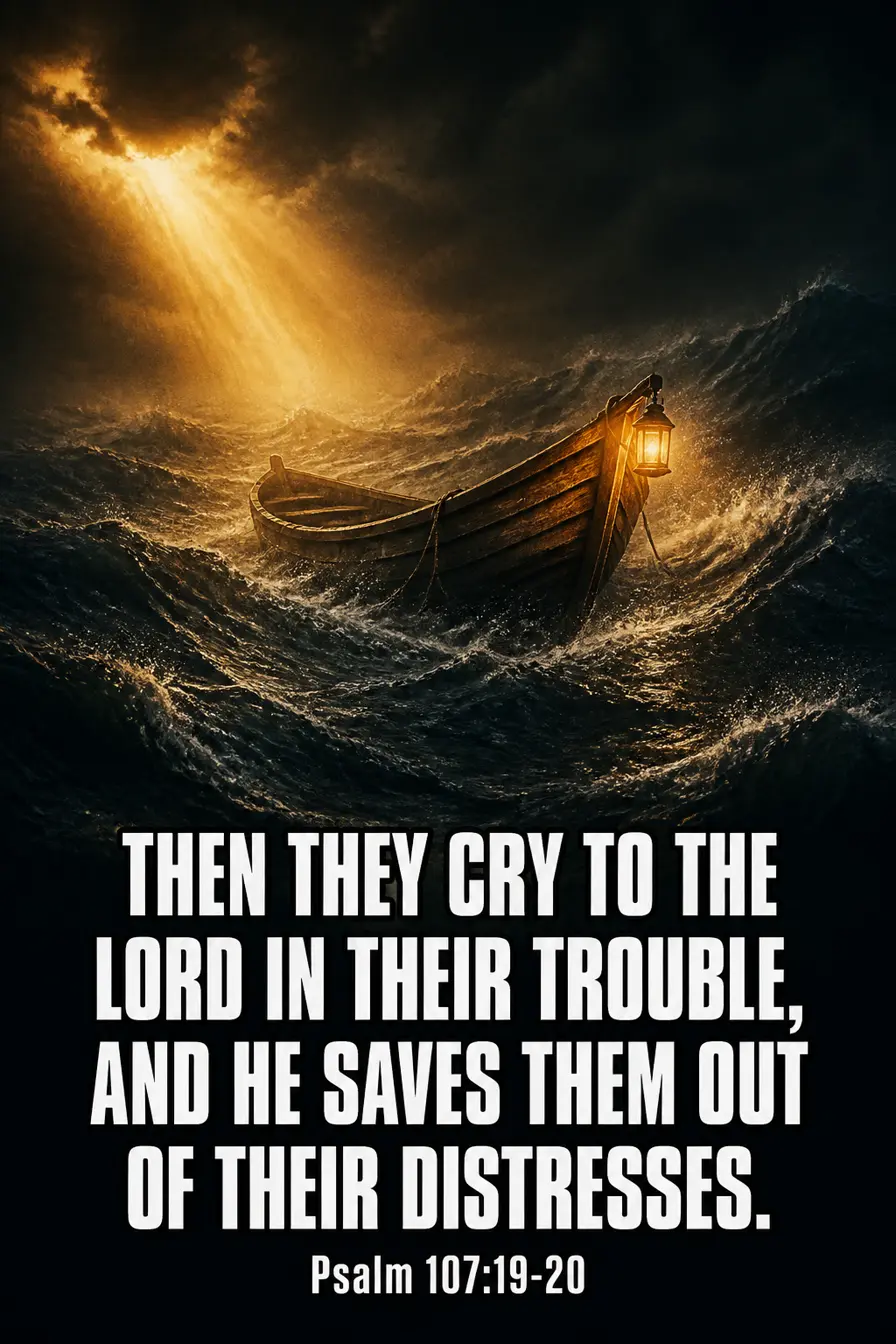
This is the third time the psalm uses this exact structure. Four groups appear in Psalm 107 — the lost, the imprisoned, the sick, sailors in a storm — and each gets the same two beats: they cried, he saved.
The repetition is the argument. This is not a one-off rescue; it is a pattern across four completely different kinds of trouble, where the entry point never changes. Nobody in the chapter works out their theology first. The crying comes before the understanding in all four, which is the correct order for anyone who cannot currently think straight.
Finding Healing in the Nights, and What Comes After
The last three are for the hours when it is worst, and for the part nobody prepares you for — afterwards.
Psalm 30:2 — Written Looking Back
“LORD my God, I cried to you, and you have healed me.” — Psalm 30:2 (WEBU)
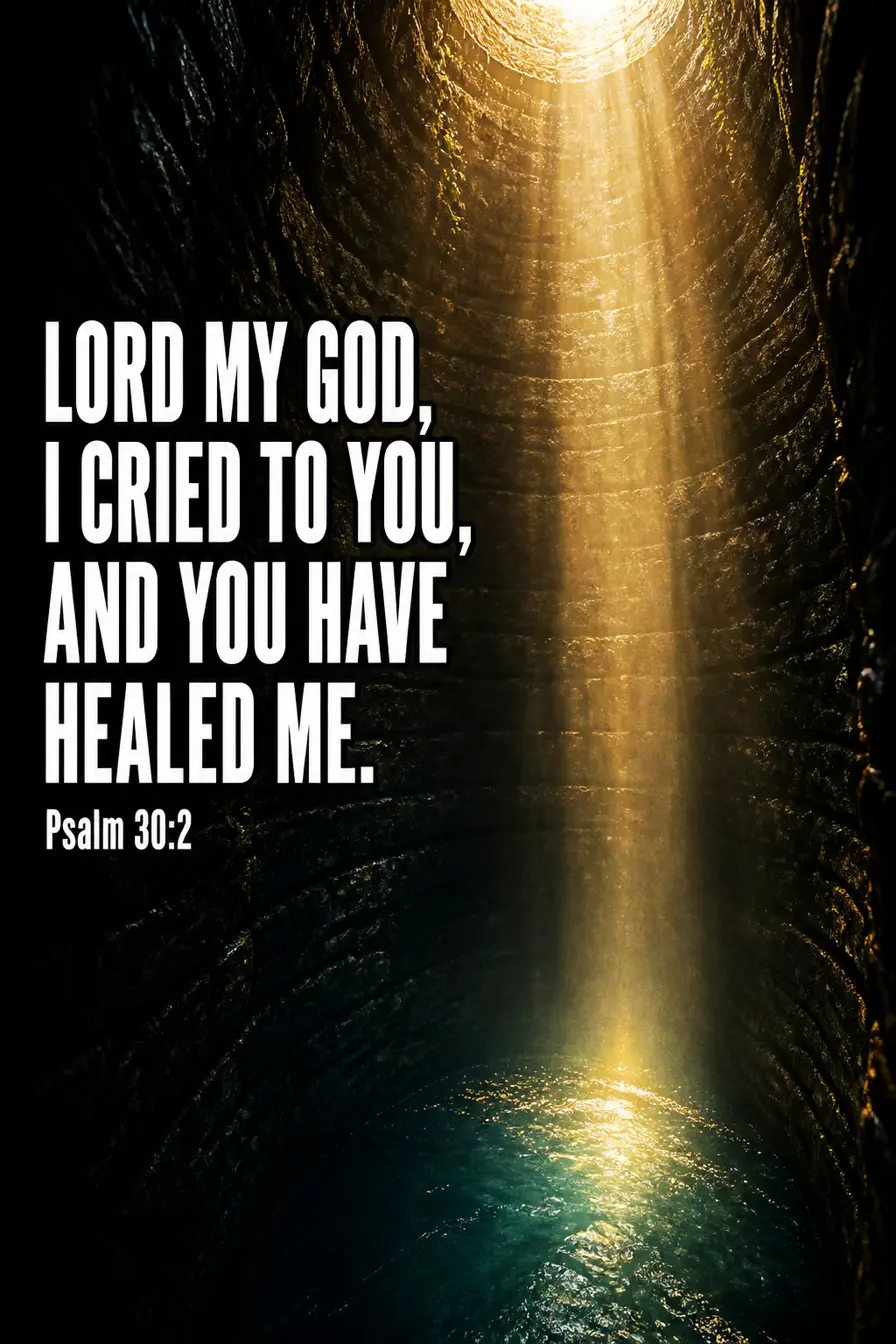
Both verbs are past tense. This is somebody on the other side writing an account, and a few lines later the same psalm says weeping may stay for the night but joy comes in the morning — a line we usually quote without the night attached.
Keeping the tense in view changes how the verse is used. It is not a claim about tonight. It is testimony from somebody who went through the whole thing and is reporting back, which is more durable than a promise about the next few hours.
Psalm 116:1-2 — The Reason Given Is Being Listened To
“I love the LORD, because he listens to my voice, and my cries for mercy. Because he has turned his ear to me, therefore I will call on him as long as I live.” — Psalm 116:1-2 (WEBU)

The stated reason for love is not the rescue. It is the listening, twice over: God hears the voice, then turns an ear toward it — the image of somebody leaning in to catch what is being said.
Then comes the consequence, and it runs for the rest of a lifetime. One experience of being properly heard produced a permanent habit. That is worth sitting with if prayer has gone quiet during a long illness: the psalm locates what rebuilt it not in the outcome, but in the sense of having been attended to.
Lamentations 3:32-33 — The Most Careful Sentence in the Bible About Suffering
“For though he causes grief, yet he will have compassion according to the multitude of his loving kindnesses. For he does not afflict willingly, nor grieve the children of men.” — Lamentations 3:32-33 (WEBU)

Lamentations was written in the ruins of a destroyed city by somebody who watched it happen. Nothing in the book is theoretical, which is why its most careful sentence carries the weight it does.
The verse declines two easy answers at once. It does not pretend God is uninvolved, and it does not suggest the suffering is wanted. Something is held open in the middle there that most of our attempts to explain illness close too quickly. Written from rubble, by somebody with every reason to simplify, it stayed complicated — which is why it holds up in a hospital corridor when simpler sentences stop working.
How to Use These Healing Scriptures
Pick one verse and keep it for the week rather than reading all twelve tonight. A long illness does not need more material. It needs something short enough to survive a bad hour.
Match it to the stage. First fortnight, frightened, nothing confirmed — Psalm 6:2. Month nine, everyone has stopped asking — John 5:5-6. Cannot pray at all — Mark 2:3-5, and then tell one person you are at that point, because in that passage the faith that worked belonged to the people doing the carrying.
Then say it out loud once a day, at a fixed moment. Reading silently in a waiting room is fine; hearing your own voice is harder to ignore. Our Bible verses about prayer collection covers the two-minute version if starting is what has stalled.
Frequently Asked Questions
What is the best Bible verse for healing?
There is no single best one, because the useful verse depends on the stage. Psalm 6:2 fits the frightened early days, Psalm 119:50 a long stretch that has not changed, and Psalm 107:19-20 the point where you cannot think clearly enough to pray. Matching verse to stage beats reaching for the most famous one.
How do you pray for healing using Scripture?
Read the verse aloud first, then say the true version of where you are, in ordinary words. Psalm 6:2 and Psalm 31:9-10 are both models for this — neither one tidies up the state of the person praying, and both are in the Bible in unedited form.
What does the Bible say about emotional healing?
Psalm 31:9-10 names eye, soul and body failing at once, treating emotional exhaustion as part of the illness rather than separate from it. Psalm 147:3, in our companion collection, is the verse most cited here. Scripture consistently declines to split the physical from the emotional.
Are there stories in the Bible about long illnesses?
Yes, and they are unusually specific about duration. Mark 5:25-26 records a woman ill for twelve years who spent everything and grew worse; John 5:5-6 describes a man sick for thirty-eight. Neither hurries past the length, which is why they read well to anyone in a long one.
Where to Start Tonight
Choose the stage you are actually in rather than the one you wish you were in, and take the verse attached to it. That is the whole instruction.
More sits in the hope archive. If the underlying question is what Scripture does and does not promise about physical healing, our Bible verses for hope and healing collection answers it directly, including the people in the New Testament who were not healed. For a season that has run longer than expected, Bible verses for hope in difficult times is written for the length rather than the crisis.