Psalm 46:10 has been printed on more mugs, cushions and phone backgrounds than almost any other line in Scripture, and it is nearly always set in a soft font over a lake at sunrise. Read the two sentences immediately before it and the lake disappears.
Bows are being broken. Spears are being shattered. Chariots are burning in a fire.
That is where “Be still, and know that I am God” is spoken — over a battlefield, not a retreat. The calming Bible verses for anxiety we have collected below start there on purpose, because the most-quoted calming verse in the Bible is also the most misread, and the misreading is the reason it stops working. It is not a request to feel peaceful. It is an order to stop fighting, given to people whose weapons have just been taken away.

Face your giants. Discover what makes someone truly brave.1 Samuel 17 · 11 min
That was just the opening. Open the app and search #002 to hear the full 11-minute story — free.
Keep listening free in the app Free on iOS & Android — no sample needed

What “Be Still” Actually Means
Psalm 46:9-10 — Read the Two Lines Above the Mug
“He makes wars cease to the end of the earth. He breaks the bow, and shatters the spear. He burns the chariots in the fire.” — Psalm 46:9 (WEBU)
“Be still, and know that I am God. I will be exalted among the nations. I will be exalted on the earth.” — Psalm 46:10 (WEBU)
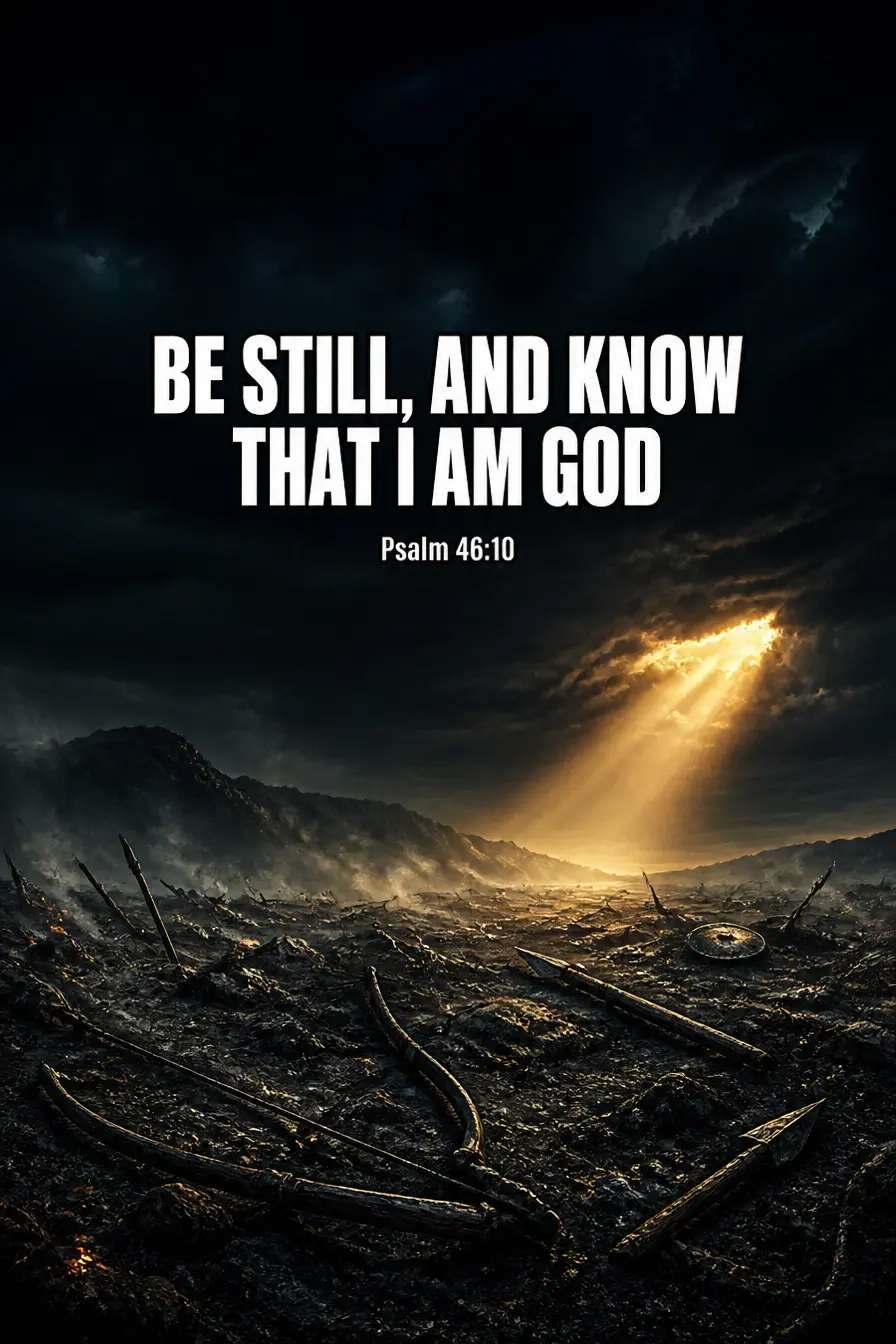
The order of that passage does all the work. Weapons are destroyed first; the stillness comes after, and it comes because the fighting has been ended from outside. Nobody in the scene calmed down. They were disarmed.
Which reframes the sentence you have been trying to obey. If stillness were a mood you had to produce, then failing to feel calm would be one more thing to be anxious about — and that loop is where most people meet this verse. It is not asking you to generate peace. It is telling you to put down what you have been swinging at the problem, because the outcome was never resting on your grip.
Exodus 14:13-14 — Still, With an Army Behind You
“Don’t be afraid. Stand still, and see the salvation of the LORD, which he will work for you today… The LORD will fight for you, and you shall be still.” — Exodus 14:13-14 (WEBU)
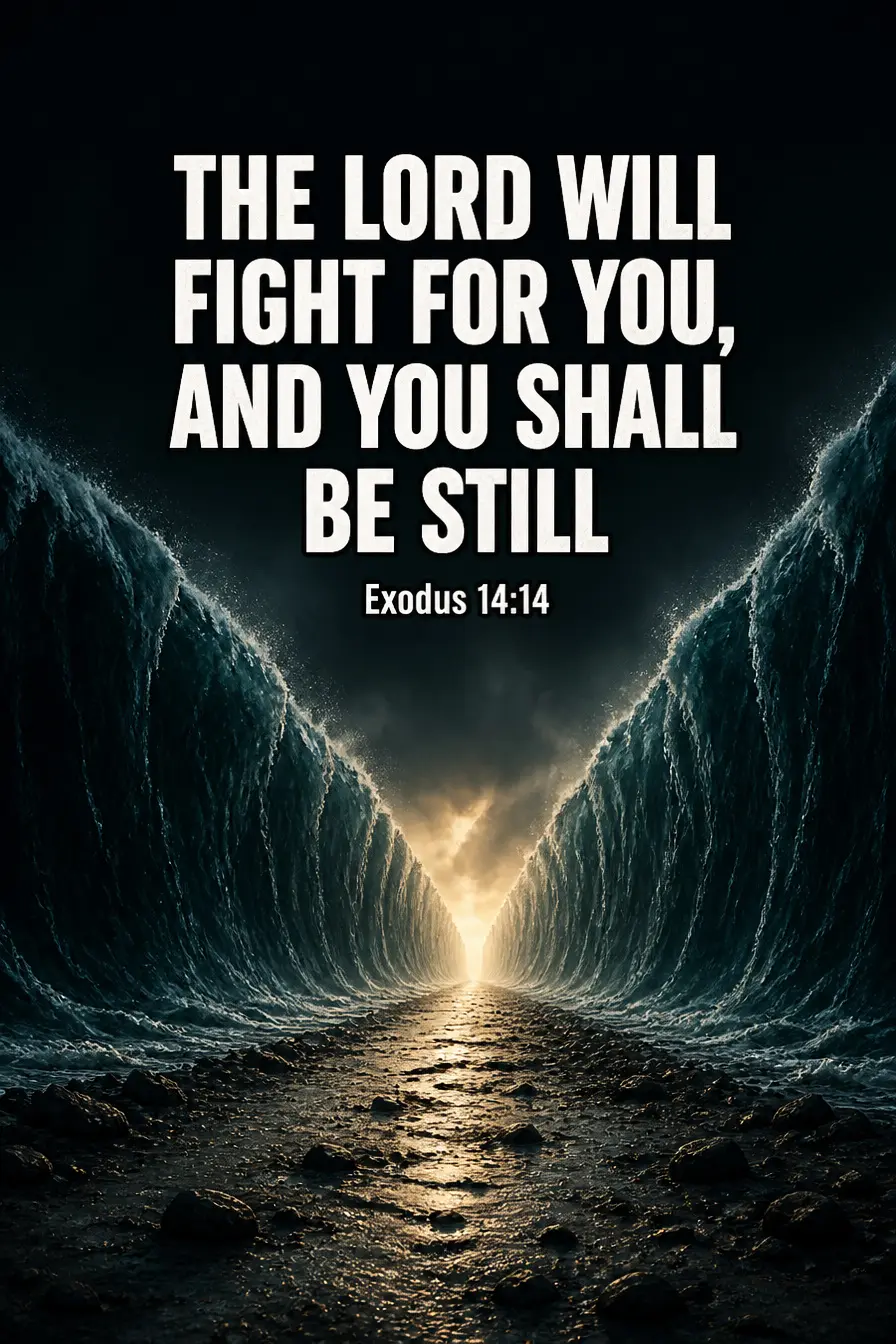
Consider the geography before the instruction. Sea in front, Egyptian chariots closing behind, no exit on either side. This is the least still moment in the Hebrew Bible, and it is where the command to be still is issued.
Two verbs are joined here that most of us keep apart: the LORD will fight and you shall be still. The stillness is not the absence of a battle. It is the consequence of somebody else having taken the battle over. Standing still at the Red Sea was not calm — it was the hardest thing those people had ever been asked to do, and it looked from the outside exactly like giving up.
Psalm 4:4 — The Version for Two in the Morning
“Search your own heart on your bed, and be still.” — Psalm 4:4 (WEBU)
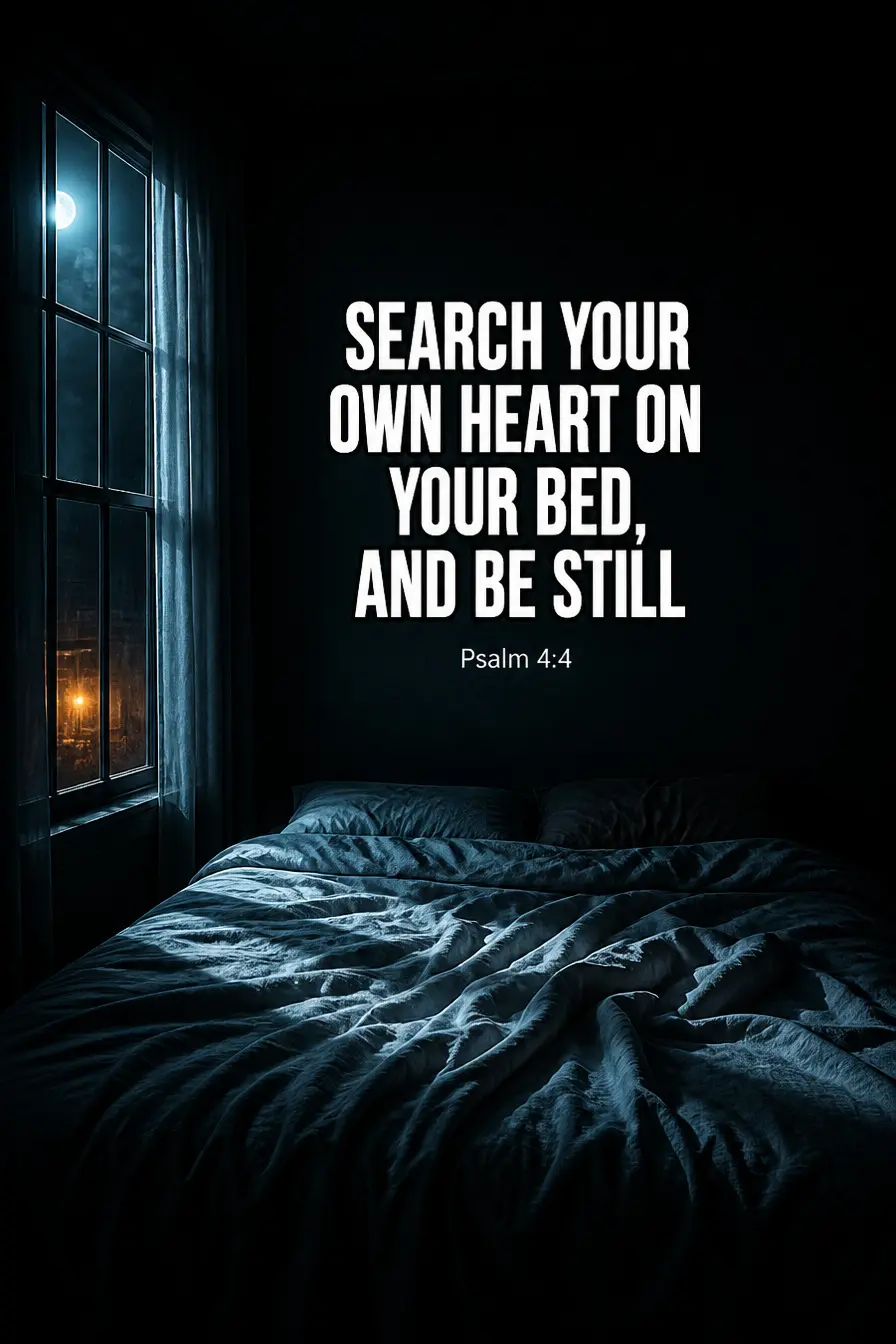
Scripture knew where this happens. Not in a chapel, not on a retreat — on your bed, in the dark, which is the hour anxiety does its best work and the hour every technique for managing it is least available to you.
The instruction has two parts and the order matters. Search first, then be still. Not “stop thinking”, which nobody has ever managed on command, but look at the thing directly, name it, and then stop turning it over. Most night-time thinking is neither of those. It circles the subject without ever landing on it, which is why it can run for hours and resolve nothing.
When the Calm Has to Come From Outside You
Mark 4:38-39 — He Was Already Asleep
“Teacher, don’t you care that we are dying?” He awoke and rebuked the wind, and said to the sea, “Peace! Be still!” The wind ceased and there was a great calm.“ — Mark 4:38-39 (WEBU)
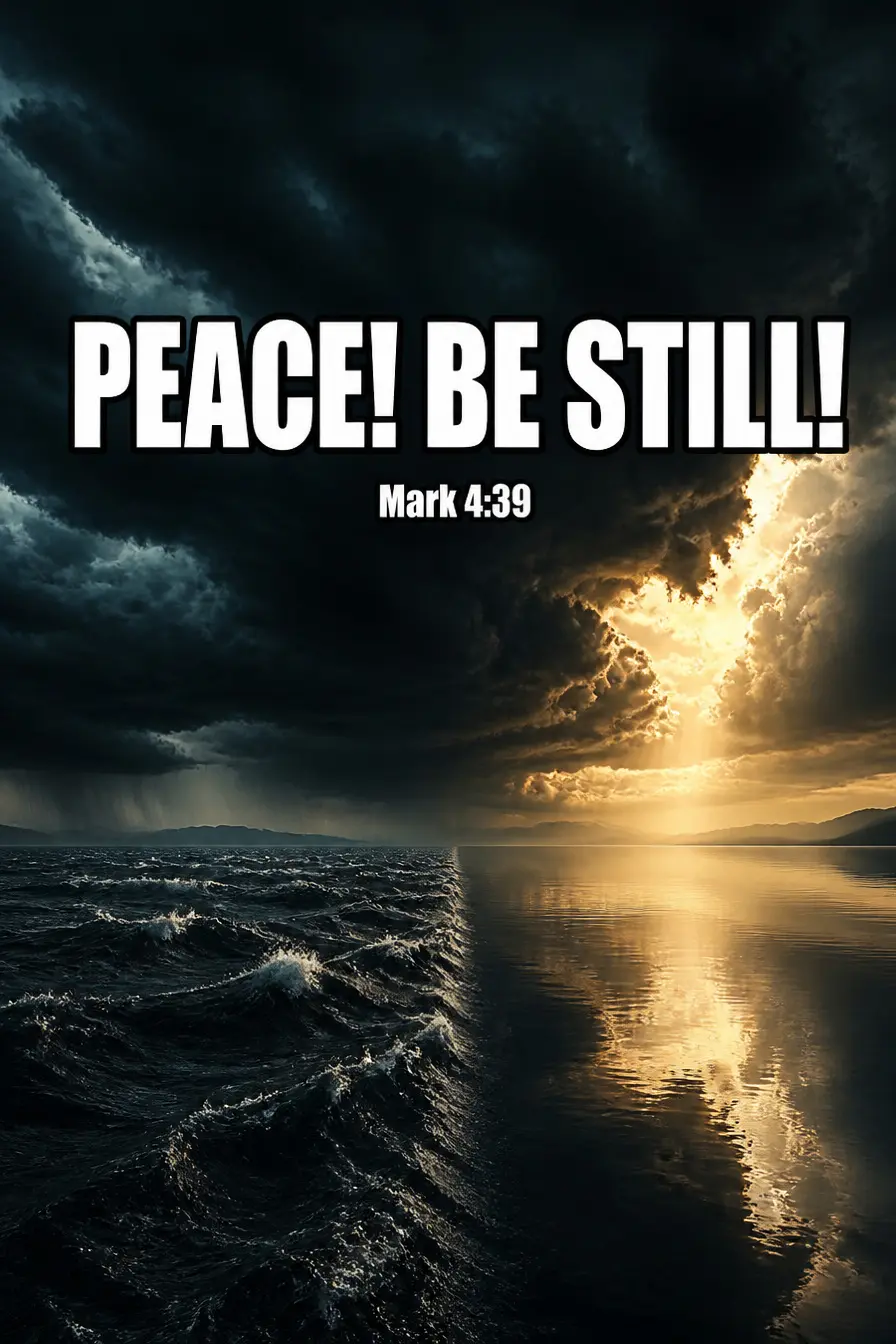
The detail that gets skipped is where He was when the storm started. Asleep, on a cushion, in the stern of a boat taking on water. The calm in that account did not begin when the wind dropped. It was already in the boat, and the disciples were standing over it, shouting.
Their question is worth keeping too, because it is the honest one: don’t you care that we are dying? Mark did not tidy that up into something more reverent. The accusation stayed in the text, and the answer to it was not a rebuke of them but a rebuke of the wind.
Psalm 107:28-30 — He Makes the Storm a Calm
“Then they cry to the LORD in their trouble, and he brings them out of their distress. He makes the storm a calm, so that its waves are still. Then they are glad because it is calm, so he brings them to their desired haven.” — Psalm 107:28-30 (WEBU)
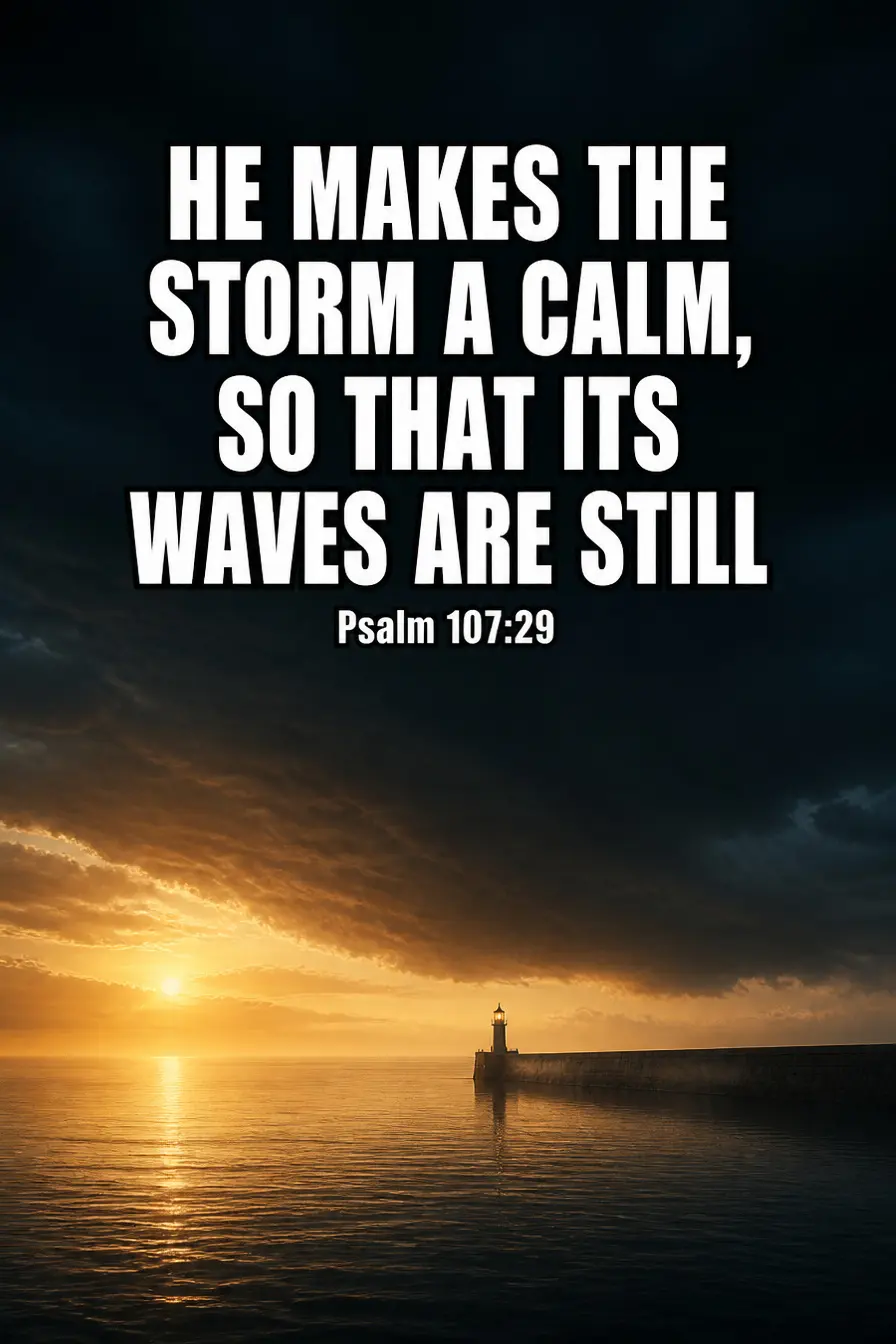
Centuries before the boat on Galilee, somebody had already written the sequence down: distress, a cry, a calm, a haven. When the disciples watched the wind drop, they were watching a psalm they had grown up singing happen in front of them.
Notice what the calm is for. It is not the end of the story — so he brings them to their desired haven. The stillness is transport, not destination. Anxiety tends to make the immediate feeling the whole horizon, and this verse quietly widens it: the point of the sea going flat was that the boat could finally get somewhere.
Zephaniah 3:17 — The Calming Is Something He Does
“The LORD, your God, is among you, a mighty one who will save. He will rejoice over you with joy. He will calm you in his love.” — Zephaniah 3:17 (WEBU)
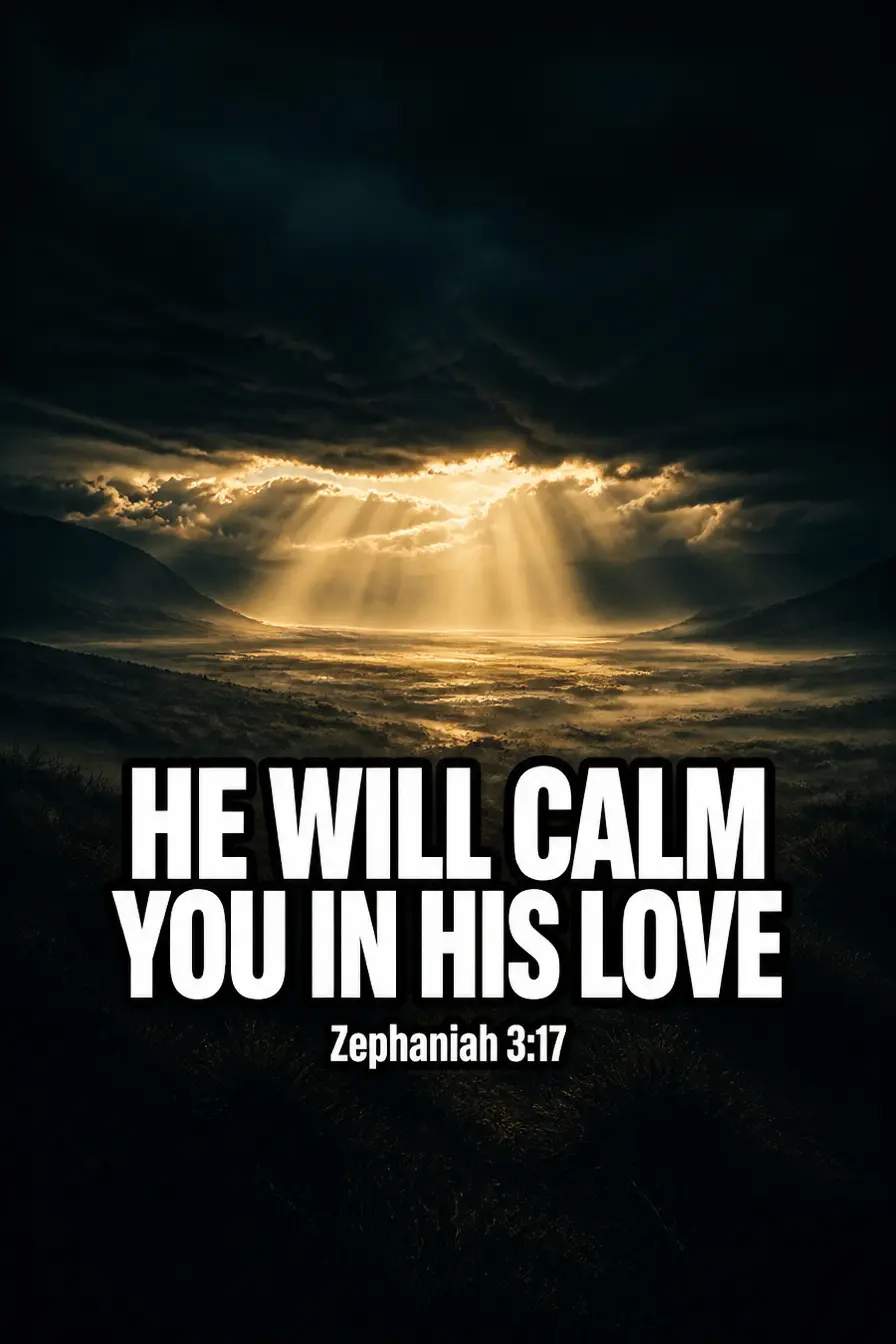
Read the verbs and see who is doing them. He saves, He rejoices, He calms. Not one of them lands on you as an instruction. In a chapter about a city that had earned judgement, the closing image is God delighting over the people He is rescuing.
He will calm you in his love is the sentence to sit with when you have run out of methods. It puts the calming in the same category as the saving — something done to you, not something achieved by you on a good day with enough sleep behind it.
The Quiet You Can Actually Choose
Isaiah 30:15 — And Then Two Words That Ruin It
“You will be saved in returning and rest. Your strength will be in quietness and in confidence.” You refused, — Isaiah 30:15 (WEBU)
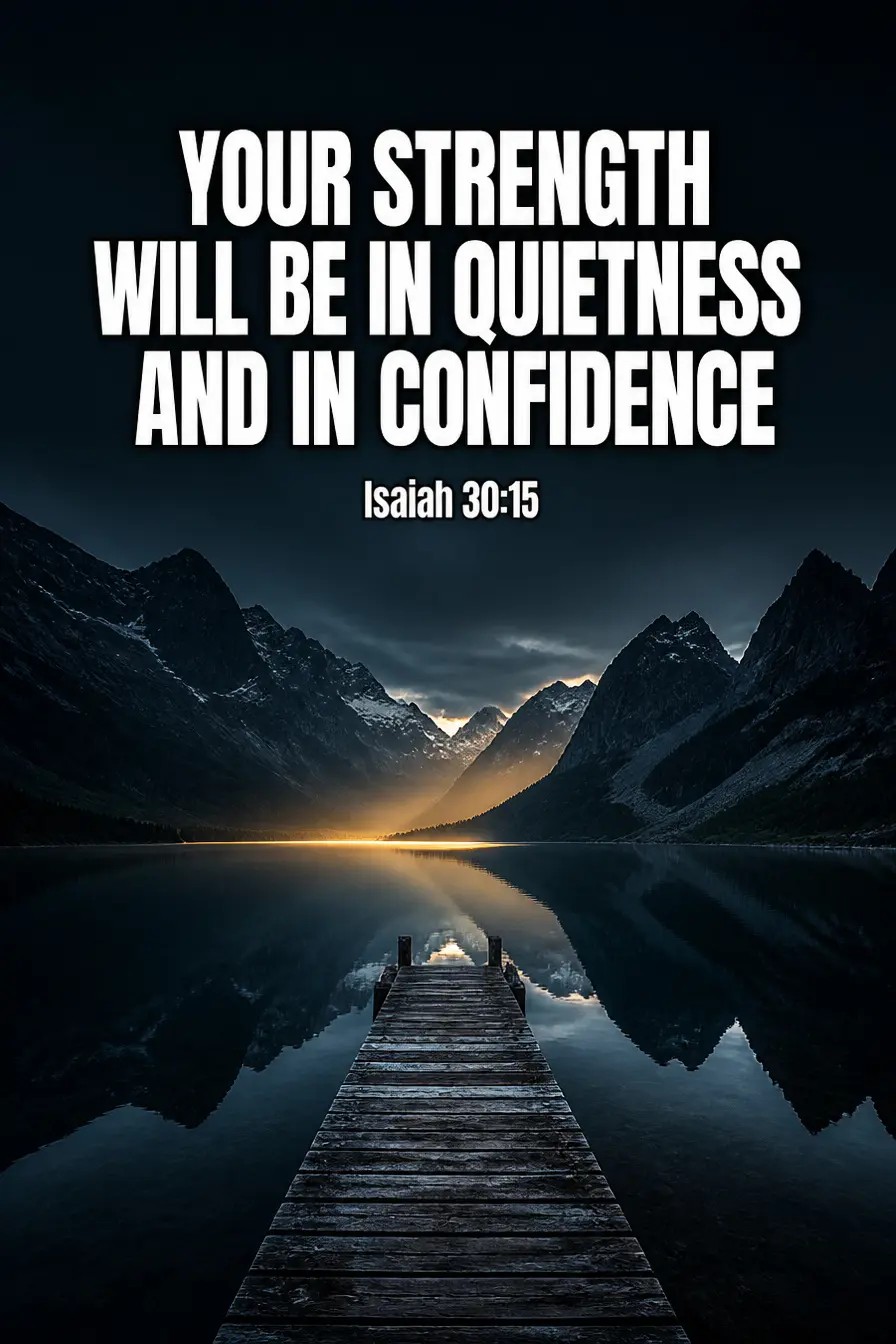
Most collections stop at “quietness and confidence” and print it on something. The verse does not stop there. It ends you refused, and the honesty of that is worth more than the poster.
What Judah refused was not God — it was the rest. They had a treaty with Egypt to arrange, horses to acquire, a plan to keep working. Anyone who has stayed up checking a page every few minutes about something they cannot change knows the pull exactly. Quietness was offered as their strength and it was declined as too passive, which is still the most common reason people do not take it.
Psalm 116:7 — Return to Your Rest
“Return to your rest, my soul, for the LORD has dealt bountifully with you.” — Psalm 116:7 (WEBU)

Return assumes you were there before. The psalmist is not asking to be given rest for the first time; he is talking to himself about going back to somewhere he already knows, which is a far more useful posture than waiting for a peace you have never felt.
He also gives himself the reason out loud: the LORD has dealt bountifully with you. That is a man arguing with his own soul, using evidence. It is one of the few things Scripture actually models for a mind that will not settle — not suppressing the thought, but answering it with something that already happened.
Lamentations 3:25-26 — Quietly Wait
“The LORD is good to those who wait for him, to the soul who seeks him. It is good that a man should hope and quietly wait for the salvation of the LORD.” — Lamentations 3:25-26 (WEBU)
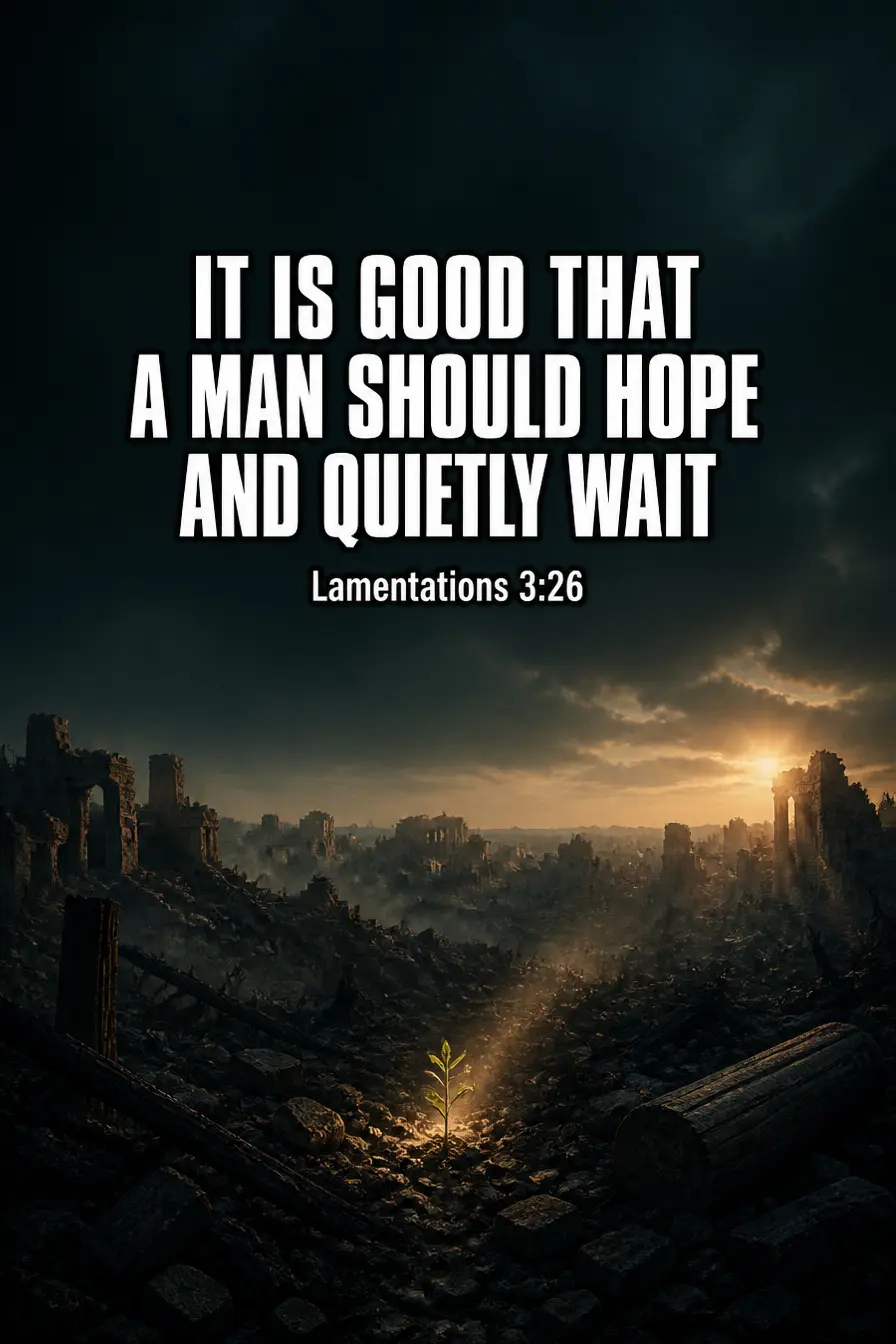
The setting gives this its weight. Lamentations is written over a burnt city, by someone looking at the ruins of everything he had assumed was permanent. Quietly wait is not the advice of a man whose life is going well.
Two things are held together here that anxiety keeps pulling apart in us: hope and waiting. Waiting without hope is dread, which is most of what a sleepless night consists of. Hope without waiting is the frantic version, checking every few minutes for news. The verse asks for both at once, and calls the combination good rather than merely bearable.
Psalm 131:2 — Like a Weaned Child
“Surely I have stilled and quieted my soul, like a weaned child with his mother, like a weaned child is my soul within me.” — Psalm 131:2 (WEBU)

The image is precise and we get it wrong constantly. A nursing child at its mother is not calm — it is there for something and will let the whole house know until it arrives. A weaned child on the same lap wants nothing except the lap.
David is describing a soul that has stopped negotiating. Not one that no longer needs God, but one that has stopped coming to Him purely as a supplier of outcomes. Anyone who has prayed hard about a situation knows the difference between those two visits, and the second one is quieter because there is nothing left to extract.
Where the Calm Comes From
1 Kings 19:11-12 — Not in the Wind, Not in the Fire
“a great and strong wind tore the mountains and broke in pieces the rocks before the LORD; but the LORD was not in the wind. After the wind there was an earthquake; but the LORD was not in the earthquake. After the earthquake a fire passed; but the LORD was not in the fire. After the fire, there was a still small voice.” — 1 Kings 19:11-12 (WEBU)
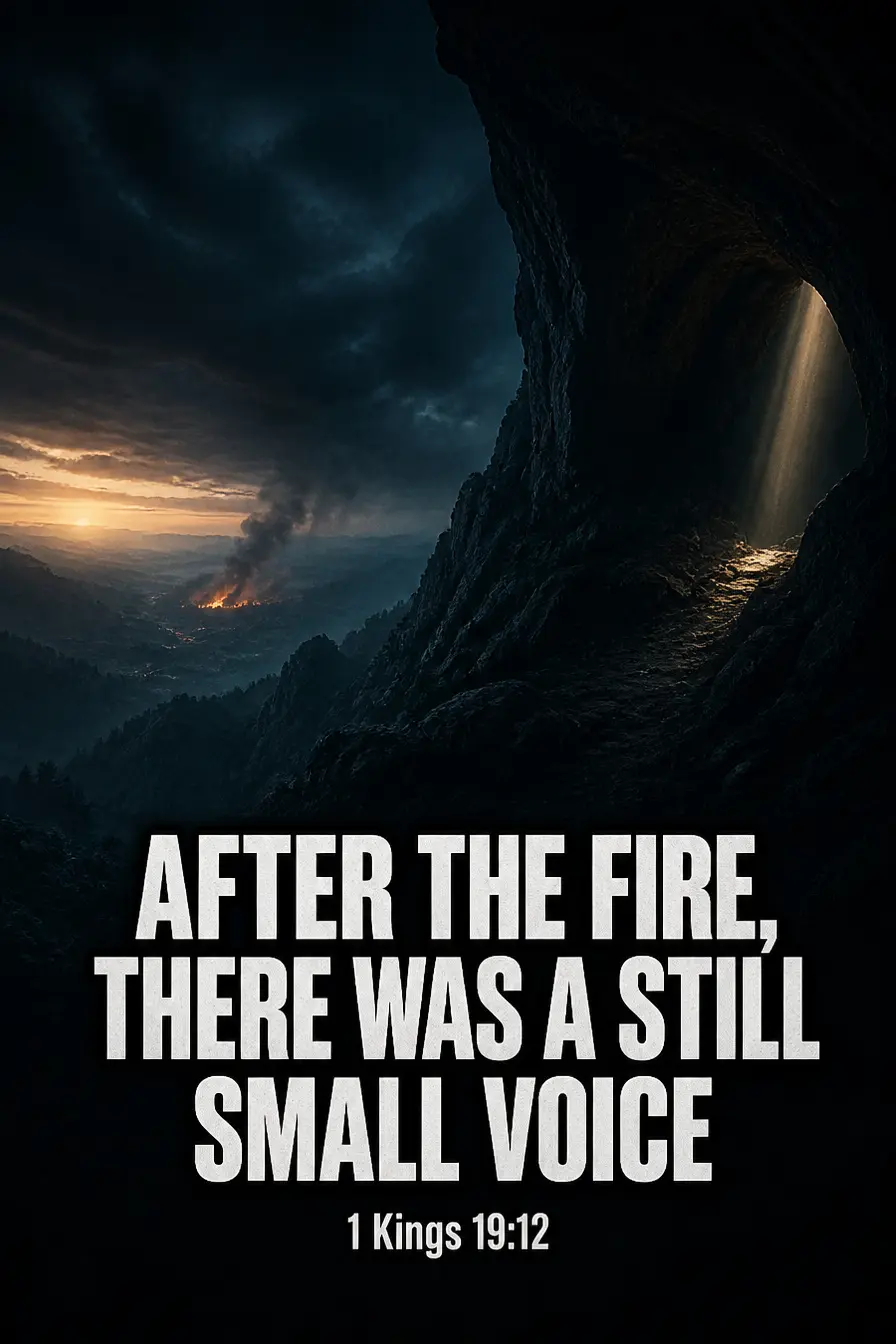
Elijah had just seen fire fall from heaven in front of a nation. If anyone had grounds to expect God in the spectacular, it was him — and the text says three times, with something close to insistence, that God was not in it.
The practical consequence is uncomfortable and freeing at once. If the presence of God is registered in a still small voice, then a loud internal week is not evidence of His absence. It only means the channel is quiet, and quiet is where it always was.
Colossians 3:15 — Let Peace Be the Umpire
“And let the peace of God rule in your hearts, to which also you were called in one body, and be thankful.” — Colossians 3:15 (WEBU)
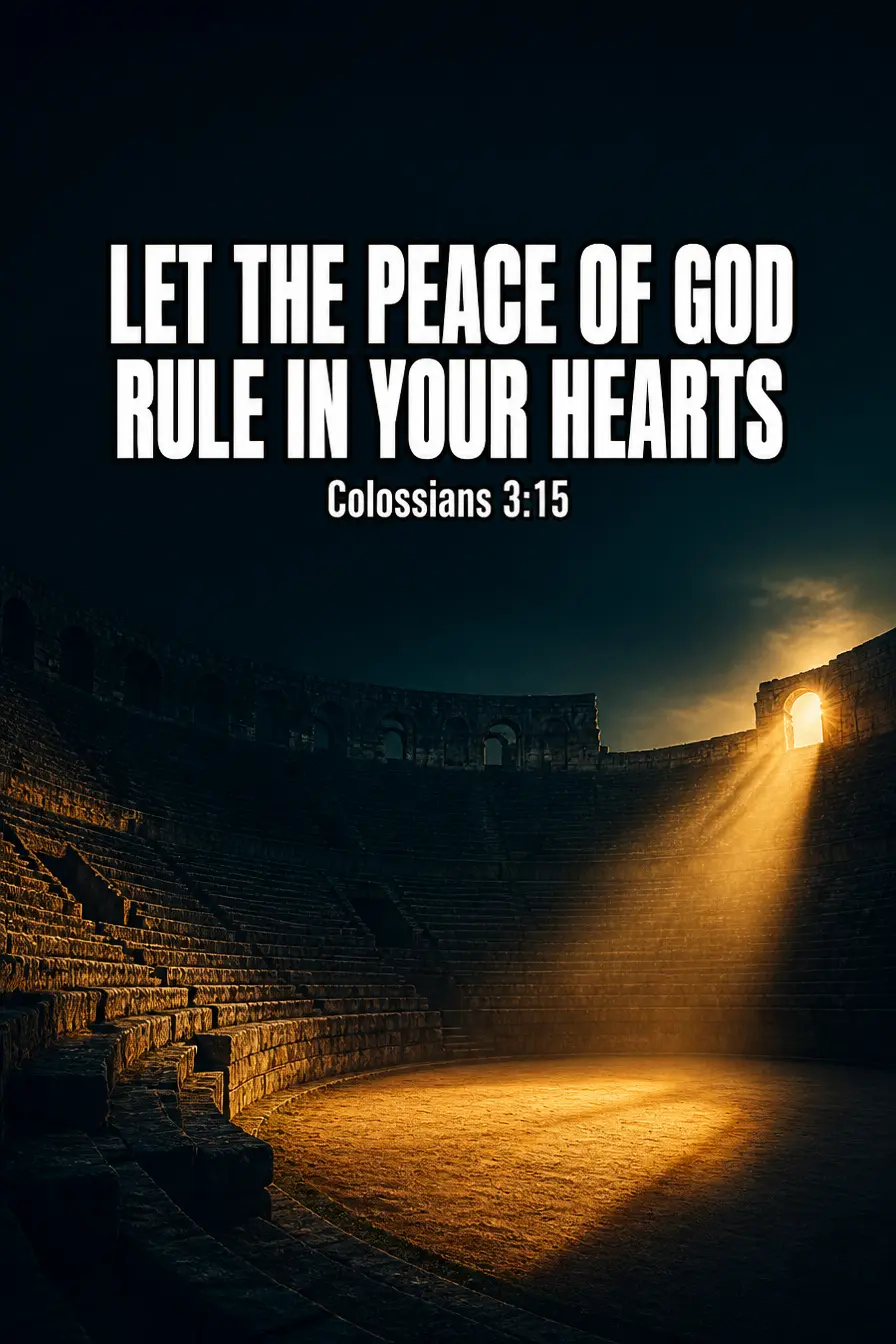
The verb behind rule is not the word for a king reigning. It is the word for the official at the games who calls the decisions and settles disputes — an umpire. Paul is telling his readers to let peace make the call.
He also refuses to leave it private: you were called in one body. The calm on offer here is not the solitary kind. Isolation is where anxious thinking gets its longest uninterrupted run, and the letter puts the peace and the other people in the same sentence deliberately.
Psalm 62:1-2 — Rests in God Alone
“My soul rests in God alone. My salvation is from him. He alone is my rock, my salvation, and my fortress. I will never be greatly shaken.” — Psalm 62:1-2 (WEBU)

Alone appears twice in two lines, and it is not there for rhythm. David is stripping out the second sources of security he had been quietly keeping in reserve, and most of us have a list of them — savings, a relationship, being useful, being right.
Then the claim, stated carefully: “never be greatly shaken”. Not never shaken. Scripture does not promise you will stop feeling it. It promises the shaking will not reach the foundation, which is a much smaller promise and a far more durable one than the version usually sold.
The Verses You Already Have, and What Each One Is For
Four passages turn up on nearly every list of calming Bible verses for anxiety, and most people reading this can already recite them. The trouble is rarely that they are unknown. It is that they get used interchangeably, when each one answers a different question.
When the anxiety has a subject you could name.
“In nothing be anxious, but in everything, by prayer and petition with thanksgiving, let your requests be made known to God. And the peace of God, which surpasses all understanding, will guard your hearts and your thoughts in Christ Jesus.” — Philippians 4:6-7 (WEBU)
Petition needs an object. This one works when there is a specific thing to hand over — a scan result, a deadline, a conversation you have to have. The promised outcome is not that the situation resolves; it is that something stands guard over your thoughts while it is unresolved.
When you are tired rather than frightened.
“Come to me, all you who labor and are heavily burdened, and I will give you rest… For my yoke is easy, and my burden is light.” — Matthew 11:28-30 (WEBU)
The words are labor and heavily burdened, not afraid. Some anxiety is fear and some is simply the weight of carrying too much for too long, and the two need different answers. A yoke, worth remembering, is not a removal of work. It is a redistribution of it.
When the fear is about what other people can do.
“Peace I leave with you. My peace I give to you; not as the world gives, I give to you. Don’t let your heart be troubled, neither let it be fearful.” — John 14:27 (WEBU)
Not as the world gives is the whole line. The peace on offer everywhere else is conditional on circumstances holding — the job, the diagnosis, the relationship. This one is handed over independently of them, which is why it can be given the night before an arrest.
When you are walking through it rather than waiting it out.
“Even though I walk through the valley of the shadow of death, I will fear no evil, for you are with me.” — Psalm 23:4 (WEBU)
The preposition is through. Not around, not out of — the psalm assumes you are inside the valley and still moving, which is a more useful promise than rescue from it. And the reason given for not fearing is not that the valley is short. It is company.
What to Do With This Tonight
Take Psalm 46 in the order it was written. Read verses 8 and 9 first — the broken bow, the shattered spear, the chariots in the fire — and only then read verse 10. It takes twenty seconds and it changes what the sentence is asking of you.
Then say the second half out loud in the Red Sea version: the LORD will fight for you, and you shall be still. Those are two clauses of one sentence, and the second only makes sense because of the first. You are not being asked to manufacture calm on top of a situation you are still carrying. You are being asked to stop carrying it.
If your mind will not settle after that, use Psalm 116:7 the way the psalmist did — talk back to yourself out loud, and name one specific thing that has already happened. The LORD has dealt bountifully with you, and then the evidence. That is not positive thinking. It is a man in the Bible arguing with his own soul and winning, using facts.
One plain thing, because it matters: if anxiety has been running for months, or it is affecting your sleep, your work or your health, put yourself in the hands of a professional. Doing that is not incompatible with faith and never has been.
Paul ends a whole letter on the same note — “may the Lord of peace himself give you peace at all times in all ways” (2 Thessalonians 3:16) — which is a benediction, not an instruction. If you want these passages to arrive on the nights you would not have opened anything, the Biblios app narrates short Scripture stories built around verses like these and can send one to your phone at a set hour.
Questions People Ask About Calming Bible Verses
What does “Be still and know that I am God” actually mean?
It means stop fighting, not stop feeling. Psalm 46:9 has God breaking bows, shattering spears and burning chariots, and the command to be still comes immediately after — addressed to combatants whose weapons have just been destroyed. Exodus 14:14 pairs the same idea plainly: “The LORD will fight for you, and you shall be still.”
What are some short Bible verses for anxiety to memorise?
Five that fit in one breath: “Be still, and know that I am God” (Psalm 46:10), “Return to your rest, my soul” (Psalm 116:7), “Peace! Be still!” (Mark 4:39), “Don’t be dismayed, for I am your God” (Isaiah 41:10), and “My soul rests in God alone” (Psalm 62:1). Short matters, because in a bad moment a long verse will not stay in your head.
What Bible verses help when you feel overwhelmed?
Psalm 107:28-30 was written for exactly that state: distress, a cry, and then “he makes the storm a calm, so that its waves are still.” Mark 4:38-39 is the same sequence with Jesus in the boat. Both put the calming outside you, which is the relief when your own effort has already been tried and has failed.
Does the Bible say to cast your anxieties on God?
Yes, and the wording is physical. 1 Peter 5:7 says to cast “all your worries on him, because he cares for you,” using the verb for throwing something off yourself onto something else — the same word used for throwing cloaks over a colt in Luke 19:35. It is a transfer of weight, not a change of attitude.
How do you calm down with Scripture when your body will not settle?
Read the verse out loud rather than silently, and read the verses around it. Both are practical, not pious: hearing your own voice occupies the channel the anxious commentary uses, and the surrounding context is usually what makes a familiar verse land differently. Psalm 46:10 is the clearest case of that on this page.
The Stillness Was Never Something You Produce
Every passage above puts the calm on God’s side of the table. He breaks the bows. He fights while you stand still. He rebukes the wind. He makes the storm a calm. He calms you in His love. Not one of them asks you to feel peaceful first and qualify for it afterwards.
So tonight, the honest version of obeying Psalm 46:10 might be to stop trying to feel calm and simply stop fighting — which is what the verse said in the first place. If the loop is the specific problem, how Scripture handles overthinking takes that apart step by step, and there are more verses for anxiety here. When it is a physical surge rather than a running thought, the short verses for the middle of a panic attack are built for that moment instead.