Look up every verse where peace appears in Scripture and something becomes obvious quickly. Nobody in the Bible finds peace.
It gets made. It gets given. It gets preached, sown, and in one startling verse it gets bought. The verbs are all active and somebody else is usually doing them. That is a different picture from the one most collections of Bible verses about peace leave you with, where peace is a state you might reach if you calm down enough.
The clearest place to watch it happen is a locked room, on the evening of the first Easter, full of frightened people.

When Fear Paralyzes You
Face your giants. Discover what makes someone truly brave.1 Samuel 17 · 11 min
That was just the opening. Open the app and search #002 to hear the full 11-minute story — free.
Keep listening free in the app Free on iOS & Android — no sample needed


The Doors Were Locked Because They Were Afraid
John gives the reason for the locked doors in the same sentence as the greeting, which is why the scene belongs in any honest article about fear.
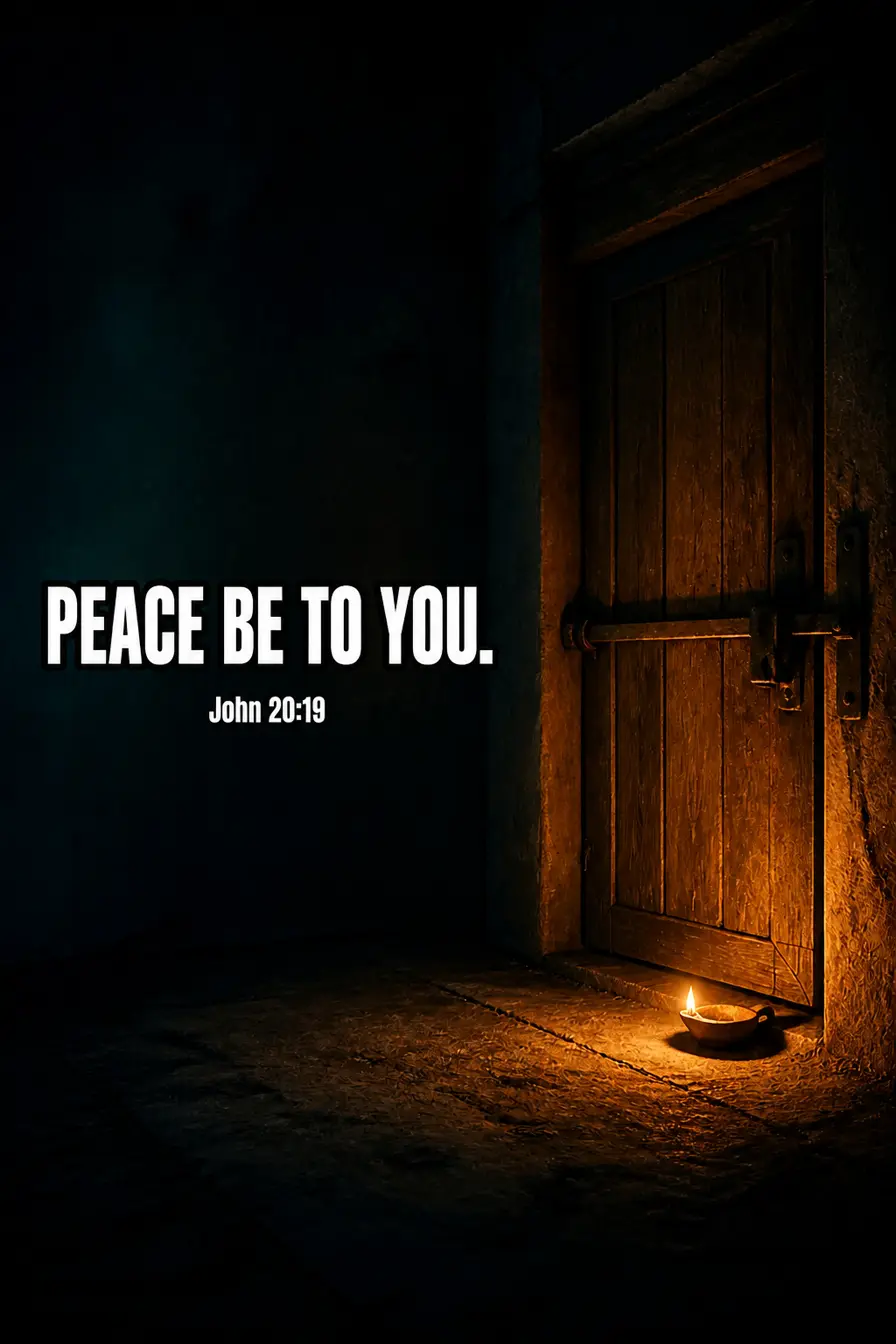
“When therefore it was evening on that day, the first day of the week, and when the doors were locked where the disciples were assembled, for fear of the Jews, Jesus came and stood in the middle and said to them, “Peace be to you.”” — John 20:19 (WEBU)
Read the sequence. Locked doors. Fear named outright. And then somebody standing in the middle of the room who did not come through the door.
He does not ask why they are hiding. He does not tell them the danger has passed — it has not, and several of them will die for this within a few decades. The first word is peace, offered into a room that is still objectively dangerous.
Then He Shows Them the Receipts
The very next verse is the one that stops this being a nice sentiment.
“When he had said this, he showed them his hands and his side. The disciples therefore were glad when they saw the Lord.” — John 20:20 (WEBU)
He says peace, and then he shows them the holes.
The wounds are the evidence for the greeting. This is not a man telling frightened people to relax; it is a man producing the price of what he is offering them. The peace in that room has a cost attached, and the cost is visible on his body.
Isaiah had described the transaction seven centuries earlier, and the noun is right there in it.
“But he was pierced for our transgressions. He was crushed for our iniquities. The punishment that brought our peace was on him; and by his wounds we are healed.” — Isaiah 53:5 (WEBU)
“The punishment that brought our peace was on him.” Peace, in the Bible, is the thing on the other side of a bill somebody paid.


He Says It Twice, and the Second Time Comes With Orders
Most people stop reading at the wounds. The next verse is where the peace turns out to have a purpose.
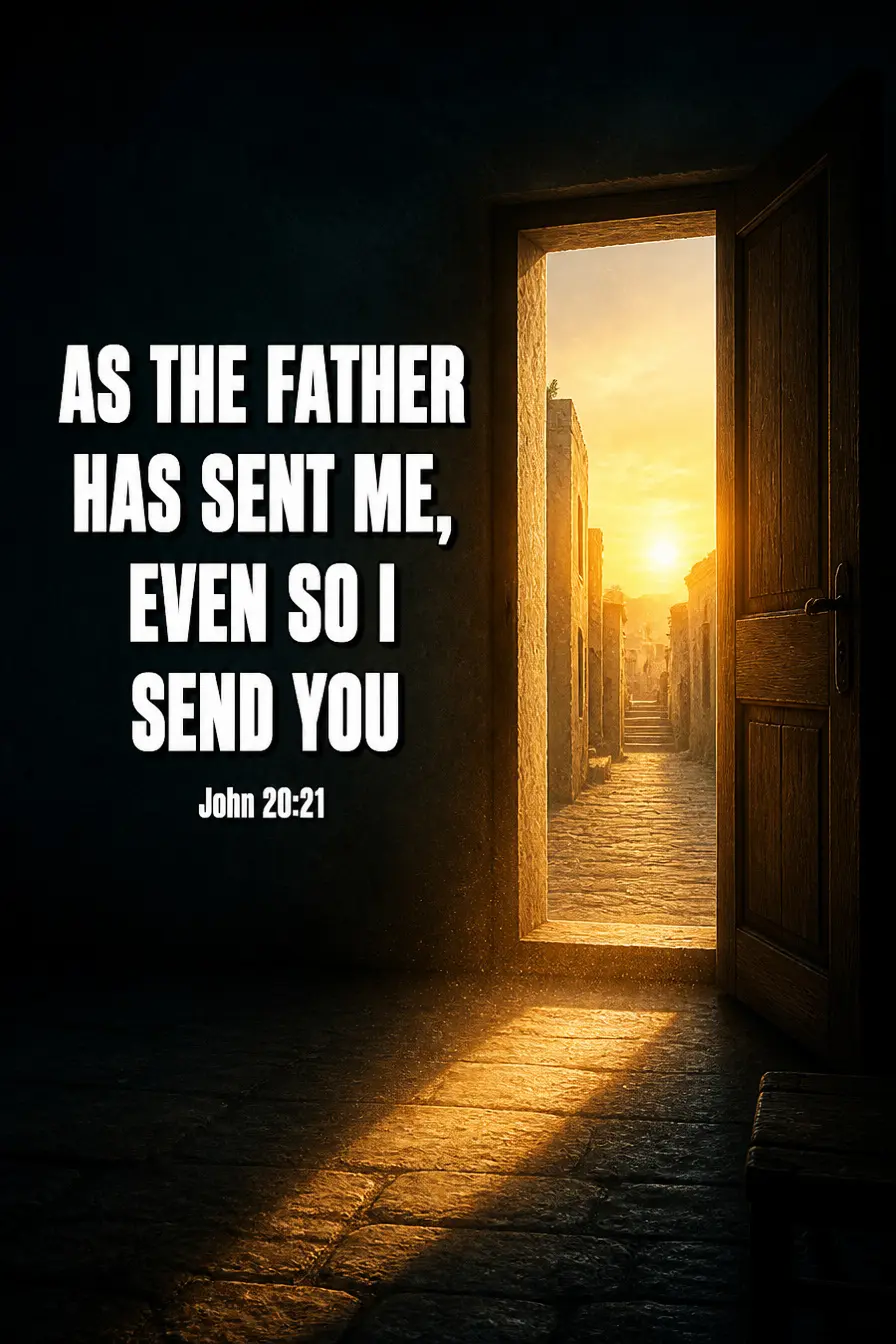
“Jesus therefore said to them again, “Peace be to you. As the Father has sent me, even so I send you.”” — John 20:21 (WEBU)
Peace be to you — and then, out you go.
The peace is not the destination. It is the briefing before they are sent back into the streets they had locked the door against. Anyone hoping that peace in Scripture means a quiet life should notice how quickly this one gets attached to a commission.
Eight Days Later, the Doors Are Locked Again
Here is the detail nobody quotes, and it may be the most useful sentence in the chapter for anybody living with anxiety.
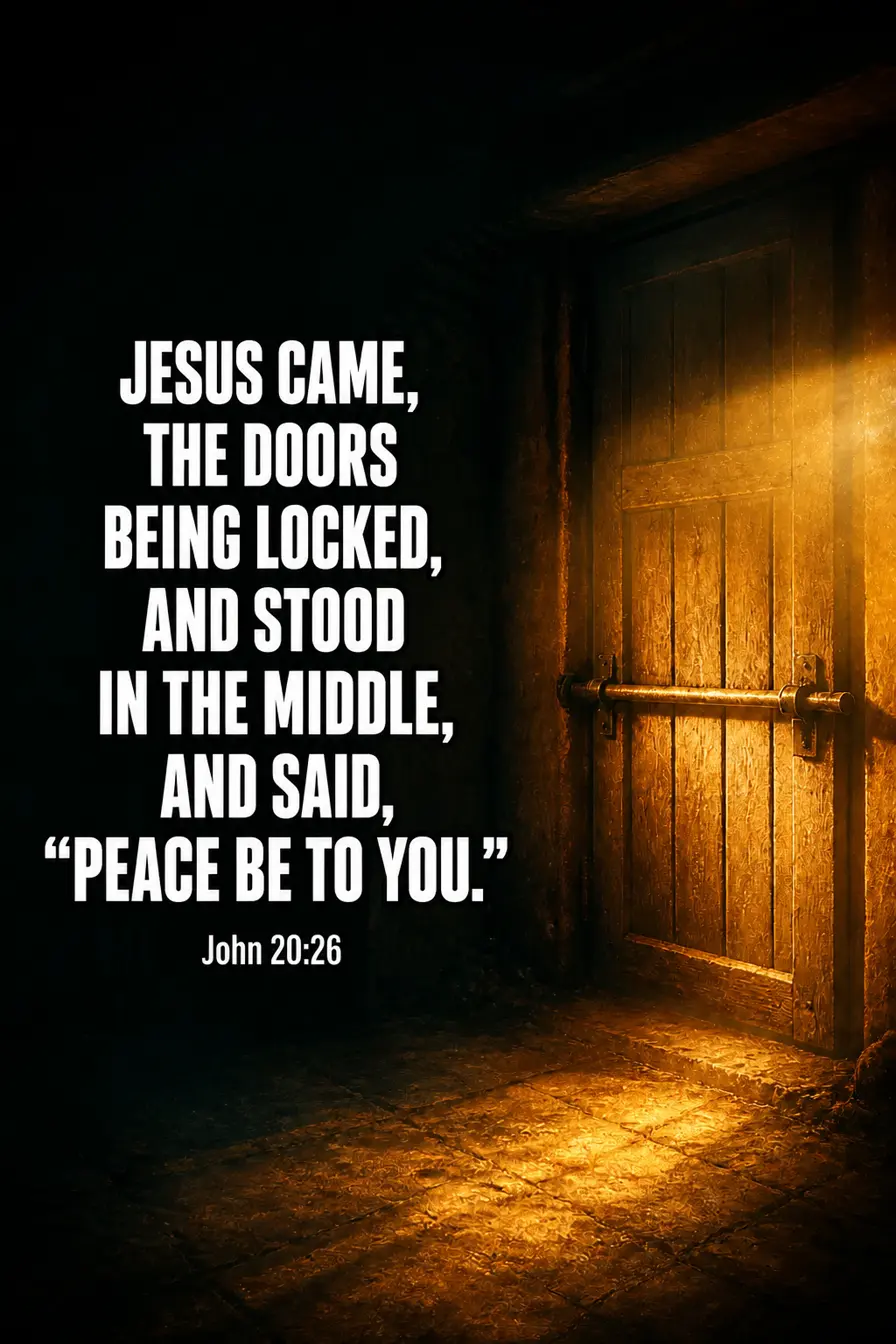
“After eight days, again his disciples were inside and Thomas was with them. Jesus came, the doors being locked, and stood in the middle, and said, “Peace be to you.”” — John 20:26 (WEBU)
They had seen him alive. They had seen the wounds. They had been sent. And a week later they are back in the same room with the doors locked, and he has to walk in and say the same three words again.
John reports this without a word of criticism. Nobody is scolded for needing it twice. If you have ever prayed something through, felt genuine relief, and then found the fear back in place by the following weekend, that is in the Bible, and the response to it was a repeat visit rather than a lecture.
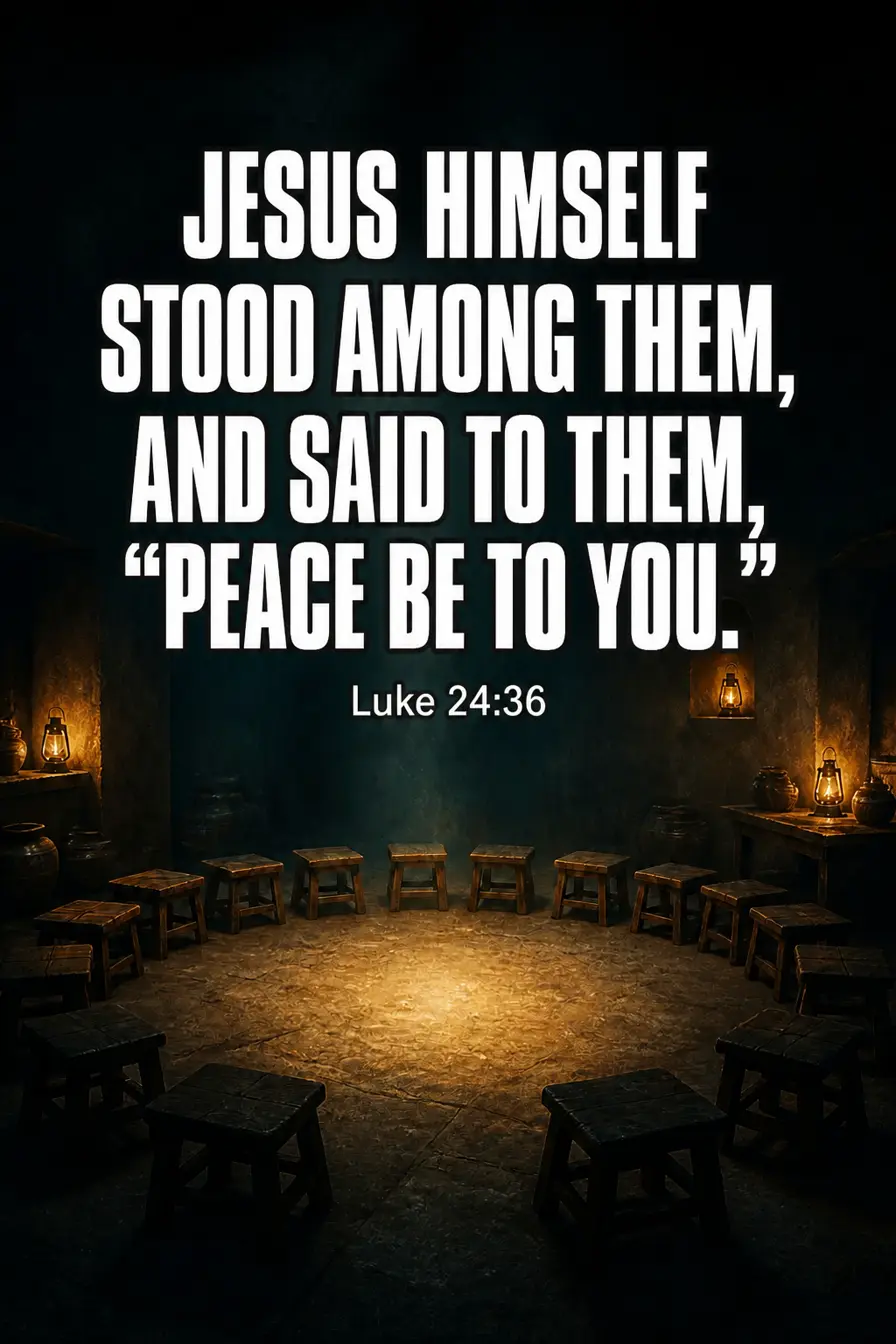
Luke records the same greeting from the same week, and it is worth seeing that the wording is fixed.
“As they said these things, Jesus himself stood among them, and said to them, “Peace be to you.”” — Luke 24:36 (WEBU)
Paul Says Peace Is a Person, Not a Feeling
When Paul writes about peace he does something strange with the grammar. He does not say Christ gives peace. He says Christ is it.
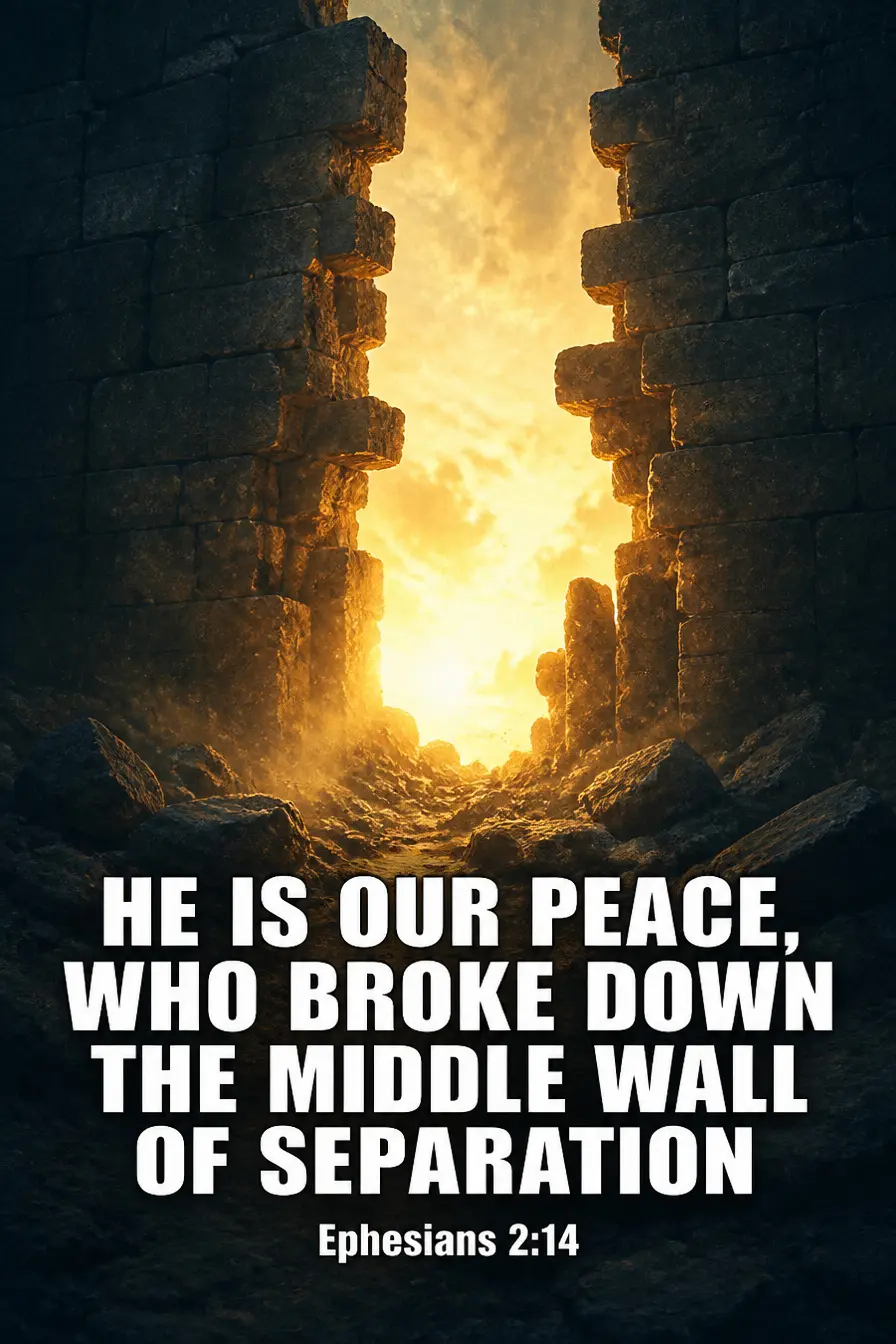
“For he is our peace, who made both one, and broke down the middle wall of separation,” — Ephesians 2:14 (WEBU)
He is our peace. And what that peace did, in this passage, was demolition — it broke down the middle wall of separation between two groups of people who had every historical reason to keep it up.
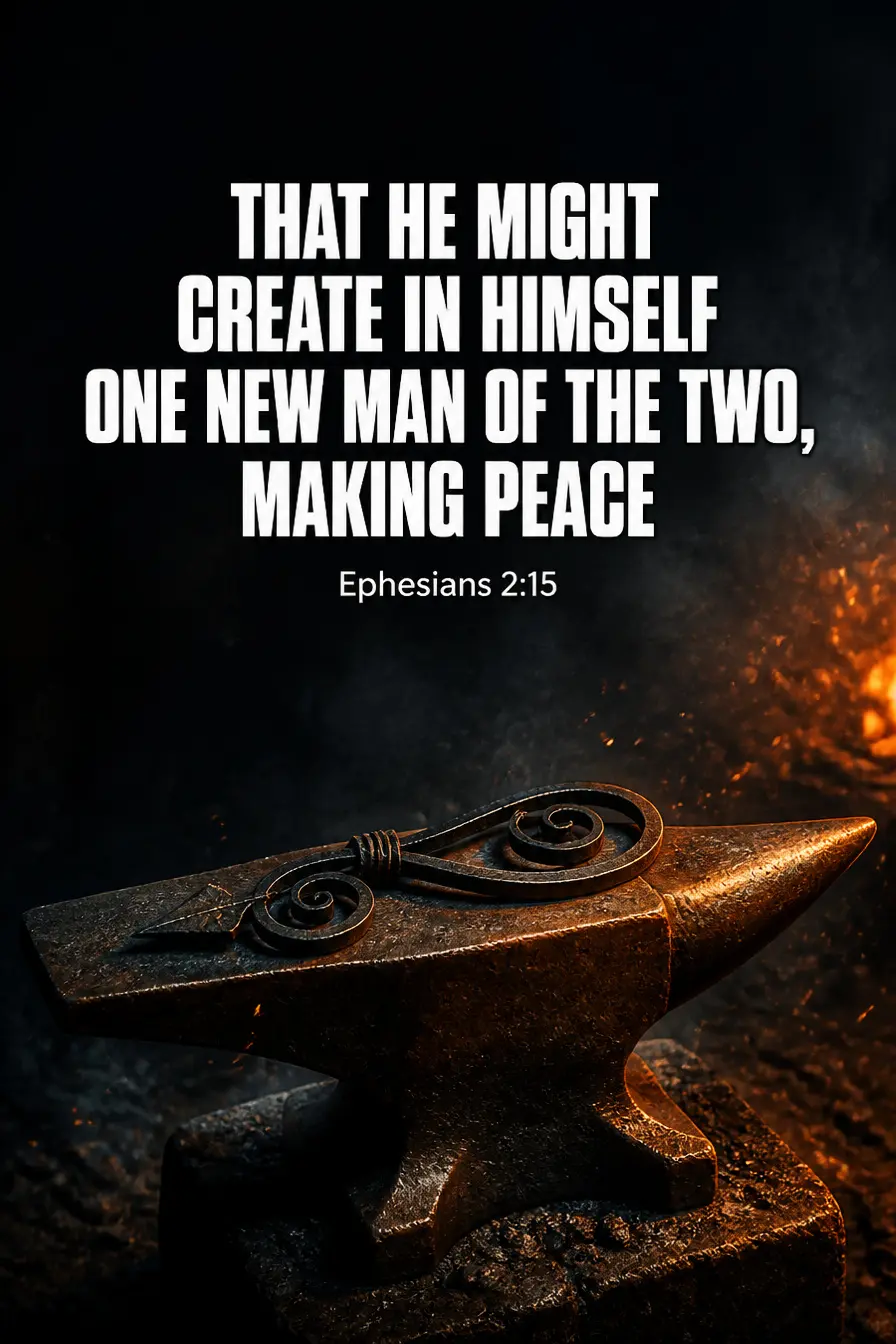
“having abolished in his flesh the hostility, the law of commandments contained in ordinances, that he might create in himself one new man of the two, making peace,” — Ephesians 2:15 (WEBU)
Making peace. Two words, and they are the whole argument of this article. Peace is manufactured, and here the raw material is his own flesh.
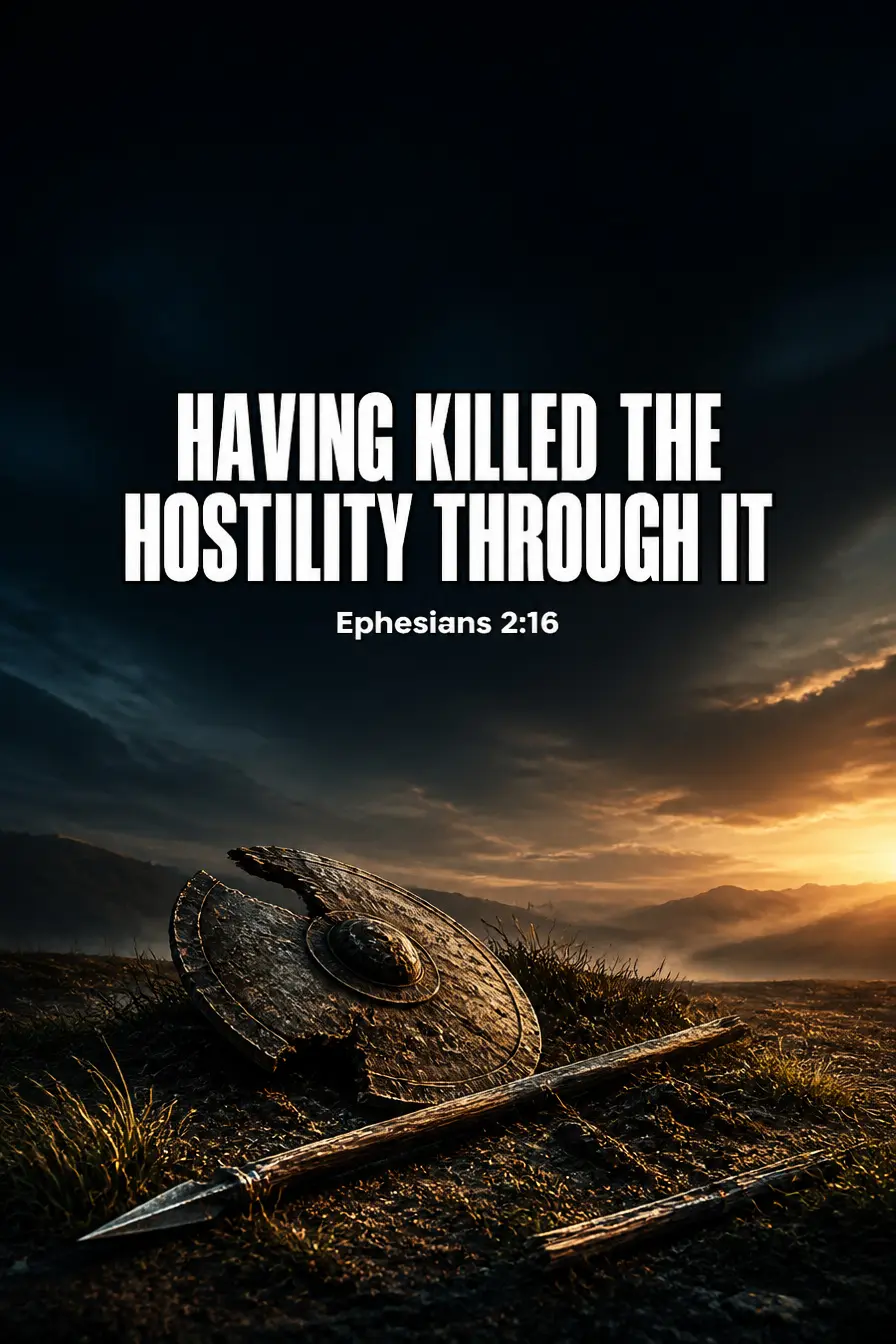
“and might reconcile them both in one body to God through the cross, having killed the hostility through it.” — Ephesians 2:16 (WEBU)
Having killed the hostility. Paul does not describe peace as hostility fading, or being managed, or being risen above. Something got put to death so that it could exist.
“He came and preached peace to you who were far off and to those who were near.” — Ephesians 2:17 (WEBU)
Preached. Announced, the way news is announced. You cannot generate this by breathing correctly; somebody has to tell you it happened.

Colossians names the material cost in one clause.
“and through him to reconcile all things to himself by him, whether things on the earth or things in the heavens, having made peace through the blood of his cross.” — Colossians 1:20 (WEBU)

And Romans states the result as a settled fact rather than an experience: “justified by faith, we have peace with God through our Lord Jesus Christ” (Romans 5:1, WEBU). It is a relationship status, not a mood, which is why it survives a bad week.
Where Peace Is Explicitly Not Located
Jesus is precise about the address, and the second half of the sentence is usually left off greeting cards.
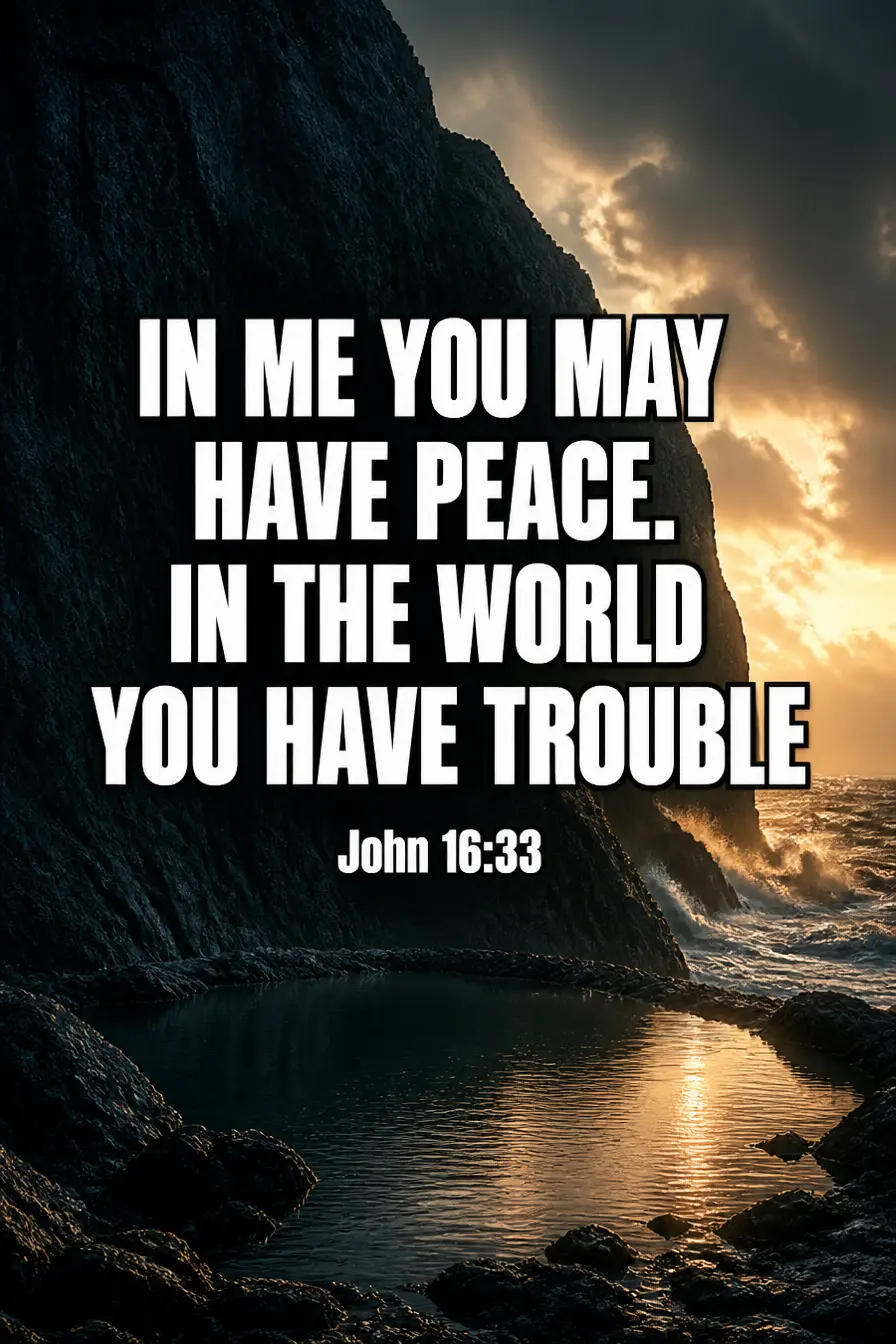
“I have told you these things, that in me you may have peace. In the world you have trouble; but cheer up! I have overcome the world.”” — John 16:33 (WEBU)
“In me” you may have peace; “in the world” you have trouble. He puts the two in the same sentence and does not pretend the second one goes away. In this world you will have trouble is a promise as much as anything else in the verse.
The title given seven hundred years earlier says the same thing as a name.
“For a child is born to us. A son is given to us; and the government will be on his shoulders. His name will be called Wonderful Counselor, Mighty God, Everlasting Father, Prince of Peace.” — Isaiah 9:6 (WEBU)

The Oldest Blessing in the Book Treats It as a Gift
Long before any of that, the priests of Israel were given words to say over the people, and the last line is the one this article is about.
“‘The LORD bless you, and keep you.” — Numbers 6:24 (WEBU)
“The LORD lift up his face toward you, and give you peace.’” — Numbers 6:26 (WEBU)
“Give you peace” — not help you find it. The whole blessing is a list of things done to you by somebody else while you stand there.
And when Gideon finally understood who he had been speaking to, he did not record how he felt about it. He built something and gave it a name.
“Then Gideon built an altar there to the LORD, and called it “The LORD is Peace.” To this day it is still in Ophrah of the Abiezrites.” — Judges 6:24 (WEBU)
“To this day it is still” there — a marker in a field, outlasting the mood of the man who put it up. That is a reasonable model for what to do on a day when peace does arrive — write it down somewhere it will still be legible when the feeling has gone.
The Part That Is Handed to Us
Having established that peace is made rather than found, Scripture puts some of the making into our hands.
“Blessed are the peacemakers, for they shall be called children of God.” — Matthew 5:9 (WEBU)
Not the peaceful. The peacemakers. The beatitude blesses a job, not a temperament.

“Now the fruit of righteousness is sown in peace by those who make peace.” — James 3:18 (WEBU)
Sown. James picks a farming verb, which carries a delay in it — the sowing and the harvest are not the same afternoon.
Paul adds two qualifications that keep this honest, and both are a relief.
“If it is possible, as much as it is up to you, be at peace with all men.” — Romans 12:18 (WEBU)
“If it is possible, as much as it is up to you” — two escape clauses in one short verse, because Paul knows peace takes two and you only control one of them. Nobody is being asked to fix a relationship the other person is committed to keeping broken.
The Peace Verses Most People Already Know
Six verses turn up in almost every list of Bible verses about peace. They earn the place, and each one reads differently once the locked room above is behind it.
“Peace I leave with you. My peace I give to you; not as the world gives, I give to you. Don’t let your heart be troubled, neither let it be fearful.” — John 14:27 (WEBU)
Jesus says this the night before the arrest, to the same men who will be hiding behind that door three days later. The verb is give again, and the qualifier matters more than it looks: the world hands out calm on condition that the trouble goes away first. This one is handed over with the trouble still coming.
“In nothing be anxious, but in everything, by prayer and petition with thanksgiving, let your requests be made known to God.” — Philippians 4:6 (WEBU)
This is usually read as an order to stop feeling anxious. It is an instruction about what to do while you still are. Paul was in chains when he wrote it, which rules out the reading where he had nothing to be anxious about.
“And the peace of God, which surpasses all understanding, will guard your hearts and your thoughts in Christ Jesus.” — Philippians 4:7 (WEBU)
Guard is a military word, from a city with a Roman garrison. A sentry does not clear the field of enemies; he stands at the gate so they do not get in. Bible Verses for Anxiety That Will Calm Your Mind works through this passage line by line.
“You will keep whoever’s mind is steadfast in perfect peace, because he trusts in you.” — Isaiah 26:3 (WEBU)
The Hebrew doubles the word, peace, peace, which is where “perfect” comes from. And the one doing the keeping is God, not the steadfast mind. Trust is the reason given, not the technique.
“And let the peace of God rule in your hearts, to which also you were called in one body, and be thankful.” — Colossians 3:15 (WEBU)
Rule here is an umpire’s word, the one who settles a disputed call. And in one body puts it back among other people: this is peace as the thing that decides arguments inside a church, not a private mood.
“In peace I will both lay myself down and sleep, for you alone, LORD, make me live in safety.” — Psalm 4:8 (WEBU)
The psalm uses sleep as the test, which is a fair one. You cannot fake falling asleep, and it is the one thing on this list you can try tonight.
What to Do With This on a Bad Day
If peace is made rather than found, the practical question changes. It stops being “how do we get calmer” and becomes “what has been made, and what is ours to make”.
- Read the receipt, not the feeling. He said peace and then showed the wounds. On a day when nothing feels peaceful, the thing to look at is what was done, not what you can sense. Romans 5:1 says we have peace with God as a completed fact.
- Expect to need it more than once. The doors were locked again eight days later. Needing the same reassurance a second and a tenth time is in the text, and it is met with a repeat visit rather than a rebuke.
- Say the specific fear out loud in prayer. In everything, Paul writes, by prayer and petition — the instruction is detailed rather than general, and thanksgiving is named as part of the method.
- Build the altar. Gideon wrote it on a stone and it outlasted him. Keep a note of the times something was answered, so that a bad week has to argue with a record rather than only with your memory.
- Do the peacemaking that is yours. One awkward conversation, one apology, one message you have been avoiding. And keep Romans 12:18 in view — as much as it is up to you, which is not all of it.
- Take the sleep seriously. Psalm 4:8 uses lying down and sleeping as the picture of trust rather than as a reward for having achieved it.
Fear and anxiety on this scale are exhausting, and they are not a measure of how much God loves you or of how strong your faith is. If what you are carrying is affecting your health or your safety, put yourself in the hands of a professional. That is not a failure of faith and it has never been incompatible with it.
For more, read Bible Verses for Anxiety That Will Calm Your Mind or browse the full Anxiety Archive.
Questions About Bible Verses About Peace
What does the Bible say about peace?
That it is given rather than found. The verbs Scripture uses are made, given, preached, sown and left — Ephesians 2:15 says making peace, Colossians 1:20 says having made peace through the blood of his cross, Numbers 6:26 says give you peace, John 14:27 says “peace I leave with you”. In every case somebody else is doing the work and it is handed over finished.
What is the best Bible verse about peace?
Philippians 4:6-7 is the one most people reach for, and it earns the place. For a harder day, John 20:19 may be more use: the disciples were behind locked doors because they were afraid, and the first word spoken into that room was peace — with the danger still entirely real outside.
Why do you keep losing your peace?
John 20:26 records the disciples back in the same locked room eight days after seeing the risen Christ. They had the evidence and they locked the doors anyway. Scripture reports it without any criticism and Jesus simply comes again. Losing it is not treated as a failure; it is treated as the reason he keeps arriving.
What does “perfect peace” mean in Isaiah 26:3?
The Hebrew repeats the word — literally peace, peace — which English renders as perfect or complete peace. The verse attaches it to a mind that is steadfast, and gives the reason as trust rather than as effort or technique.
Is anxiety a sin?
The passages above do not treat it that way. The disciples hide behind locked doors twice and are not rebuked either time; Paul commands prayer rather than shame. What Scripture consistently does is give the anxious person something to do with the anxiety — cast it, name it, present it — rather than tell them to stop having it.
What does it mean that Jesus is the Prince of Peace?
Isaiah 9:6 gives it as a title alongside Wonderful Counselor, Mighty God and Everlasting Father. Paul takes it further in Ephesians 2:14 by saying he is our peace — not the supplier of it but the thing itself, which is why John 16:33 locates peace “in me” and puts trouble in the world in the very same sentence.