Everybody trusts something at three in the morning. The savings account, the doctor’s tone of voice, the friend who always picks up, a plan with four backup plans attached. Nobody lies awake trusting nothing; the mind reaches for whatever feels most solid and leans on it.
That is close to how the Old Testament uses the word. Its most common verb for trust, batach, carries the sense of feeling secure, of resting your weight on something. And the Bible almost never says “trust” on its own. It says trust in, and then it keeps naming the rivals: chariots, horses, princes, Pharaoh, your own understanding.
So Bible verses about trusting God are less about producing a feeling and more about a choice of where to put your weight. The twelve below follow that choice through four questions: what you lean on, how to trust while you are afraid, what trust sounds like when it prays, and where it comes from.

Discover your unique purpose. You are God's masterpiece.Jeremiah 29:11 · 12 min
That was just the opening. Open the app and search #007 to hear the full 12-minute story — free.
Keep listening free in the app Free on iOS & Android — no sample needed


Trust in God Starts With Choosing What to Lean On
2 Kings 18:19 — The Question Shouted Over the Wall
“Rabshakeh said to them, “Say now to Hezekiah, ’The great king, the king of Assyria, says, “What confidence is this in which you trust?” — 2 Kings 18:19 (WEBU)
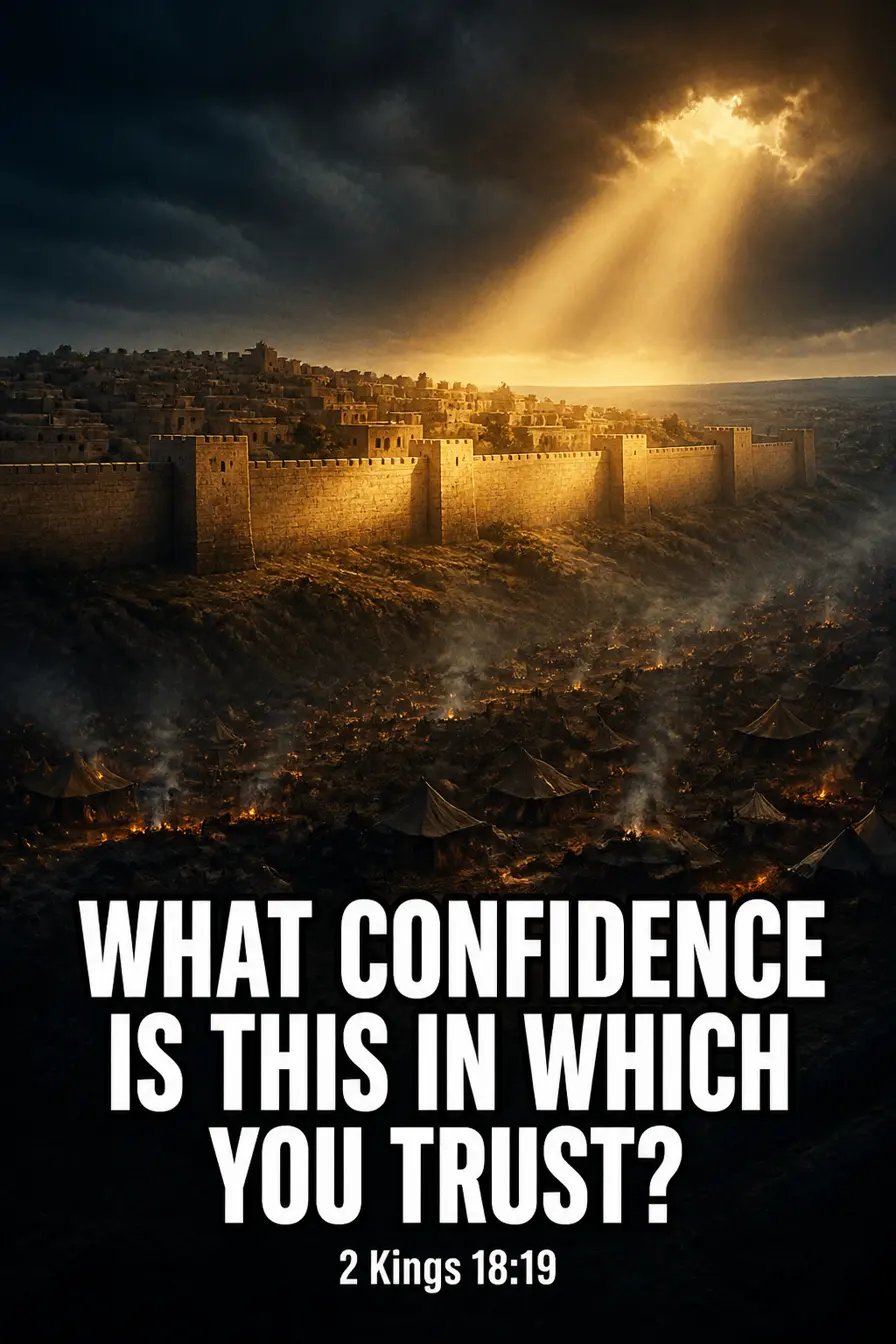
The Assyrian army is outside Jerusalem, and the king’s field commander has come to talk the city into surrender. Hezekiah’s officials beg him to speak Aramaic so the people on the wall will not understand. He switches to Hebrew on purpose and shouts louder (18:26-28).
His question is the one every hard week asks: what exactly are you relying on?
The chapter has already given the answer. Hezekiah “trusted in the LORD, the God of Israel” (18:5). Trust in Scripture is often tested exactly like this, by a voice that makes your confidence sound ridiculous, loudly, where everyone can hear.
Psalm 20:7 — Chariots, Horses, and a Name
“Some trust in chariots, and some in horses, but we trust in the name of the LORD our God.” — Psalm 20:7 (WEBU)
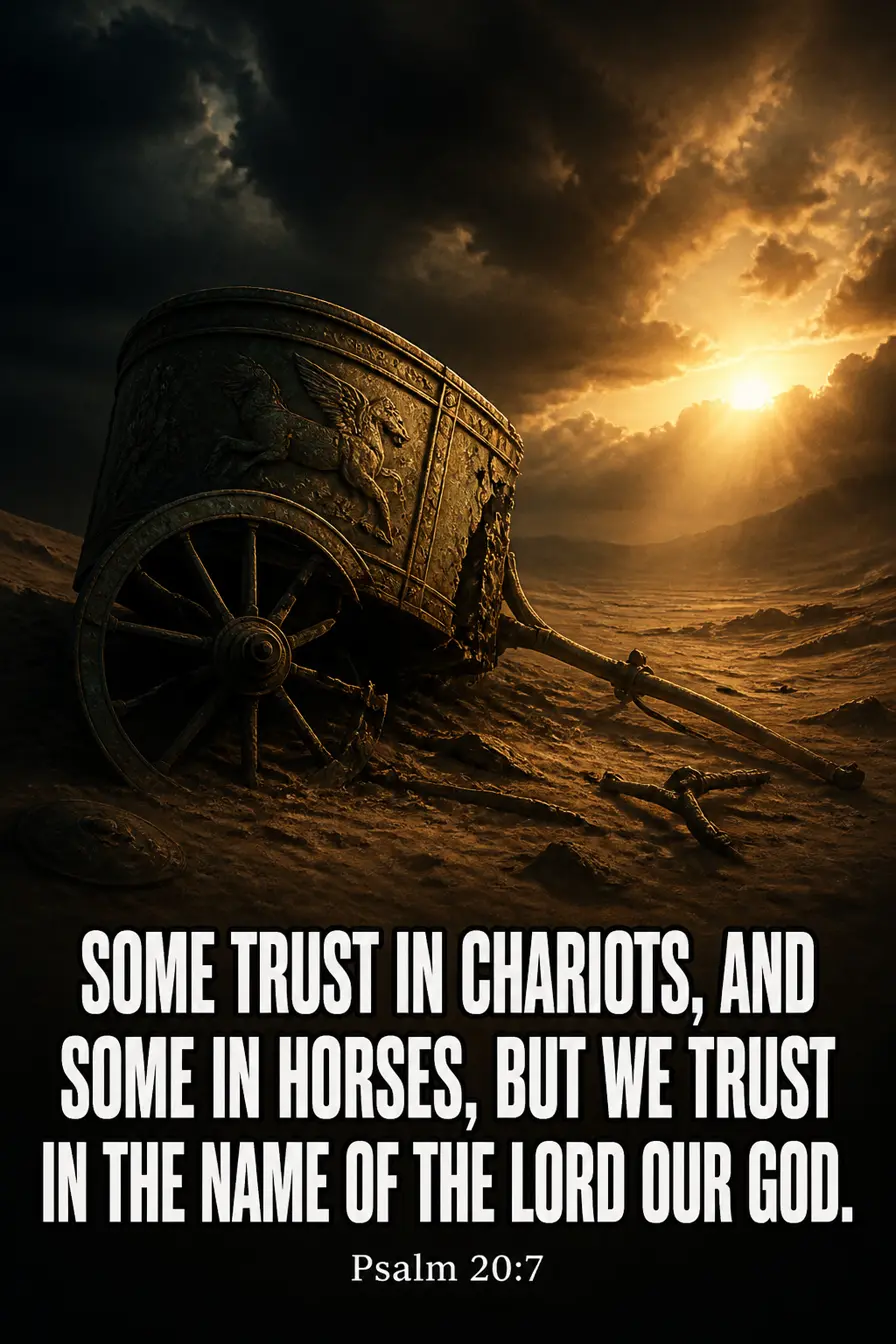
Psalm 20 is a prayer for the king before battle: “May the LORD answer you in the day of trouble” (20:1). Chariots were the most advanced weapon of the day. Israel, a hill-country people, mostly did not have them.
So this verse was written by people looking across at an army that had chariots. The contrast is between what you can count and what you cannot.
Your chariots are probably quieter: a salary, a reputation, a diagnosis researched for hours. None of them are bad. The psalm only asks which one gets your weight on the day of trouble.
Jeremiah 17:7-8 — The Tree That Does Not Notice the Drought
“Blessed is the man who trusts in the LORD, and whose confidence is in the LORD. For he will be as a tree planted by the waters, who spreads out its roots by the river, and will not fear when heat comes, but its leaf will be green, and will not be concerned in the year of drought.” — Jeremiah 17:7-8 (WEBU)
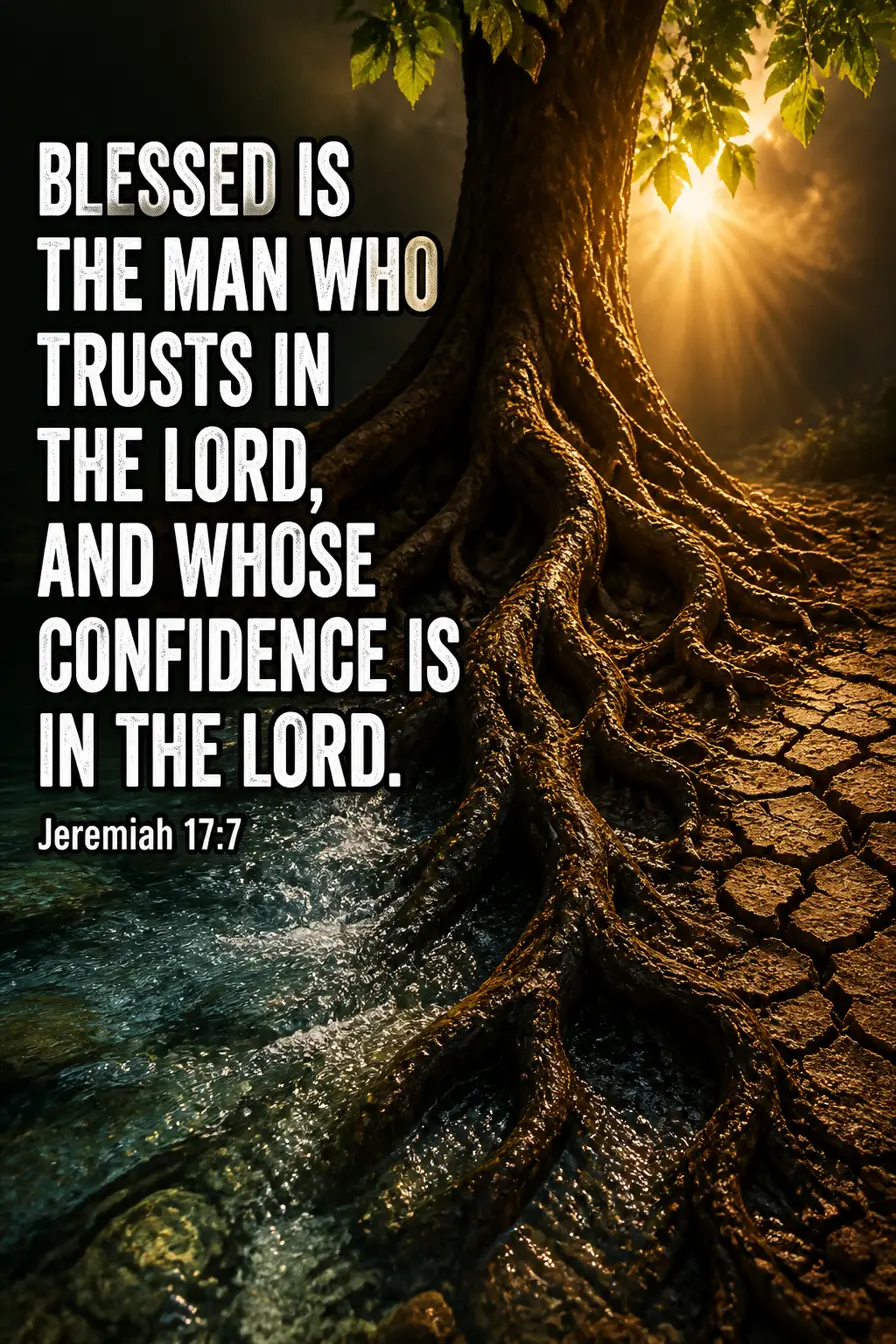
Jeremiah sets two plants side by side. Two verses earlier: “Cursed is the man who trusts in man, relies on strength of flesh” (17:5). That person is “like a bush in the desert”, living in “an uninhabited salt land” (17:6).
Notice what the blessed tree is promised. Not that the heat will not come. The verse assumes heat, and it assumes a year of drought. The difference is underground. The roots reach a river the drought cannot touch, so the leaves stay green while everything around them browns.
Trust, in this picture, is not a mood you hold on the surface. It is where your roots go, and that is decided long before the dry year.
Trusting God When You Are Afraid or Cannot See
Psalm 56:4 — Trust Shows Up While the Fear Is Still There
“In God, I praise his word. In God, I put my trust. I will not be afraid. What can flesh do to me?” — Psalm 56:4 (WEBU)

The heading of Psalm 56 says David wrote it “when the Philistines seized him in Gath”, an enemy city where he had gone to hide from Saul. Read the verse just before this one: “When I am afraid, I will put my trust in you” (56:3).
The word is “when”, not “if”. Verse 3 admits the fear, and verse 4 is what David says back to it. Trust is not the absence of fear. It is what he does while the fear is happening.
You do not have to stop being scared before you are allowed to trust. Our post on what God says when you’re afraid stays with Psalm 56:3 longer.
Isaiah 12:2 — A Song Borrowed From the Red Sea
“Behold, God is my salvation. I will trust, and will not be afraid; for the LORD, the LORD, is my strength and song; and he has become my salvation.” — Isaiah 12:2 (WEBU)
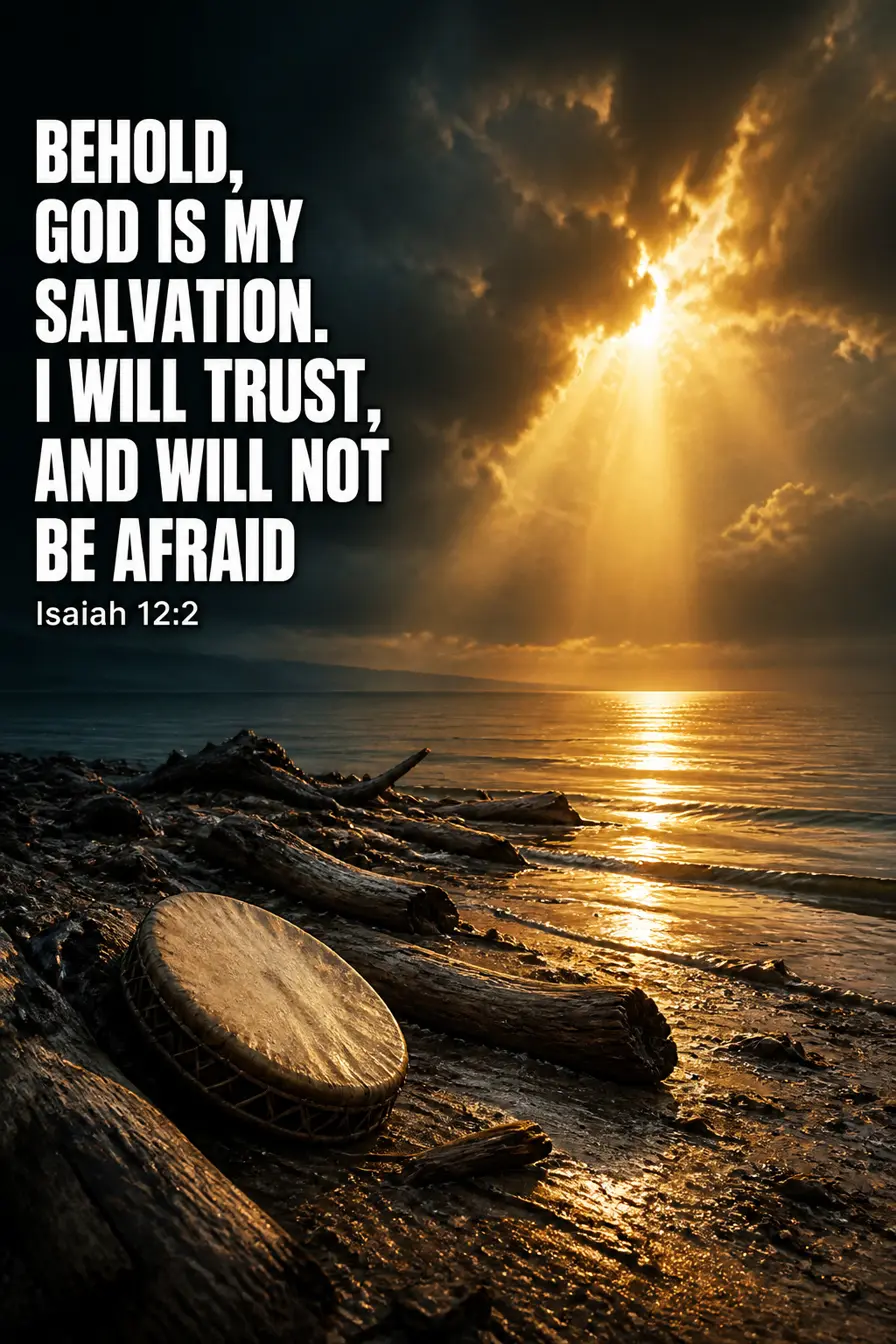
Isaiah 12 is a short song meant for “that day”, the day after rescue. Its last line, “the LORD… is my strength and song”, is borrowed almost word for word from the song Moses and Israel sang on the far shore of the Red Sea (Exodus 15:2).
That borrowing is the point. Isaiah’s audience faces invasion and exile, and the prophet hands them a song from a rescue that already happened, to sing about one that has not. Trust here is built from memory.
The verb is also future tense: “I will trust”. It is a decision, not a report of feelings, and it can be said on a day the feeling has not arrived.
Isaiah 50:10 — Trust for Someone Who Has No Light
“Who among you fears the LORD and obeys the voice of his servant? He who walks in darkness and has no light, let him trust in the LORD’s name, and rely on his God.” — Isaiah 50:10 (WEBU)

This verse describes a faithful person, someone who “fears the LORD and obeys”, who is nonetheless walking in the dark. The darkness is not a punishment, and it is not a sign of weak faith.
The next verse is a warning to people who cannot stand the dark and “kindle a fire” of their own, walking by torches they lit themselves (50:11). It ends badly. The instruction for the dark is not to manufacture light. It is to lean on a name.
If you are searching for verses about trusting God when you cannot see where this is going, this is the one written for exactly that.
What Trusting the Lord Sounds Like in Prayer
Psalm 62:8 — Trust Includes Pouring It All Out
“Trust in him at all times, you people. Pour out your heart before him. God is a refuge for us.” — Psalm 62:8 (WEBU)

Many people assume that trusting God means keeping quiet about how bad things are, as if complaining would prove the trust was fake. This verse puts the two side by side as one instruction: trust him, pour out your heart.
“Pour out” is a liquid word, the kind used for emptying a jar until nothing is left. The whole contents, not the presentable part.
Psalm 62 begins in quiet, “My soul rests in God alone” (62:1), then tells the crowd to speak. Both are trust: rest when you can, the whole jar emptied when you cannot.
Psalm 37:5 — “Commit” Means Roll It Off
“Commit your way to the LORD. Trust also in him, and he will do this:” — Psalm 37:5 (WEBU)
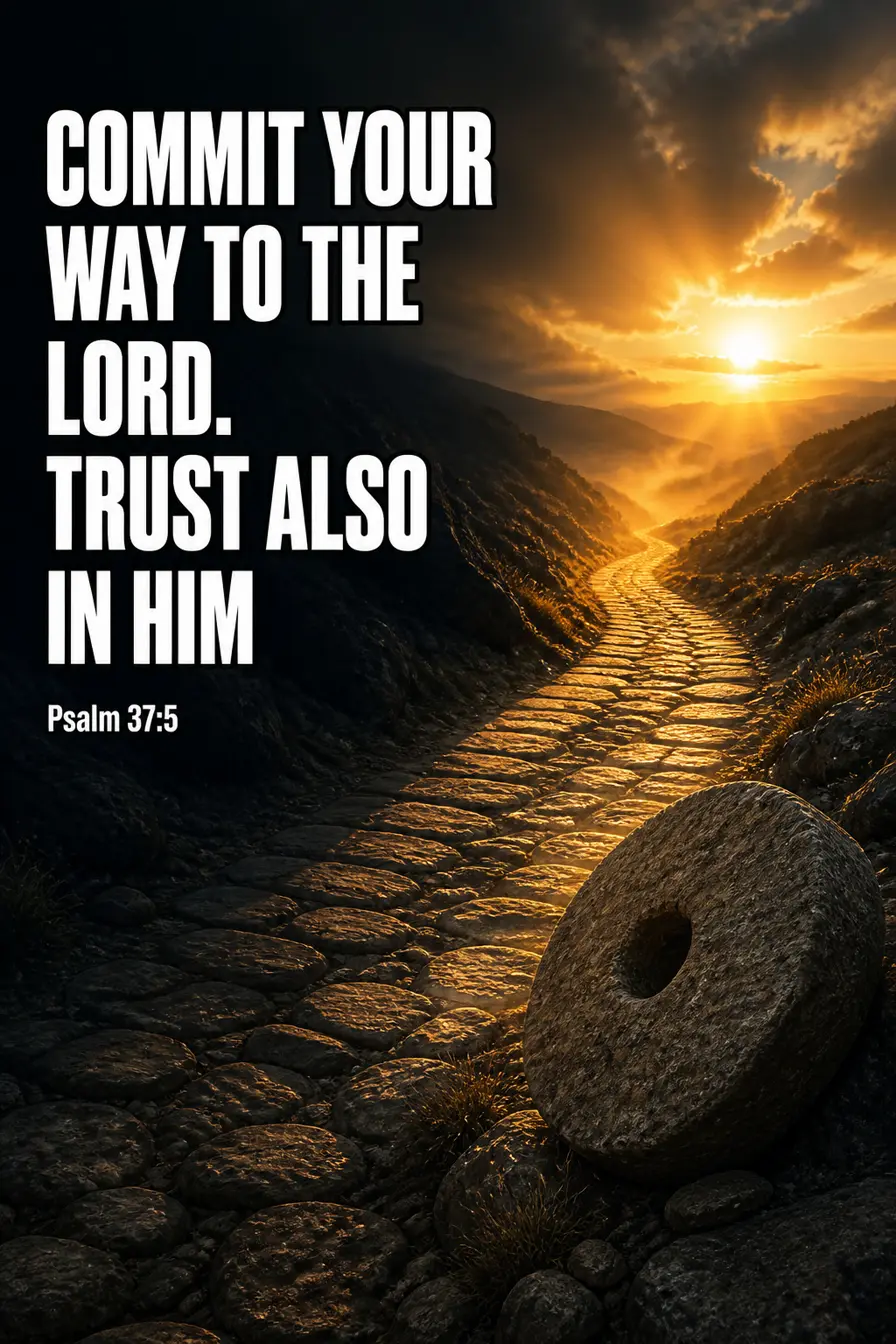
The Hebrew verb behind “commit” means to roll. It is the word for rolling a heavy stone, and it is the same verb used in Proverbs 16:3, “Commit your deeds to the LORD.” The picture is a load too heavy to carry, moved by rolling it onto someone else.
Psalm 37 is written to people watching dishonest neighbours do well, and it opens with “Don’t fret” (37:1). The cure it offers is not a better argument about fairness. It is to roll your way, your whole road, onto God.
The order is commit, then trust: roll it once, then keep trusting when you are tempted to roll it back.
Psalm 31:14-15 — “My Times Are in Your Hand”
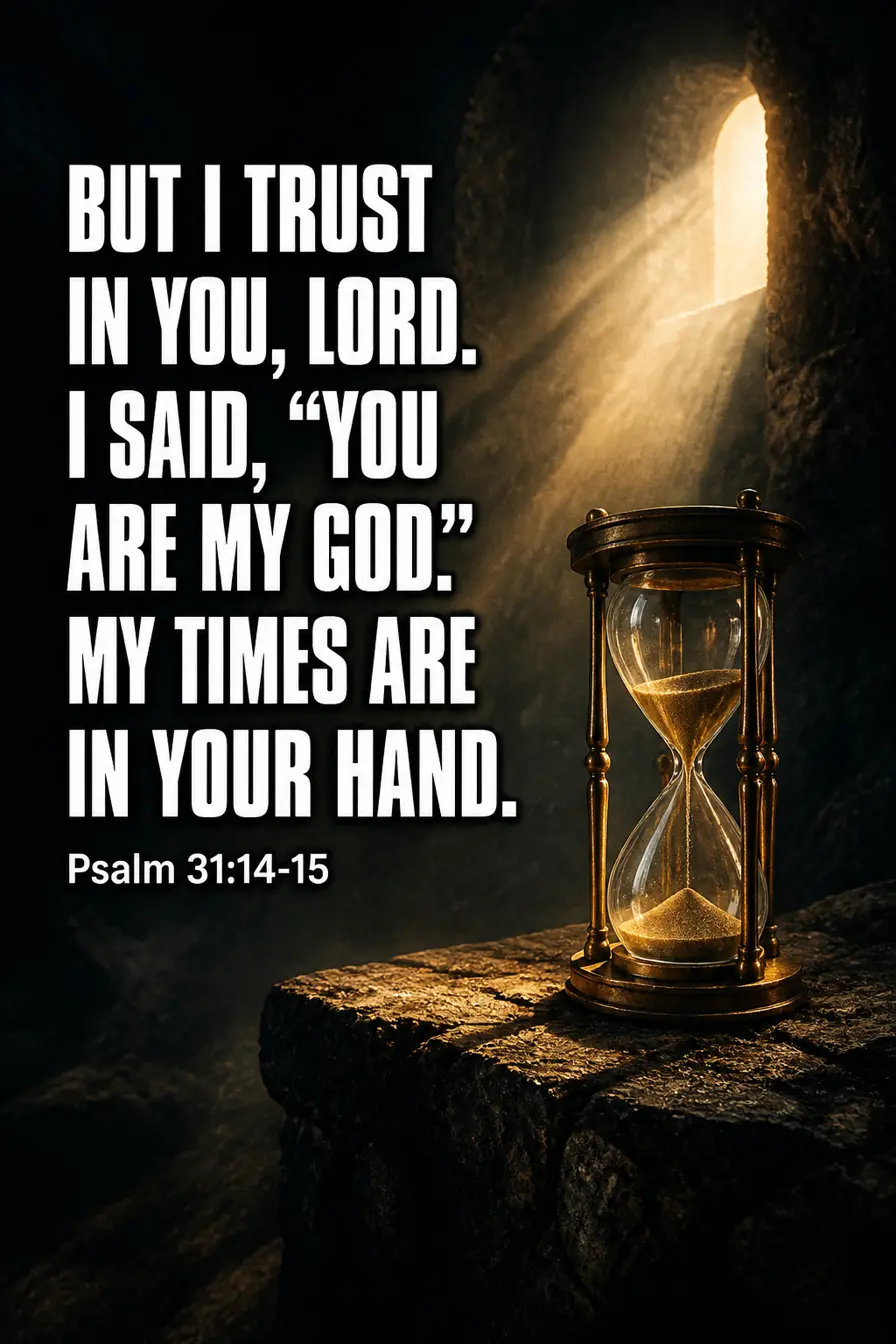
“But I trust in you, LORD. I said, “You are my God.” My times are in your hand.“ — Psalm 31:14-15 (WEBU)
The verses before this are some of the bleakest in the Psalms: the writer is “forgotten from their hearts like a dead man” and hears “the slander of many” (31:12-13). Then comes “But”.
“My times” is plural. Not just the end of life, but the seasons and turning points in it, the timing you cannot control. That is what the psalmist hands over.
Jesus prayed this psalm on the cross. His last words in Luke, “Father, into your hands I commit my spirit” (Luke 23:46), come from Psalm 31:5. When he had nothing left to do, the prayer he chose was this one.
Bible Verses About Trusting God’s Faithfulness
Psalm 9:10 — You Trust Someone You Know
“Those who know your name will put their trust in you, for you, LORD, have not forsaken those who seek you.” — Psalm 9:10 (WEBU)
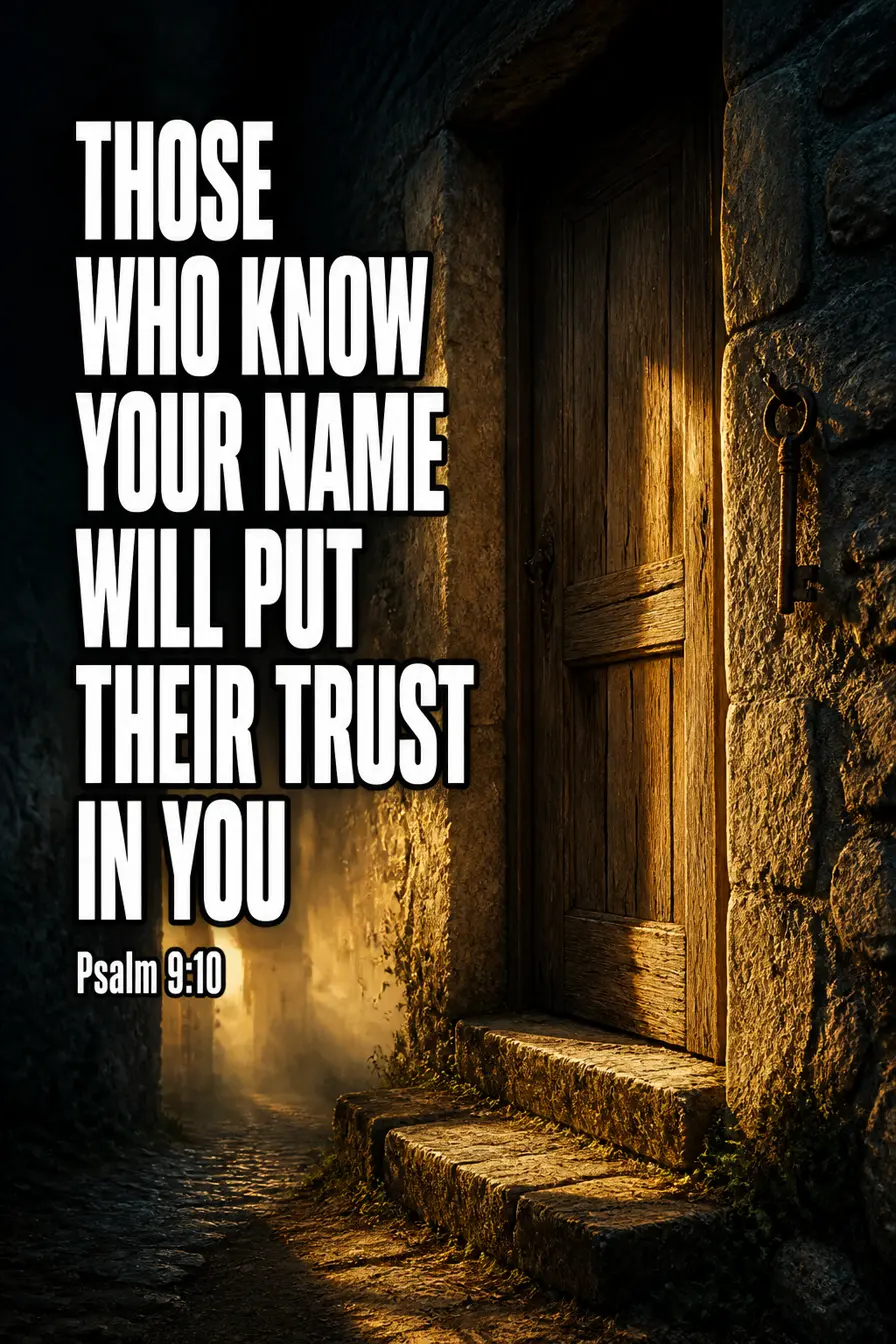
In the Bible a name is more than a label. It stands for character and reputation, what someone is known to do. To know God’s name is to know what he is like.
So knowing comes first, and trust follows. That is how it works with people too. Nobody hands a stranger their house keys after deciding to feel trusting; they hand them to a neighbour whose track record they have watched for years.
If trusting God feels forced, the answer may not be trying harder. It may be getting to know him, through what he has done in Scripture and in your own life, until his name means something specific.
Psalm 22:4-5 — Our Fathers Trusted, and Were Not Disappointed
“Our fathers trusted in you. They trusted, and you delivered them. They cried to you, and were delivered. They trusted in you, and were not disappointed.” — Psalm 22:4-5 (WEBU)

Psalm 22 opens with “My God, my God, why have you forsaken me?”, the words Jesus cried from the cross. Verses 4-5 are what the psalmist reaches for in that state: the record of people who trusted before him. “Trusted” appears three times in two verses.
Then the mockers in the psalm turn his trust into a taunt: “He trusts in the LORD. Let him deliver him” (22:8). At the crucifixion, the chief priests said almost exactly that about Jesus (Matthew 27:43).
Trust in this psalm is mocked and feels abandoned, and still leans on what God did for others. The psalm ends in praise; read it to the end.
Daniel 6:23 — The Reason Written on the Record
“So Daniel was taken up out of the den, and no kind of harm was found on him, because he had trusted in his God.” — Daniel 6:23 (WEBU)
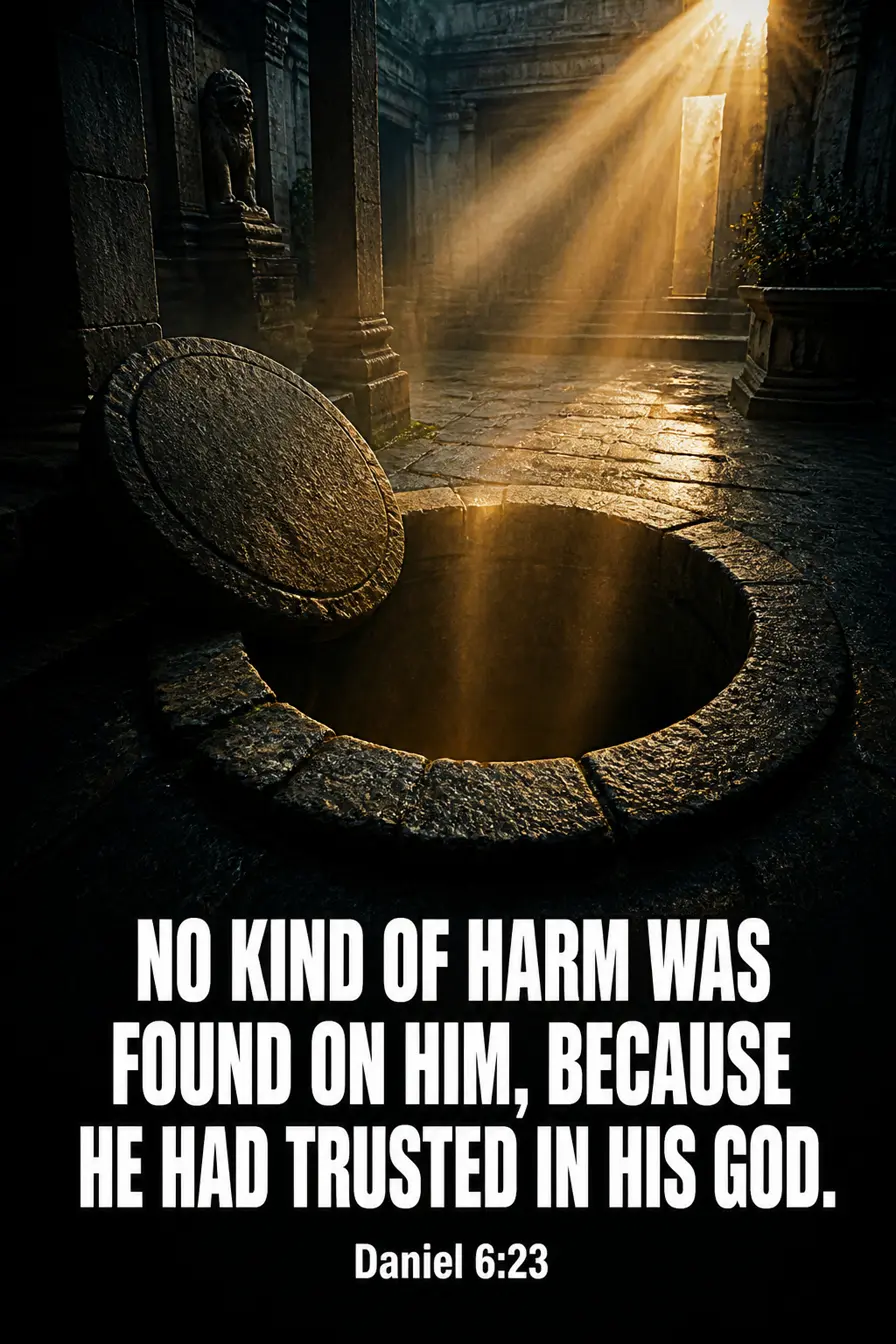
Most people know the lions. Fewer notice what Daniel did when the law against prayer was signed: he went home, opened his windows toward Jerusalem, and prayed three times a day “as he did before” (6:10).
That phrase explains the ending. The trust that held in the lions’ den was not invented on the night. It had been practised at that window, morning, noon and evening, for decades.
The narrator states the reason plainly: no harm was found on him “because he had trusted in his God”. It was the same trust as at the window, carried into a harder room.
One Practice: Name What You Are Leaning On
Psalm 20:7 makes a simple exercise possible. Take a sheet of paper and draw a line down the middle. On the left, write what you are actually relying on to get through the thing you are worried about: the money, the person, the plan, the backup plan. Be honest; nothing on that side is a sin.
On the right, write one thing God has already done that you can name specifically, from Scripture or from your own life, the way Isaiah 12 borrowed a song from the Red Sea.
Then pray Psalm 37:5 over the left column, out loud: “Commit your way to the LORD.” You are not throwing the list away. You are moving where your weight rests.
Frequently Asked Questions
What is the best Bible verse about trusting God?
Proverbs 3:5 is the most quoted: “Trust in the LORD with all your heart, and don’t lean on your own understanding.” For fear, Psalm 56:3 says, “When I am afraid, I will put my trust in you.” For a longer picture of what trust does, Jeremiah 17:7-8 describes a tree whose roots reach the river.
Which Bible verse says trust God with all your heart?
Proverbs 3:5-6. In the World English Bible it reads: “Trust in the LORD with all your heart, and don’t lean on your own understanding. In all your ways acknowledge him, and he will make your paths straight.” It contrasts leaning on God with leaning on your own reasoning.
How do you trust God in difficult times?
Start by telling him the truth about it. Psalm 62:8 joins trust with “Pour out your heart before him.” Isaiah 50:10 speaks directly to someone who “walks in darkness and has no light”. If you are in that season, our post on Bible verses for strength in hard times shows how God strengthened people in the middle of it.
What Bible verse says trust God’s plan?
Psalm 31:15 says, “My times are in your hand”, handing the timing of life to God. Jeremiah 29:11, often quoted for this, reads in WEBU: “I know the thoughts that I think toward you… thoughts of peace, and not of evil, to give you hope and a future.”
What Bible verse says trust God will provide?
Matthew 6:26 is the one Jesus gave: “See the birds of the sky, that they don’t sow, neither do they reap, nor gather into barns. Your heavenly Father feeds them. Aren’t you of much more value than they?” Our post on Bible verses about worry reads the whole passage.
Trust Has an Object
Trust in the Bible is never a free-floating feeling. It always rests on something, and the verses keep asking what. Chariots or a name. A desert bush or a tree by the river. A torch you lit or a God you know by his track record.
Start with the question the Assyrian shouted over the wall, asked honestly this time: what confidence is this in which you trust? More studies like this one are in our faith collection, beginning with the Bible verses about faith that Jesus spoke over ordinary people.