Plenty of people who have never opened a Bible can finish the line “Let there be…”.
That is what fame means for a verse. Lists of the most popular verses are usually measured inside church walls — what gets read, shared and memorized by people who already read Scripture. Famous is a different thing. It means the line reached people who never went looking for it: stamped into a bell, broadcast from lunar orbit, carved on a wall across from the United Nations, sung on a pop record that went to number one.
Each of these famous Bible verses got out through a particular door, and the door usually changed it a little. So each comes with two stories: how it got famous, and what it was saying before you ever heard it. For the handful of verses everybody already knows from church — John 3:16, Jeremiah 29:11, Philippians 4:13 — our inspirational Bible verses restore those to their setting.
Radical Transformation
One encounter on one road. The verse everyone quotes, and what it cost.Acts 9 · 13 min
That was just the opening. Open the app and search #013 to hear the full 13-minute story — free.
Keep listening free in the app Free on iOS & Android — no sample needed


Famous Bible Verses Cast in Bronze, Stone and Radio
Genesis 1:3 — Read From the Moon
“God said, “Let there be light,” and there was light.” — Genesis 1:3 (WEBU)
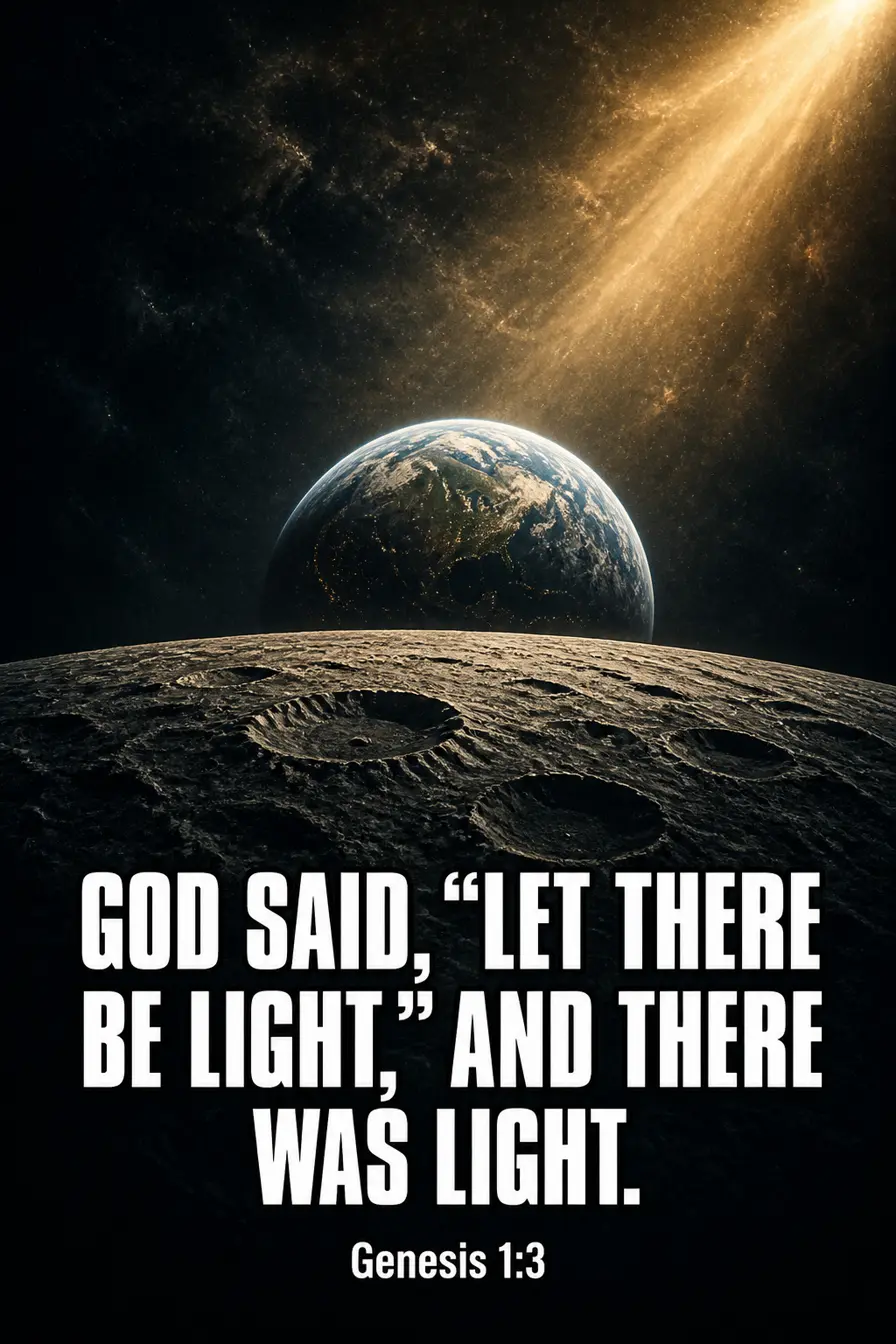
On Christmas Eve 1968 the crew of Apollo 8 — the first people to orbit the moon — took turns reading the opening verses of Genesis on a live broadcast, while the cameras showed the earth rising over a grey lunar horizon. It was one of the most watched broadcasts of its time.
Read the verse before it: the earth “formless and empty”, darkness over the deep. Those three astronauts were looking at exactly that, with one bright planet hanging in it. The first thing God makes is not a creature or a place but light, the condition for seeing anything else. If your week has felt formless, notice the order: light comes before anything gets sorted.
Leviticus 25:10 — The Bell That Got the Verse Right Later
“proclaim liberty throughout the land to all its inhabitants. It shall be a jubilee to you” — Leviticus 25:10 (WEBU)
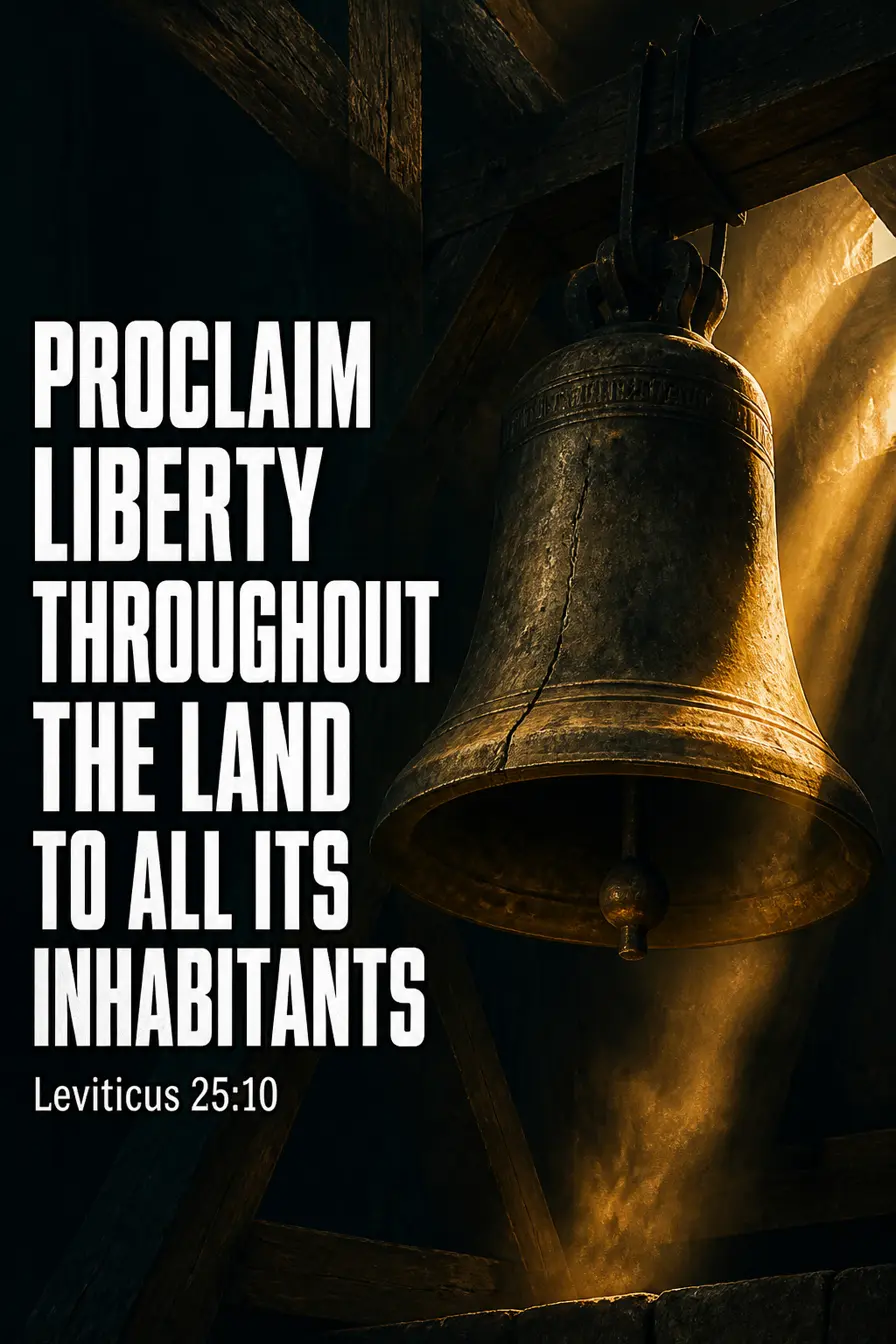
The Pennsylvania Assembly ordered a bell in 1751 to mark the fiftieth anniversary of William Penn’s 1701 charter, and cast this verse into it. The number was the point: the verse begins with making “the fiftieth year holy”.
What a jubilee actually did was more radical. Every fiftieth year, debts were cancelled, land went back to families who had lost it, and people sold into servitude went home — “each of you shall return to his family”. The bell hung in a colony where slavery was legal. Abolitionists in the 1830s adopted it and named it the Liberty Bell, reading the verse more accurately than the people who commissioned it. Liberty here is not a mood. It is a reset, paid for by whoever had been winning.
Isaiah 2:4 — What the Wall Across From the UN Leaves Off
“He will judge between the nations, and will decide concerning many peoples. They shall beat their swords into plowshares, and their spears into pruning hooks. Nation shall not lift up sword against nation, neither shall they learn war any more.” — Isaiah 2:4 (WEBU)
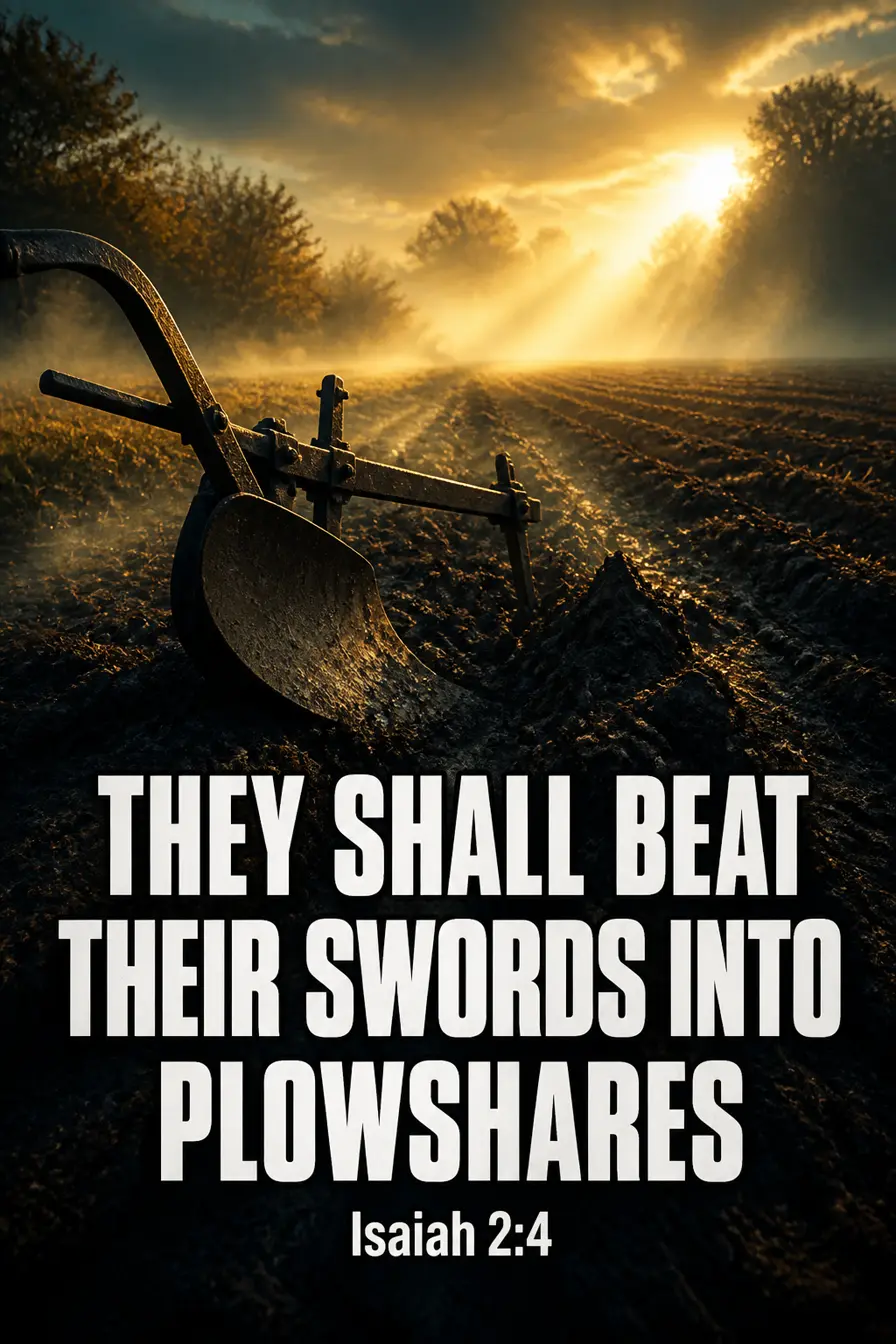
Across the street from United Nations headquarters in New York, a curved granite wall carries this verse in large capitals.
The inscription starts at “They shall beat their swords”. It leaves off the first sentence, and the first sentence is the condition: “He will judge between the nations”. In Isaiah, disarmament is not something nations manage by agreement. It follows from people streaming up to “the mountain of the LORD” saying “he will teach us of his ways”. The weapons get melted down because somebody trustworthy is finally settling the disputes. If you are tired of conflicts nobody can resolve, that is a more demanding hope than the wall suggests, and a more honest one.
Well-Known Bible Verses That Became Speeches and Songs
Amos 5:24 — A Farmer’s Line in a Preacher’s Mouth
“But let justice roll on like rivers, and righteousness like a mighty stream.” — Amos 5:24 (WEBU)
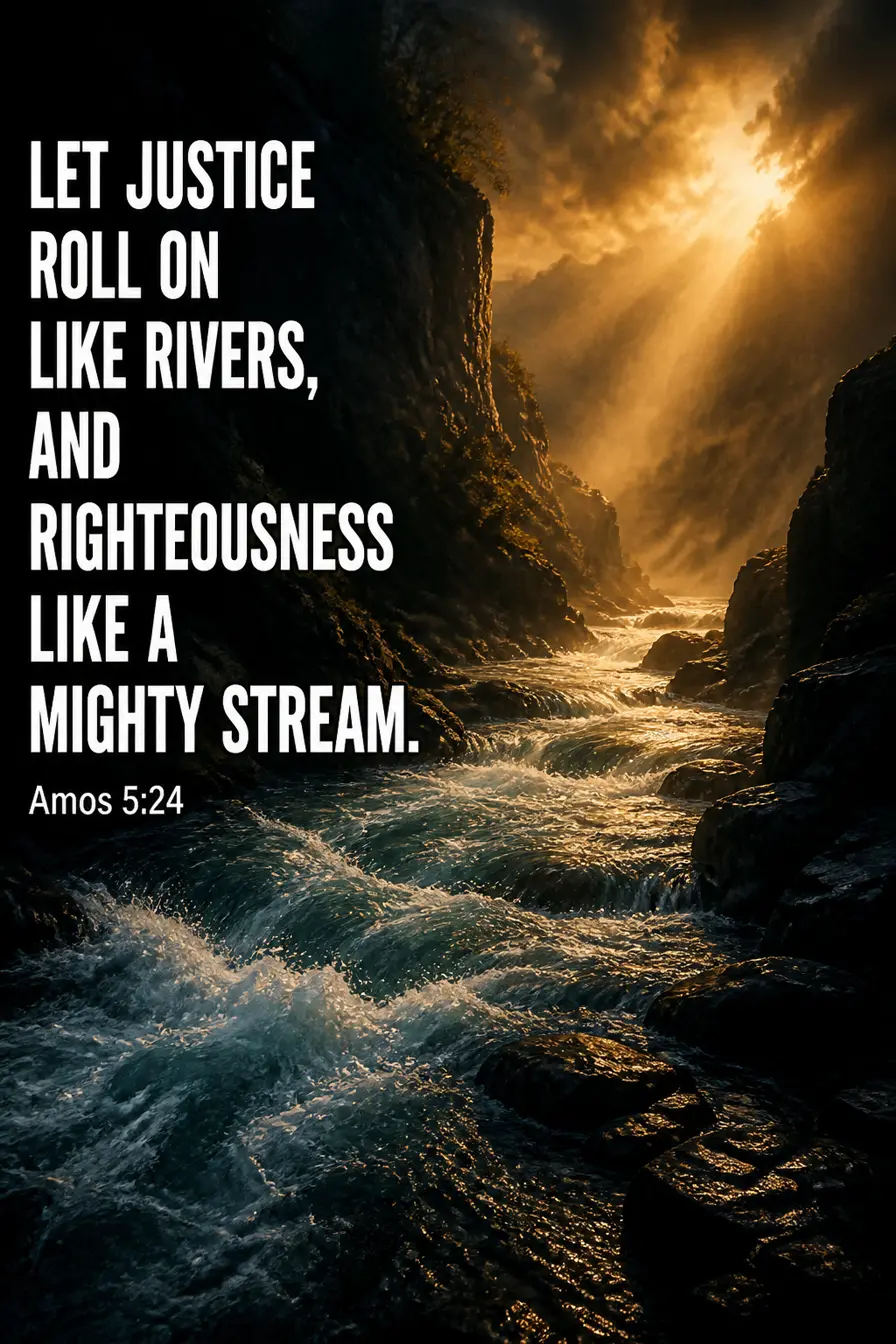
Martin Luther King Jr. used this verse at the start of the Montgomery bus boycott and again in “I Have a Dream” in 1963. In 1989 his paraphrase was carved into the Civil Rights Memorial in Montgomery, with water running over the words.
Amos would have recognised the setting. He was not a professional prophet — “a herdsman, and a farmer of sycamore figs”, in his own words — sent to preach in a prosperous kingdom that worshipped beautifully and cheated the poor. The lines just before are startling: “I hate, I despise your feasts”, “Take away from me the noise of your songs!” The famous verse is what God wants instead of worship without fairness. Read it slowly if you, like most of us, are more comfortable with the singing than with the rivers.
Ecclesiastes 3:1 — Number One in December 1965
“For everything there is a season, and a time for every purpose under heaven:” — Ecclesiastes 3:1 (WEBU)
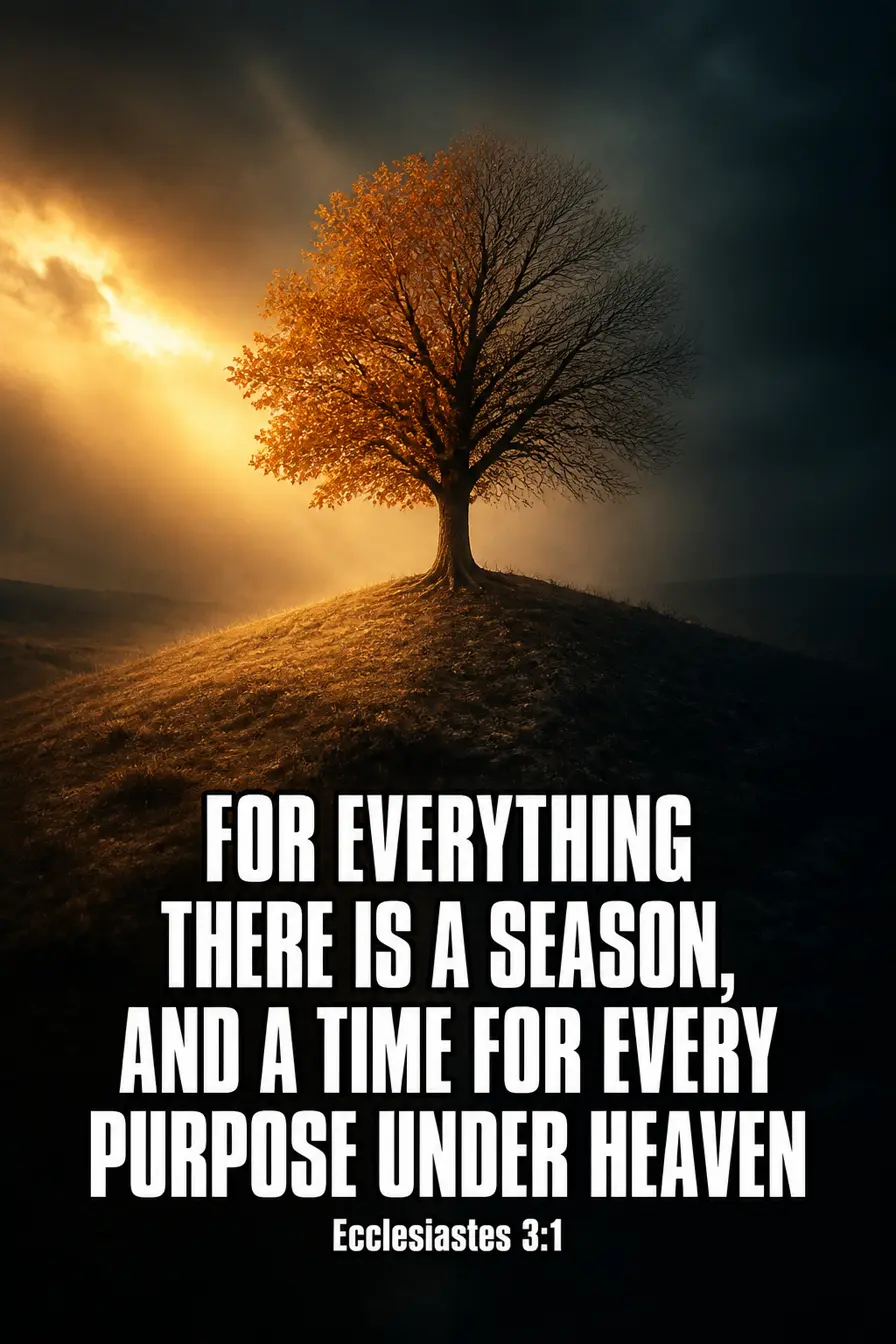
Pete Seeger set this passage to music in the late 1950s, and The Byrds’ version, “Turn! Turn! Turn!”, reached number one in America on 4 December 1965. Apart from the title, the only words in the lyric that are not from Ecclesiastes are Seeger’s closing line, “I swear it’s not too late”.
That added line is telling, because Ecclesiastes does not end on hope. The next verse asks flatly, “What profit has he who works in that in which he labors?” The seasons are an observation, not a pep talk. Read in place, the poem tells you that whatever season you are in will not last — bad news on a good day, and very good news on a bad one.
Psalm 137:1 — The Song That Stops Before the Psalm Does
“By the rivers of Babylon, there we sat down. Yes, we wept, when we remembered Zion.” — Psalm 137:1 (WEBU)
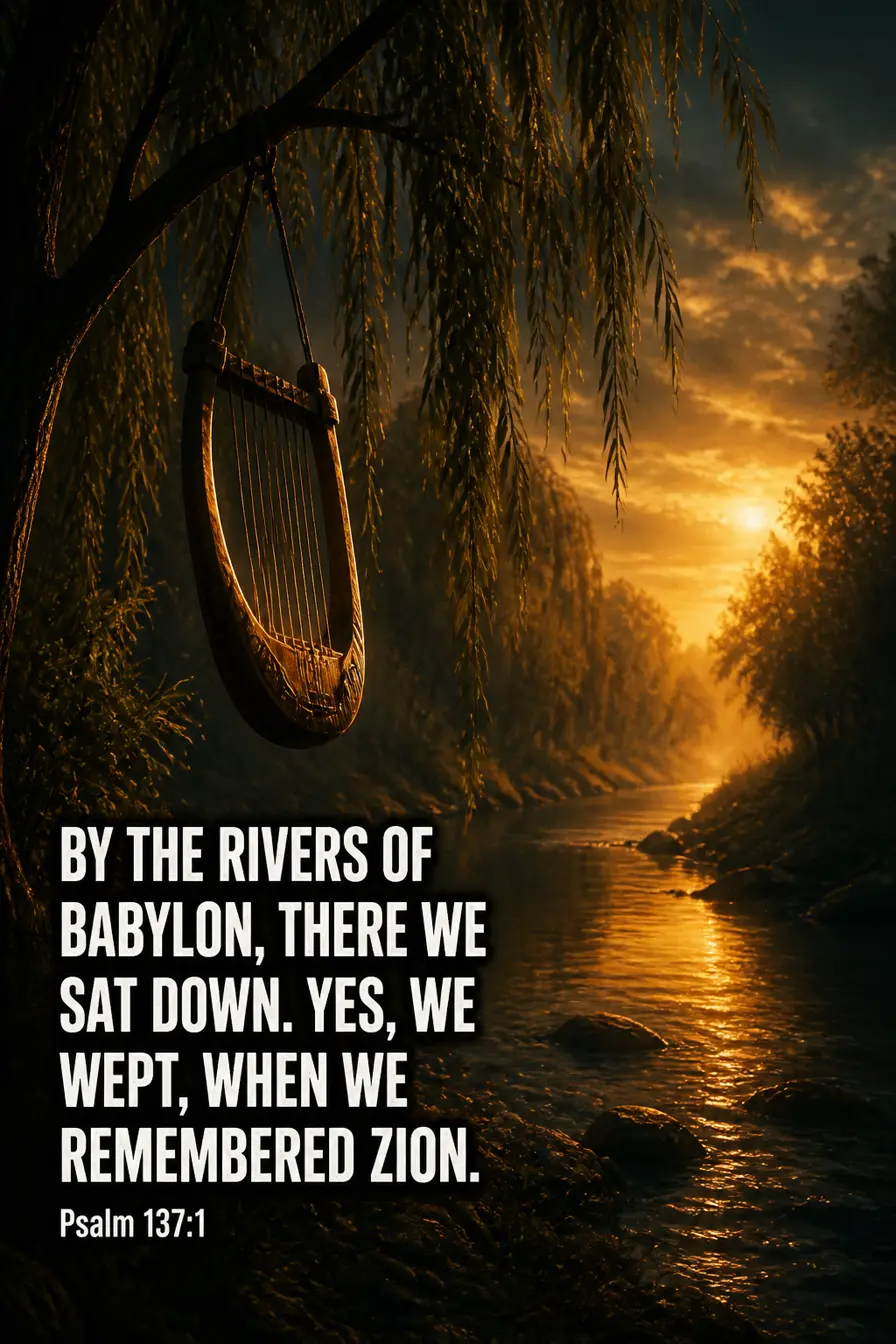
The Melodians, a Jamaican reggae group, set the first four verses to music in 1970. Boney M’s 1978 cover became one of the best-selling singles in British history, sung at discos by people who never knew it was a refugee’s lament.
The psalm was written by exiles after Jerusalem was destroyed, asking “How can we sing the LORD’s song in a foreign land?” Both records stop there. The psalm does not. It ends in a line about Babylon’s children so savage that no singer has ever put it to a tune. That ending shows what grief sounds like before it is tidied up, and it is prayed rather than acted on. If the rage you feel after a loss has frightened you, this psalm says you can bring it to God in words first.
Famous Bible Quotes Read at Weddings and Funerals
Ruth 1:16 — The Wedding Vow That Was Not Said at a Wedding
“where you go, I will go; and where you stay, I will stay. Your people will be my people, and your God my God.” — Ruth 1:16 (WEBU)
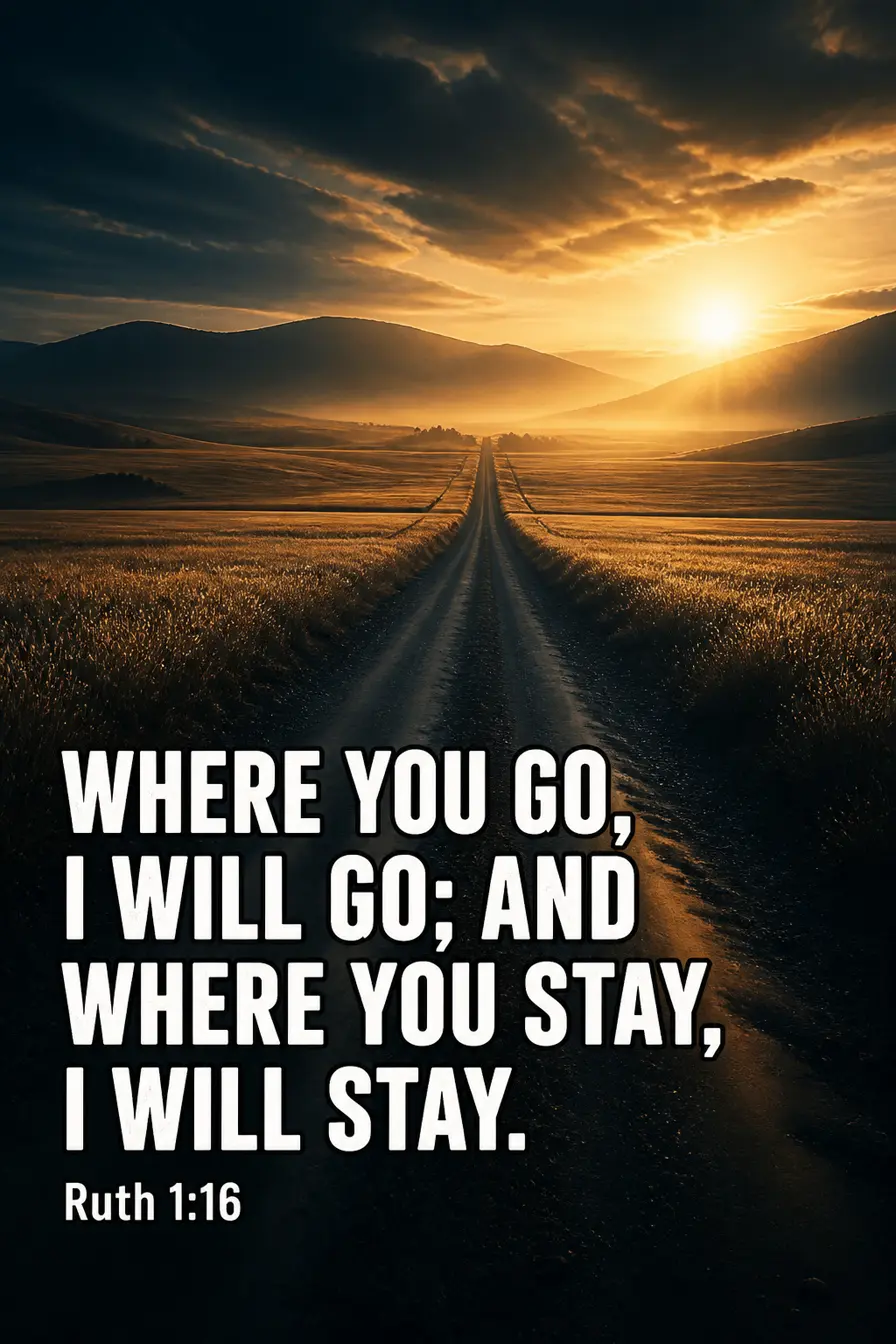
This is read at a great many weddings. It was spoken on a road, by a young widow to her widowed mother-in-law, Naomi, who had just told her to go home to her own people as the other daughter-in-law had.
Ruth had nothing to gain: no husband waiting, no inheritance, a foreign country ahead where she would be poor and suspect. She chose an old woman with nothing to offer, and a God she had only seen through that woman’s grief. It suits a wedding because it is the most unconditional loyalty in the Bible, first offered to somebody who could give nothing back. Our verses on marriage look at the other famous wedding readings the same way.
1 Corinthians 13:13 — Read at Diana’s Funeral
“But now faith, hope, and love remain—these three. The greatest of these is love.” — 1 Corinthians 13:13 (WEBU)
On 6 September 1997, Prime Minister Tony Blair read 1 Corinthians 13 at the funeral of Diana, Princess of Wales, in Westminster Abbey, to an audience estimated in the billions. A chapter better known from weddings became, for a week, the passage of public mourning.
The verb that carries the funeral reading is “remain”. A few lines earlier the chapter lists what will not last — prophecies, languages, knowledge — and it opens that list with “Love never fails”. At a wedding the passage sounds like romance. At a funeral you hear what it is: a claim about what survives when everything else, including a life, has ended.
Numbers 6:24-26 — The Oldest Bible Text Ever Found
“The LORD bless you, and keep you. The LORD make his face to shine on you, and be gracious to you. The LORD lift up his face toward you, and give you peace.” — Numbers 6:24-26 (WEBU)
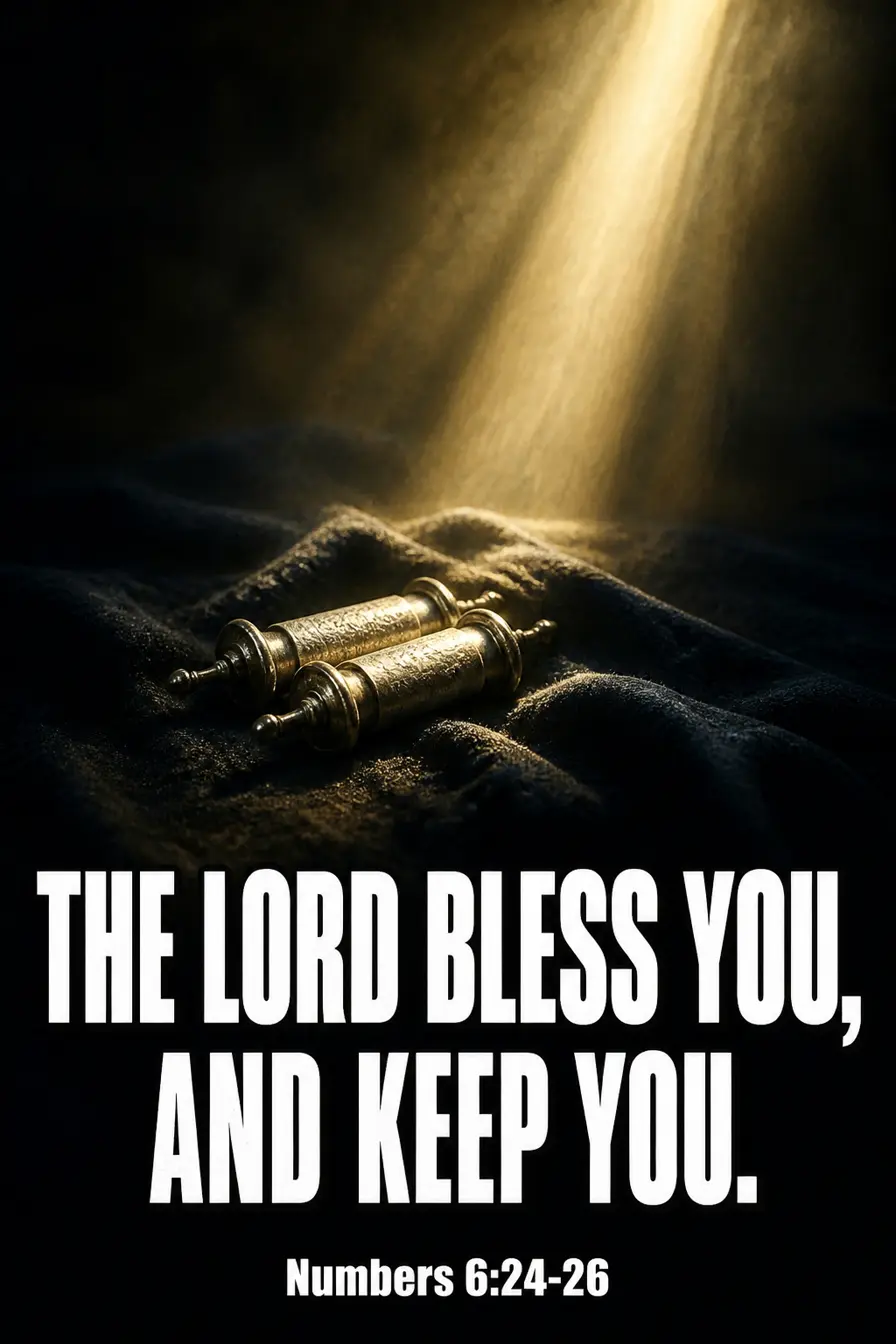
In 1979, archaeologists excavating burial caves outside Jerusalem found two tiny rolled-up strips of silver, small enough to wear as amulets. When they were finally unrolled and read, they carried a form of this blessing. Dated to around 600 BC, they are the oldest surviving texts from the Hebrew Bible — centuries older than the Dead Sea Scrolls.
So the oldest piece of Scripture anyone has held is not a law or a history. It is a blessing somebody wanted to wear. Notice the faces in it: God’s face shining on you, lifted toward you — somebody looking at you with favour rather than looking away. In 2020 a worship song built on these lines spread around the world during lockdown, sung by choirs whose members recorded alone at home.
Famous Lines Hung on Walls and Painted on Canvas
Joshua 24:15 — The Plaque That Quotes Half an Ultimatum
“but as for me and my house, we will serve the LORD.” — Joshua 24:15 (WEBU)
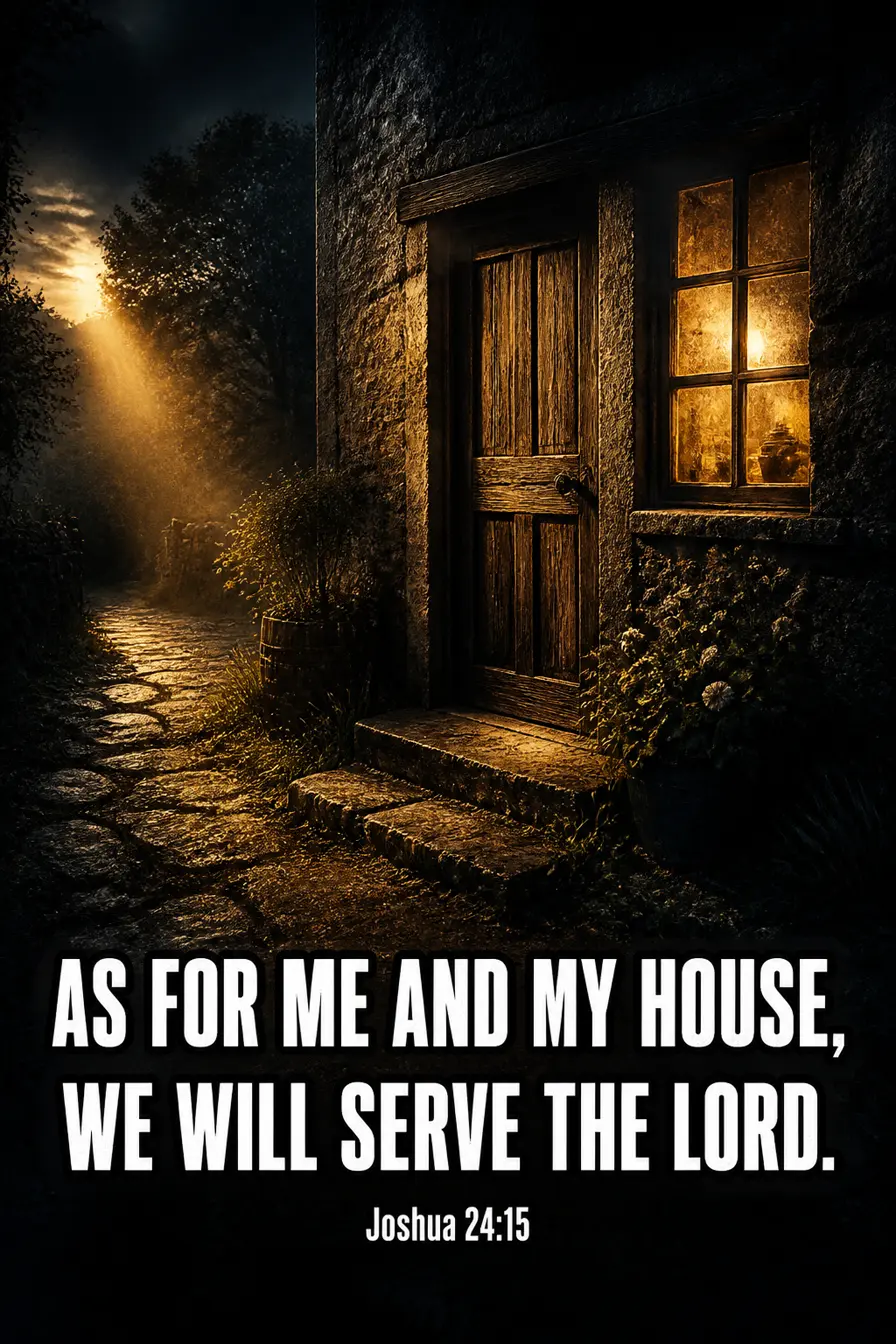
This sentence hangs above a great many front doors, where it reads like a settled family motto.
In Joshua it is the end of an ultimatum. An old leader near death gathers the whole nation and makes them choose — “choose today whom you will serve” — naming the other gods on offer. When the people answer that they will serve the LORD, Joshua’s reply is astonishing: “You can’t serve the LORD, for he is a holy God.” He is not discouraging them. He is making sure they understand the cost before they say yes. The plaque keeps the conclusion and drops the decision. Read whole, it asks you whether the commitment on your wall was ever actually made.
Revelation 3:20 — The Door With No Handle on the Outside
“Behold, I stand at the door and knock. If anyone hears my voice and opens the door, then I will come in to him and will dine with him, and he with me.” — Revelation 3:20 (WEBU)
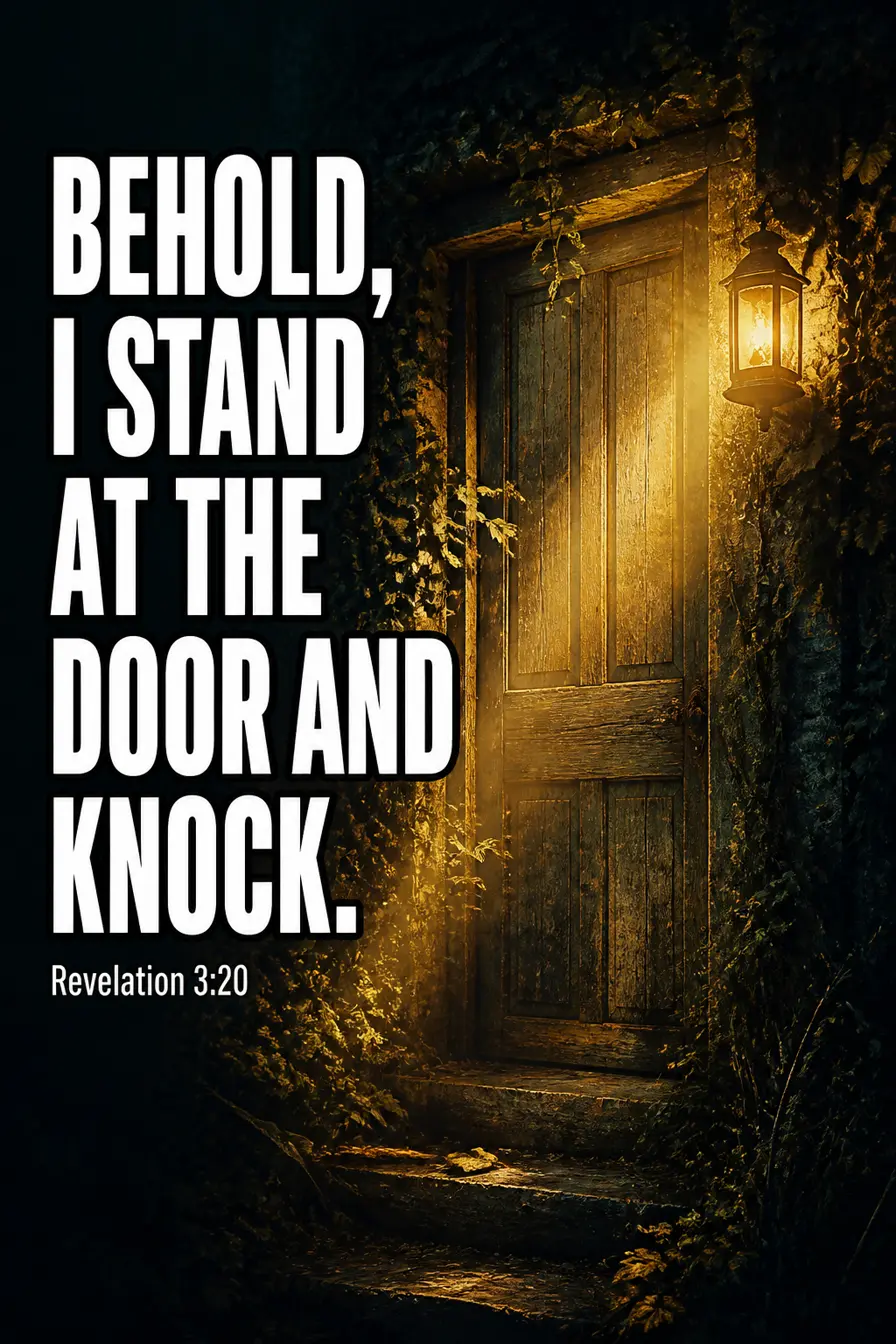
William Holman Hunt painted this verse in the 1850s as “The Light of the World”: Christ with a lantern, knocking at an overgrown door. A later version toured the world from 1905 to 1907 and was seen by millions. Hunt’s own detail is the famous one. The door has no handle on the outside, so it can only be opened from within.
The verse is usually read as an invitation to someone outside the faith. It was written to a church — the believers in Laodicea, told they were “neither cold nor hot”. Christ is outside the door of a congregation that thought it was doing fine. That is an uncomfortable picture if you already belong somewhere, and the promise attached is an ordinary meal at the same table.
John 1:1 — The Word That Faust Could Not Translate
“In the beginning was the Word, and the Word was with God, and the Word was God.” — John 1:1 (WEBU)
In Goethe’s Faust, the scholar sits down to translate this verse and cannot get past the first line. He tries “word”, then “mind”, then “power”, and finally writes “deed”.
Faust had a point. The Greek term, logos, meant word but also reason — the ordering principle of the world, argued over by philosophers for centuries. John borrows it deliberately and then does something no philosopher did: thirteen verses later, “The Word became flesh and lived among us.” The ordering principle of everything turned out to have a face and a hometown. That is why the verse resists translation. It is trying to say that the meaning behind the world is a person.
How to Read a Famous Verse as if for the First Time
Fame cuts a verse off from its sentence. The fix is short: read the verse before it and the verse after it, once, before you read the famous line again. Then ask two questions: who is speaking, and to whom? Isaiah 2:4 changes when you see the judge in its first clause; Joshua 24:15 changes when you see it is an ultimatum; Revelation 3:20 changes when you see the door belongs to a church.
Most of the time the surrounding lines do not weaken the verse. They give it back the edge that fame wore off it.
Frequently Asked Questions
What is the most famous Bible verse?
John 3:16 is usually counted the most famous, partly because it was held up on signs at televised sporting events for years and is known far beyond churches. Inside churches, reading-app data tends to rank verses like Jeremiah 29:11, Philippians 4:13 and Isaiah 41:10 near the top. Our inspirational Bible verses read several of those in their setting.
What is the most famous verse in the Old Testament?
Genesis 1:1 and Psalm 23 are the strongest candidates. Genesis 1 reached the largest live audience of any passage when Apollo 8 read it from lunar orbit in 1968, and Psalm 23 — “The LORD is my shepherd” — is among the passages most often read at funerals.
What are the 10 most famous Bible verses?
There is no official ranking. Lists built from reading-app data and search interest tend to include John 3:16, Genesis 1:1, Psalm 23:1, Jeremiah 29:11, Philippians 4:13, Proverbs 3:5-6, Romans 8:28, Isaiah 41:10, John 11:35 and John 14:6. Fame outside church walls produces a different list — the bell, the moon broadcast and the protest speech on this page.
What is the oldest Bible verse ever found?
The oldest surviving text from the Bible is the priestly blessing of Numbers 6:24-26, inscribed on two small silver scrolls found in 1979 at Ketef Hinnom, just outside Jerusalem, and dated to around 600 BC — centuries older than the Dead Sea Scrolls.
Where to Go Next
Pick one famous verse from this page and read the paragraph around it today.
More of the same kind of reading sits in the scripture archive, and if you want verses short enough to carry all week, our short Bible verses were chosen because each still makes sense on its own.