Almost nobody types “who am I in Christ” on a good day. The question usually arrives attached to something — a job that ended, a marriage that did not hold, a diagnosis, a failure you cannot stop replaying. Whatever you were quietly using to answer the question has stopped working, and the silence underneath it is louder than expected.
What makes the bible verses about identity in christ genuinely different from encouragement is the grammar. They are not descriptions of how you should feel about yourself. They are statements about a status that was changed by somebody else, at a particular point, and that does not fluctuate with how convincing it feels on a Tuesday.
So the order we have used below is deliberate: what changed, what is no longer true of you, who is doing the deciding, and where the whole thing is kept when you cannot feel it.

Discover your unique purpose. You are God's masterpiece.Jeremiah 29:11 · 12 min
That was just the opening. Open the app and search #007 to hear the full 12-minute story — free.
Keep listening free in the app Free on iOS & Android — no sample needed

What Changed, and When
2 Corinthians 5:17 — A New Creation
“Therefore if anyone is in Christ, he is a new creation. The old things have passed away. Behold, all things have become new.” — 2 Corinthians 5:17 (WEBU)

Creation rather than improvement, and the difference is not decorative. Paul does not describe a better version of the previous thing; the word he reaches for is the one used of the world being made. And the tense of have passed away is finished — a completed action being reported, not a process you are supervising. That is the whole difficulty with this verse and also its whole use: it describes something already true of people who do not feel new at all.
1 Peter 2:10 — You Were Not a People
“In the past, you were not a people, but now are God’s people, who had not obtained mercy, but now have obtained mercy.” — 1 Peter 2:10 (WEBU)
The sharpest before-and-after sentence in the New Testament, and it is rarely quoted. Not a people is a strong thing to say — not a bad people, not a lost people, not a people at all, without collective identity. Peter is writing to scattered readers across five Roman provinces who had no shared nationality, and he tells them the category they now belong to did not exist for them before. Twice he uses but now, which is where the whole verse turns.
Colossians 1:13-14 — Transferred
“who delivered us out of the power of darkness, and translated us into the Kingdom of the Son of his love, in whom we have our redemption, the forgiveness of our sins.” — Colossians 1:13-14 (WEBU)
Translated here is a relocation word — in the ancient world it described moving a population from one kingdom into another, wholesale. The point is jurisdiction: not that you feel differently but that you are under different authority, and the transfer was carried out by somebody else while you were on the wrong side of it.
Who You Are Now
If you came looking for the list, this is it. Each of these is a status, not an aspiration.
1 Peter 2:9 — Chosen Race, Royal Priesthood
“But you are a chosen race, a royal priesthood, a holy nation, a people for God’s own possession, that you may proclaim the excellence of him who called you out of darkness into his marvelous light.” — 1 Peter 2:9 (WEBU)

Four titles in one sentence, and every one of them was previously reserved. Royal priesthood in particular: in Israel the priesthood was a family you were born into and the throne was a different family entirely, and no one held both. Peter hands both to a scattered group of ordinary people. Note the last clause too — the purpose is to proclaim, meaning the identity comes with something to do rather than only something to feel.
Ephesians 2:10 — His Workmanship
“For we are his workmanship, created in Christ Jesus for good works, which God prepared before that we would walk in them.” — Ephesians 2:10 (WEBU)
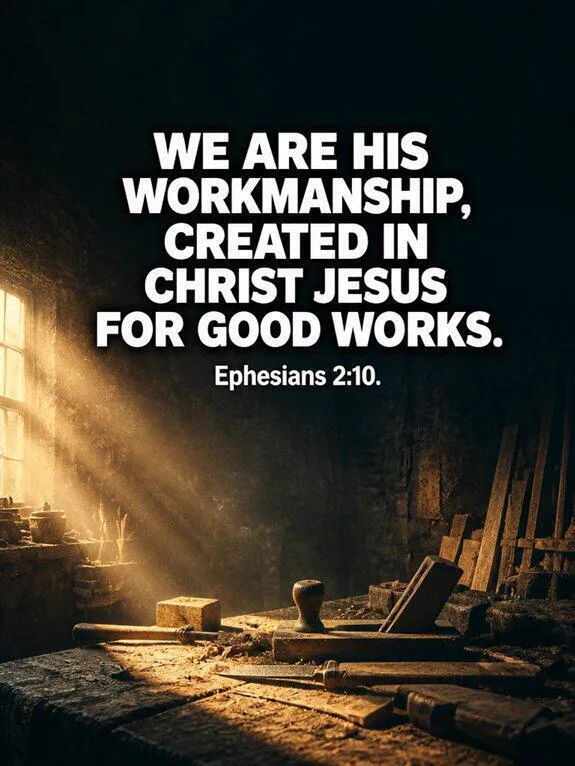
The Greek behind workmanship is poiema, the root of the English word poem — a made thing, deliberately composed. And read the order in the second half, because it is the opposite of how most people carry this: the good works were prepared beforehand, and you walk into them. Your usefulness is not what earns the identity. It was arranged in advance of you.
Galatians 4:7 — No Longer a Bondservant
“So you are no longer a bondservant, but a son; and if a son, then an heir of God through Christ.” — Galatians 4:7 (WEBU)

Roman adoption is the background and it makes this sharper than it looks. An adopted son in Roman law took the father’s name, had previous debts cancelled and could not be disinherited — the new status was legally more secure than a natural birth, because it had been chosen. Paul moves through three words in one line: bondservant, son, heir. The servant works to keep his place; the son cannot lose his.
Romans 8:16-17 — Heirs
“The Spirit himself testifies with our spirit that we are children of God; and if children, then heirs—heirs of God and joint heirs with Christ, if indeed we suffer with him, that we may also be glorified with him.” — Romans 8:16-17 (WEBU)

Testifies with our spirit is a courtroom image — a second witness corroborating the first. Paul knows your own sense of it will waver, so he describes a witness that is not you. And joint heirs with Christ is startling arithmetic: not a smaller share held in trust, the same inheritance, held together.
Ephesians 2:19 — Fellow Citizens
“So then you are no longer strangers and foreigners, but you are fellow citizens with the saints and of the household of God,” — Ephesians 2:19 (WEBU)
Two legal categories replaced by two better ones. A foreigner in a Greek city could live there for decades and never vote, own land or be buried inside the walls — permanently resident, permanently outside. Paul says that arrangement is over, and then goes further than citizenship to household, which is family rather than paperwork.
John 1:12 — The Right to Become
“But as many as received him, to them he gave the right to become God’s children, to those who believe in his name:” — John 1:12 (WEBU)
The right is a legal noun, not a feeling, and it was given rather than earned. John is precise about the mechanism — received him, believe in his name — which matters because identity language can drift into vagueness quickly. This verse says where the standing comes from and who issued it.
What Is No Longer True of You
Romans 8:1 — No Condemnation
“There is therefore now no condemnation to those who are in Christ Jesus, who don’t walk according to the flesh, but according to the Spirit.” — Romans 8:1 (WEBU)

Condemnation is the sentence, not the feeling of guilt, and the two are different in a way worth holding on to. Guilt about a specific wrong is information and can be acted on. Condemnation is a verdict on the whole person, and Paul says that verdict is not available any more — now marks the moment it stopped. The self-accusation may continue. It is no longer official.
Romans 6:6 — The Old Man
“knowing this, that our old man was crucified with him, that the body of sin might be done away with, so that we would no longer be in bondage to sin.” — Romans 6:6 (WEBU)
Paul does not say the old self was improved, reformed or put on a programme. He says it was executed, alongside somebody else, at a specific event. No longer in bondage is the consequence — bondage being a status rather than a mood, which is why he can state it as fact about people who still struggle.
Galatians 2:20 — “No Longer I Who Live”
“I have been crucified with Christ, and it is no longer I who live, but Christ lives in me. That life which I now live in the flesh, I live by faith in the Son of God, who loved me and gave himself up for me.” — Galatians 2:20 (WEBU)
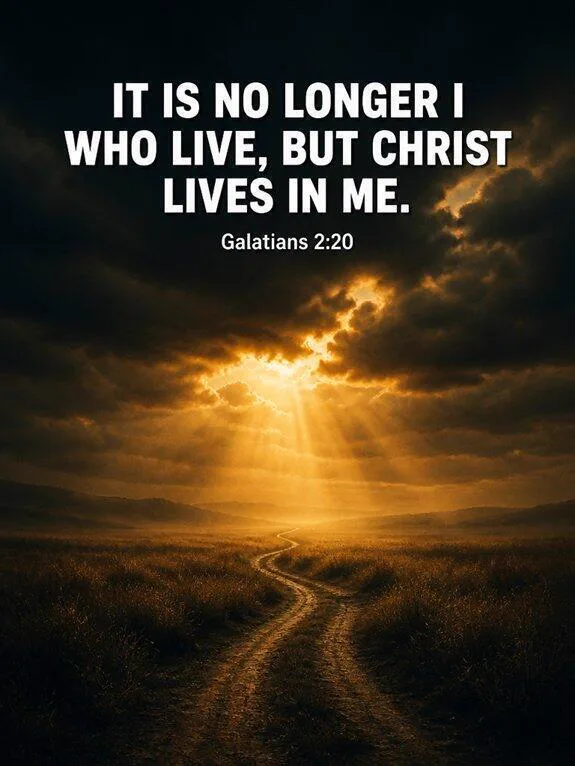
The strangest sentence on this page, and the most personal — Paul drops into the singular for a whole verse, and ends on “loved me and gave himself up for me”. Whatever the theology of it, the emotional claim is specific: this is not a general love for humanity that happens to include him. He narrows it deliberately to one person, and the verse only works if you are willing to do the same.
Romans 8:37 — More Than Conquerors
“No, in all these things we are more than conquerors through him who loved us.” — Romans 8:37 (WEBU)

In all these things, not instead of them. The list Paul has just given includes famine, persecution and the sword, so this is not a claim that the hard things are absent. More than conquerors is one compressed Greek word, and the sense is winning by a margin that was never in doubt — through him who loved us, which puts the strength somewhere other than in you.
Who Says So
An identity is only as good as the authority behind it, and that is the part most of us skip. This is it.
Ephesians 1:4-5 — Before the Foundation of the World
“even as he chose us in him before the foundation of the world, that we would be holy and without defect before him in love, having predestined us for adoption as children through Jesus Christ to himself, according to the good pleasure of his desire,” — Ephesians 1:4-5 (WEBU)
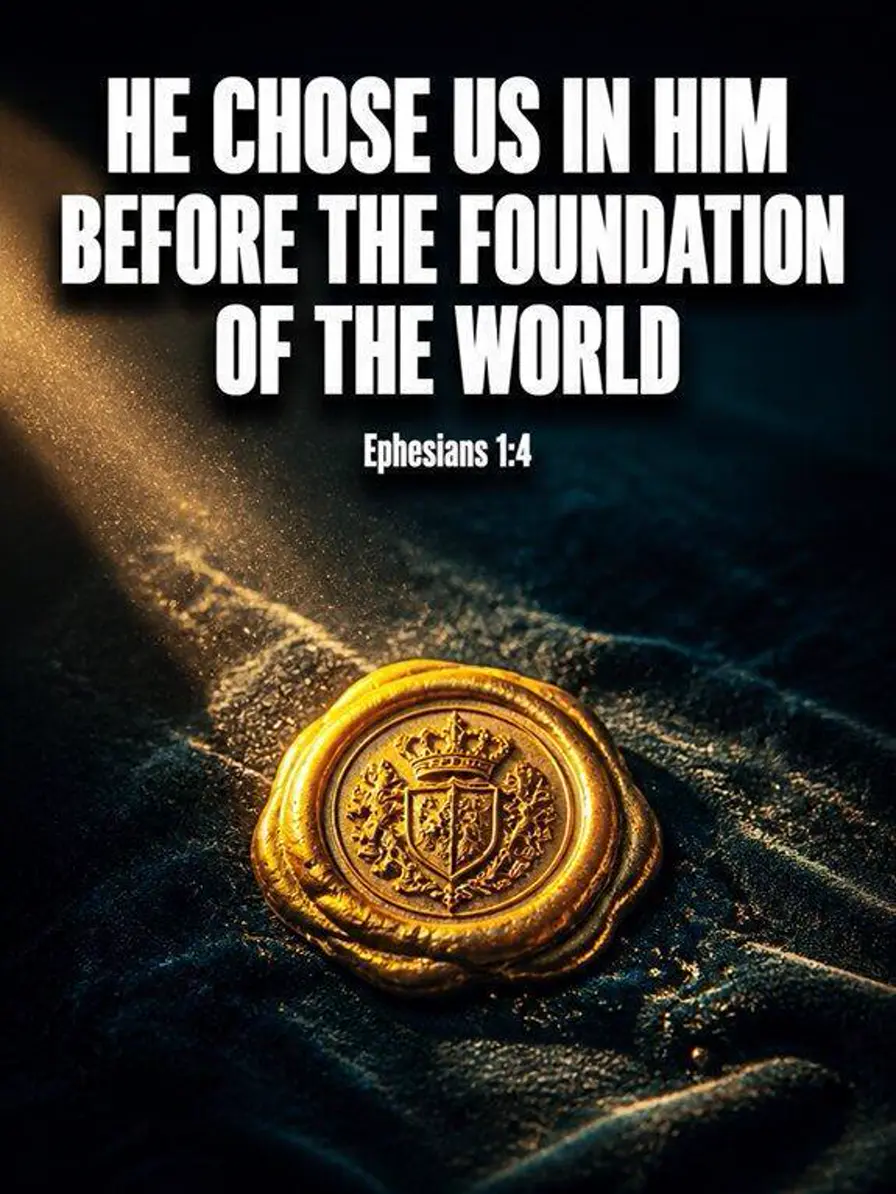
The timing is the argument. Whatever you did to disqualify yourself, it happened after this. According to the good pleasure of his desire is the phrase that undoes the transactional reading — the adoption is described as something wanted rather than something conceded, which is a different thing entirely from being tolerated.
Isaiah 43:1 — Called You by Your Name
“But now the LORD who created you, Jacob, and he who formed you, Israel, says: “Don’t be afraid, for I have redeemed you. I have called you by your name. You are mine.” — Isaiah 43:1 (WEBU)

Two names in one verse, and the choice of them is not accidental. Jacob was the name he was given at birth, meaning heel-grabber, supplanter — the name that described what he did to his brother. Israel was the name God gave him afterwards. Isaiah uses both in the same breath, which says something specific: the history is not deleted, and it is not what he is called now.
Psalm 139:13-14 — Fearfully and Wonderfully Made
“For you formed my inmost being. You knit me together in my mother’s womb. I will give thanks to you, for I am fearfully and wonderfully made. Your works are wonderful. My soul knows that very well.” — Psalm 139:13-14 (WEBU)
Knit is a slow, deliberate word for work done by hand over time, and it locates the making somewhere nobody was watching. The last line is the one that gets skipped: “my soul knows that very well”. David is not describing a feeling he has, he is describing something he has settled — and the psalm around it is full of him being examined and found out. The confidence and the exposure sit in the same poem.
1 John 3:1 — See How Great a Love
“See how great a love the Father has given to us, that we should be called children of God! For this cause the world doesn’t know us, because it didn’t know him.” — 1 John 3:1 (WEBU)
See is an imperative — John is pointing at something rather than describing a mood. And the second half explains a specific loneliness: if your sense of who you are does not match how you are read by the people around you, the verse treats that as expected rather than as evidence you have it wrong.
Where It Is Kept When You Cannot Feel It
Colossians 3:3 — Hidden with Christ
“For you died, and your life is hidden with Christ in God.” — Colossians 3:3 (WEBU)

The most useful verse here for a bad month. Hidden concedes that it is not visible — not to other people and not always to you. What is hidden is not lost; it is stored somewhere, and the location given is about as secure as a location gets. If your identity felt real in June and unreachable in November, this verse says the change was in your access to it, not in the thing itself.
John 15:15 — “I Have Called You Friends”
“No longer do I call you servants, for the servant doesn’t know what his lord does. But I have called you friends, for everything that I heard from my Father, I have made known to you.” — John 15:15 (WEBU)

The reason he gives for the promotion is information: a servant is not told what is going on, and a friend is. Jesus says this at the last meal, to men who are hours from abandoning him — so the friendship is declared before their loyalty has been tested and while he already knows how the test goes.
1 Corinthians 6:19-20 — Bought With a Price
“Or don’t you know that your body is a temple of the Holy Spirit who is in you, whom you have from God? You are not your own, for you were bought with a price. Therefore glorify God in your body and in your spirit, which are God’s.” — 1 Corinthians 6:19-20 (WEBU)
You are not your own reads at first as a loss of freedom and is doing the opposite work. Value in a market is set by what somebody pays; Paul’s argument is that the price already paid settles the question of worth permanently, and takes it out of your hands. You do not get to revalue yourself downward on a bad night. It is not your call any more.
John 15:5 — The Vine and the Branches
“I am the vine. You are the branches. He who remains in me and I in him bears much fruit, for apart from me you can do nothing.” — John 15:5 (WEBU)
A branch has no independent identity and no anxiety about it either. Remains is the operative verb — not achieve, not maintain, remain — and the fruit is described as a consequence rather than a requirement. The last clause is blunt and worth keeping next to the others: this identity is not a possession you carry away, it is a connection you stay inside.
When It Does Not Feel True
None of this feels true on demand, and treating the feeling as the test is what wears us out. Three things that help, in order.
Learn one of them properly. Not read — memorize, well enough to say without looking. A short verse takes about four repetitions a day for three days. Colossians 3:3 and Galatians 4:7 are both one line and both do heavy work. Twelve more one-liners, each with its context, are in our short Bible verses.
Notice which statement your accusation contradicts. The voice that says you are a fraud is making a claim about status, and there is a verse addressing that exact claim. Match them up specifically rather than reaching for general encouragement — condemnation gets Romans 8:1, worthlessness gets 1 Corinthians 6:20, not belonging gets Ephesians 2:19.
Let somebody else say it out loud to you. Romans 8:16 describes a witness other than yourself for a reason. Most of us can hold a truth about somebody else far more steadily than about ourselves, which is an argument for saying these things to each other rather than only reading them alone.
If the sense of worthlessness is constant, or you cannot remember the last time it lifted, that is worth saying to a doctor as well as to God. Scripture and clinical care are not rivals, and treating them as opponents costs people years.
Questions People Ask
What does the Bible say about our identity in Christ?
That it is a status conferred rather than a quality achieved. 2 Corinthians 5:17 calls it a new creation, 1 Peter 2:9 lists four titles — chosen race, royal priesthood, holy nation, a people for God’s own possession — and Ephesians 2:10 says the good works were prepared beforehand. In each case the verb belongs to God, not to you.
What does Galatians 4:7 say about your identity?
That the category changed: “you are no longer a bondservant, but a son; and if a son, then an heir of God through Christ.” Paul is drawing on Roman adoption, where the adopted son took the father’s name, had his debts cancelled and could not be disinherited. A servant works to keep his place; a son cannot lose his.
How do you find your identity in Christ?
Not by discovering something about yourself. Scripture presents it as receiving a statement about you from outside — John 1:12 says the right to become God’s children was given, and Ephesians 1:4 dates the choosing to before the foundation of the world. In practice that means learning specific verses well enough to answer specific accusations.
Who in the Bible struggled with identity?
Jacob, most obviously — a name meaning supplanter, renamed Israel after wrestling all night, and Isaiah 43:1 uses both names in one verse. Gideon called himself the least in his father’s house. Moses argued that he was the wrong man to send. In each case the argument is settled by who is speaking, not by the person’s self-assessment improving.
What does it mean to be a new creation in Christ?
2 Corinthians 5:17 uses the word for creation rather than improvement, and puts “the old things have passed away” in a completed tense. It describes something already done rather than a process you supervise — which is why it holds for people who do not feel new. Colossians 3:3 adds where it is kept while it is not visible: hidden with Christ in God.
Identity in Christ is not a feeling you generate on a Tuesday and lose by Thursday. It is a set of statements somebody else made about you, at a moment you were not consulted, and they do not move when your mood does.
Take one verse from this page and learn it properly. When you want more, Bible Verses for Identity in Christ covers the daily practice, Bible Verses About Identity and Your Purpose works through the calling side, and the full Identity archive holds the rest.