
“God loves you” may be the most repeated sentence in church, and the easiest one to stop hearing. On a bad week it can sound like a slogan from someone who has not seen your bank statement.
The Bible records people saying exactly that to God. Around four centuries before Jesus, the prophet Malachi delivered a message that opened with God’s own words, “I have loved you.” The people answered back: “How have you loved us?”
That question is a good way to read verses about God’s love. Warm sentences do not answer it. Evidence does. So the twelve passages below are grouped by the answers Scripture gives: a love that chose for no reason in us, a love that acted, a love that kept its word for centuries, a love nothing can cut off, and a love that raises children.

One encounter on one road. The verse everyone quotes, and what it cost.Acts 9 · 13 min
That was just the opening. Open the app and search #013 to hear the full 13-minute story — free.
Keep listening free in the app Free on iOS & Android — no sample needed


The Question Behind Every Verse About God’s Love
Malachi 1:2 — “How Have You Loved Us?”
““I have loved you,” says the LORD. Yet you say, “How have you loved us?”” — Malachi 1:2 (WEBU)
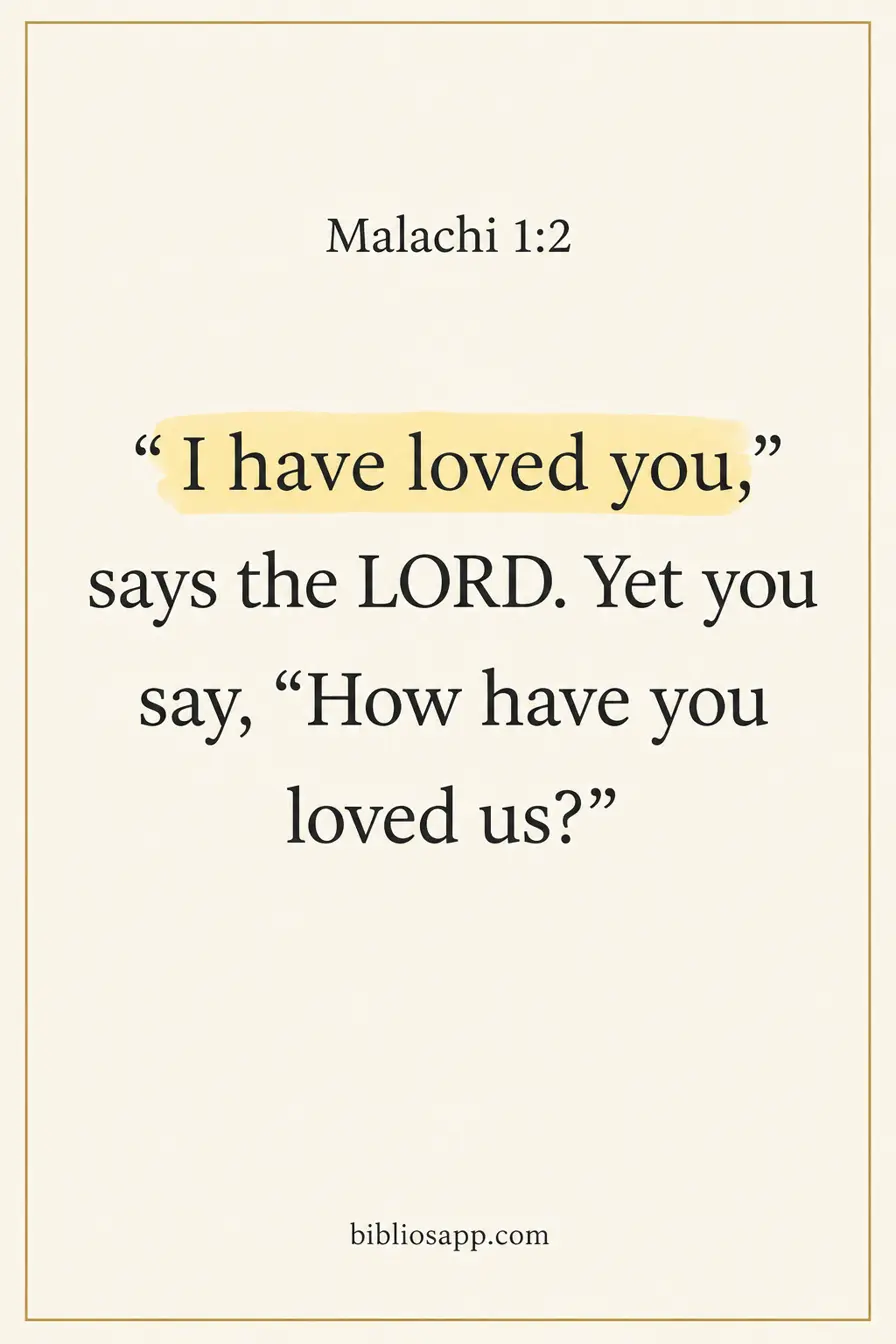
Malachi spoke to Jews back from exile in Babylon. The temple had been rebuilt, but the harvests were thin and the glorious future the earlier prophets described had not arrived. The whole book is an argument: God makes a statement, and the people push back with “Yet you say…”
God does not scold the question. He answers it with history: “Wasn’t Esau Jacob’s brother? Yet I loved Jacob.” The next line, “but Esau I hated,” jars modern ears. In Hebrew idiom it is the language of choosing one over another, the same way Genesis 29:31 says Leah “was hated” when Jacob simply loved Rachel more.
The Bible treats “How have you loved us?” as a fair question, and the rest of this list answers it.
Deuteronomy 7:7-8 — Not Because You Were Many
“The LORD didn’t set his love on you nor choose you, because you were more in number than any people; for you were the fewest of all peoples; but because the LORD loves you,” — Deuteronomy 7:7-8 (WEBU)
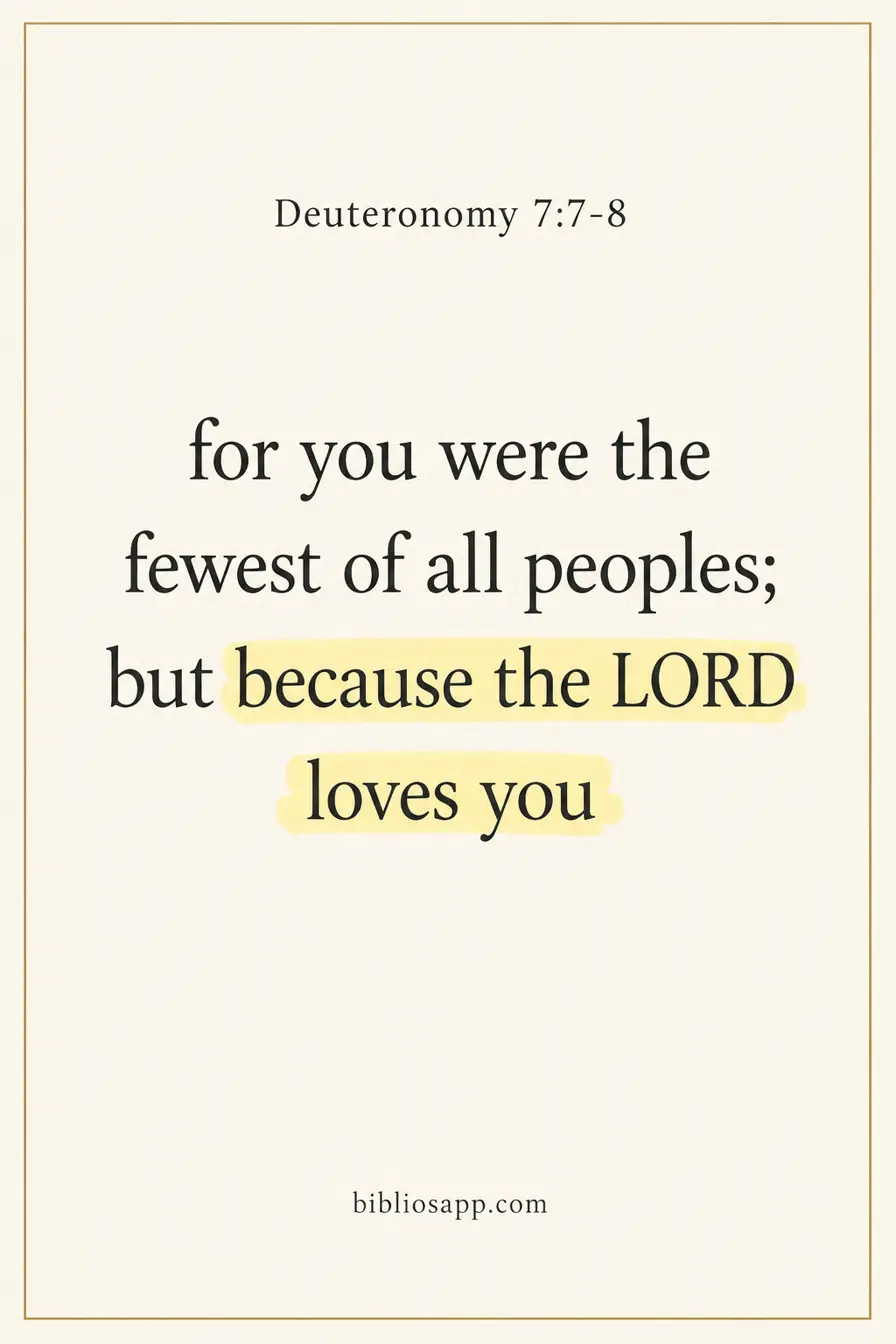
Moses says this to Israel on the edge of the promised land, answering a question they had not dared to ask: why us?
Read the reason slowly: because the LORD loves you. It sounds circular, and it is meant to. The cause of the love is not found in the people who receive it.
“Set his love on” is a strong verb in Hebrew. The same word describes Shechem’s longing for Dinah in Genesis 34:8: “The soul of my son, Shechem, longs for your daughter.” It is attachment, not tolerance.
A love that never depended on your size or your record cannot be lost by shrinking.
How God Showed His Love for Us: John 3:16, 1 John and Romans
John 3:16 — “So” Means “In This Way”
“For God so loved the world, that he gave his only born Son, that whoever believes in him should not perish, but have eternal life.” — John 3:16 (WEBU)
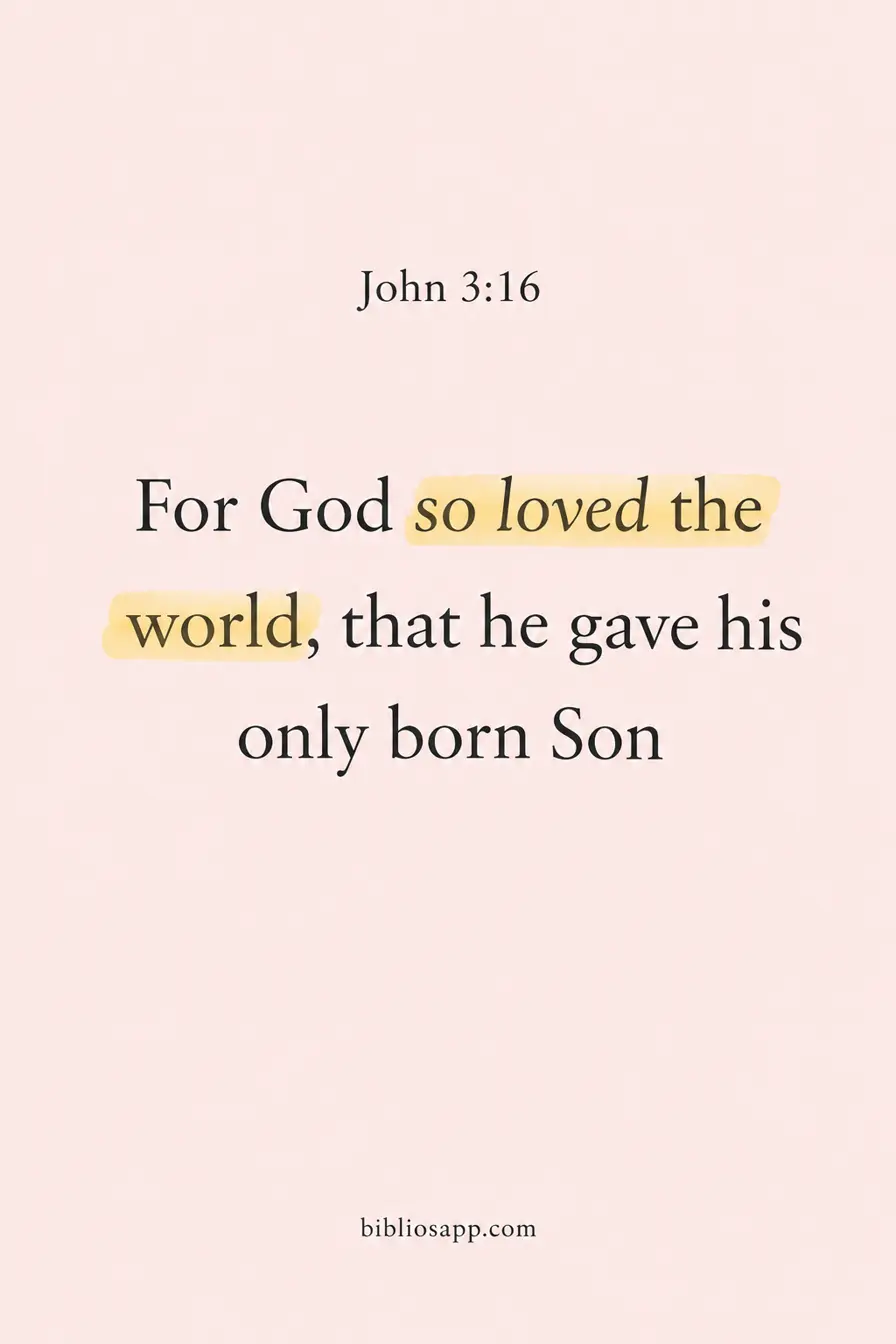
Most of us read “so loved” as “loved so much.” The Greek word behind “so” more often means “in this way.” It is the same word in 1 John 4:11, which WEBU renders “if God loved us in this way.” John 3:16 is less a measurement of how much God loves and more a description of how: he gave.
That is a direct answer to Malachi’s question. Jesus says it at night to Nicodemus, a religious teacher who came quietly to ask questions (John 3:2).
Look at the object too. In John’s Gospel “the world” is usually the world that turned its back: “the world didn’t recognize him” (1:10). God gave his Son to that world, and not “to judge the world, but that the world should be saved through him” (3:17).
1 John 4:10 — In This Is Love
“In this is love, not that we loved God, but that he loved us, and sent his Son as the atoning sacrifice for our sins.” — 1 John 4:10 (WEBU)
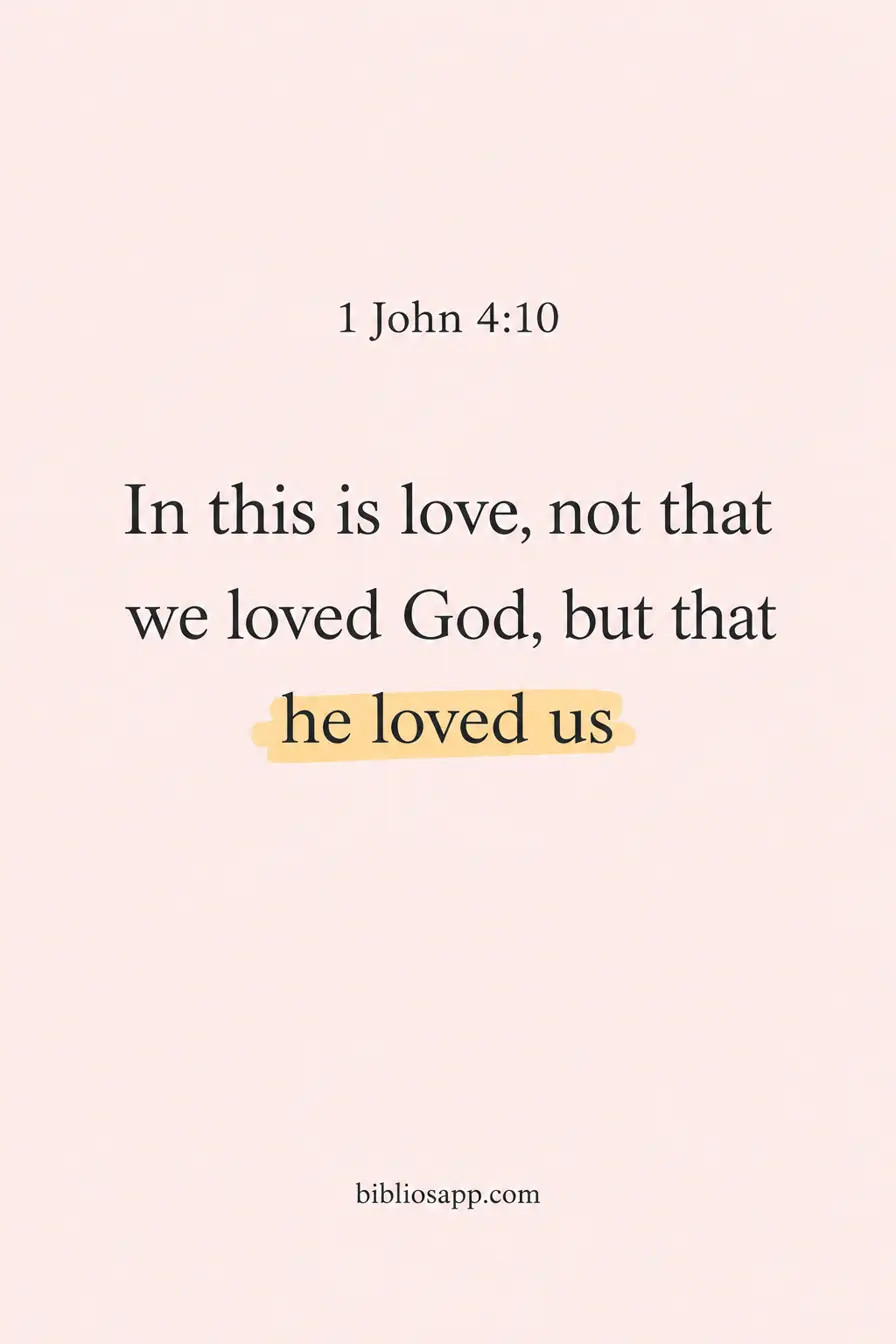
1 John is a letter from an old leader to churches shaken by a split. Chapter 4 holds the only two places in the Bible that say “God is love” outright (4:8 and 4:16).
Here John defines love by its direction. Love is not, at bottom, our effort to reach God. It starts on God’s side and travels toward us. “Atoning sacrifice” means the offering that deals with sin and restores the relationship.
A common misreading turns this chapter into a demand: love more and you will be loved. John runs it the other way. If your love for God feels thin today, the instruction is not to manufacture more. It is to look again at the love that came first.
Romans 5:8 — While We Were Yet Sinners
“But God commends his own love toward us, in that while we were yet sinners, Christ died for us.” — Romans 5:8 (WEBU)
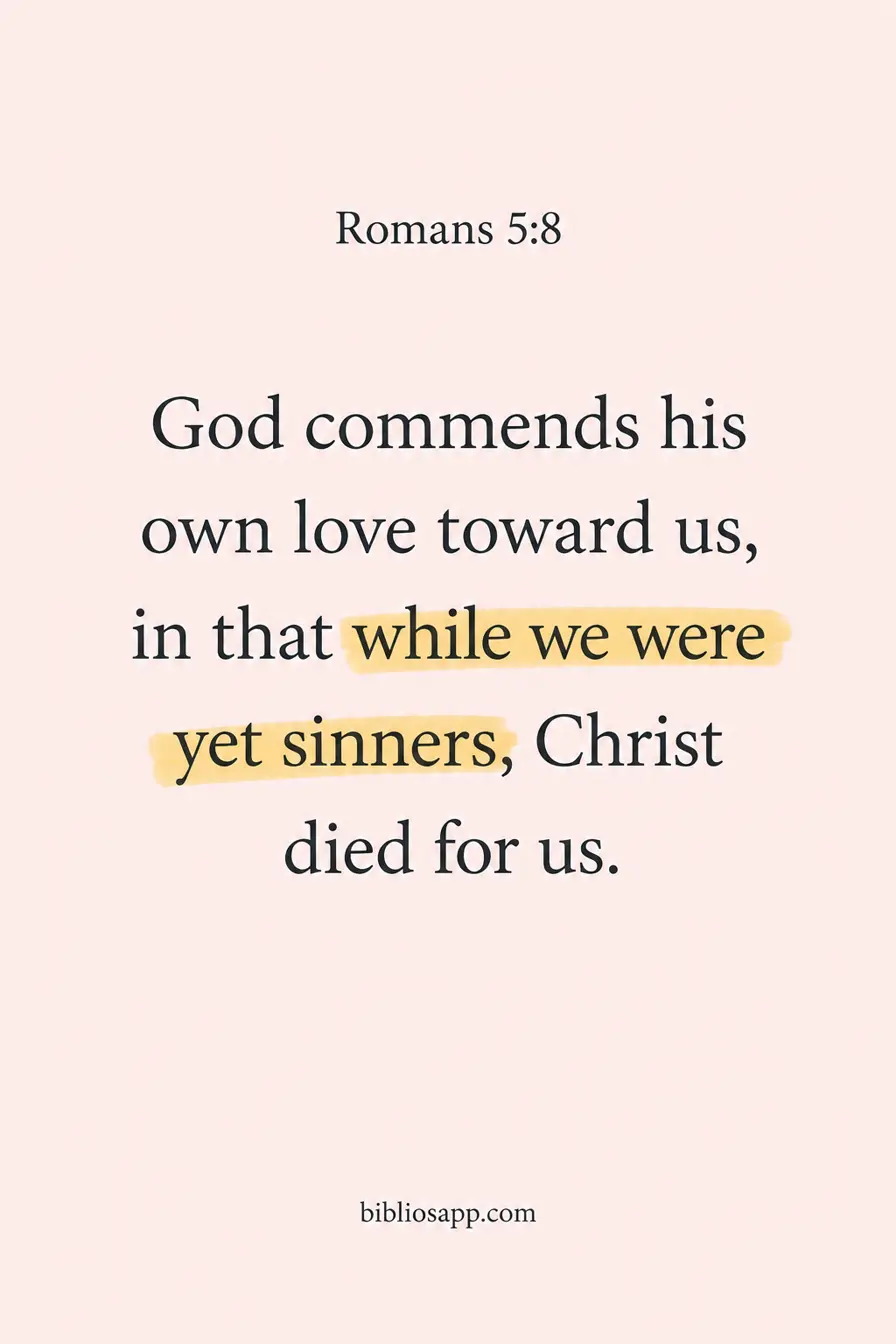
Paul sets this verse up with a piece of ordinary realism: “one will hardly die for a righteous man. Yet perhaps for a good person someone would even dare to die” (5:7). Sacrifice for good people is rare but imaginable. Sacrifice for people still in the wrong is not.
“Commends” means to show, to prove by putting on display. It is in the present tense. The cross is not only an event in the past. It goes on proving the same thing every time someone looks at it.
Notice the timing word: “while.” If you are waiting to get your life in order before you believe God could love you, this verse removes the waiting room.
God’s Unfailing Love in the Old Testament
Exodus 34:6 — The Name God Gave Himself
“The LORD passed by before him, and proclaimed, “The LORD! The LORD, a merciful and gracious God, slow to anger, and abundant in loving kindness and truth,” — Exodus 34:6 (WEBU)
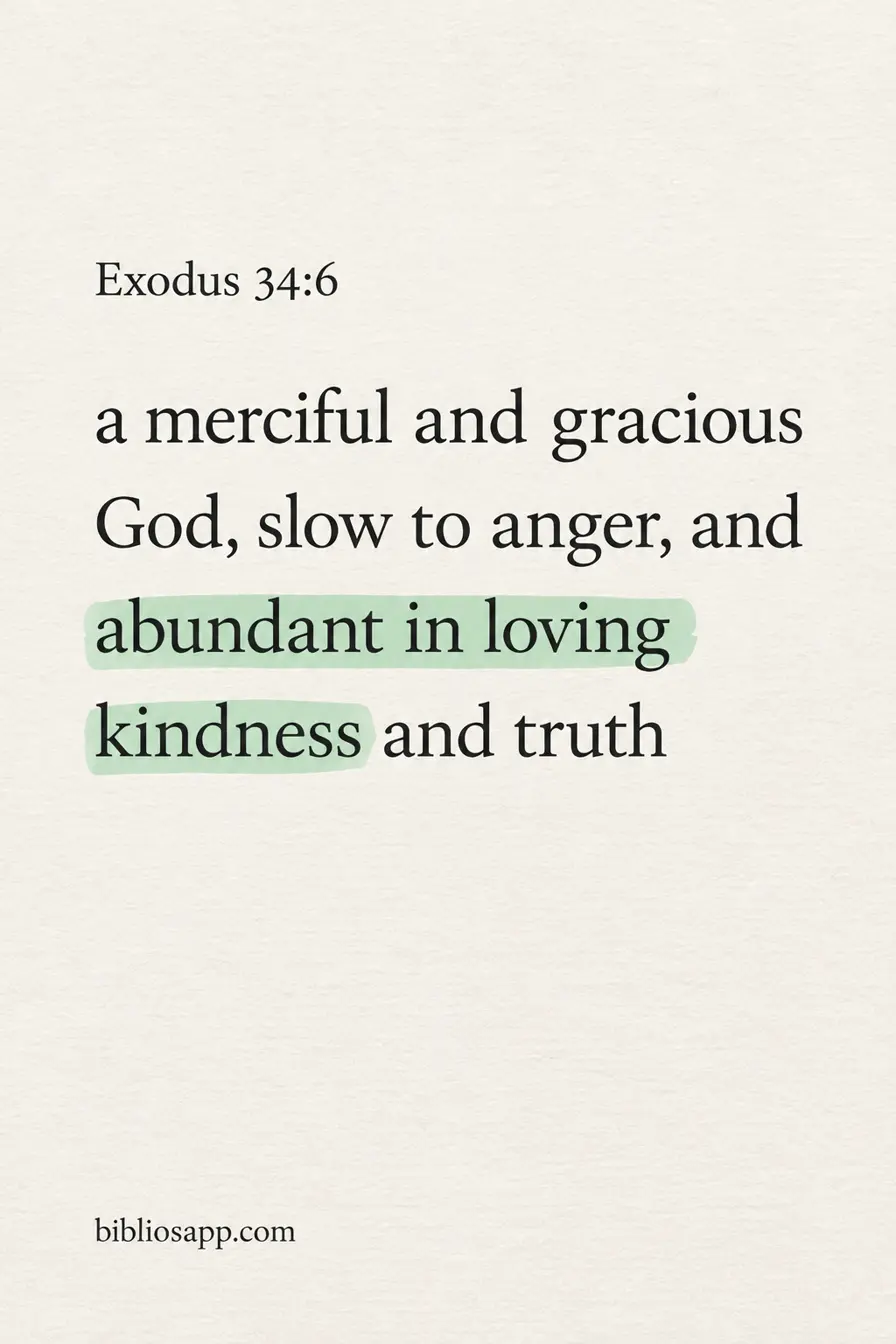
Timing is everything here. Israel has just made a golden calf and worshipped it at the foot of the mountain. Moses asks, “Please show me your glory” (33:18), and this is what God proclaims as he passes by: a description of his own character, spoken to people who had broken faith with him weeks after being rescued.
“Loving kindness” is how WEBU translates the Hebrew word chesed, which other Bibles render “steadfast love” or “unfailing love.” It is love that keeps its promises.
This became the Old Testament’s favourite description of God. Nehemiah 9:17 prays it back, Psalm 86:15 sings it, and Jonah 4:2 complains about it, annoyed that God was “abundant in loving kindness” toward Nineveh.
Psalm 136:1 — Twenty-Six Times in One Psalm
“Give thanks to the LORD, for he is good, for his loving kindness endures forever.” — Psalm 136:1 (WEBU)
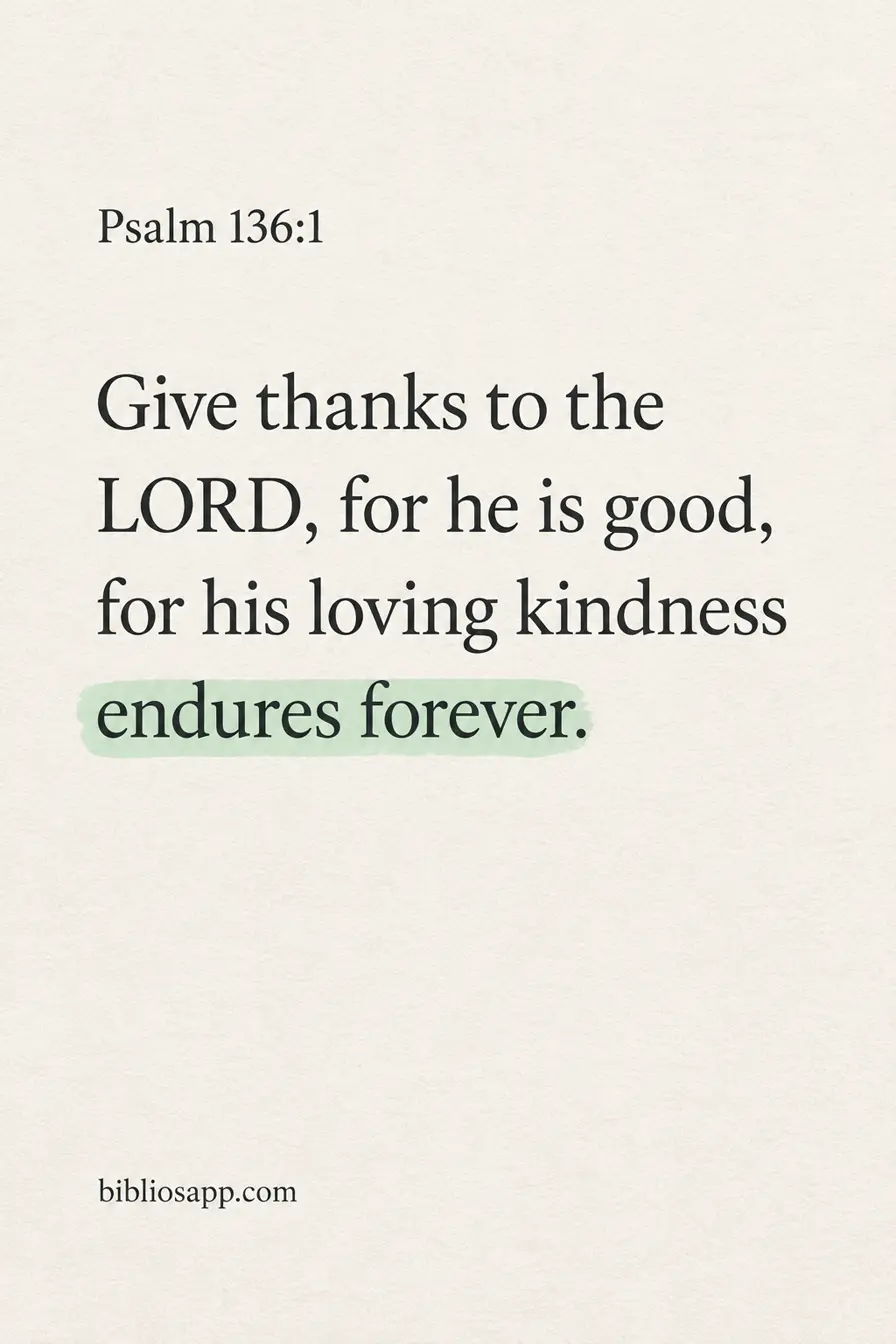
Psalm 136 has twenty-six verses, and every one ends with the same line. It was written to be sung with a leader calling out each line and the crowd answering with the refrain.
What makes the refrain remarkable is what it gets attached to. Creation, yes, and the crossing of the Red Sea. But also “Og king of Bashan, for his loving kindness endures forever” (136:20), a forgotten king from a forgotten war. And near the end: “who remembered us in our low estate” (136:23).
Try reading your own year that way tonight: write five events, good and hard, and add the refrain after each.
Nothing Can Separate Us From the Love of God
Romans 8:35 — Who Shall Separate Us?
“Who shall separate us from the love of Christ? Could oppression, or anguish, or persecution, or famine, or nakedness, or peril, or sword?” — Romans 8:35 (WEBU)
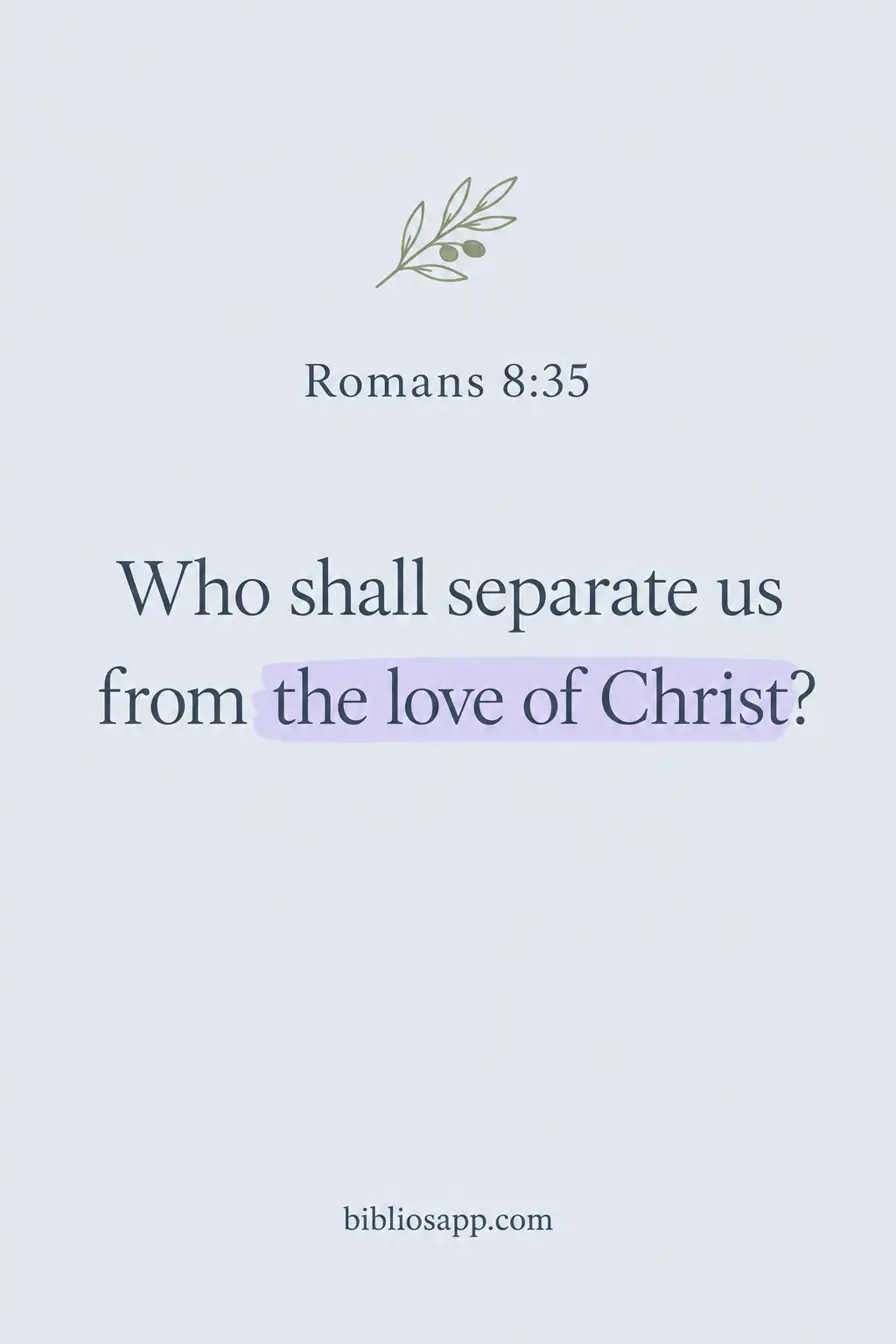
Paul’s list is not hypothetical. He had been whipped, beaten with rods, stoned and shipwrecked three times (2 Corinthians 11:24-25). He does not promise that these things will stay away.
The question is whether hardship can cut the connection. Paul’s answer, four verses later, is the most sweeping sentence on God’s love in the New Testament: “neither death, nor life, nor angels, nor principalities, nor things present, nor things to come, nor powers, nor height, nor depth, nor any other created thing will be able to separate us from God’s love which is in Christ Jesus our Lord.”
A misreading to avoid: suffering is not evidence that God’s love has been withdrawn. Romans 8 puts the two side by side on purpose.
Romans 5:5 — Poured Into Our Hearts
“and hope doesn’t disappoint us, because God’s love has been poured into our hearts through the Holy Spirit who was given to us.” — Romans 5:5 (WEBU)
The sentence before this one is about suffering: it “produces perseverance; and perseverance, proven character; and proven character, hope” (5:3-4). Then Paul explains why that hope does not collapse. God’s love is not only stated to us. It is poured into us.
“Poured” comes from the same Greek verb used at Pentecost, when God says, “I will pour out my Spirit on all flesh” (Acts 2:17). It is not a trickle. And the tense points to something already done and still in effect: the love was poured in, and it is still there.
This is the inside answer to “How have you loved us?” History shows God’s love; the Holy Spirit lets people feel it. If depression keeps you from feeling anything, that is not a failure of this verse. Therapy and medical care sit alongside faith, and God works through both.
Ephesians 3:18-19 — Width, Length, Height and Depth
“may be strengthened to comprehend with all the saints what is the width and length and height and depth, and to know Christ’s love which surpasses knowledge,” — Ephesians 3:18-19 (WEBU)
Paul calls himself “the prisoner of Christ Jesus” at the start of this chapter (3:1), and these lines are a prayer. He bows his knees (3:14) and asks for something he cannot hand over himself.
Two details are easy to miss. First, “with all the saints”: this love is grasped together. Second, the paradox. Paul prays that you would know a love “which surpasses knowledge.” You can know it truly without ever reaching its edges.
So pray it. Choose one person this week who doubts that God loves them and pray Ephesians 3:18-19 for them by name.
Bible Verses About God’s Love for His Children
Hosea 11:4 — Cords of a Man, Ties of Love
“I drew them with cords of a man, with ties of love; and I was to them like those who lift up the yoke on their necks; and I bent down to him and I fed him.” — Hosea 11:4 (WEBU)
Hosea preached in the northern kingdom of Israel in the years before Assyria destroyed it. Chapter 11 reads like a parent remembering a toddler: “When Israel was a child, then I loved him” (11:1). “I taught Ephraim to walk. I took them by their arms” (11:3). Ephraim is another name for the northern kingdom.
“Cords of a man” are human reins, not ropes for driving an animal. God bends down to feed a child who keeps walking away.
Four verses later the parent’s grief breaks through: “How can I give you up, Ephraim? How can I hand you over, Israel? … My heart is turned within me.” That is how the Old Testament pictures God’s love for his children: not cool approval, but a heart that turns over.
Hebrews 12:6 — The Love That Disciplines
“for whom the Lord loves, he disciplines, and chastises every son whom he receives.” — Hebrews 12:6 (WEBU)
Hebrews quotes Proverbs 3:12 to a church facing hostility and tempted to give up (12:3-4). Hardship, it says, does not mean God has abandoned you.
The key word comes a few verses later. Discipline “yields the peaceful fruit of righteousness to those who have been trained by it” (12:11). “Trained” is the Greek word that gives us “gymnasium.” This is coaching, not revenge.
Two guardrails keep this verse from being misused. Not every hard thing is God’s discipline; Job’s friends made that mistake. And no one may use this verse to excuse abuse. What it offers is a different reading of a hard season: possibly training, never rejection.
Answer Malachi’s Question in Writing
Take one sheet of paper. At the top, write the people’s question from Malachi 1:2: “How have you loved us?”
Underneath, list the verbs God’s love uses in these twelve verses. Set his love on. Gave. Sent. Died. Passed by and proclaimed. Endures. Will not let anything separate. Poured. Taught to walk. Bent down and fed. Disciplines.
Under each verb you have seen in your own life, even faintly, add one line. Keep the sheet where you will find it on the next bad week, when “God loves you” stops landing.
Frequently Asked Questions
Which verse says God loves you?
Jeremiah 31:3 says it most directly: “I have loved you with an everlasting love.” Malachi 1:2 opens with the same words, “I have loved you,” and John 3:16 explains how God showed that love: he gave his Son.
What verse says God loved us first?
1 John 4:19 says, “We love him, because he first loved us.” It sums up 1 John 4:10, which defines love as starting on God’s side: “not that we loved God, but that he loved us.” Our love for God is always a response, never the opening move.
Where does the Bible say “God is love”?
Only in 1 John 4, twice. Verse 8 says, “He who doesn’t love doesn’t know God, for God is love,” and verse 16 adds, “God is love, and he who remains in love remains in God, and God remains in him.” The sentence describes God’s character, not a feeling.
What are some verses about God’s love and forgiveness?
Psalm 103:12 says, “As far as the east is from the west, so far has he removed our transgressions from us.” Micah 7:18 ties forgiveness to love, saying God pardons “because he delights in loving kindness.” Our post on Bible verses about forgiveness and love goes further.
What does the Bible say about God’s love for his children?
1 John 3:1 says, “See how great a love the Father has given to us, that we should be called children of God!” Psalm 103:13 adds, “Like a father has compassion on his children, so the LORD has compassion on those who fear him,” and Hosea 11 pictures God teaching a toddler to walk.
The Answer Is a List of Things Done
Malachi’s listeners asked for evidence, and Scripture answers with things done: a small nation chosen, a Son given, a refrain sung through history, a love poured in, a child taught to walk.
For more passages read in their setting, see our famous Bible verses, the words God speaks in Scripture, and everything else in the Scripture collection.