“Hope” has been worn thin by the way we use it. We hope it stays dry on Saturday. We hope the results come back clear. In ordinary English the word signals that we want something and cannot do anything about it — a polite way of admitting we are not in control.
That is not what the word means in Scripture, and the gap is why so many bible verses about hope for the future land flat. Biblical hope is not a wish about tomorrow. It is a settled expectation about tomorrow, held because of something that has already happened. The confidence points backwards even when the promise points forwards.
Which changes how you read the verses below. They are not asking you to feel more positive about a future you cannot see. They are pointing at a track record and asking you to reason from it.

Renew your strength. Learn to soar instead of flap.Isaiah 40 · 12 min
That was just the opening. Open the app and search #003 to hear the full 12-minute story — free.
Keep listening free in the app Free on iOS & Android — no sample needed

What Christian Hope Actually Means
Two verses do the defining work, and both describe hope as something structural rather than emotional.
Hebrews 6:19 — An Anchor of the Soul
“This hope we have as an anchor of the soul, a hope both sure and steadfast and entering into that which is within the veil,” — Hebrews 6:19 (WEBU)

An anchor is a strange picture for hope, and the strangeness is the point. An anchor does not move the ship anywhere or calm the water. It holds a vessel in place while the weather does whatever it does. Notice too where this one is fixed: within the veil, meaning inside the temple’s innermost room — not in your circumstances, not in your own resolve, but somewhere the storm has no access to. The rope is here. The anchor is not.
Romans 5:3-5 — Hope That Does Not Disappoint
“Not only this, but we also rejoice in our sufferings, knowing that suffering produces perseverance; and perseverance, proven character; and proven character, hope; and hope doesn’t disappoint us, because God’s love has been poured into our hearts through the Holy Spirit who was given to us.” — Romans 5:3-5 (WEBU)
Read the order carefully, because it runs the opposite way to how we expect. Hope arrives last, and it arrives through suffering rather than instead of it. Paul is not saying hardship is good. He is describing a sequence in which endurance produces proven character, and proven character is what makes hope credible — you have watched yourself survive something. That is why he can then say hope doesn’t disappoint us. It has already been tested by the time it shows up.
The Verse Everyone Quotes, and Who Received It
If you have seen one verse about the future on a mug or a graduation card, it is this one. The context is rarely printed alongside it, and the context is the best part.
Jeremiah 29:11 — Hope and a Future
“For I know the thoughts that I think toward you,” says the LORD, “thoughts of peace, and not of evil, to give you hope and a future.” — Jeremiah 29:11 (WEBU)
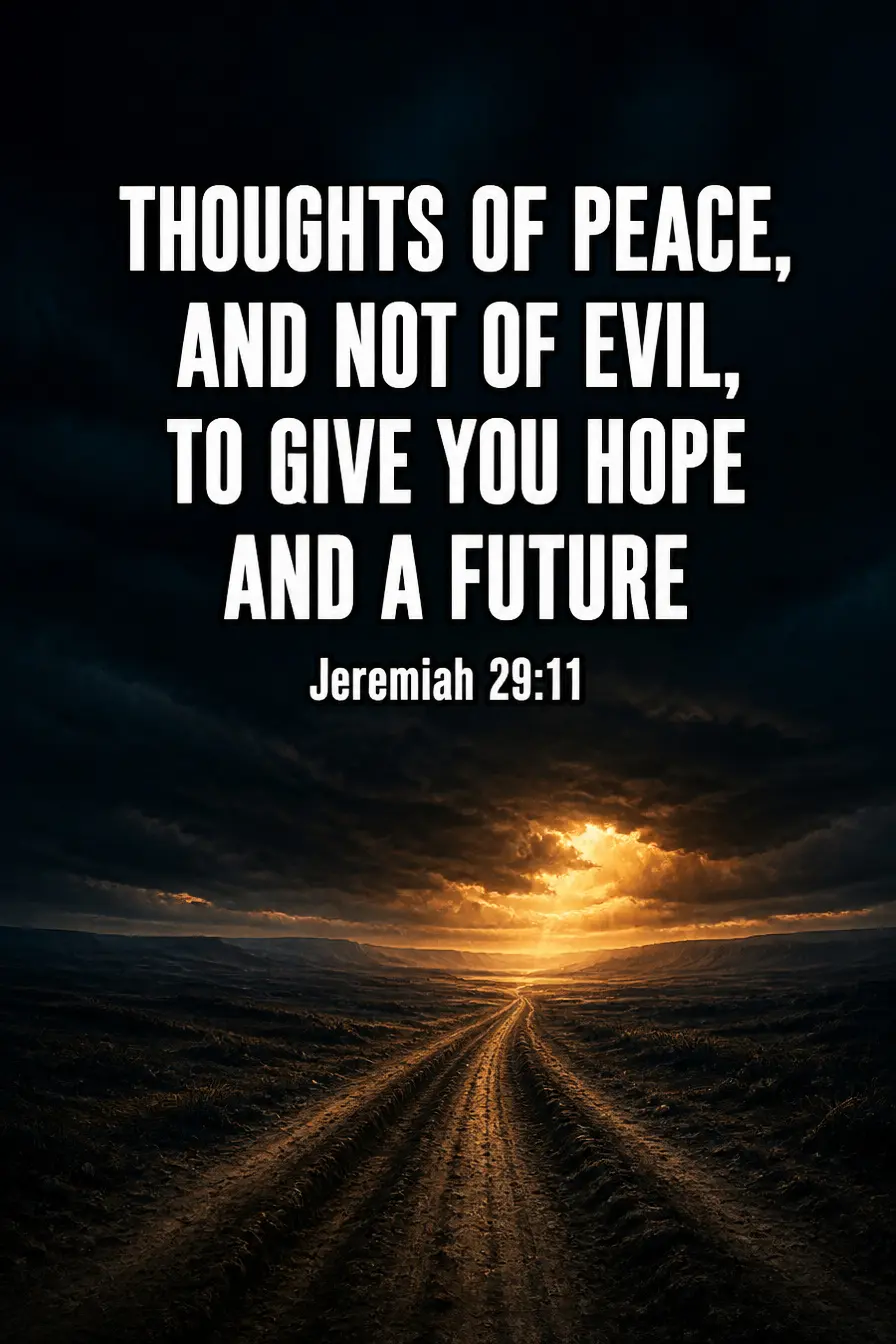
The letter this comes from was written to Judeans deported to Babylon after their city was destroyed. Not to individuals planning a career — to a defeated nation living in the territory of the empire that defeated them. That does not shrink the promise, but it does change what kind of promise it is. God is telling people who have lost everything that his intentions toward them are peace, and that a future exists on the far side.
Jeremiah 29:10 — The Seventy Years Nobody Prints
“For the LORD says, “After seventy years are accomplished for Babylon, I will visit you and perform my good word toward you, in causing you to return to this place.” — Jeremiah 29:10 (WEBU)
Here is the verse immediately before it, and it sets the timescale: seventy years. Most of the adults reading that letter would die in Babylon. The hope was real, God kept it, and it did not arrive inside their lifetimes. Earlier in the same chapter he tells them to build houses, plant gardens and have children where they are — instructions for a long stay, not a short one.
That is not a reason to hold the verse more loosely. It is a reason to hold it differently. Hope for the future in Scripture is not a promise about your preferred timetable, and any page quoting verse 11 without verse 10 is offering you something the passage does not.
Hope When You Are Worn Out
Isaiah 40:31 — They Will Walk and Not Faint
“but those who wait for the LORD will renew their strength. They will mount up with wings like eagles. They will run, and not be weary. They will walk, and not faint.” — Isaiah 40:31 (WEBU)
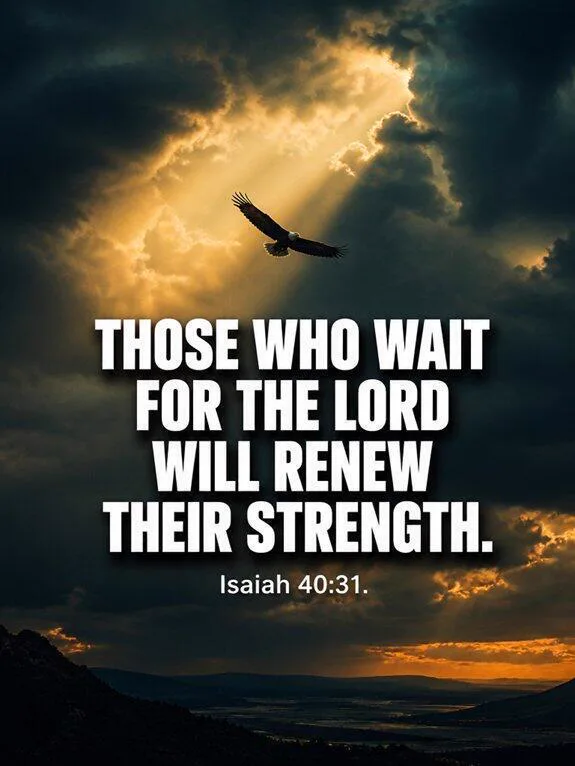
The three images descend rather than climb: soaring, then running, then walking. That looks like an anticlimax until you have had a year where walking was the achievement. Isaiah is not promising you will always feel like an eagle. He is promising the strength for whichever of the three you are actually doing, and he puts the least dramatic one last, where it carries the most weight.
Lamentations 3:21-23 — New Every Morning
“This I recall to my mind; therefore I have hope. It is because of the LORD’s loving kindnesses that we are not consumed, because his mercies don’t fail. They are new every morning. Great is your faithfulness.” — Lamentations 3:21-23 (WEBU)

The hope in these lines is the result of a deliberate act of memory, not a mood that arrived — the writer recalls something to mind first, and the hope follows from the recalling. And these lines were written by someone sitting in the ruins of Jerusalem after the siege — the same catastrophe Jeremiah’s letter addresses. New every morning is not a comfortable observation from a comfortable life. It is a decision, made in wreckage, to expect one more day’s supply.
Psalm 130:5 — Waiting Is the Activity
“I wait for the LORD. My soul waits. I hope in his word.” — Psalm 130:5 (WEBU)

Three short sentences, and the middle one is doing something the first does not. “I wait” is a decision; “my soul waits” is the whole self having caught up with it. Waiting in these psalms is never passive — the Hebrew carries the sense of straining toward, the way you watch a road for someone who is late. And the last line names what the waiting rests on: not a feeling about the outcome, but something that was said.
Hope You Can Hold On To
Hebrews 10:23 — Without Wavering
“let’s hold fast the confession of our hope without wavering; for he who promised is faithful.” — Hebrews 10:23 (WEBU)

Hold fast is a grip word, which tells you the expected conditions. Nobody grips something that is not being pulled at. And the reason given at the end is not “because you are strong enough” — it is he who promised is faithful. The stability is located in the other party to the promise. That is the difference between holding on and being held.
Romans 12:12 — Rejoicing in Hope
“rejoicing in hope, enduring in troubles, continuing steadfastly in prayer,” — Romans 12:12 (WEBU)
Three participles in a row, and they are meant to be simultaneous rather than sequential. You are not supposed to finish the troubles before the rejoicing starts. Paul stacks them deliberately: the hope is what makes the endurance possible, and the prayer is what keeps the hope supplied. Pull any one out and the other two get harder.
Psalm 71:14 — “But I Will Always Hope”
“But I will always hope, and will add to all of your praise.” — Psalm 71:14 (WEBU)
The verse opens with but, which means it is an answer to something. The lines before it describe enemies saying God has abandoned the writer, an old man watching his strength go. This is not serenity. It is a decision made against the evidence in the room, stated in the future tense, by somebody who has been at it long enough to know what he is committing to.
What the Future Actually Holds
Christian hope has content. It is not a general expectation that things will improve.
1 Peter 1:3-4 — A Living Hope
“Blessed be the God and Father of our Lord Jesus Christ, who according to his great mercy caused us to be born again to a living hope through the resurrection of Jesus Christ from the dead, to an incorruptible and undefiled inheritance that doesn’t fade away, reserved in Heaven for you,” — 1 Peter 1:3-4 (WEBU)
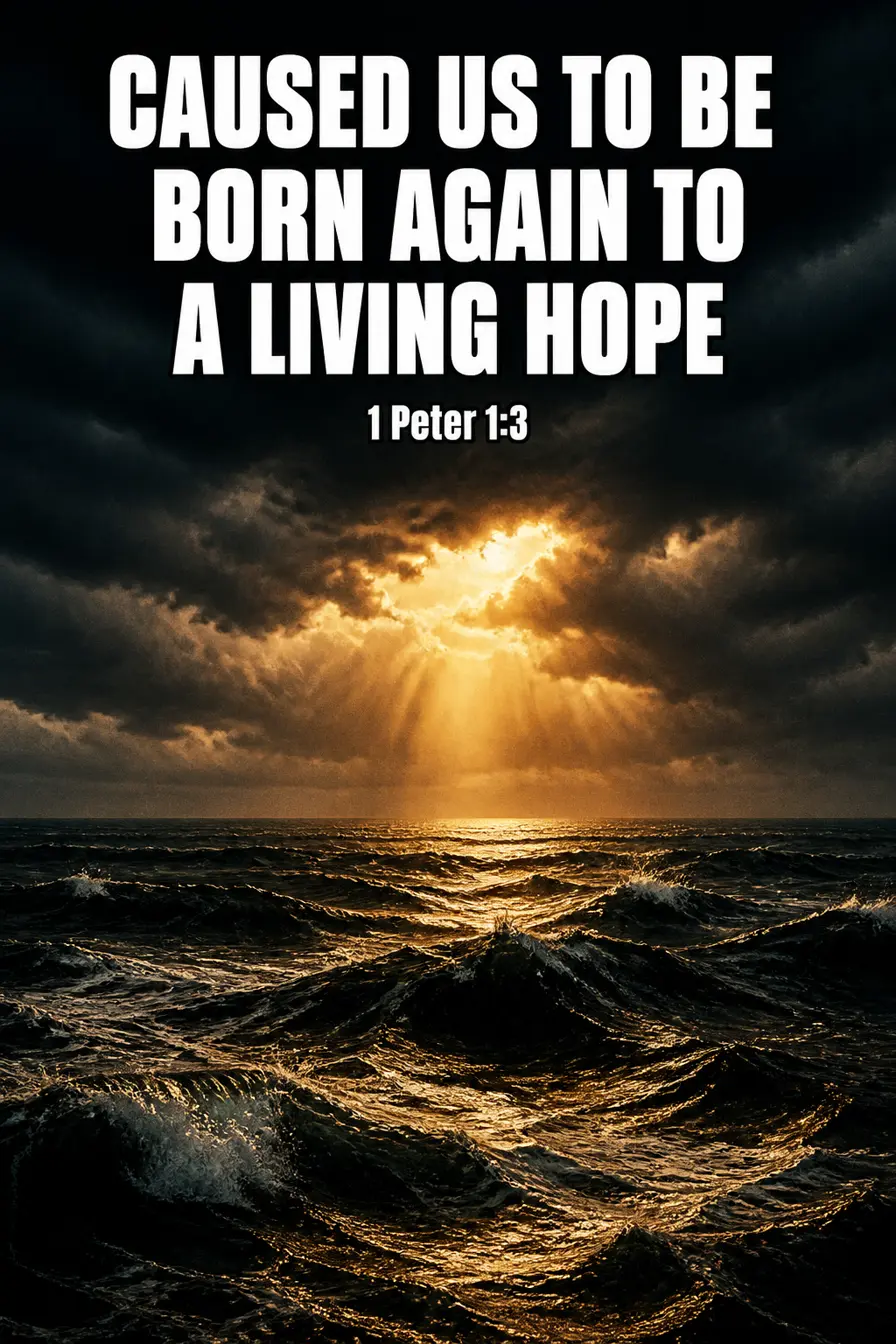
Living is the word to slow down on, because Peter is contrasting it with hopes that die. It is called living because it runs on the resurrection of Jesus Christ from the dead — an event, in the past, that either happened or did not. This is the backwards-facing confidence the whole idea rests on. Peter was writing to scattered people under pressure, and the inheritance he describes is reserved somewhere their circumstances cannot reach.
Titus 2:13 — The Blessed Hope
“looking for the blessed hope and appearing of the glory of our great God and Savior, Jesus Christ,” — Titus 2:13 (WEBU)

Paul does not say hoping for better circumstances. He names a person. The blessed hope in this sentence is the appearing of the glory of our great God and Savior — the hope and the one hoped for are the same thing. Whatever else Christian hope for the future includes, this is the floor under it, and it is the part that does not depend on how the next decade goes.
Revelation 21:4-5 — Making All Things New
“He will wipe away every tear from their eyes. Death will be no more; neither will there be mourning, nor crying, nor pain any more. The first things have passed away.” He who sits on the throne said, “Behold, I am making all things new.” — Revelation 21:4-5 (WEBU)

Making all things new, not making all new things. The distinction is the whole hope: this is repair, not replacement. Notice also how personal the first line is — not death abolished by decree, but tears wiped from faces, one at a time. A promise this large ends in a gesture that small, which is a strange thing to invent.
Romans 8:18 — Not Worthy to Be Compared
“For I consider that the sufferings of this present time are not worthy to be compared with the glory which will be revealed toward us.” — Romans 8:18 (WEBU)
“I consider” is an accounting word — Paul is weighing two things, not dismissing one of them. He is not saying the sufferings of this present time are small; elsewhere he lists his own and they are appalling. He is saying the scale is wrong to make the comparison at all. That is a claim you can either accept or not, and it is the reason he is able to keep going.
2 Corinthians 4:17-18 — Seen and Unseen
“For our light affliction, which is for the moment, works for us more and more exceedingly an eternal weight of glory, while we don’t look at the things which are seen, but at the things which are not seen. For the things which are seen are temporal, but the things which are not seen are eternal.” — 2 Corinthians 4:17-18 (WEBU)
Paul calls it light affliction, and he is the man who was shipwrecked, beaten and imprisoned. The word only makes sense next to what he sets it against — a weight of glory, the same metaphor family, deliberately outweighing. And the instruction is about attention: not to pretend the visible things are not there, but to keep looking past them at what does not expire.
Hope for the Part You Cannot See Yet
Philippians 1:6 — He Will Complete It
“being confident of this very thing, that he who began a good work in you will complete it until the day of Jesus Christ.” — Philippians 1:6 (WEBU)

The confidence is about somebody else’s competence, not yours. Paul’s logic is simple: the good work was not started by you, so its completion does not rest on you either. And until the day of Jesus Christ sets the deadline a long way out — which is honest about the pace. If you are measuring your progress against how you were last Tuesday, this verse is working on a different clock.
Proverbs 23:18 — Your Hope Will Not Be Cut Off
“Indeed surely there is a future hope, and your hope will not be cut off.” — Proverbs 23:18 (WEBU)
Cut off is a severing image — a thread, a rope. The fear this answers is not that the future will be bad but that it will simply stop, which is a different and quieter dread. Proverbs does not describe what the future holds here. It only insists that the line running toward it does not get cut, and for a certain kind of night that is the sentence you need.
Isaiah 43:18-19 — A New Thing
““Don’t remember the former things, and don’t consider the things of old. Behold, I will do a new thing. It springs out now. Don’t you know it? I will even make a way in the wilderness, and rivers in the desert.” — Isaiah 43:18-19 (WEBU)
It springs out now is present tense, and the question after it is almost impatient: don’t you know it? Isaiah is describing something already underway that has not yet been noticed. The two pictures he chooses are both about routes where none exist — a way in the wilderness, rivers in the desert. Not a rescue from the wilderness. A way through it.
Matthew 6:34 — Tomorrow’s Portion Is Not Yours Today
“Therefore don’t be anxious for tomorrow, for tomorrow will be anxious for itself. Each day’s own evil is sufficient.” — Matthew 6:34 (WEBU)

Hope for the future and anxiety about the future both live in the same place, and this is the line that separates them. Jesus is not banning planning. He is pointing out that fear makes you live two days at once — today’s real load plus tomorrow’s imagined one — and that the second is borrowed. The last clause is unusually blunt and usually trimmed: today already has enough in it.
Romans 15:13 — The Sentence to Take With You
“Now may the God of hope fill you with all joy and peace in believing, that you may abound in hope in the power of the Holy Spirit.” — Romans 15:13 (WEBU)

Paul ends the argument of Romans not with a conclusion but with a blessing, and the title he uses is worth pausing on: the God of hope. Not the God who supplies hope, as if handing out a resource — hope is being named as something he is. Which is why the sentence can ask for abundance rather than sufficiency. You are not being wished enough hope to get through. Read it as written for you and it is the most useful verse on this page.
What to Do With These
Twenty verses read in one sitting will not change how next Tuesday feels. One verse carried for a fortnight might.
Pick the one that made you stop — most likely the one that named something you had not put into words. Learn it well enough to say without looking, which for a short verse takes about four repetitions a day for three days. Then put it where the worry about the future actually arrives: the commute, the hour after the house goes quiet, the minute you wake before the alarm.
The second habit is the one Lamentations describes, and it costs nothing: recall something to mind on purpose, and let the hope follow from it. Keep a page where you write down what you were afraid of about the future, with the date. Three months later, read it. Most of it did not happen, and what did happen was survived. Fear makes confident forecasts about the future and never files a correction, so we have to file them ourselves — and that written page is what turns hope from a mood into a memory you can check.
If the future feels frightening rather than merely uncertain, that is worth saying to a doctor as well as to God. Scripture and clinical care are not rivals, and treating them that way costs people years.
Questions People Ask About Hope for the Future
What is the most powerful Bible verse for hope?
Romans 15:13 is the one most often chosen, because it asks for abundance rather than survival: “Now may the God of hope fill you with all joy and peace in believing.” For hope specifically about the future, Jeremiah 29:11 and 1 Peter 1:3 are the two most quoted — the first for God’s intentions, the second because it grounds hope in the resurrection rather than in optimism.
What Bible verse gives hope in hard times?
Lamentations 3:22-23, written in the ruins of a destroyed city, is the strongest candidate: mercies “new every morning” claimed by somebody with every reason not to. Isaiah 40:31 is the companion for exhaustion specifically, and it ends on walking rather than soaring — the promise covers the days when getting through is the whole achievement.
What is the definition of Christian hope?
Confident expectation, not wishful thinking. Ordinary English uses “hope” for something wanted but uncertain; the biblical word describes something anticipated because of what has already happened. Hebrews 6:19 calls it an anchor of the soul, fixed somewhere the weather cannot reach, and 1 Peter 1:3 names the event it is anchored to.
Who was Jeremiah 29:11 written to?
Judeans deported to Babylon after Jerusalem fell — a defeated nation in exile, not individuals planning a career. The verse before it sets the timescale at seventy years, meaning most of its first readers died before the promise arrived. God kept it. He did not keep it on their preferred schedule, and reading verse 11 without verse 10 misses what kind of promise it is.
What does the anchor in Hebrews 6:19 mean?
That hope holds you in place rather than moving you somewhere better. An anchor does not calm the sea. The passage adds that this one reaches “within the veil” — inside the temple’s innermost room, meaning it is fixed to God himself rather than to your circumstances or your own conviction, which is why the writer calls it both sure and steadfast.
Hope in Scripture is slower and more stubborn than the word suggests in ordinary use. It survived seventy years in Babylon and a city reduced to rubble, and it did that by being anchored to something already finished rather than to a forecast.
Take one verse from this page into the coming week. If you want more, Bible Verses for Hope and Faith in Difficult Seasons works through the waiting, Bible Verses About Hope, Love and God’s Promises covers what the promises actually say, and the full Hope archive holds the rest.